Does your faith need strengthening? Are you confused and wondering if Jesus Christ is really "The Way, the Truth, and the Life?" "Fight for Your Faith" is a blog filled with interesting and thought provoking articles to help you find the answers you are seeking. Jesus said, "Seek and ye shall find." In Jeremiah we read, "Ye shall seek Me, and find Me, when ye shall seek for Me with all your heart." These articles and videos will help you in your search for the Truth.

Friday, April 10, 2015

Higher purpose in life tied to better brain health

By Roxanne Nelson, Reuters, April 7, 2015

People with a high sense of purpose in life have a lower risk of stroke, according to new research.

“We and others have shown that purpose in life is protective against multiple adverse health outcomes in older age,” said lead study author Lei Yu, an assistant professor of neurological sciences at Rush Alzheimer’s Disease Center of Rush University Medical Center in Chicago.

Importantly, purpose in life may be improved through changes in behaviors or participation in activities like volunteerism, among other things, Yu told Reuter’s Health in an email.

A stroke can occur when blood flow to the brain is blocked. The damaged brain tissue may contribute to a number of conditions including dementia, movement problems, disability and death as individuals grow older.

For their study, published in the journal Stroke, Yu and his team analyzed autopsy results on 453 older adults who had been enrolled in the Rush Memory and Aging Project. All of the participants underwent annual physical and psychological evaluations, including a standard assessment of purpose in life, and were followed until they died, at an average age of 90.

None of the participants had dementia when they entered the study, but 114 people had suffered a stroke.

At autopsy, 154 individuals had macroscopic infarctions (areas of stroke damage visible to the naked eye) and 128 had “microinfarcts” (areas of damage visible with a microscope).

Purpose in life was judged on a five-point scale with higher scores indicating a greater purpose. The average score was 3.5.

With every one-point increase in the score measuring purpose, the likelihood of having one or more macroscopic infarctions decreased by about 50 percent. There was no link between purpose and microinfarcts.

This study is very well done, thorough and very intriguing, said Dr. Jose Biller, chair of neurology at Loyola University Chicago Stritch School of Medicine.

“If we put everything together, my opinion is that having a purpose in life is very healthy, and this is the message I would want to convey,” Biller said.

Yu said it’s important for people to be thoughtful about what motivates them. They should engage in rewarding behaviors, he said.

“Health conscious adults are encouraged to work actively to improve their sense of meaning in life and goal directness,” Yu said.

Rwanda Revisited

By Colum Lynch, Foreign Policy, April 5, 2015

On March 25, 1998, President Bill Clinton expressed regret for failing to halt genocide in Rwanda, saying that he didn’t “fully appreciate the depth and the speed with which [Rwandans] were being engulfed by this unimaginable terror.”

But U.S. officials in Rwanda had been warned more than a year before the 1994 slaughter began that Hutu extremists were contemplating the extermination of ethnic Tutsis, according to a review panel’s newly released transcript and declassified State Department documents obtained by Foreign Policy from the United States Holocaust Memorial Museum.

An August 1992 diplomatic cable to Washington, written by Joyce Leader, the U.S. Embassy’s deputy chief of mission in Kigali, cited warnings that Hutu extremists with links to Rwanda’s ruling party were believed to be advocating the extermination of ethnic Tutsis. On the morning the killing began in April 1994, there was little doubt about what was happening in Rwanda.

“We had a very good sense of what was taking place,” Leader told an unprecedented 2014 gathering of former Rwandan officials and international policymakers who managed the response to the world’s worst mass murder since the Holocaust. “It was clear that a systematic killing of Tutsi was taking place in neighborhoods.”

Senior ethnic Hutu officials who favored reconciling with Tutsi rebels refused to join forces with the extremists carrying out the genocide and were also hunted down and murdered, she said.

Leader’s cable was part of the discussion of a three-day review last year sponsored by the Holocaust Museum’s Center for the Prevention of Genocide and The Hague Institute for Global Justice. A transcript of the review’s findings–which runs more than 240 pages long, plus a 32-page executive summary–was provided to FP ahead of its public release at 11 am on Monday, April 6, the 21st anniversary of the start of the Rwandan genocide.

The event provided an extraordinary opportunity for 40 key players and observers to review the missteps. They included former Rwandan government and rebel officials; Belgian, French Rwandan, and U.N. diplomats and peacekeepers; aid workers, journalists, scholars, and Security Council ambassadors. U.S. officials who were directly involved in the United States delivered a detailed insider account of the American response.

Clinton’s envoys in Rwanda were clear-eyed about the nature of what was unfolding in the hours and days following the April 6, 1994, shoot-down of a plane carrying Rwandan President Juvénal Habyarimana and his Burundian counterpart, according to the review’s transcript. That set the stage for the mass slaughter of nearly a million ethnic Tutsi Rwandans, and some moderate Hutus, by extremists among the country’s majority-Hutu population.

As the killing began, terrified Rwandans fled their homes for safety, to the grounds of U.S. Ambassador David Rawson’s residence. At one stage, a small child seeking protection in the ambassador’s backyard was shot and killed, Leader recalled.

She also warned her neighbor, Rwandan Prime Minister Agathe Uwilingiyimana, who wanted to seek refuge at the American diplomat’s home, to steer clear for fear that the Presidential Guard, who were implicated in the killing, would come looking for her there. Uwilingiyimana was murdered a day after the killing began.

The 2014 discussions, which took place from June 1 through June 3, tracked the doomed Rwandan peace process, known as the Arusha Accords, which were signed in 1993 and were designed to end civil war between a Hutu-dominated government and a Tutsi-led insurgency based out of Uganda.

The attendees identified plenty of culprits: Extremists within the Hutu-led government who sought to sabotage peace efforts. Rwandan rebels who launched a massive offensive in northern Rwanda a year before the genocide, swelling the ranks of Rwanda’s community of displaced and providing a breeding ground for radicalized recruits who carried out ethnic slaughter of Tutsis. International diplomats who clung to false hopes that a doomed peace process could reverse Rwanda’s slide from a civil war.

Even the very notion of democracy came up for criticism, with Leader noting that “we need to acknowledge the link between violence and promotion of change, or democracy and peace in the case of Rwanda. We should acknowledge the negative consequences that result in some cases from the promotion of democratization.”

Britain’s then-U.N. ambassador, David Hannay, broke the failure into two parts: what he called “sins of commission” and “sins of omission.”

“The sins of commission were mainly the work of the Rwandans themselves,” he said.

“It is true that we were abandoned. But we abandoned our people, and massacred our own people,” Jean-Marie Vianney Ndagijimana, Rwanda’s ambassador to Paris during the genocide, said during the review. “Primary responsibility for the genocide, and the crimes that accompanied it, must be borne by us, Rwandans. We must accept that fact before we make accusations against the international community.”

The indifference of outside powers, particularly the United States, was a central theme of the talks.

A lot of the criticism centered on the fact that the U.N. and other world powers failed to respond to a clear warning, issued in January 1994, that a plan for the extermination of the Tutsi was underway.

The contents of that cable, drafted by the U.N.’s Canadian force commander, Lt. Gen. Roméo Dallaire, were never shared with the U.N. Security Council.

But the U.N.’s top officials in Rwanda shared the cable’s contents with representatives of the United States, Britain, and Belgium.

“I never knew about the genocide fax. I am not sure my colleagues in the African affairs bureau knew about it,” said John Shattuck, the then-U.S. assistant secretary of state for labor, human rights, and democracy. “Had this fax become more widely known in the U.S. government, it would have provided ammunition for those who were trying to resist” efforts to constrain U.N. peacekeeping.

“I do think the genocide fax could have made a difference to those like myself who were trying to impact on the debate,” he added.

But Dallaire, who attended the conference, cut Shattuck off.

“I must rebut rapidly. President Clinton did not want to know,” he said. “I hold Clinton accountable. He can excuse himself as much as he wants to the Rwandans, but he established a policy that he did not want to know.”

Former Deputy Assistant Secretary of State for African Affairs Prudence Bushnell reinforced the view that top policymakers in the Clinton administration paid little attention to events in Rwanda leading up to the genocide.

“I was way down the totem pole and I had responsibility for the Rwanda portfolio,” she recalled. “That shows you how important it was in the U.S. government.”

Indeed, there had been other warnings that had been ignored or missed. As far back as August 1992, Leader wrote a cable to Washington citing local concerns that an extremist political party linked to President Habyarimana was pursuing a “Ku Klux Klan-like approach to ethnic relations” that was “widely interpreted as a call for the extermination of Tutsis.”

In August 1993, Bacre Waly Ndiaye, a U.N. human rights researcher from Senegal, produced a troubling report about the prospects of genocide. And on Feb. 25, 1994, following a visit to Rwanda by Belgian Foreign Minister Willy Claes, the Belgian Foreign Ministry sent instructions to its United Nations envoy to explore how to strengthen the U.N. peacekeeping mission.

That document cited the “possibility of genocide in Rwanda…. It will be inacceptable for Belgians to be passive witnesses to genocide in Rwanda.”

On April 6, the day the Rwandan and Burundian leaders’ plane was shot down, French President François Mitterrand walked into the office of his foreign affairs advisor, Hubert Védrine, and asked: “Have you heard? It is terrible. They are going to massacre each other.”

U.N. officials and diplomats in New York said at the review that they were unaware of the reports. Iqbal Riza, a retired U.N. official who oversaw Rwanda for the U.N. Department of Peacekeeping, and Colin Keating, a New Zealand diplomat who served as the president of the U.N. Security Council, said they were unaware of the Ndiaye report.

The U.N. Secretary General Boutros Boutros-Ghali, meanwhile, never provided the U.N. Security Council with a briefing of Dallaire’s troubling cable.

The backdrop for America’s lack of interest in Rwanda went back to the end of the Cold War, when then-Secretary of State James Baker sought cuts in the State Department to fund the establishment of more than a dozen new embassies in the former Soviet Union, Bushnell recalled. The Africa bureau in the State Department saw its budget shrink. Clinton also showed little interest in Africa.

“Early in the Clinton term, I was not able to get a new, democratically elected president in Africa, a former human rights activist, to see the president because, I was told, ‘President Clinton would find him boring,’” Bushnell said.

The one initiative that sought considerable engagement was Somalia, where President George H.W. Bush had authorized the deployment of U.S. Marines to pave the way for a massive humanitarian relief effort. Clinton inherited the operation, which gradually entangled American military forces in a war with Somali militia challenging the international presence.

The Oct. 3, 1993, the deaths of 18 U.S. soldiers in a botched raid in Mogadishu put the Clinton administration on the defensive, and cooled the Pentagon’s attitude toward U.N. peacekeeping.

As the genocide unfolded in Rwanda six months later, the White House was finalizing a presidential directive, known as PDD-25, which placed severe constraints on the conditions required for U.S. support for peacekeeping missions. President Clinton, meanwhile, was preoccupied with producing a health care bill and upcoming midterm congressional elections–and was determined to keep America out of any foreign military entanglements, said Shattuck.

“It was effectively a straitjacket for U.S. decision-making, vis-a-vis various kinds of peacekeeping operations,” said Shattuck. “In a sense, PDD-25 was the U.S. equivalent of the withdrawal of Belgian forces after the killing of the peacekeepers, in the sense that it gave a ‘green light’ to the genocide planners.”

Even after the killing began, the White House was focused more on getting Americans and the U.N. out of Rwanda than coming to the aid of Rwanda’s victims.

Thomas S. Blanton, the director of the National Security Archives, who moderated the 2014 discussion, said that a review of declassified State Department cables and logs of a task force set up to handle the crisis showed that 80 percent of the discussion in the United States concerned the evacuation of American citizens.

Most of the remaining 20 percent was about convincing the warring parties to abide by a cease-fire and resume talks on a power-sharing agreement, Blanton said.

The White House focus on protecting civilians was largely limited to one individual, a Rwandan human rights activist named Monique Mujawamariya, who had met with President Clinton in the White House in December 1993, several months before the genocide began.

“Oh my god, all hell is breaking loose, and I am getting phone calls, ‘Where’s Monique?’” Bushnell recalled. “The greatest pressure from the White House during the entire Rwandan affair was finding Monique.” Mujawamariya fled Kigali in one of the last flights by foreigners out of the country.

The U.S. military, meanwhile, showed little interest.

The Defense Department “did not want to spend money,” Bushnell recalled. “I used to call them the ‘nowhere, no how, no way, and not with our toys’ boys.”

“Boy, oh boy, did the shooting down of the plane on April 6 and the withdrawal of the Belgians give us the excuse we needed to pull the plug,” she said. “It was an unfortunate period in my government’s history. I regret it greatly, as I think all of us do.”

The U.N. peacekeeping mission was woefully unprepared for the violence, and Rwandan government troops killed 10 Belgian peacekeepers.

During an initial visit to Rwanda in August 1993, Dallaire had recommended a force of 8,000 peacekeepers to oversee a tenuous peace process. The U.N. peacekeeping department shrunk that number down to 5,000, before the U.N. Security Council cut it in half, leaving a force of about 2,400 on the ground when the violence started.

“I was instructed that this mission had to be on the cheap,” Dallaire recalled. “The Americans had not paid [their U.N. dues], there was no money, and nobody was particularly interested in the mission to start with.”

When the genocide began, the United States launched a diplomatic campaign aimed at bringing the U.N. peacekeepers home. Initially, Washington sought to shutter the mission entirely. On April 15, 1994, Edward Walker Jr., then the U.S. deputy permanent representative to the U.N., relayed instructions from Washington to withdraw the entire U.N. mission.

But later that day, Nigerian U.N. Ambassador Ibrahim Gambari and Hannay, the British U.N. envoy, convinced Walker’s boss, then-U.S. Ambassador to the U.N. Madeleine Albright, to change her position.

“You simply cannot do that,” Hannay recalled telling Albright. “The idea that we should simply withdraw the troops and leave these people to be murdered was not right. It won’t do.”

Albright agreed, and called Richard Clarke, the senior director on the U.S. National Security Council, to change her instructions. The United States reversed itself. On April 20, the council adopted a resolution providing a minimal presence of 270 peacekeepers.

Inside Rwanda, the United States, France, and Belgium were fielding desperate appeals from Rwandans to maintain a diplomatic presence there. Dallaire said more than 1,000 elite foreign troops were mobilized to evacuate foreigners from Rwanda during the genocide. He appealed to Belgian and French commanders “to modify their orders to let me establish a force that would stop the massacres of threatened people, particularly in Kigali.”

“The answer was a categorical no,” Dallaire said.

Védrine, Mitterrand’s foreign affairs advisor, said he was unaware of Dallaire’s request, and “in hindsight, perhaps we can say this was a huge pity.” In late June, France ultimately did send troops into Rwanda in an intervention mission that undoubtedly saved lives. But it also faced criticism for protecting the fleeing forces of the Rwandan army, a longtime ally whose most extremist elements orchestrated the killings.

The Pentagon explored plans to set up a peacekeeping force outside of Rwanda, to protect refugees crossing the border. The proposal was dismissed by other Security Council members as a “joke,” recalled Hannay, noting that people were being killed inside Rwanda.

Col. Leonidas Rusatira, the head of the military college in Rwanda, appealed to U.S. and European diplomats to stay. “He said our presence would help calm the situation,” Leader recalled. “I had to be very firm and say, ‘These are our orders, we are leaving, please help us get out safely.’”

Back in Washington, Bushnell said she heard that U.S. Marines who were stationed in Burundi were eager to enter Rwanda to help evacuate Americans.

They wanted to go, but I was on the phone with my colleagues, saying, ‘No, no, no, no, do not leave the airport in Burundi,’” Bushnell said. “The last thing I wanted was somebody in Burundi shooting down an American helicopter.”

Instead, she arranged the Americans’ evacuation by land across the border.

“I do not apologize for that. The first obligation of a government is to its citizens,” Bushnell said.

“We were terrified of what was going to happen to our citizenry and so indeed we went into action,” she said. “…We had no concept that we would not be going back and not helping. I regret my government’s actions with regards to the citizens of Rwanda. I do not regret my government’s actions with regards to the citizens of the United States.”

Gen. Henry Anyidoho, a Ghanaian officer who served as the second-highest ranking U.N. peacekeeper in Rwanda, said the diplomatic community’s departure from Rwanda “affected us very badly.”

“They left too early,” Anyidoho said. “Once the killers knew there was no referee, they had a free hand to do whatever they wanted. We were overwhelmed by the effort of saving lives.”

“We felt abandoned,” Anyidoho said.

Thursday, April 9, 2015

Did MI5 know about child abuse but fail to act?

http://www.channel4.com/news/mi5-kincora-richard-kerr-brian-gemmell-child-abuseer army intelligence officer says he alerted MI5 to abuse at Kincora boys' home, but was told to stop digging. It is not the first time MI5 has been accused of covering up child abuseChannel 4 News brought Kincora victim Richard Kerr face to face with Brian Gemmell, who worked as an army intelligence officer in Belfast in the 1970s. Mr Gemmell said he put in an official report about Kincora to a senior MI5 officer, but to his astonishment he claims he was ordered to stop digging and forget about it.

Speaking to Mr Kerr, he said: "That's the thing that hits me - that if I really pushed the thing through in 75-76, you could have been rescued. I'm sorry." Channel 4 News has contacted MI5 via the Home Office and is awaiting a response to Mr Gemmell's claims.

Mr Gemmell said he believed what happened at Kincora decades ago should be brought within the scope of the over-arching, judge-led inquiry Home Secretary Theresa May set up "to consider the extent to which state and non-state institutions have failed in their duty of care to protect children from sexual abuse and exploitation".

The inquiry was established following claims that children had been abused by politicians, public officials and celebrities over many decades. In July 2014, Mrs May indicated that it would be able to study files held by MI5.

Former Liberal MP Cyril Smith, who died in 2010, was said to have abused children during the 1960s, 1970s and 1980s. In 2012, the Crown Prosecution Service said he should have been charged, while Greater Manchester Police said although he could not be convicted posthumously, "from the overwhelming evidence we have, it is right and proper we should publicly recognise that young boys were sexually and physically abused".

His Labour successor alleges MI5 was involved in suppressing the allegations at the time. So what evidence is there that MI5 was involved in a cover-up, as alleged?
October 2012 - 'powerful paedophile network'

In the Commons, Labour MP Tom Watson called on the police to examine allegations of a "powerful paedophile network linked to parliament and Number 10". He did not name any individuals, but his comments sparked a wider examination about whether political figures were involved in abuse - and whether they used their connections to cover this up.
September 2013 - MI5 'held on to' Smith evidence

Channel 4 Dispatches reported that the security services had held on to evidence of Smith's abuse in Lancashire in the 1960s. Former Lancashire Special Branch detective Tony Robinson told Dispatches he was contacted by MI5, who requested he send them the file by special courier. Smith's Liberals propped up the Labour government in the late 1970s - the so-called Lib-Lab pact.
April 2014 - MI5 'put pressure on police'

Labour's Simon Danczuk, a successor to Smith as MP for Rochdale, published a book, Smile for the Camera: The Double Life of Cyril Smith, saying MI5 and Special Branch put pressure on the police to drop their investigation into Smith's activities. Mr Danczuk first raised the Smith case in the Commons in 2012 after alleged victims contacted him.
July 2014 - abuse inquiry will see MI5 files

Mrs May implied that the judge-led inquiry she set up into historic child abuse would be able to see MI5 files. In response to a question from Tom Watson, she said: "My intention is that the fullest possible access should be made to government papers in relation to these matters. Where there are files where there are certain issues around who can have access to those files we will need to ensure that we have an appropriate means of ensuring that the information is available to the inquiry panel."
November 2014 - MI5 searches files

The Wanless report into whether there had been a cover-up of the Home Office's handling of abuse allegations in the 1980s concluded that there was no evidence 114 missing official files had been "deliberately or systematically removed or destroyed to cover up organised child abuse".

At the request of the Wanless inquiry, MI5 carried out a search of its own files, but said it had not come across anything relevant to the review. Mrs May told MPs: "I cannot stand here and say the Home Office was not involved in a cover-up in the 1980s and that is why I am determined to get to the truth of this."


The inquiry was prompted by the hunt for a "dossier" handed to Leon Brittain in 1984, when he was home secretary, about alleged paedophile abuse in Westminster in the 1980s. Lord Brittan, who died in January, was himself accused of being involved in the abuse of children in the 1980s. He always strongly denied the allegations.
February 2015 - MI5 'knew about Kincora abuse'

Gary Hoy, who was abused at the Kincora children's home in Belfast in the 1970s, was granted permission to launch a legal challenge against the government's decision to exclude Kincora from its judge-led abuse inquiry.

He said MI5 knew about the abuse he and others suffered, but failed to do anything about it. The allegation is that by allowing the abuse to go on, the security services would be able to blackmail powerful paedophiles. In 1981, three members of staff at the home were jailed for sexually abusing 11 boys.
March 2015 - agent 'caught on camera'

BBC Newsnight said it had been told that a police operation into alleged abuse by Smith was scrapped shortly after he was arrested in the 1980s. According to an unnamed source, officers gathered evidence, including video footage, from a flat in south London. Smith was allegedly one of those caught on camera, along with a senior member of the intelligence agencies.
March 2015 - victims 'threatened' by MI5

Investigative journalist Don Hale told Channel 4 News he had given the police evidence from interviews he had carried out with Smith and Brittan.
He said some victims and whisteblowers who had approached him had been "threatened" by police officers and MI5, "who've warned them not to talk to me or any other journalist and warned also that they might lose their pensions and about the officials secrets act and this is happening even up to the last few weeks".
March 2015 - 'intimidated' by police

Speaking from the US, Kincora victim Richard Kerr, who says he was trafficked from Belfast to be abused in London, told Channel 4 News police had "intimidated" him because they did not want him to give evidence at the 1981 trial.
April 2015 - 'MI5 told about abuse'

Former army intelligence officer, Brian Gemmell, who worked in Northern Ireland in the 1970s, toldChannel 4 News he put in an official report about Kincora to a senior MI5 officer, but to his astonishment he claims he was ordered to stop digging and forget about it. Speaking to Kincora victim Richard Kerr, he said: "That's the thing that hits me - that if I really pushed the thing through in 75-76, you could have been rescued. I'm sorry."

Mr Gemmell told Channel 4 News he believed what happened at Kincora decades ago should be brought within the scope of the major child abuse inquiry announced by Theresa May.

Asked why, he said: "I think two words - Richard Kerr. I think Richard's transporting over to the United Kingdom mainland to be abused, rather than just being abused in Northern Ireland, speaks volumes. It ties the two together." Asked if he believed claims that efforts were still being made to cover up what happened, he said: "I do."

Using Cash and Charm, Putin Targets Europe’s Weakest Links


By Andrew Higgins, NY Times, April 6, 2015

NICOSIA, Cyprus–When Cyprus seized hundreds of millions of dollars from bank depositors, many of them Russians, as part of an internationally brokered deal two years ago to rescue its collapsing financial system, the Russian leader, Vladimir V. Putin, denounced the move as “dangerous” and “unfair,” warning of a sharp chill in relations.

But Mr. Putin was all smiles recently when he received Cyprus’s president, Nicos Anastasiades, in Moscow, hailing relations with the Mediterranean nation as “always being truly friendly and mutually beneficial” and agreeing to extend–on greatly improved terms for Cyprus–a $2.5 billion Russian loan.

The shift from fury to declarations of eternal friendship displayed Mr. Putin’s well-known flair for tactical back flips. But it also showed his unbending determination to break out of sanctions imposed on Russia by the United States and the European Union for Moscow’s annexation of Crimea and support for armed rebels in eastern Ukraine.

Mr. Putin has methodically targeted, through charm and cash and by fanning historical and ideological embers, the European Union’s weakest links in a campaign to assert influence in some of Europe’s most troubled corners. One clear goal is to break fragile Western unity over the conflict in Ukraine.

On Wednesday, Greece’s new left-wing prime minister, Alexis Tsipras, is the next to visit Moscow. Ahead of the trip, Mr. Tsipras declared himself opposed to sanctions on Russia, describing them as a “dead-end policy.”

On Sunday, Mr. Putin’s efforts to peel away supporters from the European Union opened a new rift, after the United States ambassador in Prague criticized a decision by the Czech president, Milos Zeman, to attend a military parade in Moscow on May 9. And in February, Mr. Putin visited Hungary, the European Union’s autocratic backslider, peddling economic deals.

Russia has so far been unable to turn such hand-holding into something more concrete against sanctions that require the approval of all 28 European Union members. But pressure for a rupture is building.

Speaking in an interview last week here in Nicosia, the capital of Cyprus, Mr. Anastasiades said Cyprus had grave doubts about Europe’s policy toward Russia and was part of a “group of member states who have the same reservations.”

He ruled out breaking ranks with what for the moment remains a consensus in favor of keeping up economic pressure on Russia. But he said he expected a unanimous vote in favor of lifting sanctions when they come up for review this summer.

He said he was convinced that Mr. Putin “realizes the consequences of further military involvement” in Ukraine and “means business” in putting in place a cease-fire agreement reached in February.

The cracks opening up in Europe’s policy toward Russia have presented a difficult problem for Donald Tusk, the former prime minister of Poland who is now president of the European Council, a body in Brussels that represents the European Union’s 28 leaders.

“To keep Europe united is today the biggest challenge,” Mr. Tusk said last month, referring to “the very fragile and difficult consensus” reached by European countries after Moscow seized Crimea in March last year.

Moscow’s skill at prying open fissures in European unity has been on display in Cyprus, a tiny nation that, because of its tight historical, religious and economic ties with Russia, has taken on an oversize role as a pivotal player in the geopolitical struggle set off by the conflict in Ukraine.

Tugged in different directions by outside powers, Cyprus hosts British military bases and vast eavesdropping facilities, allows the United States Navy to use its ports and has been a member of the European Union since 2004.

Yet it still looks to Russia as a vitally important diplomatic protector, particularly in relation to Turkey’s military occupation of the north of the country, and as a crucial source of business for its financial services industry, still a pillar of the economy despite the 2013 meltdown.

An agreement sealed during Mr. Anastasiades’s visit to Moscow allows Russian warships to dock in Limassol, Cyprus’s commercial hub and heavily dependent on wealthy Russians who want to set up shell companies to shuffle their assets overseas.

Mr. Anastasiades insisted that military accords signed in Moscow merely extended a 1996 agreement and were “nothing new.” The terms of the agreements, however, are all secret, so it is impossible to know what Russia managed to gain.

Mr. Anatasiades, who traveled to Moscow after recovering from heart surgery in New York, denied tilting away from the West toward Russia. As the leader of a small country, divided since a Turkish invasion in 1974 and situated on a fault line between East and West, Mr. Anastasiades said he seeks good relations with all sides and “even with the devil.” He added, “I do not have the luxury to choose my friends.”

He said Russia might also get a role in the search for and development of gas reserves off the coast of Cyprus, a venture until now monopolized by Western companies.

Russia’s ambassador to Cyprus, Stanislav Osadchi, told a Russian-language newspaper, one of several in Limassol serving the town’s large Russian-speaking population, that the meeting with Mr. Putin, “demonstrated that, despite attempts to isolate Russia and revive the Cold War, there are countries that do not want this.”

The United States, in contrast, has struggled to get a hearing. When Russia won gushing praise on social media for restructuring its loan to Cyprus, the United States ambassador, John M. Koenig, tried to dampen the enthusiasm with messages posted on Twitter that were widely interpreted as implying a link between Mr. Anastasiades’s visit to Moscow and the killing a few days later of the Russian opposition politician Boris Nemtsov.

The Twitter posts set off an uproar, prompting the United States ambassador to issue a contrite statement that his comments had been “misunderstood.”

“For lots of people on this island, Russia is seen as a savior,” Harry Tzimitras, director of PRIO Cyprus Center, a Norwegian-funded research group in Nicosia. This, he added, provides fertile ground for efforts by Moscow to “infiltrate the European Union” and “show that it can disrupt certain policies” promoted by Washington and Brussels.

Vasilis Zertalis, the head of Prospectacy, a financial service company, described Cyprus as a “small piece on a big chessboard.” Europe, he said, tried to advance its own position during the 2013 banking crisis by seeking to end Cyprus’s role as a haven for Russian money.

“They wanted to scare the Russians away,” he said. “But the money that left was from Britain, from other European countries and from America.”

Ordinary Cypriots and politicians, he said, “all gave up on the European Union” because of the harsh bailout terms in 2013 and “know that the United States will never take a stand against Turkey.”

“So,” he said, “the only allies Cyprus really has are Russia and maybe China.”

1,500 Medical Studies Declare Healing Power of Prayer Undeniable

Amanda Casanova, Religion Today, April 06, 2015

A belief in God may make people healthier and happier, according to new studies.

“Studies have shown prayer can prevent people from getting sick–and when they do get sick, prayer can help them get better faster,” Duke University’s Harold G. Koenig, M.D., tells Newsmax Health.

The analysis of more than 1,500 medical studies showed that “people who are more religious and pray more have better mental and physical health,” Koenig said. The results come from a study published in the Southern Medical Journal.

“And out of 125 studies that looked at the link between health and regular worship, 85 showed regular churchgoers live longer,” said Koenig, director of Duke’s Center for Spirituality, Theology and Health.”

Researcher and writer Tom Knox agreed with the findings. Knox was an atheist who became a Christian after studying faith and medicine.

“What I discovered astonished me,” Knox said. “Over the past 30 years a growing and largely unnoticed body of scientific work shows religious belief is medically, socially, and psychologically beneficial.”

Wednesday, April 8, 2015

МЕРА ВЕРЫ

http://anchor.tfionline.com/ru/post/mera-very/

Виржиния Брандт Берг

Моя подруга однажды спросила заведующего супермаркетом, удавалось ли злоумышленникам получить у него деньги по фальшивому чеку. «Ни разу, – ответил он, – потому что я никогда не смотрел на чек. Я всегда смотрю на человека. Если он заслуживает доверия, я приму его чек без вопросов». Такой вере стоит поучиться!

В десятой главе послания к Евреям мы читаем, что «верен Обещавший» (см. Евреям, 10:23). Кто этот Обещавший? Бог. Взгляните на Того, Кто дает обещания в Божьем слове, и у вас не останется сомнений в их абсолютной верности. Божье слово гласит: «Сблизься же с Ним – и будешь спокоен; чрез это придет к тебе добро» (Иов, 22:21).

Познать Бога – значит, быть уверенным в том, что Он сдержит каждое произнесенное Им слово. Авраам знал Бога и «не поколебался в обетовании Божием неверием, но пребыл тверд в вере, […] будучи вполне уверен, что Он силен исполнить обещанное» (см. Римлянам, 4:20-21).

Некоторые считают веру чем-то таинственным и совершенно недосягаемым. Есть также люди, которые полагают, что вера – это природный дар, которым одни в той или иной степени обладают, а другие – нет. И то, и другое – заблуждение.

Бог всем уделил «меру веры» (см. Римлянам, 12:3). Мера веры дана каждому, но пользуются своей верой немногие. А без употребления вера дрябнет, будто мускул, который перестал работать. Вера растет лишь от постоянных упражнений.

Получить веру путем научного анализа невозможно – Бог утаил свои глубочайшие истины от «мудрых и разумных» (см. от Матфея, 11:25). Он открыл их лишь тем, кто рискнул поверить Ему на слово. И именно они, люди с младенческой верой, способны прорваться сквозь любые споры и сомнения. Именно они повергают в стыд ученых мужей – ведь стоит им руку протянуть, и Бог исполнит Свое обещание – обещание, даже суть которого ученым познать не дано.

Вера живет в собственном мире, полностью отличном от привычного нам мира пяти органов чувств. Однако в нем применимы те же принципы. Если мы пробуем на вкус что-то сладкое, то не нуждаемся в дальнейшем доказательстве сладости: об этом нам сообщают вкусовые рецепторы. И кто бы ни старался убедить нас в обратном, мы знаем, что попробовали сладкий плод – доказательство у нас уже есть.

В духовной жизни вера предоставляет нам информацию о духовных истинах точно так же, как органы чувств предоставляют информацию о мире физическом. И коль скоро мы доверяем своим органам чувств, не стоит ставить под сомнение и голос веры! Когда мы прислушиваемся к нему, вера материализует то, о чем говорит: «Как ты веровал, да будет тебе» (от Матфея, 8:13).

Поверьте Богу на слово. Если становится туго – не поддавайтесь неприятностям. Возьмите лучше Библию, найдите подходящее обещание Божье и потребуйте его исполнения во имя Иисуса. Вот, например, обещание, которым часто пользуюсь я, хотя до конца его так и не понимаю – уж слишком оно грандиозно: «Если чего попросите у Отца во имя Мое, то сделаю, да прославится Отец в Сыне». А вот еще одно: «Воззови ко Мне – и Я отвечу тебе, покажу тебе великое и недоступное, чего ты не знаешь» (Иеремия, 33:3).

Неудивительно, что Божье слово называет эти обещания «великими» и «драгоценными», утверждая, что через них мы можем сделаться «причастниками Божеского естества» (см. 2-е Петра, 1:4). Все, что для этого необходимо – это простая вера!

***

Физический мир держится на невидимой силе тяготения. Финансовый мир держится на невидимом принципе доверия. А невидимая вера – это основная сила, на которой держится весь духовный мир.

Tuesday, April 7, 2015

God Needs You

By Mark McMillion
Posted on March 18, 2015

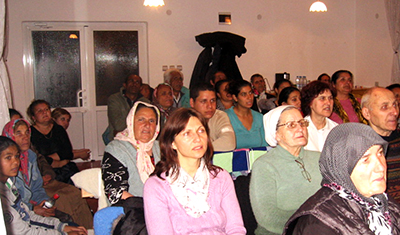
One morning while I was in Bulgaria, I was in a room above the little church where they were hosting me. I’d been speaking to around 70 people for the first two nights who’d braved the late winter snow to come and hear what the foreigner had to say. I’d shared my life story of how I came to believe in the God of Abraham and then in Jesus. Another night I’d shared some basic classes on the importance of Jesus, the subject of Salvation, the significance of the Holy Spirit, the need for the Bible in our lives.
But I somehow felt that the last night’s time with these folks lacked the full power that an opportunity like this requires. So the next morning I felt desperate that things go better. I’ve already written about this some in “Work? Or Prayer…in Bulgaria” There I mentioned how that I felt the Lord answered my desperate prayer by laying something on my heart which I wrote down after my prayer. Here’s an edited version of that and what has come to be one of the main things I’ve shared with these ones since then.
God Needs You

In Ezekiel there’s an obscure but extremely significant passage. God is speaking and He says, “I sought for a man among them to stand in the gap and make up the hedge, that I should not destroy the land. But I found him not.” (Ezekiel 22:30) The picture is of a broken wall. We can think of it as the city of our fellowship and heritage of the people of God. There was a gap through which the Enemy could attack and God needed a person to rally the forces of God to stand up for Him in the battles of the Lord. But the Scripture says, “He found him not.” God found no one to take up the mission of His will and service.

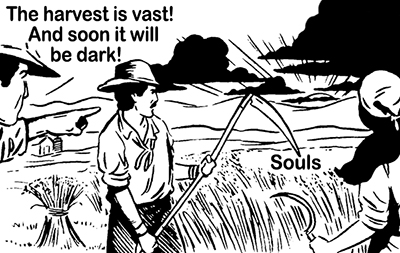
In another place, God is speaking in Isaiah, “Who shall I send, who shall go for us?” Then Isaiah answers “Here am I Lord, send me.” (Isaiah 6:8) That’s what is needed, but there are so very few. Jesus said the same thing. “When He saw the multitudes, He was moved with compassion. For they fainted and were scattered abroad as sheep having no shepherd. Then He said to His disciples, ‘The harvest is plenteous, but the laborers are few. Pray to the Lord of the harvest that He will send laborers into His harvest.’” (Matthew 9:36-38)


Where are the victors of God? Where are the heroes? Where are the “mighty men”, like David had

And it’s certainly still the same today. God needs and wants fighters, not just believers. There is a raging war going on. Souls are dying without the Word of the Lord. In the endtime, we are destined to be winners in the battles. Where are the victors of God? Where are the heroes? Where are the “mighty men”, like David had, who knew there was a battle and that they were on the side of the God of light and love and truth?

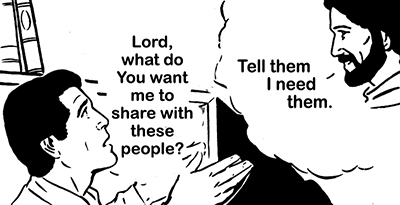
That’s what is needed. Not spectators, but players on the field of battle. God has a destiny prepared for those who will claim it in their lives. God has victorious battles to be won, souls to be set free, lights to be lifted up, and multitudes to turn to Him. But He doesn’t want to do it alone. He wants us to work with Him; He wants to work with flesh and blood us.


The church of our times has left the arena and now sits in the grandstands.

Who can He use in your community, in your family? Who does He chose? “The foolish things to confound the wise.” (I Corinthians 1:26). “When they saw the boldness of Peter and John, and perceived that they were unlearned and ignorant men, they marveled and took knowledge of them, that they had been with Jesus.” (Acts 4:13) That’s really all that’s needed. Not theology school, a university degree, the right skin color and the backing of a large denomination. What’s needed is that “they had been with Jesus”. And so, so many have been with Jesus and are with Jesus. But their lights remain “under a basket” (Matthew 5:15), rather than really on a candlestick. The church of our times has left the arena and now sits in the grandstands.


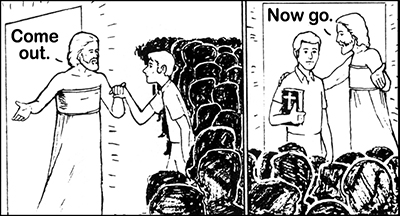
Today is the day that God needs you to step out of your circle of normalcy and to go a little further.

How can we rule with Him in the Millennium if we are not working, fighting and winning with Him right now? “Now is the day of salvation“. (II Corinthians 6:2) Today is the day that souls are fainting in the land, dying and giving up hope. Today is the day that God needs you to step out of your circle of normalcy and to go a little further. It says of Jesus, “He went a little further, and fell on His face.” (Matthew 26:39) That’s what each of us should be doing each day: going a little further and falling on our face in desperate prayer that we can be all that He wants us to be and needs us to be.

May God help all of us to not be complacent, not satisfied with the normal hum-drum tediousness of our lives. May we obey what the Lord said, to “Lift up our eyes and look on the fields, for they are white already to harvest.” (John 4:35) The Lord needs laborers, the Lord needs soldiers, the Lord needs simple people like you and me to take the mantel of His mighty men of old in these desperate end times, to have the vision of fighters, winners, overcomers, harvesters, soul winners, sheep-feeders, comforters of the weak, whatever the call or need is, that His people will have the vision of the service He has called us to and which is so very needed in these desperate times.

It’s just a very basic principle of God for centuries, “If you draw out our soul to the hungry and satisfy the afflicted soul, then your light will rise in obscurity and your darkness will be as the noonday.” (Isiah 58:10) Even in your own life, if you “Seek first the kingdom of God and His righteousness, then all these things will be added to you”. (Matthew 6:33)


But that love is a compassionate, active, stirred up love

It all comes back to love, to love God and your neighbor.But that love is a compassionate, active, stirred up love, love that doesn’t get stopped by barriers, love that ends up being something that isn’t really often seen to the degree it needs to be. It was love that sent the shepherd boy David to the front lines to see and confront the enemies of God. “Is there not a cause?”, young David said. It was love that cause Philip to run to meet the Ethiopian eunuch (Acts 8), “The love of Christ constrains us”, Paul said. (II Corinthians 5:14)
This is what I have come to share here with these precious ones. I felt the Lord would challenge them to go further in their lives, to look outward to the circle of friends and acquaintances they come in contact with daily, to witness and share the Love of God with the unsaved, those who’ve never heard the message of salvation, so many of whom will willingly come to Him, if someone will just reach them with His love.

Copyright © Fight for Your Faith