Does your faith need strengthening? Are you confused and wondering if Jesus Christ is really "The Way, the Truth, and the Life?" "Fight for Your Faith" is a blog filled with interesting and thought provoking articles to help you find the answers you are seeking. Jesus said, "Seek and ye shall find." In Jeremiah we read, "Ye shall seek Me, and find Me, when ye shall seek for Me with all your heart." These articles and videos will help you in your search for the Truth.

Thursday, December 8, 2022

Will We Hear the Sound of the Last Trumpet?


Dennis Edwards

In our last Bible class I was asked if we would hear the sound of the trumpet, the last trumpet, the seventh trumpet at the moment of the Rapture. My immediate response was that I believed that the visions in Revelation are on a spiritual plane, therefore, I concluded that, no, we wouldn’t hear the sound of the trumpet. I was thinking “we” as the world’s population. However, the Bible says clearly in Proverbs 18:13, “He that answers a matter before he hears it, it is folly and shame unto him.” In other words, we should really think and study a matter rather than giving a quick answer.


In Ecclesiastes 5:1b-2 we read, “Be more ready to hear, than to give the sacrifice of fools: for they consider not that they do evil. Be not rash with your mouth, and let not your heart be hasty to utter anything before God: for God is in heaven, and thou upon earth: therefore let your words be few.” Proverb 29:11 states, “A fool utters all his mind: but a wise man keeps it in till afterwards,” and Proverbs 17:28 says, “Even a fool, when he holds his peace, is counted wise: and he that shuts his lips is esteemed a man of understanding.”

Instead of answering immediately, I should have postponed the answer for another class. I could have said, “That’s an interesting question. I will have to think about that before giving an answer. We will get back to that during another class.”

After talking to others, I realized I had to re-think what I said. I had to really search the Scriptures to see what clues the verses themselves give, not merely what my mind may have remembered them as saying. Here’s what the Lord showed me.

Let us read John 12:20-32. "Now there were some Greeks among those who went up to worship at the festival. They came to Philip, who was from Bethsaida in Galilee, with a request. “Sir,” they said, “we would like to see Jesus.” Philip went to tell Andrew; Andrew and Philip in turn told Jesus."

Jesus totally seems to dismiss Andrew and Philip’s question. It seems at that moment He receives a revelation and then prophesies His death.

"Jesus replied, “The hour has come for the Son of Man to be glorified. Very truly I tell you, unless a kernel of wheat falls to the ground and dies, it remains only a single seed. But if it dies, it produces many seeds. Anyone who loves their life will lose it, while anyone who hates their life in this world will keep it for eternal life. Whoever serves me must follow me; and where I am, my servant also will be. My Father will honor the one who serves me.

“Now my soul is troubled, and what shall I say? ‘Father, save me from this hour’? No, it was for this very reason I came to this hour. Father, glorify your name!” Then a voice came from heaven, “I have glorified it, and will glorify it again.” The crowd that was there and heard it said it had thundered; others said an angel had spoken to him.

"Jesus said, “This voice was for your benefit, not mine. Now is the time for judgment on this world; now the prince of this world will be driven out. And I, when I am lifted up from the earth, will draw all people to myself.”

The important point here is in verses 28-30. Jesus said, “Father glorify thy name.” Then came there a voice from heaven, saying, “I have both glorified it (speaking of God’s name), and will glorify it.” The Bible goes on to say, “The people therefore, that stood by, and heard it (the voice or sound), said that it thundered: others said, An angel spoke to him.” Then Jesus responded, “This voice came not because of me, but for your sakes.”

Since this is John’s Gospel, we assume that John heard the words which he recorded as being spoken from heaven. However, not everyone heard the words. Some thought it had thundered. Others heard something and thought an angel had spoken to Jesus. Therefore, we have three groups of people. One group of believers who are close followers of Jesus that hear and understand the words from heaven which are recorded in the text. Another group who didn’t understand the message, but heard something and believed an angel had spoken with Jesus. They believed something supernatural had taken place and heaven had communicated with Jesus. A third group believed it had thundered and there was no supernatural voice or sound from heaven.

We conclude from the text that the those following closely heard the voice and understood the message. Those who followed, but maybe not so closely, heard something, knew it was supernatural, but didn’t understand the exact message. The third group, maybe more skeptical, just heard a naturally explained noise- thunder. They didn’t see anything supernatural happening.

In the synoptic Gospels we have a record of a voice coming from heaven when Jesus is baptized in Matthew 3:17, Mark 1:11, and Luke 3:22. Generally they all say that a voice from heaven said, “This is my beloved Son, in whom I am well pleased.” Again in Mark 9:1-7, Matthew 17:1-9, Luke 9:28-36 we have accounts of the disciples on the Mount of Transfiguration of hearing a voice from heaven saying, “This is my beloved Son, hear ye Him.” 

In 2 Peter 1:17 Peter remembers the words as, “This is my beloved Son, in whom I am well pleased.” Peter goes on to say in verse 18, “And this voice which came from heaven we heard, when we were with him in the holy mount.” But the Apostle concludes that more important or more sure than that voice he heard, which was his subjective personal experience, more important or more sure than his telling us his personal testimony, are the words of prophecy found in God’s word. He goes on to say in verse 19, “Whereunto you do well that ye take heed, as unto a light in a dark place, until the day star arise in your hearts.” He’s encouraging us to get into God’s word until it illuminates our hearts and minds and we know whom we have believed and really believe on Him.

But the question is, are we going to hear the trumpet sound or not? First, we are going to look at some other places where Jesus spoke about hearing and not hearing. Let’s read Matthew 13: 10-17.

The disciples came to him and asked, “Why do you speak to the people in parables?” He replied, “Because the knowledge of the secrets of the kingdom of heaven has been given to you, but not to them. Whoever has will be given more, and they will have an abundance. Whoever does not have, even what they have will be taken from them. This is why I speak to them in parables: “Though seeing, they do not see; though hearing, they do not hear or understand. In them is fulfilled the prophecy of Isaiah: ‘You will be ever hearing but never understanding; you will be ever seeing but never perceiving. For this people’s heart has become calloused; they hardly hear with their ears, and they have closed their eyes. Otherwise they might see with their eyes, hear with their ears, understand with their hearts and turn, and I would heal them.’[Isaiah 6:9-10]

"But blessed are your eyes because they see, and your ears because they hear. For truly I tell you, many prophets and righteous people longed to see what you see but did not see it, and to hear what you hear but did not hear it."

The disciples who were following closely got the parables opened unto them. But the unbelieving couldn’t hear or understand the parable.

In Jeremiah 5:21-31 we read: “ Hear this, you foolish and senseless people, who have eyes but do not see, who have ears but do not hear: Should you not fear me?” declares the Lord. “Should you not tremble in my presence? I made the sand a boundary for the sea, an everlasting barrier it cannot cross. The waves may roll, but they cannot prevail; they may roar, but they cannot cross it. But these people have stubborn and rebellious hearts; they have turned aside and gone away. They do not say to themselves, ‘Let us fear the Lord our God, who gives autumn and spring rains in season, who assures us of the regular weeks of harvest.’

"Your wrongdoings have kept these away; your sins have deprived you of good. “Among my people are the wicked who lie in wait like men who snare birds and like those who set traps to catch people. Like cages full of birds, their houses are full of deceit; they have become rich and powerful and have grown fat and sleek. Their evil deeds have no limit; they do not seek justice. They do not promote the case of the fatherless; they do not defend the just cause of the poor.

"Should I not punish them for this?” declares the Lord. “Should I not avenge myself on such a nation as this? “A horrible and shocking thing has happened in the land: The prophets prophesy lies, the priests rule by their own authority, and my people love it this way. But what will you do in the end?”

The Lord says the people have ears, but they hear not. The Lord’s word in Jeremiah are a condemnation of the wicked who have stubborn and rebellious hearts, and who have oppressed the poor. The prophets or religious leaders prophesy falsely and the people love it so, because it tickles their ears. They have ears, but they don’t hear the Lord. They prefer to hear words that affirm their own desires, their own do as they please religion. 

Apostle Paul admonished that the last days would have the same kind of false teachers and congregations. 2 Timothy 4:3-4 says, "For the time will come when people will not put up with sound doctrine. Instead, to suit their own desires, they will gather around them a great number of teachers to say what their itching ears want to hear. They will turn their ears away from the truth and turn aside to myths."

In Ezekiel 12: 2 we read, “Son of man, you dwell in the midst of a rebellious house, which have eyes to see, and see not; they have ears to hear, and hear not: for they are a rebellious house.” This seems to infer that if we are rebellious to the Lord, we won’t hear His voice. We will have ears, but we won’t hear.

The point I am trying to make is that it seems that some people hear God’s voice and others don’t. Some people see God working and others don’t. Maybe the same will take place at the rapture. Let’s read 1 Thessalonians 4:16, “For the Lord himself shall descend from heaven with a shout, with the voice of the archangel, and with the trump of God: and the dead in Christ shall rise first: then we which are alive and remain shall be caught up together with them in the clouds, to meet the Lord in the air: and so shall we ever be with the Lord. Wherefore comfort one another with these words.”

Maybe we will hear the sound of the trumpet. In Revelation 1:10, John says that while he was having the vision he heard “a great voice, as of a trumpet.” Some commentaries believe that that voice is referring to Jesus’ voice. Some say it is referring to the angel’s voice. In Revelation 3:20, Jesus says, “Behold, I stand at the door and knock: if any man hear my voice, and open the door, I will come in to him, and will sup with him, and he with me.” We have each heard His voice and opened our hearts to Him. He has come in and we have had daily fellowship with Him. However, not everyone has heard His voice for one reason or another.

Maybe at the rapture the true believers will hear the sound of the trumpet and the shout. Perhaps others will hear something and wonder if a supernatural event is taking place. A third less receptive group will deny the supernatural and claim a natural cause for whatever is happening. In Revelation either the angel or Jesus have a voice as of a trumpet. Maybe that trumpet and the voice are one in the same. Maybe the people of the world will hear as much as God lets them according to their receptivity to Him. Some that are coming closer may hear something and wonder if it is supernatural. Others, who are still rejecting God, will have a purely natural explanation for whatever they hear or do not hear.

Let’s read from Deuteronomy 5:22-33, where Moses is talking about receiving the ten commandments from God. "These are the commandments the Lord proclaimed in a loud voice to your whole assembly there on the mountain from out of the fire, the cloud and the deep darkness; and he added nothing more. Then he wrote them on two stone tablets and gave them to me.

"When you heard the voice out of the darkness, while the mountain was ablaze with fire, all the leaders of your tribes and your elders came to me. And you said, “The Lord our God has shown us his glory and his majesty, and we have heard his voice from the fire. Today we have seen that a person can live even if God speaks with them. But now, why should we die? This great fire will consume us, and we will die if we hear the voice of the Lord our God any longer. For what mortal has ever heard the voice of the living God speaking out of fire, as we have, and survived? Go near and listen to all that the Lord our God says. Then tell us whatever the Lord our God tells you. We will listen and obey.”

"The Lord heard you when you spoke to me, and the Lord said to me, “I have heard what this people said to you. Everything they said was good. Oh, that their hearts would be inclined to fear me and keep all my commands always, so that it might go well with them and their children forever!

“Go, tell them to return to their tents. But you stay here with me so that I may give you all the commands, decrees and laws you are to teach them to follow in the land I am giving them to possess.”

"So be careful to do what the Lord your God has commanded you; do not turn aside to the right or to the left. Walk in obedience to all that the Lord your God has commanded you, so that you may live and prosper and prolong your days in the land that you will possess."

The people were afraid of listening directly to the Lord and asked Moses to hear from the Lord for them. But today God wants each and every one of us to develop our own personal relationship with the Lord and to hear from the Lord through His words, through the voice of His word, and through hearing from Him in prayer and prophecy, through listening to Godly counsel, through interacting with others . He wants to speak to us with His still small voice.
  
Let us read from Matthew 7:21-29. True and False Disciples: “Not everyone who says to me, ‘Lord, Lord,’ will enter the kingdom of heaven, but only he who does the will of my Father who is in heaven. Many will say to me on that day, ‘Lord, Lord, did we not prophesy in your name and in your name drive out demons and in your name perform many miracles?’ Then I will tell them plainly, ‘I never knew you. Away from me, you evildoers!’
  
The Wise and Foolish Builders: “Therefore everyone who hears these words of mine and puts them into practice is like a wise man who built his house on the rock. The rain came down, the streams rose, and the winds blew and beat against that house; yet it did not fall, because it had its foundation on the rock. But everyone who hears these words of mine and does not put them into practice is like a foolish man who built his house on sand. The rain came down, the streams rose, and the winds blew and beat against that house, and it fell with a great crash.”

"When Jesus had finished saying these things, the crowds were amazed at his teaching, because he taught as one who had authority, and not as their teachers of the law."

If we hear and obey God’s word we won’t be deceived. In James 1:22 we read, “Be ye doers of the word and not hearers only deceiving your own selves.” We need to let God’s word speak to us. Let the voice of the word speak to us. Let the Holy Spirit speak to us in prophecy. If we do that, we will speak with authority because we have been with Jesus. In Acts 5:13 Luke explains, "Now when they saw the boldness of Peter and John, and perceived that they were unlearned and ignorant men, they marvelled; and they took knowledge of them, that they had been with Jesus." 

God wants us to develop a close relationship with Him through His word and through our personal time with Him in prayer and listening to His voice. He wants us to lean on Him and listen to His voice directing us in all we do. God wants us to become all that He created us to be. He has a plan for each of us. In Jeremiah 29:11 he says, "For I know the plans I have for you,” declares the Lord, “plans to prosper you and not to harm you, plans to give you hope and a future.” In order to fulfill that plan we need to be willing and obedient. We need to follow Him closely. God knows the way. All we have to do is follow.

Jesus said in John 10:27-29, "My sheep hear my voice; I know them, and they follow me. I give them eternal life, and they shall never perish; no one will snatch them out of my hand. My Father, who has given them to me, is greater than all; no one can snatch them out of my Father’s hand.”

Let us not follow afar off like Apostle Peter did and end up denying the Lord three times. Let us have our lamps full of oil by walking in obedience to Jesus, for He gives the oil of His Spirit to them that obey Him. Then we will be ready. Then we will hear the sound of the trumpet and enter in to the glorious wedding feast of our Lord. Until then, let us follow closely so that He can make us into fishers of men.

MIT Climate Scientist Rebuffs Climate Histeria


Skip to content

l

View Larger Image

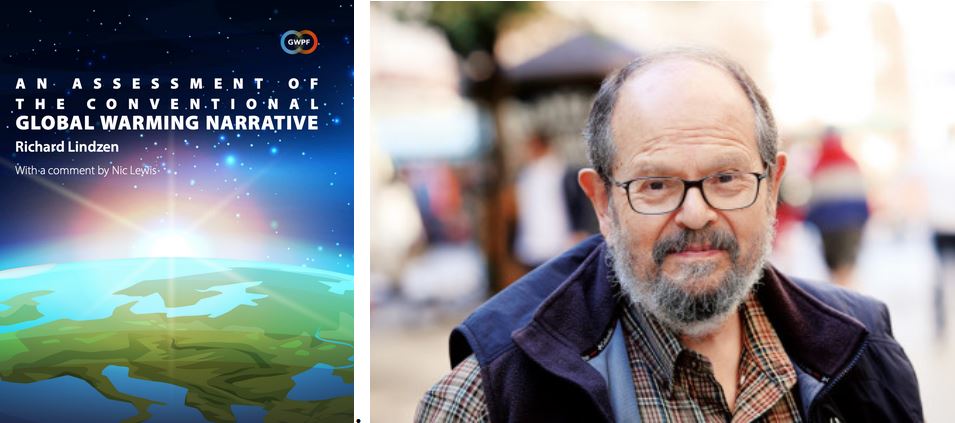
MIT Climate scientist: Climate is an absurd, quasi-religious scientific narrative
By Craig Rucker |December 8th, 2022|Climate|14 Comments


CFACT’s Climate Depot is reporting on a hard-hitting paper by Dr. Richard Lindzen, the renowned MIT climate scientist, which rejects the prevailing global warming narrative by relying on peer-reviewed science published in academic journals.

Dr. Lindzen calls into question the extent to which global temperature corresponds to atmospheric concentration of CO2. He also calls the notion of designating CO2 a “pollutant” ridiculous reiterating the essential role it plays in sustaining life. He points out that, “if we were to remove a bit more than 60% of current CO₂, the consequences would be dire: namely death by starvation for all animal life.”

Dr. Lindzen’s conclusions strike at the very core of the global warming narrative:

This all leaves us with a quasi-religious movement predicated on an absurd ‘scientific’ narrative. The policies invoked on behalf of this movement have led to the US hobbling its energy system (a process that has played a prominent role in causing current inflation), while lifting sanctions for Russia’s Nordstream 2 pipeline, which was designed to bypass the existing pipeline through the Ukraine used to supply Germany. It has caused much of the European Union to ban exploitation of shale gas and other sources of fossil fuel, thus leaving it with much higher energy costs, increased energy poverty, and dependence on Russia, thus markedly reducing its ability to oppose Mr Putin’s aggressions. …

Unless we wake up to the absurdity of the motivating narrative, this is likely only to be the beginning of the disasters that will follow from the current irrational demonization of CO₂. Changing course will be far from a simple task. As President Eisenhower noted in his farewell address in 1961: The prospect of domination of the nation’s scholars by Federal employment, project allocations, and the power of money is ever present and is gravely to be regarded. Yet, in holding scientific research and discovery in respect, as we should, we must also be alert to the equal and opposite danger that public policy could itself become the captive of a scientific-technological elite.

CFACT has known Dr. Lindzen for decades. His work is first rate.

Dr. Lindzen writes with the courage of a man of knowledge and conviction, but also with the courage of a retired academic who need no longer fear professional retaliation.

Let’s hope more academics with the courage to boldly question the dogma afflicting climate science will bravely speak out.

Author Craig Rucker

Craig Rucker is a co-founder of CFACT and currently serves as its president.

Share This Story, Choose Your Platform!
FacebookTwitterRedditLinkedInTumblrPinterestVkEmail

CFACT Collegians from VA, PA, IN, DC, TX, and AZ submitted official comments to BOEM criticizing the feds’ strategy… twitter.com/i/web/status/1…3 days ago

Gross #ESG pic.twitter.com/VCxWPJ4vlg6 days ago

Fake meat companies are failing as demand fizzles, but the FDA and World Economic Forum are still pushing fake meat… twitter.com/i/web/status/1…1 week ago

Authors

Craig Rucker

Craig Rucker is a co-founder of CFACT and currently serves as its president.

Get Involved
Donate Now
Campaigns
Issues
CFACT Programs
Stay Informed

Address
Committee For A Constructive Tomorrow 1717 Pennsylvania Ave NW, Suite 1025 Washington, DC 20006 Phone: (202) 559-9036

Copyright 2022 CFACT | All articles on this site may be republished without modification and with an attribution of the author and a link to CFACT.org within the body of the article.
FacebookTwitterYouTube

The Light of Christ in a World of Darkness

https://blog.truthforlife.org/the-light-of-christ-in-a-world-of-darkness

Truth For Life

The Light of Christ in a World of Darkness
December 08, 20228 by Alistair Begg


In his 1939 Christmas broadcast to the British nation, King George VI read from a poem by Minnie Louise Haskins:

I said to the man who stood at the gate of the year,

I said to the man who stood at the gate of the year,

“Give me a light that I may tread safely into the unknown.”

And he replied: “Go out into the darkness and put your hand into the Hand of God.

That shall be to you better than light and safer than a known way.”1

While those words were obviously meaningful to George VI and his subjects amid an escalating war with Germany, they still find an echo in the hearts and minds of men and women today. We live in a time of great uncertainty and anxiety. Whether the context is geopolitics, the national economy, clashing worldviews, or even our own family lives, people today are treading into the darkness, looking for some light that will show them the way.

In John 3:19, in His conversation with Nicodemus, Jesus shared the good news that we celebrate during the Christmas season: “The light has come into the world.” And the nature of the light is not a philosophy. It’s not a political ideology. It’s not a sentiment or a concept. The light is a person: Jesus Christ. God, in His love, sent Jesus into the world to light our way forward, leading us out of a world of death and into life with Him.

Jesus is the light by which we can see. Or, to use Haskins’s metaphor, He is the hand of God extended to us—better than any would-be light this world might offer. How, then, can we reflect His light in a world of darkness? Let’s consider the answer Jesus Himself gives.
People Love the Darkness
“The light has come into the world, and people loved the darkness rather than the light because their works were evil. For everyone who does wicked things hates the light and does not come to the light, lest his works should be exposed.” (John 3:19–20)

Before we can understand the beauty and power of the light of Christ, we first must understand what separates His light from the darkness all around it.

It’s not normal for burglars to call out from the darkness of the yard, “Excuse me, could you turn the spotlights on? I’m trying to steal from your house!” They’re burglars. They do their work in the dark. The worst thing that can happen to them is for the lights to come on and reveal them. Similarly, the Bible says that apart from Christ, we live our lives in darkness (Eph. 5:8; 1 Peter 2:9).

The darkness of our time is revealed in many different ways, and certainly in intellectual confusion and moral perversion. When people hear Jesus say, “The light has come into the world,” many respond, “That’s very interesting, but I have my own views. I have another light that I look to, and that light is as good as any.” Some have the notion today that beliefs are valid as long as they mean something to somebody. They believe there is no objective or lasting truth; there is just whatever each individual chooses for himself or herself. And if there is no eternal truth, then neither are there moral absolutes, so we shouldn’t disagree with people for living out their “true selves”—whatever the result might be.
Unless God changes our hearts, the last thing we want is to take a hand that will lead us out of darkness and into light.

We need not even turn to the most sordid examples—racism, public malfeasance, sexual perversion, or outright violence—readily as those examples may present themselves. The fact is that our society is so accustomed to the dark that we often don’t even realize the lights are out. As C. S. Lewis wrote, great evil is often “conceived and ordered … in clean, carpeted, warmed, and well-lighted offices, by quiet men with white collars and cut fingernails and smooth-shaven cheeks who do not need to raise their voice.”2 If we are enabled to see the darkness, we will realize that it is not just present in the obviously bad things happening. It is within our own hearts. It is the natural disposition that says, “I am in charge of me.” And it is deeply rooted in everyone—even in the most “upright” people.

In the nativity story, Herod hated the idea of a king because he wanted to be on the throne. In the Gospel accounts, the Pharisees rejected the Messiah because they had their own way of securing salvation. Two thousand years later, we reject the Messiah-King for the same reason. We want to have the final word over our own lives, and so we give our love to the darkness, despite all the uncertainty and chaos it brings. Unless God changes our hearts, the last thing we want is to take a hand that will lead us out of darkness and into light.
God Must Lead Us to the Light
“But whoever does what is true comes to the light, so that it may be clearly seen that his works have been carried out in God.” (John 3:21)

If you’ve ever sat for a long time in a room reading as the day dwindles away and the sunlight fades, you may have had the experience of someone walking in and saying, “It’s so dark in here!” And you may have answered, “I didn’t notice! I was so caught up in my book.” The work of the Spirit of God is to be the one to come into our lives and say, “It’s dark in here.” By nature, we don’t realize it’s dark. By and large, we think it’s fine, because it’s all we’ve known. But it’s only after we’ve realized it’s dark that we can we reach for a light.

The Christmas message ought to be hopeful. But if it is to be hopeful, it must be more than sentimental. Hope turns on the fulcrum of truth. If we would hold on to hope as we look into the darkness of the coming year, then our own purposes for our lives will do us little good. We can make nothing true by believing it, and we can make nothing right by wanting it. If we would hold on to hope, we need to listen to the voice speaking into our hearts and saying, “It’s dark in here.” And then we must look to “the true light” who has come into the world (John 1:9).
The Christmas message ought to be hopeful. But if it is to be hopeful, it must be more than sentimental. Hope turns on the fulcrum of truth.

The world is in darkness because our default setting is no longer to live according to the true purpose of our Creator. In other words, we aren’t born with the desire “to glorify God and to enjoy Him forever.”3 But God sent His Son into the world to restore people to the truth. The eternal Word became a man and lived among us, and then He died for us, bearing the punishment for the wrong we’ve done. When He rose again, He forged a path we could follow Him on into new life with God as we live in the hope of the resurrection. And He has sent His Spirit to dwell in us, making it possible for us to walk in God’s power.
“Put Your Hand into the Hand of God”

Jesus came into the world to transform us by leading us out of the darkness of self-serving falsehood and into the light of God’s true purpose. And this demands a personal and life-transforming response: Trust Jesus Christ to secure your forgiveness with God and lead you in righteousness for His glory. Divest yourself of control over your own life, and make Him your Lord.

Jesus’ death on the cross has made forgiveness possible. By nature, we think we do not need Him. But today, if it’s as if the Spirit is speaking to you, saying, “You know what? It’s dark in here. Come and walk in the light of Christ,” do not ignore that invitation. “Put your hand into the Hand of God.” He will prove Himself to be better than the best this world has to offer.

This article was adapted from the sermon “The God Who Is There” by Alistair Begg.


Minnie Louise Haskins, “God Knows”(1912).↩︎

C. S. Lewis, preface to The Screwtape Letters (1961).↩︎

The Westminster Shorter Catechism, Q. 1.↩︎

Copyright © 2022 , Truth For Life. All rights reserved.

Unless otherwise indicated, all Scripture quotations are taken from The ESV® Bible (The Holy Bible, English Standard Version®), copyright © 2001 by Crossway, a publishing ministry of Good News Publishers. Used by permission. All rights reserved.

Home

CONNECT WITH US
PO Box 398000
Cleveland , OH 44139

Alistair Begg Daily Devotional & Program
Spurgeon Daily Devotional & Program
Weekly Program & Blog Recap from TFL
Monthly Truthlines letter from Alistair Begg

Truth For Life is the teaching ministry of Alistair Begg and is committed to teaching the Bible with clarity and relevance so that unbelievers will be converted, believers will be established, and local churches will be strengthened.

Truth For Life is a qualified 501(c)(3) tax-exempt organization.

© 1994 - 2022 Truth For Life. All Rights Reserved. Policies | Site Map
Truth For Life

Wednesday, December 7, 2022

The WHO Will Control Everything


Defend free speech and individual liberty online.

Push back against big tech and media gatekeepers.

Issue: December 6, 2022

World Health Organization meets to discuss granting of increased surveillance powers under pandemic treaty
The global health agency could get new surveillance powers by May 2024.
By Tom Parker
Posted 2:12 pm
Share

If you're tired of censorship, cancel culture, and the erosion of privacy and civil liberties subscribe to Reclaim The Net.

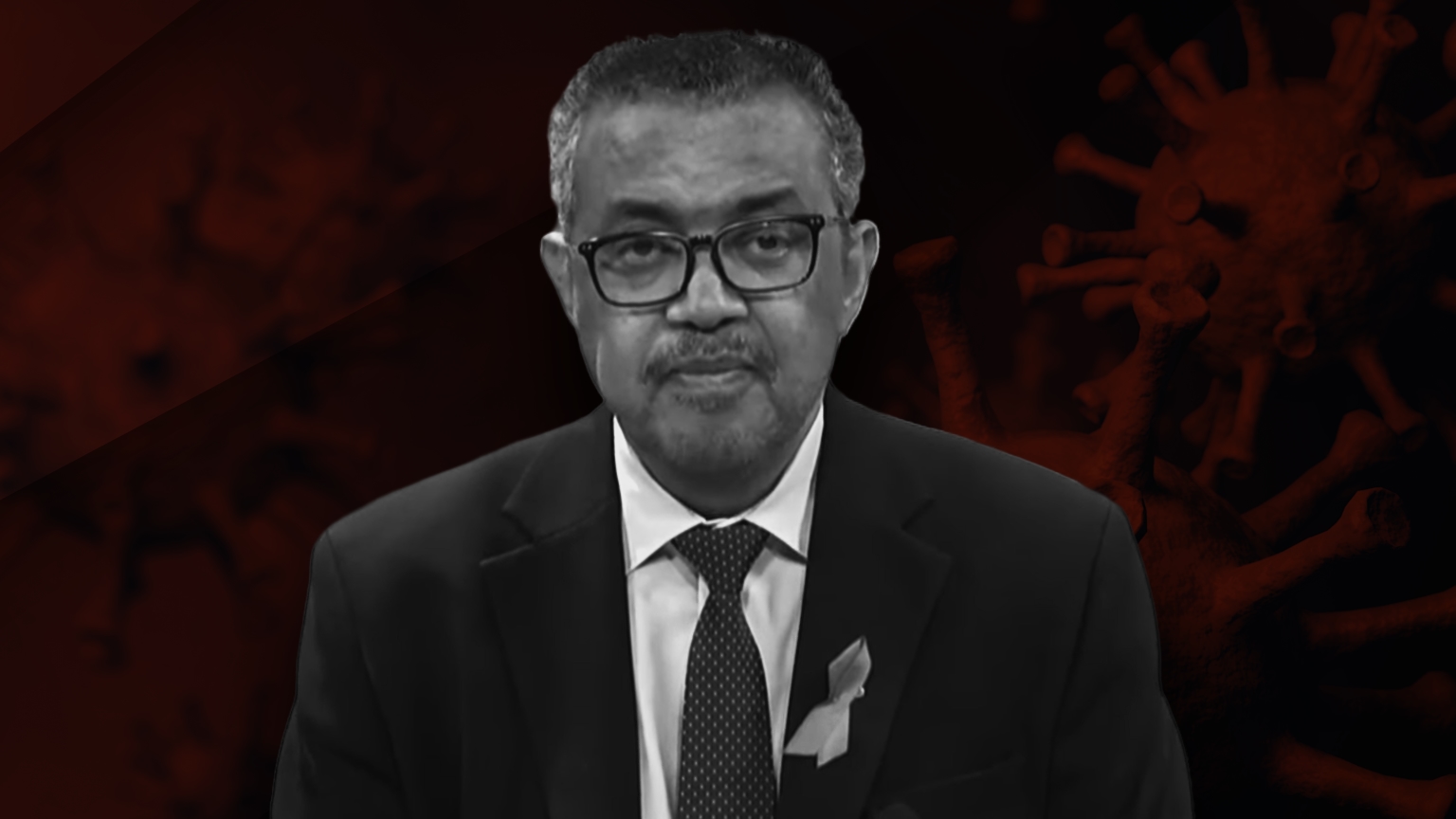
The unelected global health agency the World Health Organization (WHO) is currently meeting to consider a draft version of a controversial international pandemic treaty that will give the WHO increased surveillance powers.

The new surveillance powers are detailed in Article 10 (“Strengthening and sustaining capacities for pandemic prevention, preparedness, response and recovery of health systems”) and Article 17 (“One Health”) of the draft treaty. They include requirements for the WHO’s member states to “build and reinforce surveillance systems” across both the public and private sector and to strengthen the WHO’s “One Health surveillance systems.”

In its fact sheet on One Health, the WHO cites Covid-19 as one of the main drivers for expanding its One Health approach and notes that the COVID-19 pandemic “put a spotlight on the need for a global framework for improved surveillance and a more holistic, integrated system.”

While the draft treaty doesn’t mention contact tracing and testing, these were two of the main surveillance tools that were used to track the spread of Covid-19 during the pandemic and create a mass surveillance dragnet. Not only did this result in many citizens being forced to use surveillance apps and devices but the data was often abused by governments and third parties.

Not only does this treaty grant the WHO new surveillance powers but it also recognizes “the central role of WHO” and deems it to be “the directing and coordinating authority on international health work.”

We obtained a copy of the draft international pandemic treaty for you here.

The three-day meeting to discuss this draft treaty began on Monday (December 5) and ends Wednesday (December 7). Members of an intergovernmental negotiating body (INB) that was created by the WHO’s decision-making body, the World Health Assembly (WHA), are in attendance and have been tasked with drafting and negotiating this international pandemic treaty.

The INB is projecting that it will finalize this international pandemic treaty by May 2024 and present a final report to the seventy-seventh WHA meeting.

We obtained a copy of the INB’s current proposed timeline for you here.

If it passes, the treaty will be adopted under Article 19 of the WHO Constitution. This provision allows the WHA to impose legally binding conventions or agreements on the WHO’s 194 member states (which represent 98% of all the countries in the world) if two-thirds of the WHA vote for them.

Unlike the lawmaking process within many democratic nations, where officials are elected to implement national laws that reflect the will of the people in the country and voted out if they fail to achieve this goal, the WHO empowers a small number of global representatives, who are often unelected diplomats, to decide on international laws that are imposed on the WHO’s 194 member states.

Before these meetings took place, the WHO demonstrated its love of mass surveillance. It has publicly supported vaccine passports multiple times. The WHO also initially commended China’s response to Covid, which relies heavily on digital surveillance, and only recently changed its stance to criticize China’s zero-Covid policy.

Many powerful nations support this WHO power grab including the United States (US), United Kingdom (UK), Canada, Australia, New Zealand, and the European Council (EC) (which represents 27 European Union (EU) member states).

While some politicians in these countries have opposed this treaty, the pushback has so far failed to stop or slow down the progress of this international pandemic treaty and the May 2024 finalization is still very much in play.
If you're tired of censorship, cancel culture, and the erosion of civil liberties subscribe to Reclaim The Net.


Defend free speech and individual liberty online.

Push back against big tech and media gatekeepers.


The White House calls Twitter’s Hunter Biden censorship evidence “old news,” “distraction”READ »
December 6, 2022


SCOTUS hears case of web designer who won’t provide services to same-sex couplesREAD »
December 6, 2022


Australia launches biometric and QR app that grants access to servicesREAD »
December 6, 2022


World Health Organization meets to plot censorship of “misinformation” under international pandemic treatyREAD »
December 6, 2022


Turkey’s censorship law is harming independent media outletsREAD »
December 6, 2022


UK: Labour lawmakers want to censor “legal but harmful” speech onlineREAD »
December 6, 2022

Big Tech alternatives:


VPN Providers

Private search engines

Free speech friendly Discord alternatives

Private web browsers

Free speech friendly and privacy-focused social networks


Tuesday, December 6, 2022

The England Star Striker Reads His Bible Daily


The England star striker Bukayo Saka says reading the Bible every night gives him the confidence to go on the pitch knowing God has his back.

Speaking at a press conference shortly after England beat Senegal  3-0 at the World Cup, the 21 year old said God's presence in his life means he doesn't need to be nervous or worry about any outcome.

The Arsenal forward, who is one of the tournament's top scorers so far, was asked whether he was still reading the Bible each night in Qatar : 

"Yeah I've been continuing to do that out here. I read my Bible every night.

"For me, it's really important to have the presence of God in me all the time and it gives me more confidence to know that God's plan is perfect, so I can go on the pitch and know that God has my back. 

"But the main thing for me is just keeping my faith. You know just having faith in God so I don't need to be nervous or worry about any outcomes because obviously it's my first World Cup. You know I can start worrying about different things and different outcomes, but instead I just choose to put my faith in God."

Asked whether he has a favourite Bible verse, Bukayo Saka said he liked "all of them." 

Earlier this year, the striker spoke about how he was taught by his parents to have faith in God and learned about the importance of prayer. 

England play the World Cup holders France on Saturday in the Quarter finals of the competition.  

Premier Christian News

You can read more about Bukayo Saka's faith here : 'I hold onto God's promises' - the Christian faith of Bukayo Saka | Opinion | Premier Christianity


Dear Lord, 

We are grateful for the way in which Bukayo Saka is sharing his faith. We pray for him to continue to be faithful to you. We pray that the presence of Christian atheletes on the World Cup teams may be a witness to the world and especially the Muslim world. May those who love you let their light shine before men that they too may come to know Your love and truth. 

In Jesus' name we pray. 


Copyright © Fight for Your Faith