Thursday, April 5, 2018
Chaplain Peter Marshall's Challenge to America
“I wonder what would happen if we all agreed to read one of the Gospels until we came to a place that told us to do something, then went out to do it, and only after we had done it, began reading again? There are aspects of the Gospel that are puzzling and difficult to understand. But our problems are not centered around the things we don’t understand, but rather in the things we do understand, the things we could not possibly misunderstand. Our problem is not so much that we don’t know what we should do. We know perfectly well, but we don’t want to do it.”–Peter Marshall, former chaplain of the United States Senate
Wednesday, April 4, 2018
For Israel, there’s little political cost to killing Palestinians
By Ishaan Tharoor, Washington Post, April 2, 2018
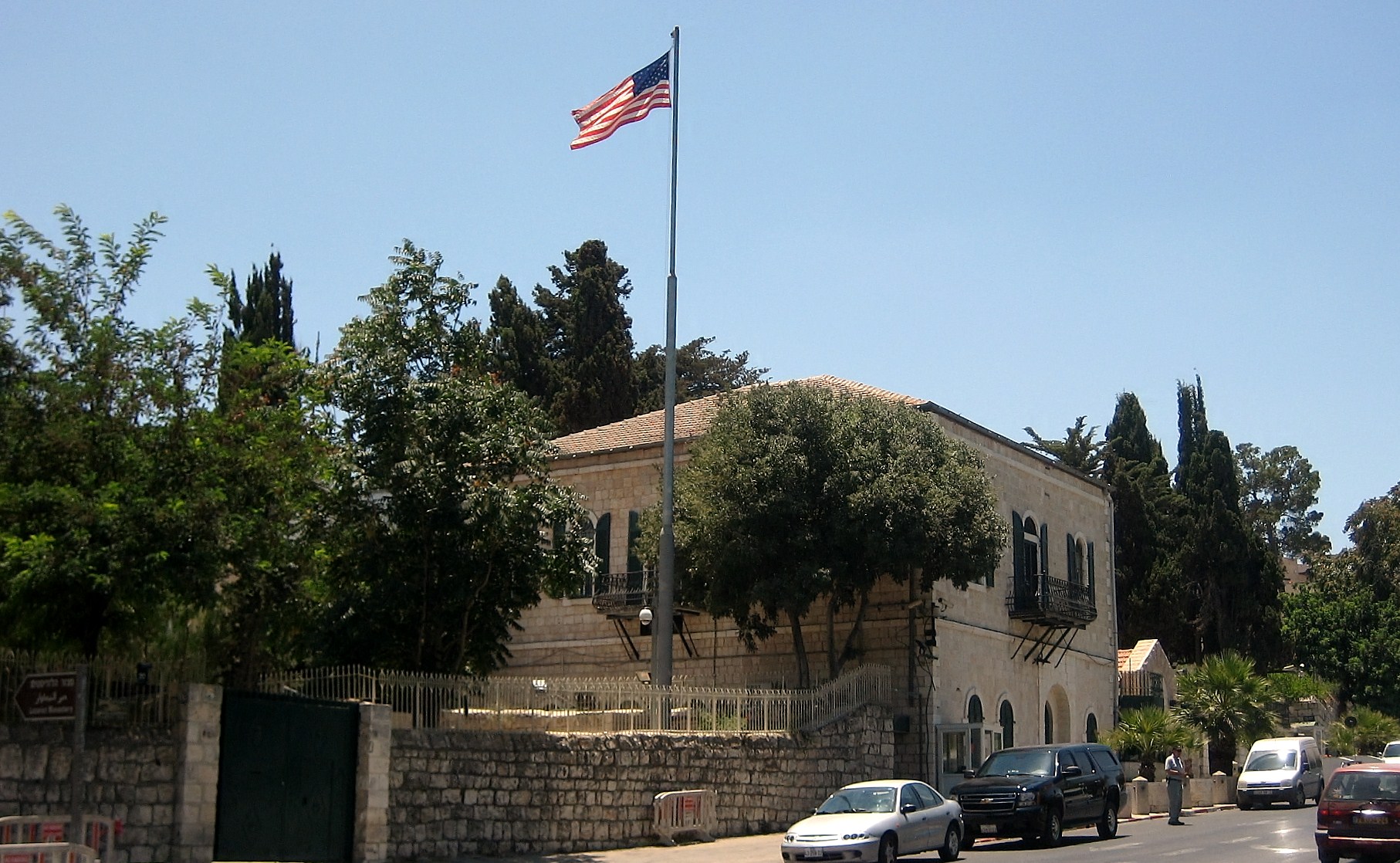
Indeed, the Trump administration has helped stoke Palestinian outrage. Across the occupied territories, Palestinian factions have called for protests every day until March 15, “the day after the anniversary of Israel’s independence in 1948, known to Palestinians as the ‘Naqba,’ or catastrophe,” as my colleagues reported. It also happens that the White House has chosen that date to open its new embassy in Jerusalem, a move that reinforced the Palestinian view that Washington can no longer be trusted as a fair broker in the long-stalled peace process.
This weekend in Gaza, Palestinians buried their dead after Israeli soldiers killed at least 15 Palestinian protesters and wounded hundreds more on Friday. About 30,000 Palestinians had gathered near the fenced barrier separating the Gaza Strip from Israel, both protesting the stifling blockade on their territory and mourning the dispossession of their ancestral lands at the hands of the Israeli state.
As in many other Palestinian protests that take place in the occupied territories, most protesters were unarmed and nonviolent. Families picnicked in the shadow of the Israeli border and flew Palestinian flags. But like so many other Palestinian protests, this one ended in tears.
“I took my grandchildren. We went to a peaceful demonstration,” Fayik Sabbagh told The Washington Post. “We went there to tell them this is our land, but what we found was different.”
Israeli authorities claimed they opened fire in response to some protesters who had encroached near the fence, burning tires and hurling stones or molotov cocktails. Footage that emerged from the chaotic scene suggested Israeli soldiers targeted unarmed protesters, including some who were running away and were shot from a distance by snipers.
One victim was 20-year-old Badr Sabbagh, Fayik’s son, who was killed just minutes after arriving to watch the protests. “He asked for a cigarette, I gave it to him, he had two puffs, and then he was shot in the head,” his brother Mohammed told The Post.
The killings marked the worst day of violence in Gaza since the 2014 war between the Islamist group Hamas and the Israeli military, in which the United Nations said at least 1,462 Palestinian civilians died. And the aftermath of the protests underscored both the desperate futility of the Palestinian struggle and the relative impunity with which Israel can snuff out Palestinian lives.
The right-wing government of Israeli Prime Minister Benjamin Netanyahu offered neither sympathy nor remorse. “Israel is acting determinedly and decisively to protect its sovereignty and the security of its citizens,” Netanyahu said. Defense Minister Avigdor Liberman rebuffed international calls for an investigation, saying that “under no circumstances” would there be an inquiry into the incident and opining that the Israeli soldiers manning the fence “deserve a commendation.”
On Saturday, the IDF even boasted that its troops had maintained total control of the situation down to the number of bullets fired. But the Israeli military soon deleted the tweet as more footage surfaced of panicked Palestinians being gunned down while trying to flee.
“These are the predictable outcomes of a manifestly illegal command: Israeli soldiers shooting live ammunition at unarmed Palestinian protesters,” said Amit Gilutz, a spokesman for B’Tselem, a Jerusalem-based leftist organization that monitors human rights abuses in the occupied territories. “What is predictable, too, is that no one–from the snipers on the ground to top officials whose policies have turned Gaza into a giant prison–is likely to be ever held accountable.”
The Israeli leadership had reason to feel comfortable in its defiance. The most vocal criticism from abroad came from Iran and Turkey; censure from either country is more likely a source of relish for Netanyahu than unease. And at the United Nations, the Trump administration blocked the Security Council from issuing a statement that called for an “independent and transparent investigation” and affirmed the Palestinians’ right to peaceful protest.
State Department spokeswoman Heather Nauert said the United States was “deeply saddened” by Friday’s events. But Jason Greenblatt, Trump’s leading envoy for Israeli and Palestinian negotiations, undercut that message by taking Israel’s side and pinning the blame on Hamas for the “hostile march.”
Indeed, the Trump administration has helped stoke Palestinian outrage. Across the occupied territories, Palestinian factions have called for protests every day until March 15, “the day after the anniversary of Israel’s independence in 1948, known to Palestinians as the ‘Naqba,’ or catastrophe,” as my colleagues reported. It also happens that the White House has chosen that date to open its new embassy in Jerusalem, a move that reinforced the Palestinian view that Washington can no longer be trusted as a fair broker in the long-stalled peace process.
Nor can the Palestinians look for much help from their neighbors. As we’ve discussed in this space, some of the region’s key powers–most notably Egypt and Saudi Arabia–have moved closer to Israel in recent years. It has become clear that while the stateless Palestinians garner tremendous sympathy from citizens across the Arab world, their plight is a tiresome nuisance for some Arab leaders, who are more keen to crack down on Islamist parties at home or confront Iranian influence abroad.
The violence Friday should also be seen as another episode in the long-running power struggle between Hamas and the Palestinian Authority, led by Mahmoud Abbas. Attempts at reconciliation between the two factions have faltered, and the two sides themselves have grown weaker. Abbas, the lost shepherd of an all-but-dead peace process, has little chance of making progress and perhaps even less credibility, while Hamas has been squeezed by both Israel and Egypt and has seen its sources of outside funding dry up.
All the while, the ongoing blockade and restrictions imposed on Gaza have made conditions more difficult for the Palestinians who live there. “I want to be shot,” one 22-year-old protester told my colleagues on Friday. “I don’t want this life.”
Israel’s heavy-handed response to the protest may now prove to be a propaganda coup for Hamas–and a warning sign of further bloodshed to come. “If there isn’t a major escalation of violence–especially with Palestinian leaders in utter desperation playing with fire and Israel immediately resorting to deadly force against unarmed demonstrators–it will be a political miracle,” commentator Hussein Ibish wrote in the National, a newspaper based in Abu Dhabi. “But the ‘holy land’ rarely delivers such miracles.”
Dennis Edwards: When Trump announced he would move the Embassy to Jerusalem the King of Jordan called for an international agreement on the city of Jerusalem. Those familiar with Bible prophecy know that many Bible scholars of the past and present believe Bible prophecy indicates that a Holy Covenant will be made by the Antichrist. Some propose the covenant may very well be some compromise between Israel and the Palestinians giving the Palestinians some form of autonomy and allowing the Jews to build a temple on the Temple Mount, while internationalizing Jerusalem as a city for all peoples and faiths. It remains to be seen if these ideas are the proper interpretation of the ancient Scriptures cited by both Jesus and Paul. One thing for sure the Israel-Palestinian conflict has been a sore spot on the body politic of the world for more than 70 years and will continue to be so unless some solution is reached. Whether the parties themselves can reach such an agreement, or whether a foreign international power must impose it's will over the situation, remains to be seen. But if our understanding of the prophecies is correct, the latter solution will be the one that comes to pass and lead us ultimately down the road to Armageddon.
Tuesday, April 3, 2018
Gaza families call for investigation into Israeli use of fatal force
By Loveday Morris and Hazem Balousha, Washington Post, March 31, 2018
BEIT LAHIA, Gaza–The morning after burying 19-year-old Abdul Fattah Abdul Nabi, his family gathered in a tent set up to receive mourners, watching and re-watching a video of the moment they say Israeli soldiers shot him in the back of the head.
The video appears to show the teenager, dressed in black, running away from Gaza’s border fence with Israel carrying a tire. Just before reaching a crowd, he crumples under gunfire.
“He had no gun, no molotov, a tire. Does that harm the Israelis, a tire?” asked his brother Mohamed Abdul Nabi, 22. “He wasn’t going toward the Israeli side. He was running away.”
The teenager was one of at least 15 people killed in the Gaza Strip by Israeli forces on Friday during what Palestinian factions billed as a peaceful “March of Return” to mark Land Day, the anniversary of the expropriation of Arab-owned land by the Israeli government in 1976. But it ended as the bloodiest day in the 140-square-mile territory since the 2014 war between Israel and Hamas, the militant group that controls Gaza.
Israeli Prime Minister Benjamin Netanyahu praised the Israeli military for guarding the country’s borders. “Israel will act firmly and decisively to protect its sovereignty and the security of its citizens,” he said in a statement Saturday.
The Israeli military has warned that it will “expand” its response if violence continues. Hamas and other factions in Gaza have vowed to keep up demonstrations, raising fears of more clashes.
Video posted to YouTube appears to show the moment Abdul Fattah Abdul Nabi was shot.
Abdul Fattah’s family is among those demanding an investigation into the Israeli response to the protest, saying videos show he posed no threat. More than 700 people were injured with live ammunition in the demonstration, according to the Palestinian Health Ministry in Gaza. Forty-nine were wounded Saturday, it said.
The United Nations on Saturday said it was “deeply concerned” and called for a transparent, independent investigation. The Israeli human rights group Adalah and the Gaza-based Al Mezan Center for Human Rights wrote to Israeli Attorney General Avichai Mandelblit to demand accountability.
In the letter, they said the use of live fire against civilians was a “blatant violation of international laws.”
The Israeli military did not immediately respond Saturday to requests to clarify the rules of engagement that were followed. In the days preceding the demonstration, the military dropped leaflets warning residents of Gaza to stay at least 300 meters from the border fence or risk being shot.
Abdul Fattah’s family said he worked in his brother’s falafel shop during the week and in a kitchen on Fridays. They said he did not belong to an armed faction.
Unlike at funeral tents for dead militants, there were no signs indicating he had an allegiance to any group.
Posters bearing his photo in the funeral tent showed him wearing a black bow tie rather than the military garb typical of fighters.
His family, though, made no effort to hide the fact that Abdul Fattah went to demonstrations and threw stones. That was no reason for him to be shot, they said.
“They were throwing stones, but the stones never even reached the fence,” said 28-year-old Alaa Abdul Nabi, another brother of the slain demonstrator. “It’s a message, to throw a stone from our land.”
Many demonstrators said they were there to protest peacefully. The family of 20-year-old Badr Sabbagh said he had just arrived to watch the demonstrations when he was shot. They rejected the Israeli army’s assertion that everyone killed was involved in violence.
“He asked for a cigarette, I gave it to him, he had two puffs, and then he was shot in the head,” said Mohammed Sabbagh, his 29-year-old brother. “He’d only been there 10 minutes.”
“I took my grandchildren. We went to a peaceful demonstration,” said his father, Fayik Sabbagh, 64. “We went there to tell them this is our land, but what we found was different.”
Palestinian photographer Mahmoud Abu Salama was taking pictures at the time and captured Abdul Fattah’s last moments. He had little hope that anyone would be held accountable, a sentiment echoed by the Israeli human rights group B’Tselem.
“These are the predictable outcomes of a manifestly illegal command: Israeli soldiers shooting live ammunition at unarmed Palestinian protesters,” said Amit Gilutz, a spokesman for the group. “What is predictable, too, is that no one–from the snipers on the ground to top officials whose policies have turned Gaza into a giant prison–is likely to be ever held accountable.”
Dennis Edwards: The sad state of today's world is seen here. The oppressor who claims the blessing of God is the victor and ruler. The oppressed dare not confront him. You would think that the oppressors would have learned from history, their own personal history, that oppression is not the solution. But they have not, nor have we. We continue to oppress the weak and the downtrodden and refuse to lead them in love to our Lord and God. When will we ever learn?
Martin Luther King
“In that dramatic scene on Calvary’s hill three men were crucified. We must never forget that all three were crucified for the same crime–the crime of extremism. Two were extremists for immorality, and thus fell below their environment. The other, Jesus Christ, was an extremist for love, truth and goodness, and thereby rose above his environment. Perhaps … the nation and the world are in dire need of creative extremists.”–Martin Luther King Jr.