by HORACE G. CAMPBELL
At the end of the Sixth BRICS
[1] Summit in Fortaleza, Brazil on July 16, 2014, the leaders of the BRICS countries announced the “Fortaleza Action Plan.” This plan is in the context of the Fortaleza Declaration,
[i]where the leaders reinforced their position that BRICS would be an international force in challenging the neo-liberal policies of the Washington Consensus. Touching on areas of major destabilization in the world – from Syria to Sudan and from Ukraine to Iraq – the leaders spelt out the need for new paths to peace and for strengthening the United Nations to resolve the outstanding questions of war and insecurity. The most daring aspect of the Fortaleza Declaration was the announcement of a new financial architecture to intervene in relation to the international tensions that have arisen since the Federal Reserve Bank of the United States announced the monetary policy of Quantitative Easing This policy allows a central bank, like the Federal Reserve System, to purchase government or other securities from the market with the goal of lowering interest rates and increasing the available money supply. The BRICS summit announced two new pillars in a new financial architecture that is to be anchored with the headquarters of the New Development Bank in Shanghai, China.
The Fortaleza Action Plan and the outcomes of this summit represented a major step in breaking the Exorbitant Privilege of the US dollar as a the dominant international currency. Along with the formal establishment of the New Development Bank (NDB), the leaders announced the launch of a Contingency Reserve Arrangement (CRA), which in 2013 was approved to receive a $100 billion fund to combat currency crises. The first president of the Bank will be from India, the inaugural Chairman of the Board of directors will come from Brazil and the inaugural chairman of the Board of Governors will be Russian. It was stressed in the Fortaleza proclamations that the BRICS Bank would be organized on the basis of equality unlike the current IMF and World Bank where the leader of the IMF is always a European and the head of the World Bank is always a U.S citizen. The proposal for the BRICS bank had been announced at the BRICS summit in New Delhi in 2012 and at the summit in Durban in 2013 the plan for the CRA was also outlined. The long term goal of the CRA will be to provide emergency cash to BRICS countries faced with short term credit crisis or balance of payments problems. Ultimately, in the context of the present currency wars, the CRA will replace the International Monetary Fund (IMF) as the provider of resources for BRICS members and other poor societies when there is balance of payment difficulties.
When the announcement was made of the bank to be capitalized with the US$ 50 billion and the CRA with US$100b, it was also announced that the leaders of BRICS were also considering the establishment of a BRICS Exchange Alliance to challenge the opaque derivatives market of the Wall Street oligarchs and an energy alliance to challenge the speculative activities of the Intercontinental Exchange (ICE). These four institutions (a) the New Development Bank (b) the Contingency Reserve Arrangement (c) The BRICS exchange alliance and (d) the BRICS Energy Alliance – when fully operational will engender a tremendous change in the direction of creating a New International Economic Order. For as we will outline, the NDB and the CRA will not simply be like other regional development banks such as the European Investment Bank or the Corporación Andina de Fomento (CAF), also known as the “Development Bank of Latin America.” The bank is emerging at a moment when the entire international financial system continues to be in a state of instability because of the recklessness of the predatory speculators of Wall Street. In the midst of this recklessness, the ruling class of the United States is stoking warfare to deflect working peoples from the crisis of global capital.
Challenging the Exorbitant Privilege
Since the establishment of the Bretton Woods Institutions (the IMF and the IBRD) in 1944 the US dollar enjoyed the position as the dominant currency in the world. Even after the devaluation of the dollar in August 1971 when the dollar was no longer backed by gold, the dollar still maintained its position as the dominant reserve currency and as the main currency for settling international transactions. After 1971, in order to escape the domination of the dollar the Europeans had come together to establish their own currency but the Euro never emerged as a serious challenge to the dollar, since it was ‘a currency without a state.’ France and Germany had colluded to create the Euro and it was the French who had coined the phrase the exorbitant privilege to describe the unipolar position of the US dollar in the world economy.
[ii]Under this privilege, more than 65 per cent of the countries in the world keep their foreign exchange reserves in the US dollar. The privilege of the dollar as the dominant reserve currency provides cheap finance to the United States so that the citizens can enjoy a very high standard of living while the poor countries of the world subsidize the military spending of the US to enable the military management of the international system.
Barry Eichengreen in the book, Exorbitant Privilege: the Rise and Fall of the dollar and the Future of the International Monetary System outlined the impact of major changes in the international economy and how the US took over the privilege as being the dominant currency after the collapse of the British Empire. We learn that the pound had slipped after the 1913 financial crisis in the West and that the US schemed for 31 years to replace the pound. This replacement was sealed in the midst of the rubble of the Second World War when the US called the Bretton Woods meeting in 1944. Just as how the pound reigned supreme in the heyday of British imperialism, so today, the dollar enjoys a number of advantages as the world reserve currency. Among the advantages is the reality that the world’s most important commodities (especially oil) are priced and traded in dollars, even if most of these commodities are not produced in the US. The fact that the world’s financial system is based on the dollar allows the Federal Reserve to export inflation to other countries, while the federal government runs a huge deficit with impunity. The reality that the dollar is not backed by real assets but by the US military had created disquiet throughout the world but the outrage intensified after the global financial crisis when the US embarked on the further devaluation of the dollar through a policy of quantitative easing.
From the start of the BRICS formation, the explicit goal was to challenge the outdated global financial and economic architecture that rewarded the imperial powers. Prior to the Fortaleza Declaration, the Russians had been most explicit that with political will, BRICS could become one of the key elements of a new system for global governance, primarily in the

economic and financial domains. This position was not only held by the BRICS countries. At the end of 2013 countries such as Brazil, Turkey, South Africa, India, Argentina, Ghana and South Korea were most vulnerable since there were capital flow adjustments resulting from QE tapering. Emerging market countries were among the most exposed to a reduction or reversal of financial flows emanating from QE given that they were the recipients of large amounts of capital during the quantitative easing period. Apart from the results of the crisis and the policies of printing dollars, the ways in which the US legal system supported the predatory practices of the banks created additional worries. In 2014 the US Supreme Court supported vulture fund banks against the Argentinian government. This ruling exacerbated the desire of many countries to seek an alternative financial arrangement that was not under the control of Wall Street and the US legal, military and financial system.
This is the context for the establishment of the BRICS Development Bank and the Contingency Reserve Arrangement.
New Development Bank
Numerous writers have drawn attention to the takeover of the US financial system by predators that have created a global Ponzi scheme with the requisite ideological stance that the large and sophisticated financial sector of the US economy represented a global good for humanity.
[iii] This military, political and ideological power of the US financial oligarchy was severely punctured in the wake of the North Atlantic financial crisis of 2008, but even after this crisis the US embarked on a new form of war, which the Brazilian finance minister, Guido Mantega, termed a currency war. This currency war took the form of competitive devaluations by the four leading convertible currencies in the world – the dollar, the Euro, the Pound sterling and the Japanese yen. Quantitative Easing (QE) was the name of the game given by the world’s largest western central Banks, namely the US Federal Reserve, the Bank of Japan, the Bank of England, and the European Central Bank.
The policies of these Central Banks were supposed to mitigate the impact of the financial crisis by influencing prices and output when short-term rates were near zero by increasing liquidity, particularly by purchasing long-term assets. The ECB and Bank of Japan focused their QE programs on direct lending to banks while the Federal Reserve and the Bank of England relied mostly on purchasing bonds. While the QE programs were initially aimed to alleviate financial market distress, the policy goals soon broadened to inflation, growth, and containing the European sovereign debt crisis. In reality, the competitive devaluations strengthened the predator class of speculators so that the very same forces that caused the financial crisis were benefiting from the crisis. Austerity measures in the capitalist countries transferred wealth to the top one per cent while the poor countries suffered from the neo-liberal policies that benefited Washington.
Because the dollar, the pound, the Euro and the yen were convertible currencies, the actions of the Central Banks had a disproportionate impact on the economies of the exploited nations – called emerging markets. Cheap finance kept interest rates low in these societies enabling the citizens of the western capitalist countries to be subsidized by the poorer nations. In the last major capitalist depression, eighty years earlier - the major capitalist countries were then colonial powers and were able to transfer the costs of the depression on to the backs and shoulders of colonized persons. In the case of Germany and Japan, these societies had embarked on aggressive militaristic actions to counter the massive crisis of the thirties.
In the aftermath of the 2008 crisis the poor countries of the world had to increase their dollar reserves, thus providing cheap finance for the U.S external deficit. Countries such as China with over $3.66 trillion in reserves and more than IS 1.3 trillion invested in US financial instruments were most vulnerable to the instability created by the exorbitant privilege of the dollar. As Chinese economic power continued to grow, an increasing number of countries have become willing to accept the RMB -renminbi as a reserve currency. By the end of 2013, the Peoples Bank of China (PBOC) had signed currency swap agreements involving a total of 2.57 trillion yuan with 23 countries and regions.
In the midst of the currency wars countries such as China had a number of concerns about the fall in the value of the American dollar. Quantitative Easing forced up the value of the yuan, which had a direct impact on Chinese export markets, and reduced the value of the more than $1.3 trillion of US treasury bonds that Beijing holds. It was the Russians, however, who were the most forceful in pressing for a new multipolar currency regime. In Latin America, the leaders of Venezuela were also very aggressive in establishing the Bolivarian Alliance of the Americas (ALBA)
The creation of the New Development Bank – a new South-South financial architecture
The creation of the BRICS bank came after there had been failed efforts to change the structure of the International Monetary Fund and the World Bank. The NDB will begin with US$50 billion, divided equally between the five countries, with an initial amount of US$10billion in cash put in over seven years and $40 billion in guarantees. The BRICS bank is scheduled to start lending in 2016. In order to be a platform for the poorer nations, the BRICS bank will open its membership to other countries other than the five BRICS members. In simple terms, the New Development Bank will challenge the role of the World Bank in the current international system. However, the nature of the challenge will be very dependent on whether the popular anti-globalization forces in BRICS will become dominant over those forces within the BRICS that support the neo-liberal economic policies of the Washington Consensus. The BRICS bank is emerging at a moment when the failures of the strategies of global capital are destroying human beings and the planet earth with citizens all over the world looking for social and political formations that can accelerate inclusive sustainable transformations.
In the field of Development funding, the World Bank lending has already been superseded by other development banks such as the China Development Bank and the Brazilian Development Bank (BNDES). In fact, the Chinese Export Import bank (EXIM) and the Brazilian Development Bank are now much bigger that the World Bank in terms of gross lending. The BNDES has branches in South Africa, the United Kingdom and Uruguay. What gives the World Bank clout is the fact that it operates as the other arm of the IMF to serve as the surveillance arm of the financial oligarchs of the West. The IMF and the World Bank serve to dominate the decisions of the Bank for International Settlement (BIS). Poor countries can be blackmailed by the BIS to come to an agreement with the IMF because without such an agreement the countries would be frozen out of international credit.
Although commentary from the western financial papers have focused on the fact that the NDB will focus on infrastructure loans, not enough attention has bene paid to the reality that along with the establishment of the NDB will be the Contingency Reserve Arrangement (CRA). China will use its vast reserves to underwrite the CRA and will contribute US $41 billion of the $100 billion that will be the basis for this currency pool. Brazil, Russia and India will each contribute US$18 billion and South Africa $5 billion to CRA’s initial capital.
While international media has been focused on the bank, the contingency currency pool is probably far more significant in so far as this CRA will be able to tide over members in financial difficulties and assist members of BRICS to escape the conditionalities and or sanctions of the IMF/Wall Street/ Treasury alliance. When the IMF was established in 1944, one of its principal tasks was to provide short term relief to countries with balance of payment problems. After the Asian financial crisis, the countries of the ASEAN states plus 3 strengthened financial cooperation and in 2010 had established the Chiang Mai Initiative with an initial foreign reserve pool of US $120 billion. In 2012, this pool was expanded to US $240 billion, but the Chiang Mai Initiative (CMI) is limited by three factors. Firstly, it is limited to the Asian region. Secondly, it is limited to currency swap arrangements but thirdly and more profoundly, this initiative remains linked to the public procurement law (ppl) of the IMF. In contrast the CRA of the BRICS formation will not succumb to the IMF and the conditionalities of the IMF.
The BRICS Exchange Alliance and Energy Alliance
The NDB and the CRA will compliment that BRICS exchange alliance which had been created in 2011 to cross-list their respective equity-based products. The exchange alliance brought together BM&FBOVESPA from Brazil, MICEX from Russia, Hong Kong Exchanges and Clearing Limited (HKEx, China), the National Stock Exchange of India (NSE) and the BSE Ltd (India) and Johannesburg Stock Exchange (JSE) from South Africa. At the first stage of this project the exchanges began the cross-listing of financial derivatives on their benchmark equity indices. This exchange alliance strikes at the heart of the massive derivatives market from which the Wall Street barons make their mega profits.
The other major innovation that is being offered by BRICS is the proposed energy alliance. Under this Energy Association, the countries of BRICS will establish a fuel reserve bank and a BRICS energy policy Institute. This energy alliance will be a direct challenge to the Intercontinental Exchange (ICE) dominated by the Western Oil companies. In the United States the Congress had established the Commodities Futures Trading Commission (CFTC), but in the era of the financialization of energy markets, the oil companies –BP, Shell, Total, Eni along the banks such as Goldman Sachs and Morgan Stanley had established the ICE. In the past three years, the Chinese oil company PetroChina overtook Exxon Mobil as the number one oil company in the world. Along with the state owned oil companies such as Gazprom (Russia) and Petrobras (Brazil) the BRICS formation already have an interest in new financial arrangements for energy to break from the control of the link between oil and the dollar. In future, the BRICS energy alliance will have the capability to bring in state owned oil companies such the National Iranian Oil Co., Petróleos de Venezuela, Sonatrach of Algeria, and Petronas (Malaysia). State-owned companies such as the ones mentioned above along with companies from Norway, Qatar, Kuwait and Saudi Arabia now control more than 75% of all crude oil production.
One indication of the future direction of the energy alliance was witnessed earlier this year when after 10 years of negotiations, Russia’s Gazprom and China’s CNPC finally signed a historic gas deal with a contract worth over US$400 billion. In the same period, Russia’s second largest financial institution,VTB signed an agreement with the Bank of China on May 20 agreeing to bypass the US dollar and pay each other in their domestic currencies. This deal was one further example of the BRICS effort to remove the dollar as the central arbiter in the transaction of energy. In a context where the United States has been promoting sanctions against Russia, the BRICS energy alliance provides another theater for the current geo-political struggles as many countries seek a new multi polar system.
New stage of International Finance
In the midst of the financial crisis of the seventies when the nonaligned countries mooted the idea of the New International Economic Order (NIEO), Henry Kissinger rubbished the idea and moved to divide the NAM by seeking to break the political links between the oil producing states and the poorer states of Africa. At that time, Henry Kissinger boasted that the poorer nations only talked and could not act. In his world, the G7 would continue to dominate the world. Since the global financial crisis, the states of the world have been seeking ways to escape the strictures of the devaluation of the US dollar and the massive printing of dollars that has been given the name of quantitative easing. In a period when the stock market of the USA reached over 17,000 points, the real economy has stagnated and via currency wars the predators of Wall Street have created havoc in the period of the tapering of Quantitative easing.
In Latin America there were discussions about the Bank of the South and the establishment of a common currency – the SUCRE. The oil producing states of the Middle East have been hoarding gold as a hedge against the inevitable fall of the value of the dollar. From Asia the ASEAN countries organized a Regional Comprehensive Economic Partnership (RCEP) and established the basis for the Chiang Mai Initiative and for closer economic cooperation after 2015. Technocrats from the Asian Development Bank have been working to refine the basis for the Asian Currency Unit. The European Union had attempted to build an alternative to the dollar, but the global financial crisis exposed the full extent to which the European banks were compromised by their alliance with the US financial institutions. More importantly, the USA maintained more than 80,000 troops in Europe to ensure the subservience of European capitalists.
Now there is another real alternative to the old Bretton Woods Institutions with the establishment of the NDB, the CRA, the BRICS Exchange alliance and the Energy Alliance.
There is no question that these four institutions will pose as a rival to the Bretton Woods Institutions. The bigger danger for the dollar is the reality that other emerging states that want to break from the conditionalities of the IMF can benefit from the NDB and CRA. The BRICS states make up more than a quarter of the Global GDP and holds less than 11 per cent of the voting rights in the IMF. The United States holds over 16.8 per cent of the voting power in the IMF and along with the countries of Britain, France, Germany and Italy control over 34 per cent of the vote of the IMF. After the crash of Wall Street in 2008 there were efforts by the BRICS group to restructure the World Bank and the IMF to increase the influence of China and other BRICS societies. Wall Street could not countenance this restructuring because the dominance of the Bretton Woods Institutions ensured the military management of the international system in so far as the poorer countries of the world had to keep their reserves in dollars and the US could finance its expenditures from the hard earned savings of other peoples. The BRICS formation will now give the poorer societies a greater say in the international financial order. In this, the BRICS societies will be sure that Washington will not take these developments sitting down. The question is whether the cohesion from among the BRICS societies will be equal to the response from Washington. There are already some commentators who have minimized the significance of the BRICS Development Bank and argued that BRICS has no other destiny than to become co-dependent upon eco-financial imperialism.
[iv] This writer believes that the future of the BRICS bank cannot be determined so flippantly but will be decided in the real world of political and ideological struggles. Progressive forces from the South will not tolerate BRICS as a replacement for western imperialism.
Horace G. Campbell, a veteran Pan Africanist is a Professor of African American Studies and Political Science at Syracuse University. He is the author of
Global NATO and the Catastrophic Failure in Libya, Monthly Review Press, 2013.
[1] BRICS: Brazil, Russia, India, China and South Africa
NOTES.
[i] http://brics6.itamaraty.gov.br/media2/press-releases/214-sixth-brics-summit-fortaleza-declaration
[ii] Barry Eichengreen, Exorbitant Privilege: The Rise and Fall of the Dollar and the Future of the International Monetary System , Oxford University Press, New York 2010 r
[iii] Charles Ferguson, Predator Nation: Corporate Criminals, Political Corruption, and the Hijacking of America, Crown Books, new York 2012
[iv] Patrick Bond, “In Fortaleza, BRICS became co-dependent upon eco-financial imperialism”

 Submitted by Tyler Durden on 12/09/2015 21:49 -0500
-1.png) EIABrent crude oil spot price.
EIABrent crude oil spot price.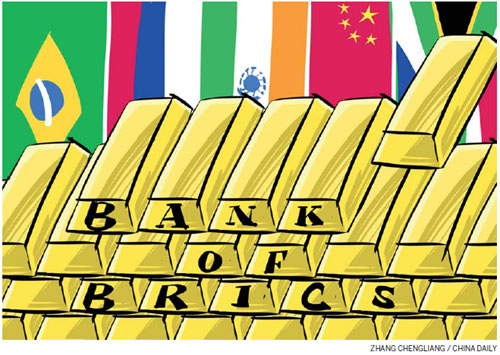 James Corbett
 Still, there is something of a revolutionary feel to the obligatory pictures of the smiling BRICS leaders coming out of this year’s summit. This year the smiles do not seem quite as forced. Perhaps they even seem a little self-assured. It may be a baby step, but after all it is a step toward a world where the poorest countries do not have to turn cap in hand to the IMF or World Bank for financial aid.
 The agreements for both the NDB and the CRA take pains to point out that they are meant as a “complement [to] existing international monetary and financial arrangements” rather than as competition to them. And the World Bank hasformally welcomed the announcement of the NDB, with World Bank President Jim Young Kim telling reporters at a recent press conference with Indian Prime Minister Modi “The only competition we have is with poverty” and “Any bank or any group of institutions that try to tackle the problem of infrastructure investment to fight poverty, we welcome.”
 Like with so many other situations, we must be careful not to fall into the trap of believing that the only alternatives that are being presented to us are the only alternatives that are possible. In this case, it seems that we are being presented with the choice between supporting a development paradigm led by the ‘bad’ globalists of the IMF/World Bank crowd that seek to control other countries through financing and the ‘good’ globalists who are selflessly looking to spur development for the good of humanity. This is just such a false choice.
 Before anyone gets too carried away with speculation about the NDB and the CRA and their likely role on the world stage, it would be good to conduct a brief reality check. There was another announcement of another alternative development bank just a few short years ago that received a similar amount of coverage and hoopla at the time that turned out to be all talk and no action. Remember the Bank of the South? Neither do most of the people who wrote about it at the time, and yet it seemed like a major development when it occurred.


