Does your faith need strengthening? Are you confused and wondering if Jesus Christ is really "The Way, the Truth, and the Life?" "Fight for Your Faith" is a blog filled with interesting and thought provoking articles to help you find the answers you are seeking. Jesus said, "Seek and ye shall find." In Jeremiah we read, "Ye shall seek Me, and find Me, when ye shall seek for Me with all your heart." These articles and videos will help you in your search for the Truth.

Sunday, January 19, 2020

Tuesday, January 31, 2017

The -other- “ban” that was quietly announced last week

By Simon Black, Sovereign Man, Cauquenes Chile, January 30, 2017

Most of the world is in an uproar right now over the travel ban that Donald Trump hastily imposed late last week on citizens of seven predominantly Muslim countries.

But there was another ban that was quietly proposed last week, and this one has far wider implications: a ban on cash.

The European Union’s primary executive authority, known as the European Commission, issued a “Road Map” last week to initiate continent-wide legislation against cash.

There are already a number of anti-cash legislative measures that have been passed in individual European member states.

In France, for example, it’s illegal to make purchases of more than 1,000 euros in cash.

And any cash deposit or withdrawal to/from a French bank account exceeding 10,000 euros within a single month must be reported to the authorities.

Italy banned cash payments above 1,000 euros back in 2011; Spain has banned cash payments in excess of 2,500 euros.

Image result for In France, for example, it’s illegal to make purchases of more than 1,000 euros in cash.And the European Central Bank announced last year that it would stop production of 500-euro notes, which will eventually phase them out altogether.

But apparently these disparate rules don’t go far enough.

According to the Commission, the presence of cash controls in some EU countries, coupled with the lack of cash controls in other EU countries, creates loopholes for criminals and terrorists.

So that’s why the European Commission is now working to standardize a ban on cash, or at least implement severe restrictions and reporting, across the entire EU.

The Commission’s roadmap indicates that forthcoming legislation, likely to be enacted next year.

This is happening. And it may serve as the perfect case study for the rest of the world.

A growing bandwagon of academics and policy makers in other countries, including the United States, UK, Australia, etc. has been calling for prohibitions against cash.

It’s always the same song: cash is a tool for criminals and terrorists.
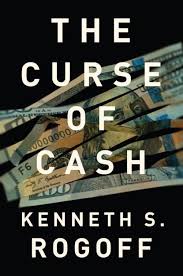
Image result for In France, for example, it’s illegal to make purchases of more than 1,000 euros in cash.Harvard economist Ken Rogoff is a leading voice in the War on Cash; his new book The Curse of Cash claims that physical currency makes the world less safe.

Rogoff further states “all that cash” is being used for “tax evasion, corruption, terrorism, the drug trade, human trafficking. . .”

Wow. Sounds pretty grim.

Apparently pulling out a $5 bill to tip your valet makes you a member of ISIS now.

Of course, this is total nonsense.
Image result for In France, for example, it’s illegal to make purchases of more than 1,000 euros in cash.A recent Gallup poll from last year shows that a healthy 24% of Americans still use cash to make all or most of their purchases, compared to the other options like debit cards, credit cards, checks, bank transfers, PayPal, etc.

And the Federal Reserve Bank of San Francisco released a ton of data late last year showing that:

- 52% of grocery purchases, along with personal care products, are made in cash

- 62% of purchases up to $10 are made in cash

- But even at much higher amounts over $100, nearly 1 in 5 purchases are still made using physical cash

This doesn’t sound life nefarious criminal activity to me.

It seems that perfectly normal, law-abiding citizens still use cash on a regular basis.

But that doesn’t seem to matter.

A bunch of university professors who have probably never been within 1,000 miles of ISIS think that a ban on cash would make us all safer from terrorists.

You probably recall the horrible Christmas attack in Berlin last month in which a Tunisian man drove a truck through a crowded pedestrian mall, killing 12 people.

Well, the attacker was found with 1,000 euros in cash.

The logic, therefore, is to ban cash.

I’m sure he was also found wearing pants. Perhaps we should ban those too.

Image result for In France, for example, it’s illegal to make purchases of more than 1,000 euros in cash.This idea that criminals and terrorists only deal in bricks of cash is a pathetic fantasy regurgitated by the serially uninformed.

I learned this first hand, years ago, when I was an intelligence officer in the Middle East: criminals and terrorists don’t need to rely on cash.

The 9/11 attackers spent months living in the United States, and they routinely used bank accounts, credit cards, and traveler’s checks to finance themselves.

Image result for In France, for example, it’s illegal to make purchases of more than 1,000 euros in cash.And both criminal organizations and terrorist networks have access to a multitude of funding options from legitimate businesses and charities, along with access to a highly developed internal system of credit.

A cash ban wouldn’t have prevented 9/11, nor would it have prevented the Berlin Christmas attack.

What cash controls do affect, however, are the financial options of law-abiding people.

These policymakers and academics acknowledge that banning cash would reduce consumers’ financial privacy. And that’s true.
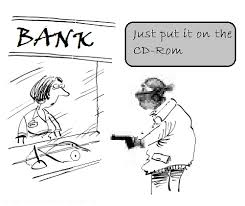
Image result for In France, for example, it’s illegal to make purchases of more than 1,000 euros in cash.But they’re totally missing the point. Cash isn’t about privacy.

It’s one of the only remaining options in a financial system that has gone totally crazy.

Especially in Europe, where interest rates are negative and many banks are on the verge of collapse, cash is a protective shelter in a storm of chaos.

Think about it: every time you make a deposit at your bank, that savings no longer belongs to you. It’s now the bank’s money. It’s their asset, not yours.

You become an unsecured creditor of the bank with nothing more than a claim on their balance sheet, beholden to all the stupidity and shenanigans that they have a history of perpetrating.

Banks never miss an opportunity to prove to the rest of the world that they do not deserve the trust that we place in them.

Image result for In France, for example, it’s illegal to make purchases of more than 1,000 euros in cash.And for now, anyone who wishes to divorce themselves from these consequences can simply withdraw a portion of their savings and hold cash.

Image result for In France, for example, it’s illegal to make purchases of more than 1,000 euros in cash.Cash means there is no middleman standing between you and your savings.

Banning it, for any reason, destroys this option and subjects every consumer to the whims of a financial system that is stacked against us.


Until tomorrow,

Simon Black

Founder, SovereignMan.com

Thursday, November 17, 2016

The War on Cash has Intensified!

By Simon Black at SovereignMan.com

November 16, 2016 - Santiago, Chile

Less than a week after India’s surprise move to scrap its highest denomination cash notes, another front in the War on Cash has intensified down under in Australia. 

Yesterday, banking giant UBS proposed that eliminating Australia’s $100 and $50 bills would be “good for the economy and good for the banks.” 

(How convenient that a bank would propose something that’s good for banks!) 

This isn’t the first time that the financial establishment has pushed for a cashless society in Australia (or anywhere else). 

In September 2015, Australian bank Westpac published its “Cash Free Report”, suggesting that the country would become cashless by 2022. 

In July 2016, Australian payments firm Tyro published an enormously self-serving blog post touting the benefits of a cashless society and saying, “it’s only a matter of time.” 

Most notably, two days ago, Citibank (yes, THAT Citibank) announced that it was going cashless at some of its Australian branches. 

The media and political establishments have chimed in as well. 

In February of this year, the Sydney Morning Herald released a series of articles, some of which were written by officials from Australia’s Department of the Treasury, suggesting that eliminating cash will “save billions”, and that “moving to a cashless society is the next step for the Australian dollar”. 

This is how it works. 

The government, media, banks, and even academia have formed a single, unified chorus to push this idea out to consumers that “cashless” is good for everyone. 

And it’s happening across the planet, from Australia to India to Europe to North America. 

They’re partially right. 

Going cashless probably will save a lot of money; paper currency is costly to transport in large quantities due to the need for security. 

It’s also accurate to suggest that going cashless will be “good for the banks.” 

As UBS pointed out yesterday, “de-monetizing” Australia’s $50 and $100 bills would force anyone holding those notes to deposit them back in the banking system. 

Bank deposits would rise as a result, and consequently, so would bank profits. 

Governments would benefit from a cashless society because all savings would be in the banking system, and they have full regulatory control over the banks. 

This means that your politicians would have more control over your savings and fewer obstacles to impose capital controls or engage in Civil Asset Forfeiture. 

Even policy wonk academics would have a rare opportunity to take their lousy theories and PhD dissertations for a test drive. 

Everyone benefits from a cashless society… except for you. 

For individuals, cash still has plenty of important advantages. 

Cash is one of the few remaining options for financial privacy that doesn’t create a permanent record of every purchase or transaction you make. 

It’s also an easy way to reduce your exposure to risks in the broader financial system. 

Think about it-- the banking system is full of institutions that never miss an opportunity to demonstrate they cannot be trusted with our money. 

Hardly a month goes by without some major banking scandal; they’re caught colluding on exchange rates, manipulating interest rates, fraudulently establishing fake accounts without customer consent (and then charging us fees on top of that). 

It’s disgraceful. 

In addition, bank safety is far from certain. 

In many banking systems across the world (especially in Europe right now), banks have precariously low levels of capital and are already suffering the effects of negative interest rates. 

Even in the United States, banks routinely employ very clever accounting tricks to conceal their true financial condition. 

There’s also the fact that, the moment you make a deposit at a bank, it’s no longer your money. It becomes the bank’s money. 

And they can do with it as they please, whether it’s freezing you out of your account or making idiotic investments with minimal reserve requirements. 

You have no say in the matter. 

As a bank depositor, you’re nothing more than an unsecured creditor of a financial institution which may or may not allow you to withdraw your own savings. 

If you don’t believe me, take a trip down to your bank and ask to withdraw $25,000. See how quickly they treat you like a criminal terrorist. 

Bottom line, conventional banking is not risk-free. And holding cash is one way to reduce that risk. 

Cash essentially eliminates the middleman between you and your savings… at least, the portion of your savings that can be easily exchanged for goods and services in the economy. 

Cash is a pitiful store of value over the long-term. Precious metals and other real assets are much better alternatives. 

But we still can’t walk into Starbucks and pay for a cup of coffee with a quarter-ounce silver coin. 

So until that day comes, cash remains an asset that you’ll want to hold. 

Just make sure you don’t go overboard. The War on Cash is very real. So if you have more than a couple of months worth of living expenses, you’re taking on unnecessary risk. 

Also, keep the denominations low. 

As the case with India shows, governments have no compunction about violating the public trust with immediate effect and without warning. 

So if you’re in the US, don’t keep a mountain of $100 bills in your safe. Keep 10s, 20s, and 50s. 

If you’re in Europe, definitely avoid the 500 and 200 euro notes, opt for 20s and 50s. 

Wednesday, June 3, 2015

How The Crackdown On Cash Quietly Undermines Our Freedom

Emmanuel Garessus, Le Temps, June 1, 2015

GENEVA–There is a war on cash. A growing number of countries are taking steps to restrict this concrete manifestation of our toils, with notable economists such as Larry Summers and Kenneth Rogoff even pleading for requiring all economic transactions to be electronic. What is their motivation, and is this an attack on freedom?

Greece, Sweden and Italy have already gone too far in limiting how cash is used. Former Prime Minister Mario Monti, who succeeded Silvio Berlusconi, reduced the authorized limit for cash transactions from 2,500 euros to 1,000 euros in 2011. The Danish government decided this year that boutiques, convenience stores and restaurants must stop accepting cash.

From a purely economic standpoint, cash doesn’t have the same value as money in a bank account. The risk of the first corresponds only to that of the central bank, while money in an account is as risky as the commercial bank that is holding it–and the loans they can issue thanks to it.

For individuals, bills and coins offer assurance. “Everyone is obligated to accept money from the central bank,” says German economic journalist Roland Tichy. “It guarantees both the forging and immediate realization of a contract at the point of sale: money for merchandise.” In the age of cyber crime, he adds, “a keyboard is riskier than a banknote.”

But those who want to limit cash transactions point to the risks of carrying it, not to mention the logistical cost of bills for banks and lost revenue for the state through black markets and tax evasion. Online businesses are naturally enthusiastic regarding a cashless society. But studies claiming to show the advantages of limiting cash transactions have been financed primarily by credit card companies, as Tichy observes on his blog.

The major reason for banning cash, favored by backers of Keynesian economics, is to support economic recovery. Former Treasury Secretary Larry Summers says excess liquidity could condemn the economy to lasting stagnation. Despite interest rates hovering near zero, investment opportunities still may not be attractive enough. If cash isn’t banned, it may be necessary to introduce negative interest rates to get people to put their money to work.

Kenneth Rogoff, former chief economist at the International Monetary Fund, suggests that banning cash could kill two birds with one stone by supporting central banks in fiscal expansion policies, while also fighting tax evasion.

That theory is debatable, both economically and politically. The idea that liquidity is the cause of stagnation is widely disputed among economists. The underlying problem is the mountain of debt. Consumer debt levels more than doubled between 1980 and 2010 in industrialized countries, and the trend isn’t slowing.

Daniel Stelter, author of Debt in the 21st Century, explains that without reduction in debt levels, the hope for significant growth won’t be realized. Unconventional strategies of central banks might permit a modest lift in GDP, but at the cost of devaluing money. Employment and investment won’t actually take off. At the same time, slower productivity growth, the aging of populations, and rising taxes all conspire to put the brakes on growth. With no solution for lowering debt, there is no way out.

“When the situation demands it, the powers of the world are able to take drastic measures,” Stelter explains in Manager magazine. The economist recalls when the government seized gold from American households in 1933. The goal was to combat the Great Depression and, more specifically, devalue the dollar. Now the question is whether authorities would go as far as to ban cash completely.

Individuals already hold relatively little of it. In Germany, the average person has just 103 euros in their wallet and 1,440 euros at home, according to the Deutsche Bundesbank. Approximately 80% of German transactions are still in cash, and the central bank reports that citizens want to keep it this way.

Government mistrust of citizens has become so great that any money not controlled or certified by the state is assumed to be the product of a reprehensible act. Cash has suddenly started to stink. It’s no longer regarded as the fruit of honest labor or compensation that citizens would like to hold onto.

In Switzerland, anyone carrying an amount equal or greater to 10,000 Swiss francs (9,670 euros) must be able to furnish justification to the authorities. And this limit risks being reduced. Still, it’s worth noting that there is a clear distinction between East and West: In Europe, suspicion can be prompted by the sale of a watch, while in Asian countries it’s not unusual to purchase a building using cash.

“The sphere of private life does not exclude fiscal honesty,” Andreas Lusser writes in his book Objections: Why Our Money Deserves Privacy.

When Russian novelist Fyodor Dostoyevsky was condemned to a penal colony in Siberia, he gave birth to the phrase, “Money is coined freedom.”

A resistance movement is in the works to reject this Orwellian nightmare, this notion of total transparency for citizens. Private life is protected by dollars and coins, and it’s worth defending.

Copyright © Fight for Your Faith