Does your faith need strengthening? Are you confused and wondering if Jesus Christ is really "The Way, the Truth, and the Life?" "Fight for Your Faith" is a blog filled with interesting and thought provoking articles to help you find the answers you are seeking. Jesus said, "Seek and ye shall find." In Jeremiah we read, "Ye shall seek Me, and find Me, when ye shall seek for Me with all your heart." These articles and videos will help you in your search for the Truth.

Friday, April 21, 2017

In Portugal, Drug Use Is Treated As A Medical Issue, Not A Crime

Lauren Frayer, NPR, April 18, 2017

Gandelina Damião, 78, is permanently hunched, carrying her sorrow. She lost three children to heroin in the 1990s.

A quarter century ago, her cobblestone lane, up a grassy hill from Lisbon’s Tagus River, was littered with syringes. She recalls having to search for her teenagers in graffitied stone buildings nearby, where they would shoot up.

“It was a huge blow,” Damião says, pointing to framed photos on her wall of Paulo, Miguel and Liliana. “I was a good mother. I never gave them money for drugs. But I couldn’t save them.”

For much of the 20th century, Portugal was a closed, Catholic society, with a military dictator and no drug education. In the early 1970s, young Portuguese men were drafted to fight wars in the country’s African colonies, where many were exposed to drugs for the first time. Some came home addicted.

In 1974, there was a revolution–and an explosion of freedom.

“It was a little bit like the Americans in Vietnam. Whiskey was cheaper than water, and cannabis was easy to access. So people came home from war with some [drug] habits,” says João Goulão, Portugal’s drug czar. “Suddenly everything was different [after the revolution]. Freedom! And drugs were something that came with that freedom. But we were completely naive.”

By the 1990s, 1 percent of Portugal’s population was hooked on heroin. It was one of the worst drug epidemics in the world, and it prompted Portugal’s government to take a novel approach: It decriminalized all drugs. Starting in 2001, possession or use of any drug–even heroin–has been treated as a health issue, not a crime.

Goulão, who had worked as a family physician in his 20s, at the height of the crisis, says there was very little opposition to the policy change.

“Every family had its own drug addict. It was so, so present in everyday life, that it turned public opinion,” Goulão says. “We are dealing with a chronic relapsing disease, and this is a disease like any other. I do not put a diabetic in jail, for instance.”

Under the 2001 decriminalization law, authored by Goulão, drug dealers are still sent to prison. But anyone caught with less than a 10-day supply of any drug–including heroin–gets mandatory medical treatment. No judge, no courtroom, no jail.

Instead they end up in a sparsely furnished, discreet, unmarked office in downtown Lisbon, for counselling with government sociologists, who decide whether to refer them to drug treatment centers.

“It’s cheaper to treat people than to incarcerate them,” says sociologist Nuno Cabaz. “If I come across someone who wants my help, I’m in a much better position to provide it than a judge would ever be. Simple as that.”

Cabaz’s team of 10 counselors handles all of Lisbon’s roughly 2,500 drug cases a year. It may sound like a lot, but it’s actually a 75 percent drop from the 1990s. Portugal’s drug-induced death rate has plummeted to five times lower than the European Union average.

Along a row of abandoned buildings in northern Lisbon, field psychologists took NPR to meet some of Portugal’s remaining drug users. The hillside is littered with needles, and bursting with wildflowers. The sky rumbles with airliners landing at the international airport nearby.

There’s a philosophy book on a cement stoop next to a middle-aged man who’s smoking crack cocaine. He gives his name as Rui, and says the stigma against addicts has eased since decriminalization.

“Now, not so much. It’s less, because the methadone is coming, and people are treating this problem,” he says. “They see the drugs with another perspective.”

Every day, a government van pulls up and gives him a dose of methadone, an opioid that helps wean people off of heroin. It’s a step toward harm-reduction. He still does cocaine, but no longer shoots up.

Drug-related HIV infections in Portugal have dropped 95 percent.

Drug workers hand out packets with clean needles and condoms, and listen to another addict, Antonio, describe his anxiety.

“If the drugs hurt too much my body, I escape a little, and then I come back again,” he says. “But it’s a world I cannot escape! If I turn there, it’s there–it’s everywhere. I cannot escape.”

For every person in Portugal who cannot escape addiction, there’s daily methadone, counseling and free treatment. A generation ago, these addicts were put in jail. Now they’re on the street.

But polls show the Portuguese–having lived through the ravages of a heroin epidemic–overwhelmingly support this policy.
Sunday, February 16, 2014

100 Americans die of drug overdoses each day

By Harold Pollack, Washington Post, February 7, 2014

By now, virtually everyone has heard that actor Philip Seymour Hoffman died last Sunday of an apparent heroin overdose. What fewer people know is that, on the same day, roughly 100 other Americans also likely died from drug overdoses—statistically speaking.

The rise of fatal overdoses over the last 15 years is startling. In 2010, according to the Centers for Disease Control and Prevention, there were 38,329 fatal drug overdoses in the United States, more than double the 16,849 fatal overdoses observed in 1999.

Overdosing is now the leading cause of accidental death in the United States, accounting for more deaths than traffic fatalities or gun homicides and suicides. Fatal overdoses from opiate medications such as oxycodone, hydrocodone, and methadone have quadrupled since 1999, accounting for an estimated 16,651 deaths in 2010.

Monday, February 3, 2014

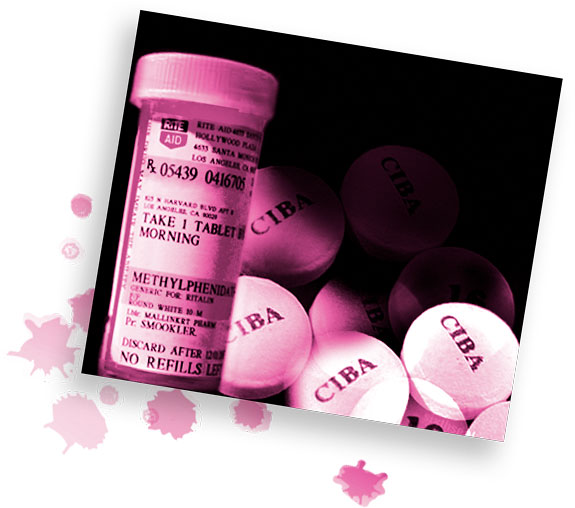
WHAT IS RITALIN?


Ritalin is the common name for methylphenidate, classified by the Drug Enforcement Administration as a Schedule II narcotic—the same classification as cocaine, morphine and amphetamines.1 It is abused by teens for its stimulant effects.

Even when Ritalin is used as a prescription drug, it may have severe effects including nervousness, insomnia, anorexia, loss of appetite, pulse changes, heart problems and weight loss. The manufacturer says it is a drug of dependency.

In June 2005, the US Food and Drug Administration issued a series of public health advisories warning that Ritalin and drugs like it may cause visual hallucinations, suicidal thoughts and psychotic behavior, as well as aggression or violent behavior.

One writer put it this way: “Parents are never told: ‘Oh, by the way, once in a while a child dies simply by taking their prescribed medication.’ Or ‘By the way, children on stimulant medications have twice the future rate of drug abuse.’ Or ‘By the way, one third of all children on these medications develop symptoms of obsessive-compulsive behavior within the first year.’”
1.amphetamine: a powerful central nervous system (brain and spinal cord) stimulant, often called “speed.”


STREET NAMES

RITALIN:


Diet Coke


Kiddie Cocaine


Kiddie Coke


Poor man’s cocaine


R-ball

Friday, October 4, 2013

We Destroyed Afghanistan: Americans Can't Remember, Afghans Will Never Forget

By Tom Engelhardt, TomDispatch.com, October 1, 2013

The Afghan War is officially winding down. American casualties, generally from towns and suburbs you’ve never heard of unless you were born there, are still coming in. Though far fewer American troops are in the field with Afghan forces, devastating “insider attacks” in which a soldier or policeman turns his gun on his American allies, trainers, or mentors still periodically occur. Civilian casualties continue to rise. “Surgically precise” U.S. air and drone strikes still mysteriously kill Afghan civilians. And as U.S. combat troops withdraw, Afghan-on-Afghan fighting is actually increasing, with the U.S.-trained army taking almost Vietnam-level, possibly unsustainable casualties (100 or more dead a week), while the police are similarly hit hard.

Meanwhile, as TomDispatch regular Ann Jones points out, our second longest war has already played Houdini, doing a remarkable disappearing job in “the homeland.” Almost 12 years after it began, no one here, it seems, is considering how to assess American “success” on that distant battlefield. But were we to do so, what possible gauge might we use? Here’s a suggestion: how about opium production? In 1979, the year America’s first Afghan war (against the Soviets) began, that country was producing just 250 tons of opium; by the early years of the post-9/11 American occupation of the country, that figure had hit 3,400 tons. Between 2006 and the present, it’s ranged from a 2007 high of 8,200 tons to a low of just under 5,000 tons. Officials of Russia’s Federal Drug Control Service now claim that 40,000 tons of illicit opiates have been stockpiled in Afghanistan, mostly to be marketed abroad. As of 2012, it was the world’s leading supplier of opium, with 74% of the global market, a figure that was expected to hit 90% as U.S. combat troops leave (and foreign aid flees). In other words, success in an endless war in that country has meant creating the world’s first true narco-state. It’s a record to consider. Not for nothing, it seems, were all those billions of dollars expended, not without accomplishments do we leave (if we are actually leaving).

Monday, July 23, 2012

Portugal Decriminalized All Drugs Eleven Years Ago And The Results Are Staggering!


Samuel Blackstone, Business Insider, Jul. 17, 2012

On July 1st, 2001, Portugal decriminalized every imaginable drug, from marijuana, to cocaine, to heroin. Some thought Lisbon would become a drug tourist haven, others predicted usage rates among youths to surge.

Eleven years later, it turns out they were both wrong.

Over a decade has passed since Portugal changed its philosophy from labeling drug users as criminals to labeling them as people affected by a disease. This time lapse has allowed statistics to develop and in time, has made Portugal an example to follow.

First, some clarification.

Portugal’s move to decriminalize does not mean people can carry around, use, and sell drugs free from police interference. That would be legalization. Rather, all drugs are “decriminalized,” meaning drug possession, distribution, and use is still illegal. While distribution and trafficking is still a criminal offense, possession and use is moved out of criminal courts and into a special court where each offender’s unique situation is judged by legal experts, psychologists, and social workers. Treatment and further action is decided in these courts, where addicts and drug use is treated as a public health service rather than referring it to the justice system (like the U.S.), reports Fox News.

The resulting effect: a drastic reduction in addicts, with Portuguese officials and reports highlighting that this number, at 100,000 before the new policy was enacted, has been halved in the following ten years. Portugal’s drug usage rates are now among the lowest of EU member states, according to the same report.

One more outcome: a lot less sick people. Drug related diseases including STDs and overdoses have been reduced even more than usage rates, which experts believe is the result of the government offering treatment with no threat of legal ramifications to addicts.

While this policy is by no means news, the statistics and figures, which take years to develop and subsequently depict the effects of the change, seem to be worth noting. In a country like America, which may take the philosophy of criminalization a bit far (more than half of America’s federal inmates are in prison on drug convictions), other alternatives must, and to a small degree, are being discussed.

For policymakers or people simply interested in this topic, cases like Portugal are a great place to start.

Copyright © Fight for Your Faith