Does your faith need strengthening? Are you confused and wondering if Jesus Christ is really "The Way, the Truth, and the Life?" "Fight for Your Faith" is a blog filled with interesting and thought provoking articles to help you find the answers you are seeking. Jesus said, "Seek and ye shall find." In Jeremiah we read, "Ye shall seek Me, and find Me, when ye shall seek for Me with all your heart." These articles and videos will help you in your search for the Truth.

Thursday, January 11, 2018

Death, Be Not Proud!


Holy Sonnet 10
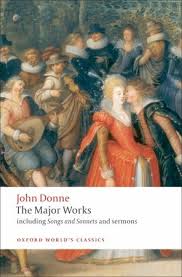
BY JOHN DONNE (1572-1631) 
Death, be not proud, though some have called thee 
Mighty and dreadful, for thou art not so; 
For those whom thou think'st thou dost overthrow 
Die not, poor Death, nor yet canst thou kill me. 
From rest and sleep, which but thy pictures be, 
Much pleasure; then from thee much more must flow, 
And soonest our best men with thee do go, 
Rest of their bones, and soul's delivery. 
Thou art slave to fate, chance, kings, and desperate men, 
And dost with poison, war, and sickness dwell, 
And poppy or charms can make us sleep as well 
And better than thy stroke; why swell'st thou then? 
One short sleep past, we wake eternally 
And death shall be no more; Death, thou shalt die. 

1 Corinthians 15:26: "The last enemy that shall be destroyed is death".
Revelation 21:4: "And God shall wipe away all tears from their eyes; and there shall be no more death, neither sorrow, nor crying, neither shall there be any more pain: for the former things are passed away."

Wednesday, January 10, 2018

Tapes Reveal Egyptian Leaders’ Tacit Acceptance of Jerusalem Move

By David D. Kirkpatrick, NY Times, Jan. 6, 2018

As President Trump moved last month to recognize Jerusalem as the capital of Israel, an Egyptian intelligence officer quietly placed phone calls to the hosts of several influential talk shows in Egypt.

“Like all our Arab brothers,” Egypt would denounce the decision in public, the officer, Capt. Ashraf al-Kholi, told the hosts.

But strife with Israel was not in Egypt’s national interest, Captain Kholi said. He told the hosts that instead of condemning the decision, they should persuade their viewers to accept it. Palestinians, he suggested, should content themselves with the dreary West Bank town that currently houses the Palestinian Authority, Ramallah.

“How is Jerusalem different from Ramallah, really?” Captain Kholi asked repeatedly in four audio recordings of his telephone calls obtained by The New York Times.

“Exactly that,” agreed one host, Azmi Megahed, who confirmed the authenticity of the recording.

For decades, powerful Arab states like Egypt and Saudi Arabia have publicly criticized Israel’s treatment of the Palestinians, while privately acquiescing to Israel’s continued occupation of territory the Palestinians claim as their homeland.

But now a de facto alliance against shared foes such as Iran, the Muslim Brotherhood, Islamic State militants and the Arab Spring uprisings is drawing the Arab leaders into an ever-closer collaboration with their one-time nemesis, Israel–producing especially stark juxtapositions between their posturing in public and private.

Mr. Trump’s decision broke with a central premise of 50 years of American-sponsored peace talks, defied decades of Arab demands that East Jerusalem be the capital of a Palestinian state, and stoked fears of a violent backlash across the Middle East.

Arab governments, mindful of the popular sympathy for the Palestinian cause, rushed to publicly condemn it.

Egyptian state media reported that President Abdel Fattah el-Sisi had personally protested to Mr. Trump. Egyptian religious leaders close to the government refused to meet with Vice President Mike Pence, and Egypt submitted a United Nations Security Council resolution demanding a reversal of Mr. Trump’s decision. (The United States vetoed the resolution, although the General Assembly adopted a similar one, over American objections, days later.)

King Salman of Saudi Arabia, arguably the most influential Arab state, also publicly denounced Mr. Trump’s decision.

At the same time, though, the kingdom had already quietly signaled its acquiescence or even tacit approval of the Israeli claim to Jerusalem. Days before Mr. Trump’s announcement, the Saudi crown prince, Mohammed bin Salman, privately urged the Palestinian president, Mahmoud Abbas, to accept a radically curtailed vision of statehood without a capital in East Jerusalem, according to Palestinian, Arab and European officials who have heard Mr. Abbas’s version of events.

Saudi Arabia publicly disputed those reports.
Image result for Captain Kholi’s egyptian
From left to right: Mofid Fawzy, Saeed Hassaseen, Yousra, Azmi Megahed (MEE montage)
http://www.middleeasteye.net/news/egypt-yousra-palestine-israel-jerusalem-1450837488
The hosts Captain Kholi called all heeded his advice, and most other voices in the state-owned and pro-government news media across the Arab world were also strikingly muted, even unemotional, about the status of Jerusalem. Such a response would have been all but unthinkable even a decade ago, much less during the period between 1948 and 1973, when Egypt and its Arab allies fought three wars against Israel.

Shibley Telhami, a scholar of the region at the University of Maryland and the Brookings Institution, called the Arab states’ acceptance of the decision “transformational.”

“I don’t think it would have happened a decade ago, because Arab leaders would have made clear they wouldn’t live with it,” he said. Instead, he said, preoccupied by concerns about their own stability, the Arab leaders signaled that–while they may not like the decision–they “will find a way to work with it,” and “with a White House that is prepared to break with what had been taboos in American foreign policy.”

Two spokesmen for the Egyptian government did not respond to requests for comment for this article. Captain Kholi could not be reached.

Television talk shows play a formative role in shaping public debate in Egypt, and Egyptian intelligence services often brief the presenters of the programs about messages to convey to the public. The hosts typically prefer to characterize the conversations as journalists talking to sources.

In addition to the call with Mr. Megahed, three other audio recordings of strikingly similar telephone conversations with the same intelligence agent, Captain Kholi, were all provided to The Times by an intermediary supportive of the Palestinian cause and opposed to President Sisi. The origin of the recordings could not be determined.

The recordings all appear to match public recordings of their voices, and Captain Kholi’s talking points in each of the calls follow the same lines as his conversation with Mr. Megahed.

“I was just calling to tell you what our public stance is, so if you go on TV or speak in an interview, I am telling you what is the stance of Egypt’s national security apparatus and what it stands to benefit from in this matter of announcing Jerusalem to be the capital of Israel, O.K.?” Captain Kholi began one conversation, with Mr. Hassaseen.

“Give me orders, sir,” Mr. Hassaseen replied, according to the recording. “I am at your command.”

“We, like all our Arab brothers, are denouncing this matter,” Captain Kholi continued. But, he added, “After that, this thing will become a reality. Palestinians can’t resist and we don’t want to go to war. We have enough on our plate as you know.”

The Egyptian military has struggled for more than four years to try to defeat a simmering militant Islamist insurgence centered in the North Sinai, and Egyptian officials have sometimes accused Hamas, the militant Palestinian group that controls the adjacent Gaza Strip, of abetting violence against the government of Egypt.

“The point that is dangerous for us is the intifada issue,” Captain Kholi explained. “An intifada would not serve Egypt’s national security interests because an intifada would revive the Islamists and Hamas. Hamas would be reborn once more.”

“At the end of the day, later on, Jerusalem won’t be much different from Ramallah. What matters is ending the suffering of the Palestinian people,” Captain Kholi concluded. “Concessions are a must and if we reach a concession whereby Jerusalem will be–Ramallah will be the capital of Palestine, to end the war and so no one else dies, then we would go for it.”

All three recipients of his calls pledged to convey his messages, and some echoed his arguments in broadcasts. “Enough already. It got old,” Mr. Megahed told his viewers about the issue of Jerusalem.

In his conversation with Mr. Megahed, however, Captain Kholi added an extra flourish. He charged that Egypt’s regional foe Qatar and its ruler, Emir Tamim bin Hamad al Thani, were the ones guilty of collaborating with Israel.

“You also will say that Tamim and Qatar have secret ties to Israel. You know all that,” Captain Kholi told the talk show host.

“Obvious ties,” Mr. Megahed replied. “My pleasure. My pleasure. I will include it in the next episode, God willing.”

Dennis Edwards: Again we see even the Arab nations lining up with Trump's decision to make Jerusalem the capitol of Israel. Will there be a Holy Covenant to further confirm this position? Such a covenant could offer concessions to the Palestinians and the allowance for Israel to build the Third Temple. The prophecies of Daniel predict that religious sacrificial worship will begin again and then be stopped by the Antichrist. The Jewish people have not had sacrificial worship since the destroying of their holy temple by the Romans in 70 AD.

Tuesday, January 9, 2018

As a 2-State Solution Loses Steam, a 1-State Plan Gains Traction

By David M. Halbfinger, NY Times, Jan. 5, 2018

JERUSALEM–The Israeli right, emboldened by President Trump’s recognition of Jerusalem as Israel’s capital, is not the only faction arguing for a single state between the Jordan River and the Mediterranean Sea.

The Palestine Liberation Organization has also begun to ask whether that might not be such a bad idea, though it has a radically different view of what that state would look like.

As momentum ebbs for a two-state solution to the Israeli-Palestinian conflict, both sides are taking another look at the one-state idea. But that solution has long been problematic for both sides.

For the Israelis, absorbing three million West Bank Palestinians means either giving up on democracy or accepting the end of the Jewish state. The Palestinians, unwilling to live under apartheid-like conditions or military occupation, have also seen two states as their best hope.

Now, for the first time since it declared its support for a Palestinian state side-by-side with Israel in 1988, the P.L.O. is seriously debating whether to embrace fallback options, including the pursuit of a single state.

“It’s dominating the discussion,” said Mustafa Barghouti, a physician who sits on the P.L.O.’s central council, which is to take up possible changes to the national movement’s strategy later this month.

Palestinian supporters envision one state with equal rights for Palestinians and Jews. Palestinians would have proportionate political power and, given demographic trends, would before long be a majority, spelling the end of the Zionist project.

That outcome is unacceptable to the Israeli right wing, which is pressing to annex the land on the occupied West Bank where Jewish settlers have built communities while consigning Palestinians to the areas where they live now.

Israeli proponents of these ideas freely acknowledge that the Palestinian areas would be considerably less than a state, at least to start: Prime Minister Benjamin Netanyahu has even called it a “state-minus.” Eventually, they say, the Palestinians could achieve statehood in a confederation with Jordan or Egypt, as part of Israel, or perhaps even independently–but not soon.

Both sides have long officially supported the idea of a two-state solution to the conflict while accusing the other of harboring designs on the whole territory. But Mr. Trump’s Jerusalem declaration last month changed the calculus.

The Trump administration has not endorsed a one-state solution, and it is working on its own peace plan, insisting that any final agreement, including borders, be negotiated by the two sides. But last month’s decision by the president to recognize Jerusalem as Israel’s capital, in defiance of a decades-old United States policy and international consensus and with no mention of a Palestinian claim on the city, was seen as putting his thumb on the Israeli side of the scale.

Saeb Erekat, the veteran Palestinian negotiator, said that Mr. Trump’s declaration was the death knell for the two-state solution and that Palestinians should shift their focus to “one state with equal rights.” His position has since gained traction among the Palestinian leadership.

Under that idea, the Palestinian movement would shift to a struggle for equal civil rights, including the freedoms of movement, assembly and speech, and the right to vote in national elections. “Which could mean a Palestinian could be the prime minister,” Mr. Barghouti said.

To its Palestinian supporters, the one-state idea is bitter consolation after decades of striving for statehood under the Oslo peace accords, which many believe has achieved little aside from providing cover, and buying time, for Israel to expand settlements.

“When you support the two-state solution, you’re supporting Netanyahu,” said As’ad Ghanem, a political science lecturer at the University of Haifa who has been working with a group of Israelis and Palestinians on a one-state strategy for some time. “It is time for us Palestinians to present an alternative.”

“At least 30 percent of Palestinians support one-state when no one is talking about it,” said Hamada Jaber, an organizer of a group called the One State Foundation. “If there’s at least one political party on each side that will talk about it and adapt this strategy, the support will grow.”

The idea has stronger support among the young, said Khalil Shikaki, a Palestinian pollster, particularly students and professionals who have clamored for a change in strategy since the Arab spring in 2011.

“I’m 24,” said Mariam Barghouti, a writer and activist involved in one of the one-state efforts, and a distant relation of Mr. Barghouti. “All I’ve known is Oslo and the two-state negotiation process. I’ve witnessed how it’s only gotten worse for me and my generation.”

To the Israeli right, abandoning the two-state goal is a good thing, a long-term threat averted. But the Israeli right has not fully explained how its single state overcomes the demographic conundrum. Absorbing the nearly three million Palestinians on the West Bank would either spell the end of a Jewish state or destroy Israeli democracy if Palestinians were denied equal rights. Even a slim Jewish majority would be politically unable to deny Palestinians full citizenship and rights in a single sovereign state.

“I would never give citizenship to the masses of the Arab population in Judea and Samaria,” said Yoav Kisch, a member of Parliament from Mr. Netanyahu’s party who is advancing one autonomy plan, using the biblical names for the West Bank.

Eventually, he said, what’s left of the Palestinian areas could become part of Jordan or Egypt, or become some kind of “state-minus” with limited sovereignty. In the meantime, Mr. Kisch said, he would be willing to give full Israeli citizenship to only about 30,000 West Bank Palestinians who live in areas where he wants Israel to assert sovereignty.

Such a move would be unacceptable to the Palestinians.

What these two sharply different one-state visions share is a conviction that a two-state solution is out of reach.

To be sure, the P.L.O. is not giving up entirely on a two-state solution. It is still pursuing other diplomatic avenues. On Friday, for example, Mr. Erekat called on Arab League member states to act on past commitments to cut ties with any country that recognizes Jerusalem as Israel’s capital.

And there is skepticism among both Palestinians and Israelis that Palestinian leaders like Mr. Erekat and Mahmoud Abbas, president of the Palestinian Authority, would ever truly abandon the Oslo process, to which they have devoted their careers and to which they owe their livelihoods.

If and when a more liberal Israeli government is elected, it could also revive a two-state peace process.

But the costs and political difficulty of withdrawing Israelis from the West Bank grow with every settler family that moves in.

Daniel C. Kurtzer, a Princeton professor who was ambassador to Egypt in the Clinton administration and to Israel under George W. Bush, noted that about 120,000 Palestinian workers commuted to Israel every day, the Palestinian security services provided help to Israel in protecting its own population and the Palestinian Authority’s administration relieved Israel of the occupying power’s obligation to care for refugees.

“You and I will say, ‘It’ll never happen, they’ll come to their senses,’ “ Mr. Kurtzer said. “But how long can you live with the status quo? We’re going to wake up one day and it’s going to be effectively one state. It’s like ‘Thelma and Louise.’ You’re going down the highway and life is great. But there’s a cliff.”

Dennis Edwards: The Bible tells us in the last days before the dramatic Armageddon event takes place some amazing events are going to happen.

"And the sixth angel poured out his vial upon the great river Euphrates (located in Iraq); and the water there of was dried up, that the way of the kings of the east (Iran and Pakistan?) might be prepared....For they are spirits of devils, working miracles, which go forth unto the kings of the earth and of the whole world, to gather together them to battle of that great day of God Almighty....And he gathered them together into a place called in the Hebrew tongue Armageddon."[Revelation 16:12,14,16]

One of those key events is that a Holy Covenant will be made and signed by many nations concerning the situation in the Middle East.

"And he (the Antichrist or beast) shall confirm the covenant with many for one week (7 year period)"[Daniel 9:27a]

However, 3 and 1/2 years after the signing of the Holy Covenant, the agreement will be broken. Israel will be invaded and the Abomination of Desolation will be placed in the Temple. 

"and in the midst of the week (or half way through the seven year period) he (the Antichrist) shall cause the sacrifice and the oblation to cease (no doubt the renewed sacrifice performed at a new Third Temple in Jerusalem), and for the overspreading of abominations he shall make it desolate, even until the consummation...."[Daniel 9:27b] 

In another chapter of Daniel we are given more information: Daniel writes,

"For the ships of Chittem (Cyprus, where the NATO forces have a port, which just happens to be almost directly opposite of where Russia is building a permanent naval base in Tartus, Syria.) shall come against him (the Antichrist): therefore he shall have indignation against the holy covenant (though he was its author, see verse 11:22b "He is also the prince of the covenant."): so shall he do; he shall return, and have intelligence with them that forsake the holy covenant. And arms shall stand on his part, and they shall pollute the sanctuary of strength, and shall take away the daily sacrifice, and they shall place the abomination that makes desolate."[Daniel 11:30-31] 

Concerning the "abomination of desolation" Jesus himself said,

"When ye therefore shall see the abomination of desolation, spoken by Daniel the prophet, stand in the holy place, (whosoever reads let him understand:) Then let them which be in Judea flee into the mountains:...For then shall be great tribulation, such as was since not since the beginning of the world to this time, no, nor ever shall be."[Matthew 24:15,16, 21]

The importance of the events taking place in Israel is that there are certain sign posts proclaimed by the prophets concerning the end times and Christ's second coming. We must past through these sign posts before Christ can return according to Scripture. Knowing what those sign post are helps us to understand the events taking place in the Middle East and to where they will eventually culminate. 

Here's what we are to expect:

[1] A rise of the Antichrist to power as a political/military leader and negotiator on the international scene.

[2] The signing of some sort of Holy Covenant which will give the Jewish people the possibility of renewing their religious sacrificial worship. We assume that this will take place in a restored Third Temple. We also speculate that the Holy Covenant will therefore involve the negotiation of the rebuilding of a Jewish Third Temple on or near to the present Temple Mount.

[3] The Holy Covenant will be confirmed by many nations or perhaps the United Nations. It will initially be a 7 year agreement.

[4] Because of the continual tensions and differing of opinions concerning the Middle East peace process, the covenant will be broken by its author who is none other than the Antichrist.

[5] He will stop the sacrificial worship and place the abomination that makes desolate in the Temple which marks the beginning point of the terrible period of world history known in the Bible as the Great Tribulation or Jacob's Trouble.

[6] The Great Tribulation will be a horrible period of religious persecution against all who do not conform to the Antichrist's one-world program, which includes the mark of the beast technology, possibly some sort of computer implant for identification to buy or sell. 

"And he causes all, both small and great, rich and poor, frfee and dond, to receive a mark in their right hand, or in their foreheads: And that no man might buy or sell, save he that had the mark, or the name of the beast, or the number of his name....and his number is Six hundred threescore (a score is twenty, therefore three score equals sixty) and six," or 666.[Revelation 13:16,17]

This period could very well culminate with a nuclear confrontation. At the end of the horrendous tribulation period Christ returns in the clouds to catch his followers away in the famous rapture event.

"Immediately after the tribulation of those days shall the sun be darkened, and the moon shall not give her light, and the stars shall fall from the heaven, and the powers of the heavens shall be shaken: And then shall appear the sign of the Son of man in heaven: and then shall all the tribes of the earth mourn, and they shall see the Son of man coming in the clouds of heaven with power and great glory. And he shall send his angels with a great sound of a trumpet, and they shall gather together his elect from the four winds, from one end of heaven to the other."[Matthew 24:29-31]

[7] Not long afterwards, possibly 45-75, the Battle of Armageddon takes place in Israel and ends with Christ's return to stop the warfare that is in danger of destroying all of mankind.[Revelation 19:11-21; Ezekiel 39:1-7, 17-22]

That's a short look at Bible prophecy as I see it. We are living in amazing times. That's why we have that uncertain feeling in our hearts that the world is going down the wrong road fast and furiously. A good understanding of Bible prophecy helps relieve the tension, and helps us trust in Him who is creator of Heaven and Earth, that He is in deed ultimately in control. He has told us before hand so that when these events come upon us, and they shall do some day, we will hold fast to His words and promises and be faithful witnesses unto the end just like our faithful ancestors were before us. Hold on to your horses, we could be in for the ride of our lives.

A Short Analysis of John Donne’s ‘To His Mistress Going to Bed’

A summary of Donne’s classic poem: Posted by interestingliterature

‘To His Mistress Going to Bed’ has been called the greatest verbal striptease in English verse. In this poem, John Donne (1572-1631) encourages his lover to undress for him, in one of the most deeply erotic love poems (‘lust poems’?) in the English language. How Donne captures his mounting excitement in ‘To His Mistress Going to Bed’ deserves careful analysis. We include the poem below.

To His Mistress Going to Bed

Come, Madam, come, all rest my powers defy,
Until I labour, I in labour lie.
The foe oft-times having the foe in sight,
Is tir’d with standing though he never fight.
Off with that girdle, like heaven’s Zone glistering,
But a far fairer world encompassing.
Unpin that spangled breastplate which you wear,
That th’eyes of busy fools may be stopped there.
Unlace yourself, for that harmonious chime,
Tells me from you, that now it is bed time.
Off with that happy busk, which I envy,
That still can be, and still can stand so nigh.
Your gown going off, such beauteous state reveals,
As when from flowery meads th’hill’s shadow steals.
Off with that wiry Coronet and shew
The hairy Diadem which on you doth grow:
Now off with those shoes, and then safely tread
In this love’s hallow’d temple, this soft bed.
In such white robes, heaven’s Angels used to be
Received by men; Thou Angel bringst with thee
A heaven like Mahomet’s Paradise; and though
Ill spirits walk in white, we easily know,
By this these Angels from an evil sprite,
Those set our hairs, but these our flesh upright.
Licence my roving hands, and let them go,
Before, behind, between, above, below.
O my America! my new-found-land,
My kingdom, safeliest when with one man mann’d,
My Mine of precious stones, My Empirie,
How blest am I in this discovering thee!
To enter in these bonds, is to be free;
Then where my hand is set, my seal shall be.
Full nakedness! All joys are due to thee,
As souls unbodied, bodies uncloth’d must be,
To taste whole joys. Gems which you women use
Are like Atlanta’s balls, cast in men’s views,
That when a fool’s eye lighteth on a Gem,
His earthly soul may covet theirs, not them.
Like pictures, or like books’ gay coverings made
For lay-men, are all women thus array’d;
Themselves are mystic books, which only we
(Whom their imputed grace will dignify)
Must see reveal’d. Then since that I may know;
As liberally, as to a Midwife, shew
Thy self: cast all, yea, this white linen hence,
There is no penance due to innocence.
To teach thee, I am naked first; why then
What needst thou have more covering than a man.

Perhaps the best way to proceed towards an analysis of ‘To His Mistress Going to Bed’ is not by summarising the content but by paraphrasing it. So: ‘Come, madam: all my powers defy the urge to rest, and I want to get down to it. Until we get busy together, I lie here in agony, like a woman in childbirth. When an enemy has his enemy in sight, he gets tired of standing around and yearns to engage in combat. Take that girdle off from round your waist; it’s like the bright heavens encircling the world – except that the “world” that is your body is a far more beautiful one for it to encircle. Take that glittering breastplate off too, so that nosy oglers can have their eyes feast upon what’s underneath. Remove your lace, so that I may know it’s time for us to go to bed. Take off that busk [a sort of corset], which I envy for being able to be so close to you and yet not going weak. Removing your gown is like the shadow of the hill fading from the flowery meadows to reveal their beauty. Remove your hat, to reveal the natural crown of your hair beneath. Off with those shoes, as you would when entering a sacred temple – which, in a sense, you are when you enter the “temple of love” that is a bed. Heavenly angels used to greet men wearing such white robes, and you are an angel bringing me a paradise like the one Mohammed promises. I know that evil spirits can also dress themselves in white, but we can easily tell the difference: evil spirits make the hairs stand on end, but heavenly beings like yourself make men’s … flesh [or a certain part of the flesh, wink wink] stand upright.’

In the next verse paragraph, the striptease continues: ‘All my wandering hands to touch you everywhere. You are like my America, a newly-discovered land! Safest when “manned” by one person. You are a mine of precious gems, and I am blessed for having discovered you. To allow yourself to be bonded with me is [paradoxically] to be free, so where I now place my hand, I “seal” the deal between us.’

The third verse paragraph begins ‘Full nakedness!’ Donne addresses his mistress: ‘All joys are thanks to you. For souls to float free of their bodies, those bodies must be unclothed, if we are to taste joys fully. Gems you women use are like the golden apples that distracted Atalanta [from Greek mythology] during her race against a suitor, Hippomenes. Like Hippomenes trying to throw Atalanta off course, you throw your gems in our way, so that men chase after your wealth rather than your beauty. All women are decorated like this: like pictures, or the attractive covers put on books for laymen. But women are mystic books themselves, and so we must look beyond their gaudy covers and see what lies beneath. So, because I must see you properly, reveal yourself as freely as a woman in labour would show herself to the midwife. Take off the white linen still covering your body. You won’t need to feel guilty for doing something that is, after all, so innocent.’

Donne concludes ‘To His Mistress Going to Bed’ by leading by example: ‘Look, to show you how it’s done, I’ll take off my clothes first. See? And why would you need to have more covering than a man?’

‘To His Mistress Going to Bed’, as our detailed paraphrase above has tried to capture, is a great poem of seduction. But it is more than this, and Donne weaves in a number of complex ideas into that poem that, on the face of it, simply appears to be arguing for a woman to get her kit off.

For one, Donne’s poem undoes, or at the very least develops, the usual idea of courtly love by confronting the fact that the courtly love poet, in praising the beautiful woman, ultimately wants to go to bed with her (though often he can’t and never will get the chance). Donne’s poem argues that the unattainable woman shouldn’t be unattainable: all that flattery of her looks and beauty is because the poet really wants to sleep with her. So, Donne concludes, why don’t we just do it? He also briefly introduces, and overturns, the idea of Neoplatonism (also seen elsewhere in his poetry): namely, that the body must be left behind in order to love the soul:

Full nakedness! All joys are due to thee,
As souls unbodied, bodies uncloth’d must be.

Just as the soul must, according to Neoplatonism, remove itself from the body, so the body should, Donne urges, remove itself from clothes. Similarly, Donne presents the idea of going to bed with him, not as a sin (the woman is his ‘mistress’, after all, and so they are not married) but as ‘innocence’.

Similarly, Donne’s use of imagery drawn from childbirth seeks to make sex seem natural and even virtuous, because after all, if nobody had sex, there would be no childbirth and the human race would come to an end. But, Donne being Donne, he wittily plays on the multiple meanings of labour: ‘Unless I labour, I in labour be’ is a deft play on the word’s double meaning, i.e. both work (seen as virtuous) and childbearing (also virtuous). And using such a metaphor about himself, the man, only heightens the effect. And, of course, he returns to the labour/childbirth image when he likens his mistress’ stripping for his enjoyment to a pregnant woman taking her clothes off for the midwife.

‘To His Mistress Going to Bed’ is one of Donne’s most sensual and erotic poems, and repays close analysis because of the clever use of imagery and the masterly way that Donne rhetorically overturns received attitudes to love and desire.

Monday, January 8, 2018

Friday, January 5, 2018

Trump threatens stop to Palestinian aid over Jerusalem row

BBC, 3 January 2018

The US may stop aid payments to Palestinians who are “no longer willing to talk peace”, President Trump said.

On Twitter, Mr Trump said the United States received “no appreciation or respect” in return for its aid.

He also said his controversial recognition of the contested city of Jerusalem as Israel’s capital took the hugely divisive issue “off the table” for new peace talks.

Palestinians had said the move showed the US could not be a neutral broker.

Soon after Washington’s decision was announced in December, Palestinian President Mahmoud Abbas said he would not accept any US peace plan for the Middle East.

The decision on Jerusalem was also overwhelmingly condemned at the United Nations, where 128 countries voted against Mr Trump’s fulfilment of a campaign promise.

The US president was following up earlier comments about aid payments to Pakistan, in which he said the US had received only “lies and deceit” in exchange for billions of dollars in aid.


@realDonaldTrump: It’s not only Pakistan that we pay billions of dollars to for nothing, but also many other countries, and others. As an example, we pay the Palestinians HUNDRED OF MILLIONS OF DOLLARS a year and get no appreciation or respect. They don’t even want to negotiate a long overdue…

@realDonaldTrump: …peace treaty with Israel. We have taken Jerusalem, the toughest part of the negotiation, off the table, but Israel, for that, would have had to pay more. But with the Palestinians no longer willing to talk peace, why should we make any of these massive future payments to them?

Jerusalem is one of the world’s most contested sites.

Israel claims the whole of the city as its capital. The Palestinians want East Jerusalem, occupied by Israel in the 1967 Middle East war, to be the capital of a future Palestinian state.

Mr Trump, however, decided to formally recognise Jerusalem as Israel’s capital, despite being warned it could cause unrest in the region.

He also said he would move the US embassy there from Tel Aviv, where all other nations have their consulates.

For the Palestinians, Mr Abbas said: “The United States has proven to be a dishonest mediator in the peace process.”

He also called Jerusalem the “eternal capital of the state of Palestine”.

How did the Palestinians respond to Mr Trump’s threat to cut aid?

Angrily. A Twitter feed of the governing Palestine Liberation Organisation accused Mr Trump of sabotaging their “search for peace”.


@nadplo: Palestinian rights are not for sale. By recognizing Occupied Jerusalem as Israel’s capital Donald Trump has not only violated of international law, but he has also singlehandedly destroyed the very foundations of peace and condoned Israel’s illegal annexation of the city.

@nadplo: We will not be blackmailed. President Trump has sabotaged our search for peace, freedom and justice. Now he dares to blame the Palestinians for the consequences of his own irresponsible actions!

Mr Trump’s tweets followed remarks from Nikki Haley, the US envoy to the United Nations, in which she said the US would stop contributing to the UN’s relief agency for Palestinian refugees.

The agency runs education, health, and social programmes. The United States is its largest governmental donor, handing over almost $370m (£270m) in 2016.

Speaking at a news conference, Ms Haley said: “The president has basically said that he doesn’t want to give any additional funding, or stop funding, until the Palestinians are agreeing to come back to the negotiation table.”

She said the UN’s vote to condemn Mr Trump’s Jerusalem decision was “not helpful to the situation”.

“The Palestinians now have to show their will that they want to come to the table. As of now, they’re not coming to the table but they asked for aid.

“We’re not giving the aid, we’re going to make sure that they come to the table,” she said.

The withdrawal of aid is likely to have a significant impact on the UN agency’s work, as the US contributes almost 30% of its overall funding.

In 2016, the second-largest donor, the European Union, donated less than half as much as the US.

Dennis Edwards: Again we see America and Israel becoming more and more isolated from world opinion. If we are understanding Bible prophecy correctly, this isolation of these two nations will lead us to that terrible day of Armageddon. The Book of Revelation chapters 16,17,18 and 19 in the New Testament, and Ezekiel 38 and 39, plus Daniel 11:30-45 in the Old Testament seem to be referring to the same apocalyptic events. These events culminate with the invasion of Israel during the end times. The present positions of both Israel and America are in line with what the prophets predicted. If we are understanding correctly, Israel will be invaded and at the same time or near to the same time,  the Babylonian city system will be destroyed. 

So keep your eyes and ears open. We may have some sort of "Holy Covenant" regarding Jerusalem, which could be a compromised agreement on the Palestinian issue and the state of Jerusalem. Whatever the Holy Covenant is however, it is the breaking of the covenant and the placing of the "abomination that makes desolate" in the temple that Jesus gave as a sign point to the beginning of the Great Tribulation or Jacob's Trouble. It is at the end of the Great Tribulation period and the Wrath of God that follows that the destruction of Babylonian city system takes place and the invasion of Israel. Christ's predicted return will take place during the Armageddon period to prevent mankind form destroying all of civilisation. 

In Ezekiel 38 and 39 we see Russia with its allies Turkey and Iran cooperating in Israel's invasion. These nations are presently strengthening their accords and military cooperation. We see Russia making a permanent base in Syria, not far from Israel itself. All these events are confirmations that we are moving down the road to destruction just as we sang many years ago, and just as the Bible predicts. Our turning our backs on God has brought bad results and will continue to do so. One thing is turning our backs on the religious system, the other is turning our backs on God. Most people don't seem to be able to distinguish the two and God is completely left out of their knowledge. But He doesn't have to be. He says, "Draw nigh to Me, and I will draw nigh to you." Make your resolution to draw nigh to God this year. It may be your last!

Sunday, December 31, 2017

Putin is outplaying Trump in the Middle East

By Ishaan Tharoor, Washington Post, December 12, 2017

Russian President Vladimir Putin made a surprise visit to Syria on Monday as part of a whirlwind Middle Eastern tour. Putin, who also stopped in Egypt and Turkey, met leaders, posed for photo-ops, inked a huge energy deal and, all in all, played the part of an influential international statesman. While President Trump has sparked outrage across the region, Putin played the role of sober and dependable partner.

In Cairo, Putin announced the resumption of direct Russian commercial flights to the country for the first time since a plane bombing there in 2015. Discussions with President Abdel Fattah el-Sissi also circled around the signing of a Russian contract for a $30 billion nuclear energy plant as well as a possible agreement for the Russian air force to use Egyptian bases.

In Ankara, Putin met Turkish President Recep Tayyip Erdogan for the eighth time in 2017, further proof of how dramatically relations between the two countries have improved in the year since the assassination of the Russian ambassador in Turkey and the two years since Turkish forces shot down a Russian fighter jet. Erdogan and his allies have slowly come around to accepting that Russia simply outflanked them in Syria and, in any case, are more animated by their current grievances with Washington.

And what about Syria itself? On his first visit to the country since authorizing Russia’s 2015 military intervention there, Putin met President Bashar al-Assad, declared victory over the Islamic State and announced an imminent drawdown of Russian forces. “In two years, the Russian armed forces, together with the Syrian Army have defeated the most combat-capable group of international terrorists,” Putin said in a speech at Khmeimim air base near the Syrian coastal city of Latakia. “In connection with this, I have made a decision: A significant part of the Russian military contingent in the Syrian Arab Republic is returning home, to Russia.”

There’s a healthy amount of skepticism about what that “significant part” may add up to, but the moment still presents Russia a chance to gloat over the efficacy of its engagement in Syria. Critics at the time of the intervention, including yours truly, suggested that Moscow was walking into a quagmire. Two years later, however, Putin has demonstrated both that Russia stands by its friends and that it can project power well beyond Eastern Europe.

“As America shrank from its traditional role in the Middle East, Russia expanded its own, making an ostentatious show of fighting Islamist terrorists on behalf of a reluctant Western Christendom,” wrote the Atlantic’s Julia Ioffe in a recent cover story on Putin’s strategy.

By comparison, two successive U.S. administrations have struggled to come up with a coherent Middle East policy. Commentators of various stripes lambaste the Obama administration for turning on the Arab strongmen who were traditional U.S. allies before the pro-democracy uprisings of 2011 and then for not doing enough to unseat Assad as the rebellion in Syria picked up steam.

Paradoxically, Trump–who decries a legacy of U.S. wars in the region–made a big show of launching missiles at a Syrian government airfield after the Assad regime carried out a chemical weapons attack on civilians earlier this year. Since then, however, he has shown little interest in Syria beyond executing the final stages of the Obama-era campaign against the Islamic State, which included the recent recapture of the city of Raqqa. Trump also ended U.S. covert support for Syria’s beleaguered “moderate” rebels.

Trump’s latest fracas isn’t likely to help, either. In Ankara, alongside Erdogan, Putin capitalized on disquiet over Trump’s move to recognize Jerusalem as Israel’s capital. He emphasized that Trump’s order “doesn’t help the Mideast settlement and, just the other way round, destabilizes the already difficult situation in the region.”

A Pew survey conducted this year among people in a number of countries in the region found that 64 percent see Russia as more influential in Middle Eastern affairs than compared to a decade ago. That perception may grow in the months to come, with Russia well-poised to benefit. “For many local actors, Russia’s increasing presence seems to be more appealing as a source of some balance,” wrote Turkish academic Talha Kose in the Daily Sabah, a pro-Erdogan newspaper. “The Trump administration’s erratic moves like the recent declaration of Jerusalem as the capital of Israel will only accelerate the decline of U.S. influence and pave the way for Moscow.”

According to Salem, the Russians are “not interested in a new Cold War, but they will take their opportunities” to expand their influence in the Middle East and play the part of an international power. Their efforts to do so will include exporting arms and civilian nuclear energy–as seen in the mooted deal with Egypt–and cultivating access to potentially huge natural gas deposits in the eastern Mediterranean.

Politically, as Trump enters heavy-handedly on one side of the Saudi-Iranian rivalry, Salem says the Russians will “nibble wherever they can, happy to be an effective number two player” in the Middle East in contrast to the chaotic role played by the United States.

“Moscow has a strategy, is executing it through timely and well-considered policies that have successfully strengthened its position not only with Iran but also with our allies and across the entire Middle East,” wrote Stephen Blank of the conservative American Foreign Policy Council. But, he added, that’s not the case for Washington: “U.S. involvement has degenerated into a series of spasmodic and at best tactical moves and at worst unfocused rage against notional threats even as we resolutely fail to deal with the actual threats to our position and influence.”

Is Jordan's King calling for a Holy Covenant on the Middle East?

Here's some news that came out before Christmas that I didn't have time to post.

Jordan’s King Rejects Change in Status of Jerusalem, Its Holy Sites

(Reuters) Jordan’s King Abdullah on Wednesday rejected any attempt to change the status of Jerusalem or its holy sites, and said peace would not come to the region without a resolution of the Israeli-Palestinian conflict.

In another related headline we read,

Palestine’s Abbas Says U.S. Jerusalem Decision ‘Greatest Crime’ 

(Reuters) Palestinian President Mahmoud Abbas said on Wednesday, the Trump administration’s decision to recognize Jerusalem as the capital of Israel was the “greatest crime” and a flagrant violation of international law.

And now a week later,

Tens of Thousands of Indonesians Rally Over Trump’s Jerusalem Stance

(Reuters) Tens of thousands of Muslims marched from the main mosque in Indonesia’s capital to a square in Jakarta on Sunday to protest against U.S. President Donald Trump’s decision to recognize Jerusalem as the capital of Israel.

Dennis Edwards: Again we see the Arab's reaction to Trump's decision to move the American Embassy in Israel to Jerusalem. In many posts, I have mentioned the "Peace-Pact" or "Holy Covenant" spoken of in Bible prophecy concerning the last days.  Some Bible prophecy experts believe that the Bible foretells of a Holy Covenant before the 2nd Coming of Christ. Speculation about what the Holy Covenant could involve increased when Israel became a nation in 1948. In 1967's Six-Day War Israel gained more territory, while the Palestinians became more frustrated with the world's lack of enforcing UN resolution 242. That resolution promised to form a two state solution with both Jews and Palestinians having Jerusalem as their capital.

Because of the tension over Israel's aggressive stance concerning land areas that were formally Palestinian, many have thought the Holy Covenant might involve a compromise to placate both Israel and Palestine over their differences. The importance of the  7 year Holy Covenant  confirmed by many nations, is that it is broken half way through the 7 year period. The breaking of the Covenant and the placing of the Abomination of Desolation in the Temple are the signs Jesus gave for the beginning of the Great Tribulation or sometimes called "Jacob's Trouble." If we are understanding Scripture correctly, the Antichrist is the author or promoter of the Covenant and also he who breaks it. Could Trump's decision to move the American Embassy to Jerusalem be a catalyst to a situation in which a Holy Covenant is deemed necessary and agreed upon by many nations concerned? If so, we could be living in some very exciting and yet very sobering days.

Other articles since Christmas have noted that Trump's decision to embrace Israel's desire for Jerusalem to be it's capitol has moved America away from being able to negotiate a settlement between the Jews and the Palestinians. These articles have noted that Russia is seen by the world in a better position as negotiator because of it's positive action to stop IS in Syria. The Russians are now making a more permanent military/naval base in Syria. So her presence in the Middle East will not diminish and her relationship with Turkey and Iran, two key nations in the famous future Battle of Armageddon or the battle of Ezekiel 38 & 39, continues to be strengthened. 

Friday, December 29, 2017

Unretirement

By Bruce Horovitz, Kaiser Health News, December 11, 2017

In his view, Tim Franson utterly failed at retirement.

After 20 years as a high-ranking vice president at drugmaker Eli Lilly, Franson and his wife, Chris, a successful real estate agent, thought they were quietly retiring nearly a decade ago to Bonita Springs, Fla.

For the first month or so, Franson said, he mostly slept. He wasn’t depressed, just mentally and physically exhausted.

Then, “I went crazy,” said Franson. “I’m not very good at sitting around.”

He quickly found himself back at work part time after a friend at a small pharmaceutical company asked him for strategic advice. “Things snowballed from there.”

Today, Franson, 66, consults and works about four days a week, while serving on two for-profit boards and two nonprofit boards.

Welcome to the land of the un-retired–folks who thought they were leaving the work world only to return because they sorely missed something about it, besides the money. These people in their 50s through 80s retired on pensions or savings–or both–but ultimately woke up to the fact there’s more to life than watching Florida sunsets.

This “un-retirement” trend continues to build, according to a 2017 Rand Corp. study showing that 39 percent of Americans 65 and older who are currently employed had previously retired. And more than half of those 50 and older who are not working and not searching for work said they would work if the “right opportunity came along,” the study found.

“We have a mistaken image of life, that you go to school, work for 40 years, then say goodbye to colleagues for the last time and embrace the leisure life,” said Chris Farrell, author of “Unretirement: How Baby Boomers Are Changing the Way We Think About Work, Community and the Good Life.” “That’s not turning out to be the arc of most people’s lives.”

This isn’t about older folks returning to work because they need the dough. This is about older folks returning to work because they miss the challenges, the accomplishments and, most important, the collegiality.

When retirees are asked what they miss most about pre-retirement life, the No. 1 answer is typically colleagues, said Farrell. “What’s constantly underestimated is that work is really a community. It turns out it’s much healthier and more satisfying to work for a bad boss than to sit on the couch and watch TV,” he said.

Franson gets that. Not that it didn’t make perfect sense for him to retire when he did, at age 58. Lilly offered him a year’s pay and a full pension to take early retirement. Franson had prostate cancer while at Lilly–and though the surgery was successful, he said, “that experience makes you sit back and revisit how you want to experience your remaining days.” At the time, his kids were out of college, and he didn’t have any grandkids yet.

Then, life derailed him when his wife, Chris, took ill and died within a few years. Four years ago, he accepted another consulting job in the Indianapolis area to be closer to his children and grandchildren. Franson has no plans to retire from his un-retirement anytime soon.

Laurie Caraway retired in 2013 as director of clinical data management at Bristol-Myers Squibb at age 56. She picked that age because her father had died at 56, before he had a chance to retire from private practice as a surgeon.

Her husband, Scott, a longtime American Airlines pilot, retired along with her. Scott adapted quickly and learned to be a potter. It was summer, and Laura spent the next three to four months biking, swimming and treating retirement like a vacation. Some days, she simply sat on her front porch swing.

Then, the weather changed. The cold autumn reminded Caraway that something had to change in her life. So, she started volunteering in Guilford, Conn., with a group that works to uplift academically gifted minority women from disadvantaged communities. That expanded into a part-time, paid position managing the group’s consignment shop.

Caraway was presented with an opportunity to go back–on a short-term contract–to Bristol-Myers Squibb. This encouraged her to send her résumé to Your Encore, a retiree return-to-work program co-created by Lilly, Procter & Gamble and Boeing that matches retirees with employers who need their skills. She landed more contracts to which she can always say “No, thanks” and still have time for yoga class.

“There is life after retirement,” she said. “It’s called work.”

Then, there’s Louise Klaber. She retired at age 65 from a 20-year career in organizational development–but is now working again at age 81.

In 2001, the former New Yorker thought she was living the dream when she arranged to retire to New York City with husband Ralph Walde, a college professor.

Sept. 13 was moving day into their apartment on New York’s Upper West Side. But as the horrific events of 9/11 unfurled, they found they were living in a state of shock. Within weeks, they were both signed up to do volunteer work helping prepare meals for the 9/11 site workers. Their shift: 8 p.m. to 6 a.m., chopping squash, carrots and onions. “It made us feel like we were actually doing something to help,” Klaber said.

The prep kitchen shut down shortly after Thanksgiving, and she found part-time paid work assisting people most severely affected by 9/11 find financial aid, mental health assistance or employment. She then contacted ReServe, a national nonprofit that places retired professionals with public service agencies of all sizes, budgets and missions. ReServe linked Klaber with the New York City Law Department, where she has worked part time ever since as an organization development counselor. What drives her isn’t the $10-an-hour pay but the professional camaraderie.

A former marathon runner, Klaber still runs almost daily. That, she said, is an important ingredient for staying healthy–but the work is just as important to her vitality.

When will she finally quit working?

“God only knows,” she said. “I’m having way too much fun.”

Copyright © Fight for Your Faith