Thursday, November 17, 2016
The War on Cash has Intensified!
By Simon Black at SovereignMan.com
November 16, 2016 - Santiago, Chile
Less than a week after India’s surprise move to scrap its highest denomination cash notes, another front in the War on Cash has intensified down under in Australia.
Yesterday, banking giant UBS proposed that eliminating Australia’s $100 and $50 bills would be “good for the economy and good for the banks.”
(How convenient that a bank would propose something that’s good for banks!)
This isn’t the first time that the financial establishment has pushed for a cashless society in Australia (or anywhere else).
In September 2015, Australian bank Westpac published its “Cash Free Report”, suggesting that the country would become cashless by 2022.
In July 2016, Australian payments firm Tyro published an enormously self-serving blog post touting the benefits of a cashless society and saying, “it’s only a matter of time.”
Most notably, two days ago, Citibank (yes, THAT Citibank) announced that it was going cashless at some of its Australian branches.
The media and political establishments have chimed in as well.
In February of this year, the Sydney Morning Herald released a series of articles, some of which were written by officials from Australia’s Department of the Treasury, suggesting that eliminating cash will “save billions”, and that “moving to a cashless society is the next step for the Australian dollar”.
This is how it works.
The government, media, banks, and even academia have formed a single, unified chorus to push this idea out to consumers that “cashless” is good for everyone.
And it’s happening across the planet, from Australia to India to Europe to North America.
They’re partially right.
Going cashless probably will save a lot of money; paper currency is costly to transport in large quantities due to the need for security.
It’s also accurate to suggest that going cashless will be “good for the banks.”
As UBS pointed out yesterday, “de-monetizing” Australia’s $50 and $100 bills would force anyone holding those notes to deposit them back in the banking system.
Bank deposits would rise as a result, and consequently, so would bank profits.
Governments would benefit from a cashless society because all savings would be in the banking system, and they have full regulatory control over the banks.
This means that your politicians would have more control over your savings and fewer obstacles to impose capital controls or engage in Civil Asset Forfeiture.
Even policy wonk academics would have a rare opportunity to take their lousy theories and PhD dissertations for a test drive.
Everyone benefits from a cashless society… except for you.
For individuals, cash still has plenty of important advantages.
Cash is one of the few remaining options for financial privacy that doesn’t create a permanent record of every purchase or transaction you make.
It’s also an easy way to reduce your exposure to risks in the broader financial system.
Think about it-- the banking system is full of institutions that never miss an opportunity to demonstrate they cannot be trusted with our money.
Hardly a month goes by without some major banking scandal; they’re caught colluding on exchange rates, manipulating interest rates, fraudulently establishing fake accounts without customer consent (and then charging us fees on top of that).
It’s disgraceful.
In addition, bank safety is far from certain.
In many banking systems across the world (especially in Europe right now), banks have precariously low levels of capital and are already suffering the effects of negative interest rates.
Even in the United States, banks routinely employ very clever accounting tricks to conceal their true financial condition.
There’s also the fact that, the moment you make a deposit at a bank, it’s no longer your money. It becomes the bank’s money.
And they can do with it as they please, whether it’s freezing you out of your account or making idiotic investments with minimal reserve requirements.
You have no say in the matter.
As a bank depositor, you’re nothing more than an unsecured creditor of a financial institution which may or may not allow you to withdraw your own savings.
If you don’t believe me, take a trip down to your bank and ask to withdraw $25,000. See how quickly they treat you like a criminal terrorist.
Bottom line, conventional banking is not risk-free. And holding cash is one way to reduce that risk.
Cash essentially eliminates the middleman between you and your savings… at least, the portion of your savings that can be easily exchanged for goods and services in the economy.
Cash is a pitiful store of value over the long-term. Precious metals and other real assets are much better alternatives.
But we still can’t walk into Starbucks and pay for a cup of coffee with a quarter-ounce silver coin.
So until that day comes, cash remains an asset that you’ll want to hold.
Just make sure you don’t go overboard. The War on Cash is very real. So if you have more than a couple of months worth of living expenses, you’re taking on unnecessary risk.
Also, keep the denominations low.
As the case with India shows, governments have no compunction about violating the public trust with immediate effect and without warning.
So if you’re in the US, don’t keep a mountain of $100 bills in your safe. Keep 10s, 20s, and 50s.
If you’re in Europe, definitely avoid the 500 and 200 euro notes, opt for 20s and 50s.
Genetic Heart Disease Risk Eased by Healthy Habits, Study Finds
By Gina Kolata, NY Times, Nov. 13, 2016
Is genetics destiny when it comes to heart disease?
A new analysis of data from more than 55,000 people provides an answer. It finds that by living right–by not smoking, by exercising moderately and by eating a healthy diet heavy in fruits, vegetables and grains–people can tamp down even the worst genetic risk.
“DNA is not destiny; it is not deterministic for this disease,” said Dr. Sekar Kathiresan, the director of the Center for Human Genetic Research at Massachusetts General Hospital. “You do have control over the problem, even if you have been dealt a bad genetic hand.”
The research, by Dr. Kathiresan and his colleagues, is the first attempt to use large data sets to tease apart the effects of genes and lifestyle in heart disease, researchers said. It was published on Sunday in The New England Journal of Medicine to coincide with the presentation of the results at the annual meeting of the American Heart Association.
About 365,000 people die of coronary heart disease–the most common type–annually in the United States, and 17.3 million worldwide, making it one of the biggest killers.
The investigators found that genes can double the risk of heart disease, but a good lifestyle cuts it in half. Just as important, they found, a terrible lifestyle erases about half of the benefits of good genetics.
According to Dr. Lawrence J. Appel, the director of the Welch Center for Prevention, Epidemiology and Clinical Research at Johns Hopkins Medical Institutions, you do not have to have an exemplary lifestyle to reap a big benefit. It looks as if the biggest protective effect by far came from going from a terrible lifestyle to one that was at least moderately good.
The new study shows a new way to think about genes and lifestyle, researchers say.
“It’s very important,” said Dr. David Maron, the director of preventive cardiology at Stanford, who was not involved in the new study. “If you are dealt a bad hand, there are things you can do to attenuate the risk.”
Dr. Kathiresan is already using the study’s results when he sees patients, he said. The genetic test is not available outside of research studies, he said, but he often gets an idea of who has a worrisome genetic risk when he talks to patients.
“A poor man’s substitute,” he said, “is: ‘My dad died at 45 of a heart attack. I have a strong family history.’”
He now replies, “You have it in your power to change that risk.”
Wednesday, November 16, 2016
Bill to Legalize West Bank Settlements Advances in Israel
By Isabel Kershner, NY Times, Nov. 13, 2016
JERUSALEM–An Israeli ministerial committee on Sunday approved a contentious bill that would allow for the retroactive legalization of Jewish settlement outposts built on privately owned Palestinian land in the occupied West Bank. The measure breaks a longstanding taboo, and in the view of many experts, it defies international law.
The bill requires approval by Parliament before becoming law. Prime Minister Benjamin Netanyahu opposed its advancement now, presumably to avoid international censure. The attorney general has cautioned that he will be hard pressed to defend the legislation in Israel’s Supreme Court.
Israel’s pro-settlement camp has promoted the legislation, known as the Regulation Law, with increasing urgency as a Dec. 25 deadline approaches for the court-ordered destruction of Amona, an illegal outpost of 40 families on a West Bank hilltop claimed by dozens of Palestinian landowners and their heirs.
Treading a fine line between world opinion, his conservative Likud Party and his governing coalition, Mr. Netanyahu tried to delay the vote. He said it would harm the chances of a government request pending before the Supreme Court to postpone the demolition of Amona by half a year.
“There is no one who is more concerned about settlement than us,” Mr. Netanyahu said Sunday, in a nod to his pro-settlement constituency. But, he added, “sagacity and responsibility” are needed for the benefit of the settlement project as a whole.
Husam Zomlot, an adviser to Mahmoud Abbas, the president of the Palestinian Authority, said that while all settlement was illegal, Sunday’s decision served to “reaffirm the Israeli government insistence on burying the prospects for peace.”
Israel’s expansion of settlements has outraged Palestinians and been a source of acute tension with the Obama administration, which views all settlement activity as illegitimate and an obstacle to peace. Most of the world considers the settlements in territory that Israel conquered from Jordan in the 1967 war to be a violation of international law.
Dennis Edwards: [The Bible has this to say:
Hath oppressed the poor and needy, hath spoiled by violence, hath not restored the pledge, and hath lifted up his eyes to the idols, hath committed abomination, hath given forth upon usury, and hath taken increase: shall he then live? he shall not live: he hath done all these abominations; he shall surely die; his blood shall be upon him. (Ezekiel 18:12-13)
That could be quite a condemnation of Israel's treatment of the Palestinians. Trump has said he has no problem with Israeli settlements on former Palestinian lands. The Evangelical Christians seem to think Trump's position is God's love for Israel. But maybe they have it all wrong as Israel's oppression of the Palestinians seems to run counter to God's word. If we look at the Palestinians as the poor and oppressed, how would God treat them, if He is indeed a true and righteous God?] Back to N.Y.Times article:
President Obama is considering whether to publicly lay out his own parameters for a settlement of the Israeli-Palestinian conflict before he leaves office, in a speech or in a resolution before the United Nations Security Council, a prospect Mr. Netanyahu has strongly opposed.
Instead of evicting the settlers, the Regulation Law would transfer the rights for the use of private land into Israeli hands and force the Palestinian landowners to accept compensation. While Israel’s highest legal authorities allow settlements in areas declared public land, private property rights have technically been preserved.
Naftali Bennett, a minister whose Jewish Home party promoted the bill, said Sunday’s action signified that Israel had embarked on “a historic process of normalizing the settlements in Judea and Samaria,” referring to the West Bank by its biblical name.
Critics said it represented a creeping annexation of the West Bank, with Parliament potentially imposing Israeli law in an area that the military authorities have overseen for nearly 50 years.
Tamar Zandberg, a legislator from the left-wing Meretz party, said the proposed law “says you are allowed to steal.”
Donald Trump Likely to End Aid for Rebels Fighting Syrian Government
By David E. Sanger, NY Times, Nov. 11, 2016
WASHINGTON–President-elect Donald J. Trump said Friday that he was likely to abandon the American effort to support “moderate” opposition groups in Syria who are battling the government of President Bashar al-Assad, saying “we have no idea who these people are.”
In an interview with The Wall Street Journal that dealt largely with economic issues, including his willingness to retain parts of the Affordable Care Act, he repeated a position he took often during his campaign: that the United States should focus on defeating the Islamic State, and find common ground with the Syrians and their Russian backers.
“I’ve had an opposite view of many people regarding Syria,” Mr. Trump told The Journal. “My attitude was you’re fighting Syria, Syria is fighting ISIS, and you have to get rid of ISIS. Russia is now totally aligned with Syria, and now you have Iran, which is becoming powerful, because of us, is aligned with Syria.”
His comments suggest that once Mr. Trump begins overseeing both the public support for the opposition groups, and a far larger covert effort run by the Central Intelligence Agency, he may wind down or abandon the effort. But there are in fact two wars going on simultaneously in Syria.

One is against the Islamic State, in which the United States is supporting 30,000 Syrian-Kurdish and Syrian-Arab fighters, who last weekend announced they were opening a new phase of the battle, beginning to encircle the ISIS capital in Raqqa. There are roughly 300 United States Special Operations forces on the ground assisting these militia.
The second effort is in support of rebels fighting Mr. Assad. The C.I.A. covert program is by far the largest conduit of support, providing antitank missiles to rebels fighting the government. That is the program that Mr. Trump seems most intent on ending. If the United States pursues that line, “We end up fighting Russia, fighting Syria,” Mr. Trump told The Journal.
The argument for ending the support may be bolstered by the fact that, as a matter of survival, those opposition groups have entered into battlefield alliances with the affiliate of Al Qaeda in Syria, formerly known as Al Nusra. This has had the effect of allowing Mr. Assad and Russia to argue that they are attacking Al Qaeda, and the United States should aid them in that effort. Secretary of State John Kerry acknowledged that argument during his ultimately failed effort to reach a deal for a cease-fire and an ultimate settlement.
Mr. Trump’s the-enemy-of-my-enemy-is-my-friend logic is consistent with what he said during the campaign. “I’m not saying Assad is a good man, ‘cause he’s not,” he told The New York Times in an interview in March, “but our far greater problem is not Assad, it’s ISIS.”
But it also takes a position that will gratify President Vladimir V. Putin, because it suggests that rather than pressure Russia to end its support of Mr. Assad, a Trump administration will get out of Mr. Putin’s way.
In another hint of a major change in policy, one of Mr. Trump’s primary national security advisers, Lt. General Michael T. Flynn, the retired head of the Defense Intelligence Agency, wrote in The Hill newspaper this week that the United States should extradite Fethullah Gulen who Turkey has demanded should be sent back from his exile in Pennsylvania. The Turkish government of Recep Tayyip Erdogan has blamed him for a coup attempt over the summer.
The Justice Department has not yet concluded that there is any convincing evidence that Mr. Gulen should be sent back to almost certain confinement or execution under an extradition treaty with the United States. They see the request as part of Mr. Erdogan’s effort to eliminate all opposition.
Mr. Flynn adopted many of Turkey’s arguments about Mr. Gulen, arguing that “American taxpayers are helping finance Gulen’s 160 charter schools” in the United States, and that it is more important to support Turkey than be “hoodwinked by this masked source of terror and instability nestled comfortably in our own backyard.”
Dennis Edwards: It seems if America stops attacking Assad, which had been their aim for the last years, suffering would diminish in that poor country. People are generally tired of the war in Syria and the growth of ISIS as a result. If Trump does stop American support to any opposition forces against Assad, then there exists a possibility of Syria recuperating, returning to peace, and the immigration crisis in Europe coming to an end. Keep those goals in your prayers.
US Special Forces In Libya To Fight the ISIS Problem They Created
Corbett •
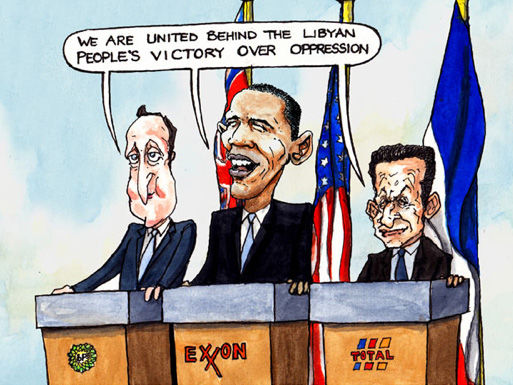
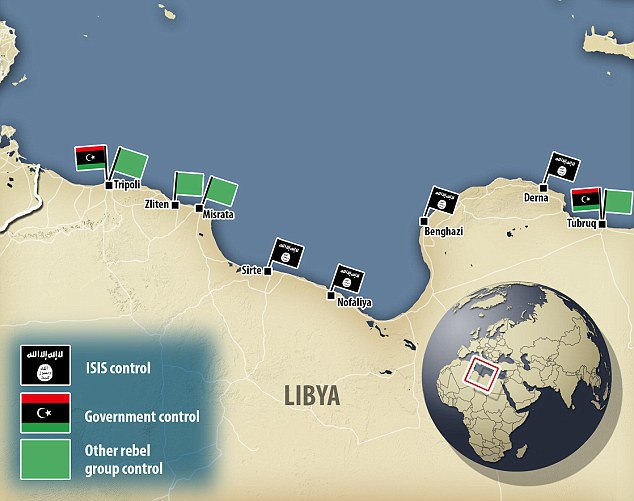
In 2011 NATO rained bombs on Libya to remove the Gaddafi government from power. Openly backing known terrorists in their push to oust Gaddafi, the NATO powers, led by Obama, Cameron and Sarkozy, ended up supporting, fostering and equipping battle-hardened jihadis that they then sent off as a proxy army to begin the destabilization of Syria. But now that proxy army is coming home to roost, with recent reports claiming as many as 6,500 Islamic State fighters operating in Libya.
So of course the US has responded to this mess in the only way it knows how: sending more troops. Well, to be more accurate, the troops have been there for half a year, but the government is just now getting around to announcing their presence…via an anonymous leak in the Washington Post, that is.
That’s right, since late last year a team of US Special Operations commandos have been stationed in Libya in an attempt to “sort through the various factions and identify the potential recipients of American support in the future.” In other words, the same US government that knowingly backed the crazy jihadis in the first place is now there to vet which groups to back in its fight against the crazy jihadis.
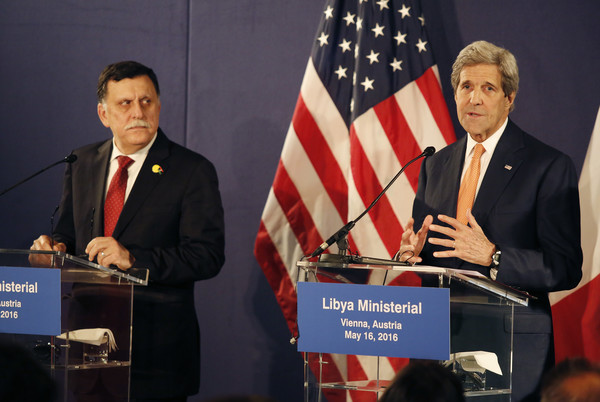
Appalled yet? Well, the worst part isn’t the special forces on the ground at the moment. It’s not even the obligatory “regional powers” conference going on in Vienna, which is likely to see thousands more troops sent to re-invade the country. Nor is it the fact that the US is now planning to break the UN’s own embargo against sending arms to Libya — as long as the Libyans double-dog swear the arms will only be used for fighting ISIS.
No, the worst part is that there is arguably no “Libya” left to save even if the NATO vultures withdrew their talons and flew back to their cave. Since the murder of Gaddafi the country has plunged into utter chaos. The “government” in Tripoli is a “government” in name only. In truth, it barely governs Tripoli, and the areas in the east are for all intents and purposes a separate country. This fundamental divide is perhaps best exemplified by the absolute insanity taking place at the country’s central bank.
You might remember that one of the very first things the NATO-backed terrorists in Libya did after the fighting broke out was to found their own central bank in Benghazi. You might also know that the battle for control of the “legitimate” central bank and its $100 billion dollars in reserves has been one of the main struggles between the many warring factions in post-Gaddafi Libya, with rebel groups having seized the Benghazi branch early last year.
That struggle has descended into a complete farce, with the central bank’s chief not having access to the bank’s funds or even its own vault. The bank, headquartered in the east of the country, is not entirely trusted by the Tripoli-based government, and for good reason: the bank has provided funds to some of the very groups that are waging war with the nominal government. So the government in Tripoli has been sending the central bank a stipend of $23.5 million a month for its operating expenses (a fraction of the $257 million the bank claims to need). The central bank’s vault contains an estimated $187 million in gold and silver, which the bank says it desperately needs. But there’s a catch: there is a five digit access code to enter the vault and the Tripoli government won’t share it with the bank’s own governor. So the bank has taken matters into its own hands by bringing in a pair of safe crackers to help break into the bank’s own vault.
This farce is illustrative of the breakdown of Libya as a whole. Any pretense that Libya cohered as a single country was shattered along with the government that was bombed off the face of the earth in 2011. That country may never exist again as anything other than the state-in-name-only that it has become in recent years.
But one thing is for certain: if Libya does survive and its people can once again find a way to live together it won’t be due to the efforts of the US Special Forces or the powers-that-shouldn’t-be and their Vienna conference or an agreement to end the arms embargo on the country. Outside interference caused the problem; it won’t help to fix it.
Dennis Edwards: The Bible does mention Libya as participating in the ultimate invasion of Israel during the Last Days in Ezekiel 38 joining in an alliance with Russia, Turkey, Iran and Ethiopia.. Libya is also mentioned in Daniel 11 which many Bible scholars believe is referencing the same invasion. So Libya well remain a country and at some future date seems to be able to participate in that final battle against Israel predicted in the Bible.
That's why it's important to know what the Bible says. It tells you the end from the beginning.
Why Do Modern Christians Rarely Talk about Rewards in Heaven?
Michael J. Kruger
RSS
found at this biblestudytools.com
Dr. Michael J. Kruger is President and Professor of New Testament at Reformed Theological Seminary, Charlotte, NC. In addition, he is an ordained minister in the Presby.
When is the last time you heard a sermon that suggested that a motive for our obedience should be the rewards we receive in heaven? I imagine for most of us it has been a long time, maybe even never. Whenever a sermon (or book) provides a motive for obedience, it is almost always thankfulness for what Christ has done. And certainly that is a wonderful and foundational motivation. But is it the only motivation?
The New Testament writings suggest it is not. For those who faithfully endure persecution, Jesus makes it clear, “Rejoice in that day, and leap for joy, for behold, your reward is great in heaven” (Luke 6:23). Paul states it plainly, “But each will receive his own reward according to his own labor” (1 Corinthians 3:8). The author of Hebrews even reminds us that Moses was motivated by rewards, “He regarded disgrace for the sake of Christ as of greater value than the treasures of Egypt, because he was looking ahead to his reward” (Hebrews 11:26).
RSS
found at this biblestudytools.com
Dr. Michael J. Kruger is President and Professor of New Testament at Reformed Theological Seminary, Charlotte, NC. In addition, he is an ordained minister in the Presby.
When is the last time you heard a sermon that suggested that a motive for our obedience should be the rewards we receive in heaven? I imagine for most of us it has been a long time, maybe even never. Whenever a sermon (or book) provides a motive for obedience, it is almost always thankfulness for what Christ has done. And certainly that is a wonderful and foundational motivation. But is it the only motivation?
The New Testament writings suggest it is not. For those who faithfully endure persecution, Jesus makes it clear, “Rejoice in that day, and leap for joy, for behold, your reward is great in heaven” (Luke 6:23). Paul states it plainly, “But each will receive his own reward according to his own labor” (1 Corinthians 3:8). The author of Hebrews even reminds us that Moses was motivated by rewards, “He regarded disgrace for the sake of Christ as of greater value than the treasures of Egypt, because he was looking ahead to his reward” (Hebrews 11:26).

But if rewards are clearly presented as a motivation in the Christian life, why don’t we hear more about rewards in our modern pulpits? I am sure there are many answers to that question, but let me suggest one: we have been convinced that our obedience doesn’t matter. While we are rightly told that only Christ’s obedience can secure our justification and that he has kept the law perfectly for us, our own obedience receives far less attention in the pulpit. Justification is center stage, and sanctification is peripheral.
No doubt, the downplaying of Christian obedience is borne out of good motives—some think Christ is glorified the most when we disparage our own obedience. Our good works are just “filthy rags” (Isaiah 64:6), we are reminded.

No doubt, the downplaying of Christian obedience is borne out of good motives—some think Christ is glorified the most when we disparage our own obedience. Our good works are just “filthy rags” (Isaiah 64:6), we are reminded.
But, this whole line of thought misses the distinction between an unbeliever’s attempts at law-keeping and that of regenerated believer. Granted, neither can merit salvation or justification. Both fall woefully short of God’s perfect standards. But that does not mean that the believer’s obedience doesn’t matter. God can still be pleased with it, even though it is imperfect. Consider John Piper’s comments on this point:
It is terribly confusing when people say that the only righteousness that has any value is the imputed righteousness of Christ. I agree that justification is not grounded on any of our righteousness, but only the righteousness of Christ imputed to us. But sometimes people are careless and speak disparagingly of all human righteousness, as if there were no such thing that pleased God. They often cite Isaiah 64:6 which says our righteousness is as filthy rags…[But] when my sons do what I tell them to do—I do not call their obedience “filthy rags” even if it is not perfect. Neither does God. All the more because he himself is “working in us that which is pleasing in his sight” (Hebrews 13:21). He does not call his own, Spirit-wrought fruit, “rags” (Future Grace, 151-152).
It is only when we recognize that the obedience of the believer really does matter, and that we really can please our Father, that the rewards passages in the Bible will make any sense. And that can be a tremendous encouragement to those of us who labor heavily in ministry. When we toil for the cause of Christ, we want to hear, and are bolstered by hearing, the encouraging words of Paul: “Your labor is not in vain” (1 Corinthians 15:58).
For more, visit Dr. Kruger's website: Canon Fodder.
It is terribly confusing when people say that the only righteousness that has any value is the imputed righteousness of Christ. I agree that justification is not grounded on any of our righteousness, but only the righteousness of Christ imputed to us. But sometimes people are careless and speak disparagingly of all human righteousness, as if there were no such thing that pleased God. They often cite Isaiah 64:6 which says our righteousness is as filthy rags…[But] when my sons do what I tell them to do—I do not call their obedience “filthy rags” even if it is not perfect. Neither does God. All the more because he himself is “working in us that which is pleasing in his sight” (Hebrews 13:21). He does not call his own, Spirit-wrought fruit, “rags” (Future Grace, 151-152).
It is only when we recognize that the obedience of the believer really does matter, and that we really can please our Father, that the rewards passages in the Bible will make any sense. And that can be a tremendous encouragement to those of us who labor heavily in ministry. When we toil for the cause of Christ, we want to hear, and are bolstered by hearing, the encouraging words of Paul: “Your labor is not in vain” (1 Corinthians 15:58).Tuesday, November 15, 2016
Russia and Iran in Talks Over $10 Billion Arms Deal
Dennis Edwards: Here we could very well be seeing Russia and Iran preparing for the eventual invasion of Israel predicted in the Bible in Ezekiel 38 and 39. Here are some speculations on the significance of Ezekiel's prophecy.
Ezekiel 38 King James Version
1 And the word of the Lord came unto me, saying,
2 Son of man, set thy face against Gog, the land of Magog (Russia), the chief prince of Meshech (Moscow) and Tubal (Tobolsk), and prophesy against him,
3 And say, Thus saith the Lord God; Behold, I am against thee, O Gog, the chief prince of Meshech and Tubal:

4 And I will turn thee back, and put hooks into thy jaws, and I will bring thee forth, and all thine army, horses and horsemen, all of them clothed with all sorts of armour, even a great company with bucklers and shields, all of them handling swords:
5 Persia (Iran), Ethiopia, and Libya with them; all of them with shield and helmet:
6 Gomer (Turkey or Europe), and all his bands; the house of Togarmah (Turkey) of the north quarters, and all his bands: and many people with thee.
7 Be thou prepared, and prepare for thyself, thou, and all thy company that are assembled unto thee, and be thou a guard unto them.
8 After many days thou shalt be visited: in the latter years thou shalt come into the land that is brought back from the sword, and is gathered out of many people, against the mountains of Israel, which have been always waste: but it is brought forth out of the nations, and they shall dwell safely all of them. (Present day Israel)
9 Thou shalt ascend and come like a storm, thou shalt be like a cloud to cover the land, thou, and all thy bands, and many people with thee.
10 Thus saith the Lord God; It shall also come to pass, that at the same time shall things come into thy mind, and thou shalt think an evil thought:
11 And thou shalt say, I will go up to the land of unwalled villages; I will go to them that are at rest, that dwell safely, all of them dwelling without walls, and having neither bars nor gates,
12 To take a spoil, and to take a prey; to turn thine hand upon the desolate places that are now inhabited, and upon the people that are gathered out of the nations, which have gotten cattle and goods, that dwell in the midst of the land.

13 Sheba, and Dedan, (Saudi Arabia, American ally) and the merchants of Tarshish (Great Britain is an American and an Israeli ally), with all the young lions thereof (The off-shuts of Great Britain including USA, Canada, Australia and possibly India), shall say unto thee (Russia and the invading forces), Art thou come to take a spoil? hast thou gathered thy company to take a prey? to carry away silver and gold, to take away cattle and goods, to take a great spoil?
14 Therefore, son of man, prophesy and say unto Gog, Thus saith the Lord God; In that day when my people of Israel dwell safely, shalt thou not know it?
15 And thou shalt come from thy place out of the north parts, thou, and many people with thee, all of them riding upon horses, a great company, and a mighty army:
16 And thou shalt come up against my people of Israel, as a cloud to cover the land; it shall be in the latter days, and I will bring thee against my land, that the heathen may know me, when I shall be sanctified in thee, O Gog, before their eyes. (God is going to judge Israel and America for their sins. In chapter 39 we see Russia and her allies also get it at the Battle of Armageddon. Revelation 19.)
17 Thus saith the Lord God; Art thou he of whom I have spoken in old time by my servants the prophets of Israel, which prophesied in those days many years that I would bring thee against them?
18 And it shall come to pass at the same time when Gog shall come against the land of Israel, saith the Lord God, that my fury shall come up in my face.
19 For in my jealousy and in the fire of my wrath have I spoken, Surely in that day there shall be a great shaking in the land of Israel;
20 So that the fishes of the sea, and the fowls of the heaven, and the beasts of the field, and all creeping things that creep upon the earth, and all the men that are upon the face of the earth, shall shake at my presence, and the mountains shall be thrown down, and the steep places shall fall, and every wall shall fall to the ground.
21 And I will call for a sword against him throughout all my mountains, saith the Lord God: every man's sword shall be against his brother.
22 And I will plead against him with pestilence and with blood; and I will rain upon him, and upon his bands, and upon the many people that are with him, an overflowing rain, and great hailstones, fire, and brimstone. (These hailstones are mentioned in the book of Revelation. The "fire and brimstone" could be referring to nuclear engagement.)
23 Thus will I magnify myself, and sanctify myself; and I will be known in the eyes of many nations, and they shall know that I am the Lord.