Does your faith need strengthening? Are you confused and wondering if Jesus Christ is really "The Way, the Truth, and the Life?" "Fight for Your Faith" is a blog filled with interesting and thought provoking articles to help you find the answers you are seeking. Jesus said, "Seek and ye shall find." In Jeremiah we read, "Ye shall seek Me, and find Me, when ye shall seek for Me with all your heart." These articles and videos will help you in your search for the Truth.

Tuesday, March 5, 2019

Thursday, February 28, 2019

Viver um Cristianismo Contracultura


Compilação

Numa cultura que dá grande ênfase ao lazer, luxo, ganho financeiro, autoaprimoramento e posses materiais, os irmãos trabalharem diligentemente, viverem com simplicidade, doarem-se, ajudarem construtivamente, e investirem no eterno se torna cada vez mais contracultura...

Isso sim é contracultura! Num mundo em que tudo gira em torna da própria pessoa—proteja-se, promova-se, console-se, e cuide de si mesmo—Jesus diz: “Crucifique-se. Deixe de lado a autopreservação para viver para a glória de Deus não importa o que isso signifique para você na cultura ao seu redor.”—David Image result for Cristianismo Contracultura

Mudando a cultura

Jesus não veio para formar um exército insurgente de protestadores culturais. Mas ele mudou a cultura e também as normas culturais na cabeça deles, e continua fazendo isto hoje. Para as multidões que se formavam no primeiro século, a sabedoria do rabino de Nazaré era diferente da maioria. Ele ensinou com autoridade, mas também deixou seus possíveis alunos perplexos dizendo que o último será o primeiro, que prostitutas e coletores de impostos entrariam no Reino antes dos peritos religiosos.
Image result for sermão mais contracultura que já foi pregado.— sermão de monte jesus
Este mestre continua proclamando mensagens radicais para as multidões no século atual. Amar o seu próximo é um mandamento que vai contra a maioria das normas culturais, amar o seu inimigo ainda mais. Todo o Sermão da Montanha foi, e permanece sendo, o sermão mais contracultura que já foi pregado.—Jill Carattini

Relevância e convicção

Não me entenda mal, eu também quero que a igreja seja relevante, mas não quero que se espelhe na cultura para poder alcançar sua meta. Há duas maneiras de ser relevante. Uma é aceitar as prioridades do mundo ao nosso redor até nossas mensagens começarem a soar como todas as outras mensagens das quais a cultura desfruta. A outra é tomar uma posição de contracultura e então explicar por que a visão geral do cristão é superior.

Esta é a escolha que temos como líderes de igreja: fazer um esforço consistente para nos parecer mais com a cultura, ou um esforço consistente para guiar a cultura a algo melhor. Focar a igreja nos desejos dos indivíduos que a frequentam, ou repetidas vezes defender a vida entregue e altruísta cristã. Por isto que líderes relevantes da igreja têm que saber “vender o seu peixe”.

Pode com certeza usar linguagem, imaginário e música que são familiares à cultura, mas nossa mensagem não pode estar comprometida. Não podemos nos entregar ao hedonismo egoísta… Podemos tentar ser relevantes entretendo nossa natureza egoísta, ou podemos ser verdadeiramente relevantes ao defendermos aquilo em que acreditamos, apesar de ser a contracultura altruísta.—J. Warner Wallace

Expressões públicas de fé
Image result for Daniel, Hananias, Misael e Azarias
A história de Daniel é de uma fé extraordinária em Deus durante o auge do poder executivo e diante de todos. Relata eventos cruciais nas vidas dos quatro amigos—Daniel, Hananias, Misael e Azarias—que nasceram no minúsculo estado de Judá no Oriente Médio há cerca de dois mil e quinhentos anos... O que torna notável a história de fé desses rapazes é que eles não apenas continuaram sua devoção privada a Deus a qual desenvolveram em sua terra natal, mas deram um testemunho público de grande alcance em uma sociedade pluralista crescentemente antagônica à sua fé. É por isso que a história deles tem uma mensagem tão poderosa para nós hoje.

Fortes correntes de pluralismo e secularismo na sociedade ocidental contemporânea, reforçadas por uma postura politicamente correta paralisante, marginalizam cada vez mais a expressão da fé em Deus, limitando-a, se possível, à esfera privada. Está se tornando cada vez menos aceito mencionar Deus em público, que dirá admitir sua fé em algo exclusivo e absoluto, como a singularidade de Jesus Cristo como Filho de Deus e Salvador. A sociedade tolera a prática da fé cristã nas devoções particulares e nos cultos da igreja, mas cada vez mais deprecia o testemunho público. Para o relativista e secularista, o testemunho público da fé em Deus cheira muito ao extremismo proselitista e fundamentalista. Por conseguinte, consideram-no uma ameaça potencial à estabilidade social e à liberdade humana.
Image result for daniel praying in the lion's den
A história de Daniel e seus amigos é um chamado para que nossa geração seja corajosa; para que não perca a coragem e permita que a expressão de nossa fé seja diluída e suprimida do espaço público e, assim, se torne fraca e ineficaz. A história deles também nos dirá que esse objetivo provavelmente não será alcançado sem um custo.—John Lennox

*

Devemos entender que nossa meta não é fazer com que seguir Jesus seja mais fácil. A mensagem do evangelho é necessariamente de contracultura e ofensiva para o coração humano.—Ed Stetzer

*

Como nossa cultura seria diferente se o cristão estivesse preparado para viver sua vida como seguidor de Jesus Cristo com verdadeira convicção? Se demonstrasse diariamente estar disposto a se posicionar em favor de Cristo, independentemente das consequências? ... A transformação cultural resulta de uma transformação pessoal, e isso só acontecerá quando as pessoas realmente virem um exemplo vivo do Evangelho. O que nosso país, nossa cultura, nosso mundo precisa é de cristãos dispostos a mostrar o caráter de suas convicções sem se importarem com o que vai lhes custar.—Andy Bannister

Defendendo a verdade
Image result for Martinho Lutero, Savonarola, John Knox e Tyndale,
De acordo com a história do mundo, muitos profetas sofreram oposição e perseguição. Mas eles salvaram muitas almas, despertaram muita gente e preservaram a verdade, o evangelho e a salvação. E é por isso que você está aqui hoje, porque alguém lutou e defendeu a verdade! Desde os tempos dos antigos profetas até Martinho Lutero, Savonarola, John Knox e Tyndale, que deram suas vidas para que você pudesse ter a verdade. Mas, como resultado, você está aqui hoje ouvindo a verdade de Deus, e a Bíblia foi preservada. E porque estamos dispostos a dar nossas vidas pela verdade de Deus, alguém vai ouvir sobre isso e acreditar, aceitar e continuar depois que morrermos!

Para cada gota de sangue derramado, Deus levanta mais dez gotas para continuar pregando! Glória a Deus! Pois o sangue dos mártires é a semente da igreja, disse um grande mártir certa vez. Não foi apenas o que os cristãos disseram que levou Roma ao cristianismo, foi a maneira como eles viveram e o modo como morreram! Naquela época as pessoas sabiam que os cristãos tinham fé. Não se poderia lutar contra um sistema mais dominante do que aquele no qual eles viviam, e no caso deles o sistema foi finalmente conquistado.

Vamos orar e pedir a Deus que nos ajude a ter a coragem de pregar uma mensagem que pode não ser popular, que pode ser difícil de pregar, e que muitos talvez não aceitem.—D. Brandt 

Publicado no Âncora em fevereiro de 2019.anchor.tfionline.com/pt/post/viver-um-cristianismo-contracultura/

The Heresy of White Christianity

"Every Sunday morning, we went to church to exorcize hate—of ourselves and of white racists.” (Photo: Mr. Fish / Truthdig)
"Every Sunday morning, we went to church to exorcize hate—of ourselves and of white racists.” (Photo: Mr. Fish / Truthdig) 

“Those who have lived in the cultures of the oppressed know something about freedom that the oppressors will never know.” 

by

 There are, as Cornel West has pointed out, only two African-Americans who rose from dirt-poor poverty to the highest levels of American intellectual life—the writer Richard Wright and the radical theologian James H. Cone.

Cone, who died in April, grew up in segregated Bearden, Ark., the impoverished son of a woodcutter who had only a sixth-grade education. With an almost superhuman will, Cone clawed his way up from the Arkansas cotton fields to implode theological studies in the United States with his withering critique of the white supremacy and racism inherent within the white, liberal Christian church. His brilliance—he was a Greek scholar and wrote his doctoral dissertation on the Swiss theologian Karl Barth—enabled him to “turn the white man’s theology against him and make it speak for the liberation of black people.” God’s revelation in America, he understood, “was found among poor black people.” Privileged white Christianity and its theology were “heresy.” He was, until the end of his life, possessed by what the theologian Reinhold Niebuhr called “sublime madness.” His insights, he writes, “came to me as if revealed by the spirits of my ancestors long dead but now coming alive to haunt and torment the descendants of the whites who had killed them.”

“When it became clear to me that Jesus was not biologically white and that white scholars actually lied by not telling people who he really was, I stopped trusting anything they said,” he writes in his posthumous memoir, “Said I Wasn’t Gonna Tell Nobody: The Making of a Black Theologian,” published in October.

“White supremacy is America’s original sin and liberation is the Bible’s central message,” he writes in his book. “Any theology in America that fails to engage white supremacy and God’s liberation of black people from that evil is not Christian theology but a theology of the Antichrist.”

White supremacy “is the Antichrist in America because it has killed and crippled tens of millions of black bodies and minds in the modern world,” he writes. “It has also committed genocide against the indigenous people of this land. If that isn’t demonic, I don’t know what is … [and] it is found in every aspect of American life, especially churches, seminaries, and theology.”

Cone, who spent most of his life teaching at New York City’s Union Theological Seminary, where the theological luminaries Paul Tillich and Reinhold Niebuhr preceded him, was acutely aware that “there are a lot of brilliant theologians and most are irrelevant and some are evil.”

Of the biblical story of Cain’s murder of Abel, Cone writes: “… [T]he Lord said to Cain, ‘Where is your brother Abel?’ He said, ‘I don’t know; am I my brother’s keeper?’ And the Lord said, ‘What have you done? Listen: your brother’s blood is crying out to me from the ground!’ ” Cain, in Cone’s eyes, symbolizes white people, as Abel symbolizes black people.

“God is asking white Americans, especially Christians, ‘Where are your black brothers and sisters?’ ” Cone writes. “And whites respond, ‘We don’t know. Are we their keepers?’ And the Lord says, ‘What have you done to them for four centuries?’ ”

The stark truth he elucidated unsettled his critics and even some of his admirers, who were forced to face their own complicity in systems of oppression. “People cannot bear very much reality,” T.S. Eliot wrote. And the reality Cone relentlessly exposed was one most white Americans seek to deny.

“Christianity is essentially a religion of liberation,” Cone writes. “The function of theology is that of analyzing the meaning of that liberation for the oppressed community so they can know that their struggle for political, social, and economic justice is consistent with the gospel of Jesus Christ. Any message that is not related to the liberation of the poor is not Christ’s message. Any theology that is indifferent to the theme of liberation is not Christian theology. In a society where [people] are oppressed because they are black, Christian theology must become Black Theology, a theology that is unreservedly identified with the goals of the oppressed community and seeking to interpret the divine character of their struggle for liberation.”

The Detroit rebellion of 1967 and the assassination of Martin Luther King Jr. a year later were turning points in Cone’s life. This was when he—at the time a professor at Adrian College, a largely white college in Adrian, Mich.—removed his mask, a mask that, as the poet Paul Laurence Dunbar wrote, “grins and lies.”

“I felt that white liberals had killed King, helped by those Negroes who thought he was moving too fast,” he writes. “Even though they didn’t pull the trigger, they had refused to listen to King when he proclaimed God’s judgment on America for failing to deal with the three great evils of our time: poverty, racism, and war. The white liberal media demonized King, accusing him of meddling in America’s foreign affairs by opposing the Vietnam War and blaming him for provoking violence wherever he led a march. White liberals, however, accepted no responsibility for King’s murder, and they refused to understand why Negroes were rioting and burning down their communities.”

“I didn’t want to talk to white people about King’s assassination or about the uprisings in the cities,” he writes of that period in his life. “[I]t was too much of an emotional burden to explain racism to racists, and I had nothing to say to them. I decided to have my say in writing. I’d give them something to read and talk about.”

Cone is often described as the father of black liberation theology, although he was also, maybe more importantly, one of the very few contemporary theologians who understood and championed the radical message of the Gospel. Theological studies are divided into pre-Cone and post-Cone eras. Post-Cone theology has largely been an addendum or reaction to his work, begun with his first book, “Black Theology and Black Power,” published in 1969. He wrote the book, he says, “as an attack on racism in white churches and an attack on self-loathing in black churches. I was not interested in making an academic point about theology; rather, I was issuing a manifesto against whiteness and for blackness in an effort to liberate Christians from white supremacy.”
Cone never lost his fire. He never sold out to become a feted celebrity.

“I didn’t care what white theologians thought about black liberation theology,” he writes. “They didn’t give a damn about black people. We were invisible to their writings, not even worthy of mention. Why should I care about what they thought?”

“After more than fifty years of working with, writing about, talking to white theologians, I have to say that most are wasting their time and energy, as far as I am concerned,” he writes, an observation that I, having been forced as a seminary student to plow through the turgid, jargon-filled works of white theologians, can only second. Cone blasted churches, including black churches that emphasize personal piety and the prosperity gospel, as “the worst place to learn about Christianity.”

His body of work, including his masterpieces “Martin & Malcolm & America” and “The Cross and the Lynching Tree,” is vital for understanding America and the moral failure of the white liberal church and white liberal power structure. Cone’s insight is an important means of recognizing and fighting systemic and institutionalized racism, especially in an age of Donald Trump.

“I write on behalf of all those whom the Salvadoran theologian and martyr Ignacio Ellacuría called ‘the crucified peoples of history,’ ” Cone writes in his memoir. “I write for the forgotten and the abused, the marginalized and the despised. I write for those who are penniless, jobless, landless, all those who have no political or social power. I write for gays, lesbians, bisexuals, and those who are transgender. I write for immigrants stranded on the U.S. border and for undocumented farmworkers toiling in misery in the nation’s agricultural fields. I write for Palestinians in the Gaza Strip, on the West Bank, and in East Jerusalem. I write for Muslims and refugees who live under the terror of war in Iraq, Afghanistan, and Syria. And I write for all people who care about humanity. I believe that until Americans, especially Christians and theologians, can see the cross and the lynching tree together, until we can identify Christ with ‘recrucified’ black bodies hanging from lynching trees, there can be no genuine understanding of Christian identity in America, and no deliverance from the brutal legacy of slavery and white supremacy.”

The cross, Cone reminded us, is not an abstraction; it is the instrument of death used by the oppressor to crucify the oppressed. And the cross is all around us. He writes in “The Cross and the Lynching Tree”:
The cross is a paradoxical religious symbol because it inverts the world’s value system, proclaiming that hope comes by way of defeat, that suffering and death do not have the last word, that the last shall be first and the first last. Secular intellectuals find this idea absurd, but it is profoundly real in the spiritual life of black folk. For many who were tortured and lynched, the crucified Christ often manifested God’s loving and liberating presence within the great contradictions of black life. The cross of Jesus is what empowered black Christians to believe, ultimately, that they would not be defeated by the “troubles of the world,” no matter how great and painful their suffering. Only people stripped of power could understand this absurd claim of faith. The cross was God’s critique of power—white power—with powerless love, snatching victory from the jaws of defeat.
Present-day Christians misinterpret the cross when they make it a nonoffensive religious symbol, a decorative object in their homes and churches. The cross, therefore, needs the lynching tree to remind us what it means when we say that God is revealed in Jesus at Golgotha, the place of the skull, on the cross where criminals and rebels against the Roman state were executed. The lynching tree is America’s cross. What happened to Jesus in Jerusalem happened to blacks in Arkansas, Mississippi, and Kentucky. Lynched black bodies are symbols of Christ’s body. If we want to understand what the crucifixion means for Americans today, we must view it through the lens of mutilated black bodies whose lives are destroyed in the criminal justice system. Jesus continues to be lynched before our eyes. He is crucified wherever people are tormented. That is why I say Christ is black.
Every once in a while, when Cone expressed something he thought was particularly important, he would say, “That’s Charlie talking.” To know Cone was to know Charlie and Lucy, his parents, who wrapped him and his brothers in unconditional love that held at bay the dehumanizing fear, discrimination and humiliation that came with living in Jim and Jane Crow Arkansas. He, like poet and novelist Claude McKay, said that what he wrote was “urged out of my blood,” adding “in my case the blood of blacks in Bearden and elsewhere who saw what I saw, felt what I felt, and loved what I loved.”

The essence of Cone was embodied in this radical love, a love that was not rooted in abstractions but the particular reality of his parents and his people. The ferocity of his anger at the injustice endured by the oppressed was matched only by the ferocity of his love. He cared. And because he cared, he carried the hurt and pain of the oppressed, the crucified of the earth, within him. As a boy, after dark, he waited by the window for his father to return home, knowing that to be a black man out on the roads in Arkansas at night meant you might never reach home. He spent his life, in a sense, at that window. He wrote and spoke not only for the forgotten, but also in a very tangible way for Charlie and Lucy. He instantly saw through hypocrisy and detested the pretentions of privilege. He never forgot who he was. He never forgot where he came from. His life was lived to honor his parents and all who were like his parents. He had unmatched courage, integrity and wisdom; indeed he was one of the wisest people I have ever known.

Cone was acutely aware, as Charles H. Long wrote, that “those who have lived in the cultures of the oppressed know something about freedom that the oppressors will never know.” He reminded us that our character is measured by what we have overcome. Despair, for him, was sin.

“What was beautiful about slavery?” Cone asks in his memoir. “Nothing, rationally! But the spirituals, folklore, slave religion, and slave narratives are beautiful, and they came out of slavery. How do we explain that miracle? What’s beautiful about lynching and Jim Crow segregation? Nothing! Yet the blues, jazz, great preaching, and gospel music are beautiful, and they came out of the post-slavery brutalities of white supremacy. In the 1960s we proclaimed ‘Black is beautiful!’ because it is. We raised our fists to “I’m Black and I’m Proud,’ and we showed ‘Black Pride’ in our walk and talk, our song and sermon.”

He goes on:
We were not destroyed by white supremacy. We resisted it, created a beautiful culture, the civil rights and Black Power movements, which are celebrated around the world. [James] Baldwin asked black people “to accept the past and to learn to live with it.” “I beg the black people of this country,” he said, shortly after “Fire” [“The Fire Next Time”] was published, “to do something which I know to be very difficult; to be proud of the auction block, and all that rope, and all that fire, and all that pain.”
To see beauty in tragedy is very difficult. One needs theological eyes to do that. We have to look beneath the surface and get to the source. Baldwin was not blind. He saw both the tragedy and the beauty in black suffering and its redeeming value. That was why he said that suffering can become a bridge that connects people with one another, blacks with whites and people of all cultures with one another. Suffering is sorrow and joy, tragedy and triumph. It connected blacks with one another and made us stronger. We know anguish and pain and have moved beyond it. The real question about suffering is how to use it. “If you can accept the pain that almost kills you,” says Vivaldo, Baldwin’s character in his novel Another Country, “you can use it, you can become better.” But “that’s hard to do,” Eric, another character, responds. “I know,” Vivaldo acknowledges. If you don’t accept the pain, “you get stopped with whatever it was that ruined you and you make it happen over and over again and your life has—ceased, really—because you can’t move or change or love anymore.” But if you accept it, “you realize that your suffering does not isolate you,” Baldwin says in his dialogue with Nikki Giovanni; “your suffering is your bridge.” Singing the blues and the spirituals is using suffering, letting it become your bridge moving forward. “For, while the tale of how we suffer, and how we are delighted, and how we may triumph is never new, it always must be heard,” Baldwin writes in his short story “Sonny’s Blues.” “There isn’t any other tale to tell, and it’s the only light we’ve got in all this darkness.”
“I would rather be a part of the culture that resisted lynching than the one that lynched,” Cone writes at the end of the book. “I would rather be the one who suffered wrong than the one who did wrong. The one who suffered wrong is stronger than the one who did wrong. Jesus was stronger than his crucifiers. Blacks are stronger than whites. Black religion is more creative and meaningful and true than white religion. That is why I love black religion, folklore, and the blues. Black culture keeps black people from hating white people. Every Sunday morning, we went to church to exorcize hate—of ourselves and of white racists.”

There will come difficult moments in our own lives, moments when we are faced with an impulse, driven by fear or self-interest or simple expediency, to turn away at the sight of suffering and injustice. We will hear the cries of the oppressed and want to shut them out. We will count the cost to our careers, our reputations and perhaps our security, for to truly stand with the oppressed is to be treated like the oppressed. But a force greater than our own will compel us to kneel down and pick up the cross. The weight will cut into our shoulders. Our step will slow. Our breathing will become labored. We will be condemned by the powerful and ignored or reviled by the indifferent. But we will demand justice. And when we do, we will say to ourselves, “That’s Cone talking.”

Tuesday, February 19, 2019

Is Health the Most Important Thing?

By Dennis Edwards

I’ve been thinking about this saying that people often say here in Portugal. It’s something like this. “How’ it going?” “Well, as long as I’m healthy, that’s the most important thing, health. So, as long as I’m healthy.”

One time while doing a public campaign I asked the people I was interviewing what was the most important thing to them, and the largest portion said it was health. But then I would tell them a little story to show them that maybe health wasn’t the most importante thing but that being in good relationship with those around us was even more important than health.

I’ll share that story in a moment. But that’s not where I am going with this article. What I’m asking is, “Is health the most important thing and as long as you’re healthy you’re fine?

Bible tells us the most important commandment is “To love the Lord thy God with all thy heart, with all thy soul, with all thy mind, and with all thy strength. And the second is like unto it, to love thy neighbor as thyself.”[Mark 12:30]

In the Proverbs we read, “Get wisdom and with all thy getting get understanding,” and “Wisdom is the principal thing.”[Proverbs 4:7] In fact the Proverbs tell us that if we pursue wisdom it will bring us health and life.[Proverbs 4:13,22] The life it alludes to could very well be the eternal life we all inwardly hope for and desire.
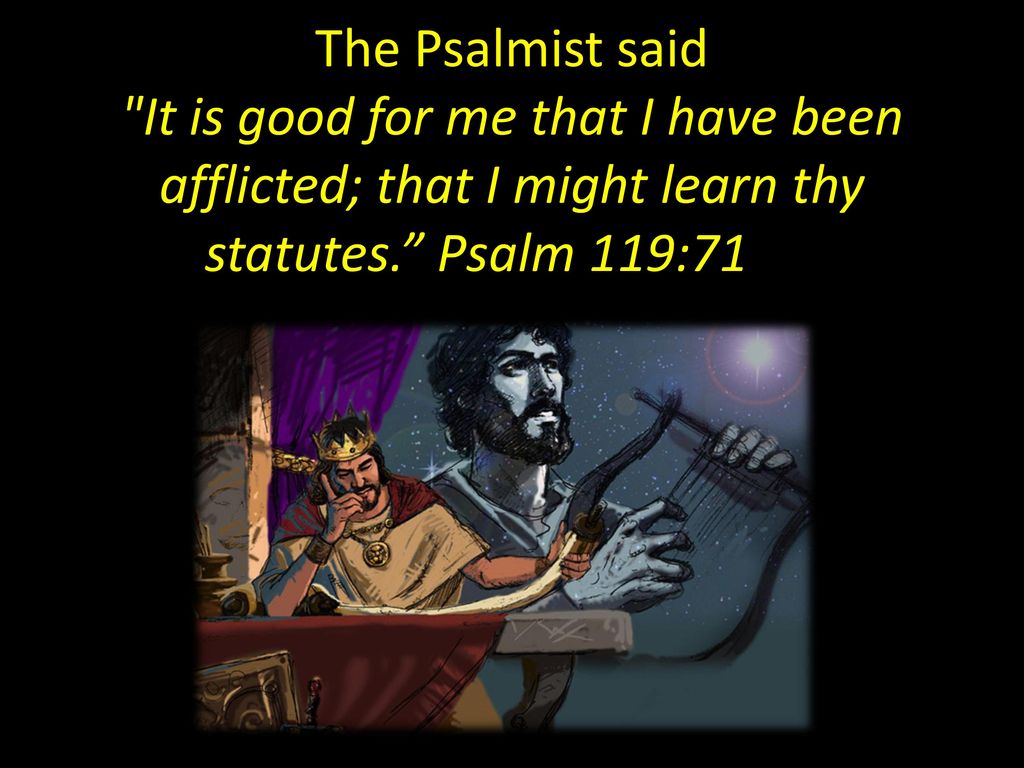
Image result for it is good for me that i have been afflicted that i might learn thy statutes
Elsewhere, in the Psalms we read over and over again how David’s problems and afflictions brought him closer to God. In other words, they were good for him. We read, “Before I was afflicted I went astray, but now I do keep thy law. [Psalm 119:67] It was good for me that I was afflicted that I might learn thy statutes.”[Psalm 119:71]
Image result for the book of job in the bible
The Bible is a collection of some of the oldest books in the world. Moses edited the book of Genesis and wrote it down around 1,500 BC. The book of Job is said to be from the time of Abraham who lived around 2,000 BC. Do you remember the story of Job? He was a rich man with ten children, wealthy, well respected, a city father, righteous, kind to those in need, a really good man. But the story goes that Satan asks God permission to afflict Job to test his faith. Satan says, “He doesn’t really love you, let me test him, and I’ll show you.” God says, “Okay, test him, but don’t take his life.”[Job 2:5-6]

First the devil destroys his children killing them all in an earthquake that takes their lives. He has thieves come and steal all Job’s cattle, and sheep, and camels, etc which was where his riches lay. And finally, Satan afflicts Job’s health.

Job’s own wife tells him he should curse God who must be bringing all this bad luck upon him and die.[Job 3:9-10] But Job responds with one of his most poignant lines of faith, “Though He slay me, yet will I trust Him.”[Job 13:15]

Job’s best friends come to comfort him. But all they can conclude is that God is just and therefore Job must have some secret sin that God is dealing with. He needs to confess and repent and get right with God. Job responds that they would have been wiser to have just sat quietly with him and accompanied him in his suffering instead of self-righteously condemning him.[Job 13:5]
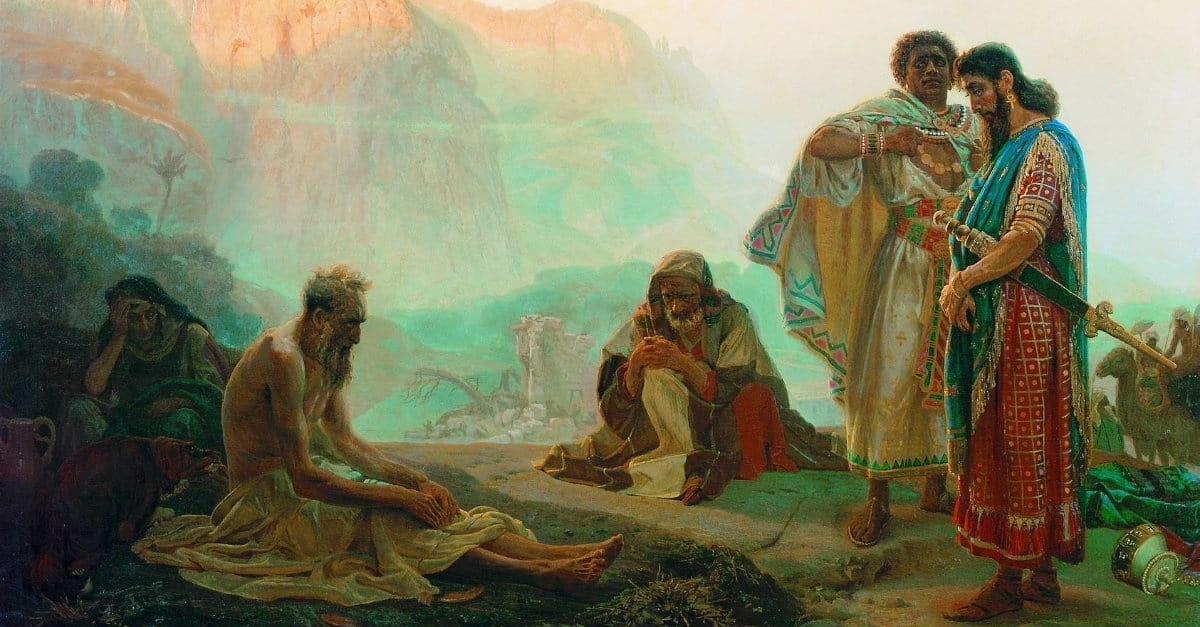
Image result for jobs friends questioning him
Job answers that he has not sinned, but that he has been righteous in all his ways. So his friends stop talking with him, “because Job was righteous in his own eyes, and justified himself rather than God.”[Job 32:1-2]

Then the youngest friend speaks and tries to explain to Job that God is righteous in what he does. He says, “God will not do wickedly, nor will he pervert judgment.”[Job 34:12] His friend exposes Job’s sin and says, “You think that you are more righteous than God and that you therefore don’t desserve this affliction.”[Job 34:5] His friend is trying to show Job that his real sin is that Job feels he is righteous and good and therefore assumes that God is unjust in what He is doing.

Finally God speaks to Job and asks him if he Job can instruct God?[Job 40:2] God asks Job question after question after question.[Job 38 & 39] Job finally gets the point and says, “Lord, I am vile:”[Job 40:4] And lays his hand upon his mouth. After God finishes reproving him and instructing him Job answers, “I know that Thou can do anything, and that no thought can be hidden from thee…..I have said things that I really didn’t have understanding in. Wherefore I abhor myself, and repent in dust and ashes.”[Job 42:2,3,6]
Image result for Job's sin was self-righteousness
You see Job’s sin was his self-righteousness. That he trusted in his own righteousness to save him. He missed the point that none of us are really righteous though we may have an appearance of righteousness and may in deed think we are.

Job’s affliction led him to the realization that God is good and no matter what happens in our life God will bring good from it if we can continue to love and trust Him. Apostle Paul assures us in his writings that “All things work together for good to them that love God.”[Romas 8:28] That’s why the most famous line from the book of Job is Job’s declaration of faith where he says, “Though He slay me, yet will I trust Him.”[Job 13:15]

Image result for troubles draw us to the bosom of God
King David, the psalmist, wrote, “In my affliction I cried unto the Lord and He answered me from His holy tabernacle.”[Psalm 18:6 ] If you take time to read the Psalms you’ll find David finding God in his afflictions. His afflictions and troubles drew him to the bosom of God where all his needs were met.
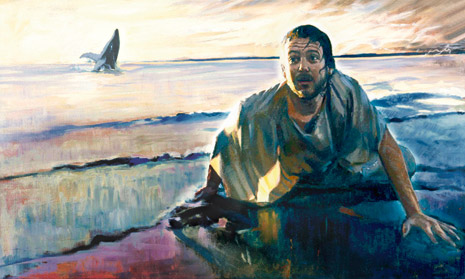
Related image
In the book of Jonah we see Jonah saying, “I cried by reason of my affliction unto the Lord, and He heard me; out of the belly of hell cried I, and Thou heard my voice.”[Jonah 2:2] The affliction, the predicament, the problem Jonah was encountering was what caused him to cry unto the Lord. God allows those problems so that we will in deed seek His face as we so often drift away from Him or refuse His call.

Therefore, affliction, sickness, troubles, pain, and heartache are good if they ultimately get us to draw nigh to God. The Apostle James, the brother of Jesus, wrote, “Draw nigh to God and He will draw nigh to you… Be afflicted and mourn and weep. Let your laughter be turned to mourning, and your joy to heaviness. Humble yourselves in the sight of the Lord, and He shall lift you up.”[James 4:8-10] Solomon wrote God is more in the house of morning than in the house of mirth.[Ecclesiastes 7:2] He said, “Sorrow is better than laughter: for by the sadness of the countenance the heart is made better.”[Ecclesiastes 7:3]

So, we see that health is not the most important thing contrary to popular opinion. Our relationship with God is what is most important. If we lose everything else, but our faith, we have really lost nothing. But if we lose our faith in God, we have lost everything. Jesus even said it would be better for us to lose an eye or a hand if it brought us into relationship with God and kept us from eternal damnation.[Matthew 5:29-30]

Let your suffering and your pain and your sorrow draw you closer to God who loves you and wants to help you and comfort you and heal you and be your refuge in the time of trouble. Forsake your self righteous pride and call out to Him.
Image result for Fear God and keep His commandments for this is the whole duty of man
Solomon wrote, “Fear God and keep His commandments for this is the whole duty of man.” [Ecclesiastes 12:13] Paul tells us that God’s commandments are not grievous but are fulfilled in one word, even this, “Thou shalt love thy neighbour as thyself.”[Galatians 5:14] Therefore, friends, let us love God and one another for this is the whole duty of man. Let us take our suffering and afflictions bravely and let them draw us unto the bosom of God, Jesus Christ, His son [John 1:18] where we find healing, strength, victory, forgiveness, and provision for all our needs. Amen.
Image result for draw us into the bosom of God, Jesus Christ
I forgot to tell you that story that I would use to show people that health was not the most important thing. Here goes.

Let’s say you are healthy but you are forced to live with a partner that is always putting you down, criticizing you, demeaning you. Is health then the most important thing? Wouldn’t being in good relationship with those around you be more important than your health? Or would our health mean much to us if our company was dreadful. Therefore, living in harmony with those around us is even more important than health. And bad health can be sustained and born if we are compassed about with loving companions. In fact bad health can be good for us if it brings us into harmony with the One who created us and loves us more than we can ever understand in this life and can ultimately bring us healing. It’s the same guy again, Jesus. We keep trying to leave that name out. But that’s the name we each really need to look into. “For there is none other name under heaven given among men whereby we must be saved.”[Acts 4:12]

My grandfather had a poem on the wall of his house. It went something like this.

Image result for irish philosophy there are only two things to worry about
There are only two things to worry about in life: health or sickness. If you are healthy, you’ve got nothing to worry about. But if you are sick, there are only two things to worry about: you’ll get better, or you’ll get worse. If you get better, you’ve got nothing to worry about. But if you get worse there are two things to worry about: you’ll either die or you’ll recover. If you recover, you’ve got nothing to worry about. But if you die there are two things to worry about: you’ll either go to heaven or you’ll go to hell. If you go to heaven, you’ve got nothing to worry about. But if you go to hell, you’ll be so busy meeting old friends, you won’t have time to worry.

The point here that this comic relief is trying to convince us of is the idea that even suffering in hell will be bearable if we are in good company, in good relationship with others around us. In other words, if we are in good relationship with others we can bear anything. War is made bearable by the unity of spirit the combat team gains through the troubles they face together. Relationship with others makes us sacrífice and bear the unbearable. That’s what husbands and wives do for one another. That’s what parents do for their children.

Image result for lazarus and the rich man
But the conclusion that good company will make hell bearable is not true. The richman in the story Jesus told about the poorman and richman who died the same day did not seem to think that hell was a fun place. He asked God to allow him to get a message through to his other brothers that they come not to the same place.[Luke 16:19-31] So don't take the poem above as a slogan for life. You might end up somewhere you don't want to be, in Hell. 

God wants relationship with us. He says, “Come and let us reason together.”[Isaiah 1:18ª] But because of the free will He has given us, He must allow sorrow and pain and death. Nevertheless, through these heartaches, He is there longing for us to seek relationship with Him. Relationship with God makes everything in life bearable and He promises to supply all our needs, be it health, provision, strength, comfort, light, love, etc. Please, call unto the Lord in your time of affliction and He will hear you. He will come to you and will give you peace and healing of heart, soul, mind, and body. That’s His promise and it’s true. Seek relationship with God. He’s waiting and He is only a prayer away.

Monday, February 18, 2019

Uma mensagem de esperança


Esta é uma mensagem de esperança para você que sofre, uma mensagem de que melhores dias virão. Não se desespere. Não desista. Esforce-se por ser amável e positivo apesar das circunstâncias. Se aceitar o amor dAquele que morreu para lhe proporcionar uma vida melhor, um dia você será recompensado e estará junto com Ele por toda a eternidade no Seu lindo lar. Será um membro da Sua família, e todo o sofrimento desaparecerá — para sempre.

A vida certamente é difícil. Mas existe um conselheiro que pode ajudá-lo diante de decisões que lhe parecem muito difíceis. Existe alguém a quem pode recorrer quando seu coração machuca e precisa de um amigo para segurar a sua mão. Existe alguém que estará ao seu lado nos bons e nos maus momentos. E não só isso, existe alguém que prometeu cuidar de tudo de ruim que lhe acontece e, no final, fazer tudo contribuir para o bem.

Esse é Aquele que a Bíblia descreve como “um homem de dores que sabe o que é padecer” (Isaías 53:3) — alguém que passou pelo maior sofrimento de todos e entende suas piores dores emocionais e físicas. Ele é tudo que você poderia desejar: amigo, conselheiro, guia, professor e pai. Ele é Jesus, o Filho de Deus.

O amor de Deus é ilimitado e infinito. É mais alto do que o maior pico, e mais profundo do que o mar. Está presente em todo lugar, é constante e incomparável! É total, fabuloso e magnificente, grandioso demais para podermos entender completamente.

Deus, nosso maravilhoso Criador, queria que vivenciássemos esse amor monumental, e tinha um plano para isso! Ele resumiu todo esse amor, compaixão e empatia no Seu Filho Jesus, e então O enviou à terra para viver como nós. Ele veio na forme de um bebê e, como nós, passou por toda a experiência humana. No entanto, ao contrário de nós, Jesus era Deus e homem.

A sua missão na terra foi concluída com o sofrimento de uma crucificação angustiante, quando então retornou para Seu lar celestial junto do Pai. Ele fez o sacrifício supremo para nos redimir, levando sobre Si os nossos pecados. Assim Ele morreu para que sejamos perdoados e possamos conhecer o Seu grande amor por cada um de nós.

“Porque Deus amou o mundo de tal maneira que deu o seu filho unigênito, para que todo aquele que nele crê não pereça, mas tenha a vida eterna” (João 3:16).

Esse amor se manifesta não apenas por meio do lar celestial que Ele preparou para nós, mas também por Ele nos acompanhar em todas as dificuldades, desafios, problemas, perdas e tragédias.

Uma coisa impressionante é que Jesus conhece você pessoalmente. Ele sabe o seu nome; sabe tudo que lhe acontece; sabe dos seus problemas e sofrimentos, e quer ajudá-lo em cada situação.

Ele está com você todo o tempo, e se abrir seu coração, conseguirá ouvi-lO. Ele deseja ser o seu melhor amigo e manter um diálogo com você. Ele é tudo que existe de lindo e bom, e pode ajudá-lo a encontrar essa bondade e beleza.


É possível vivenciar o contentamento que Ele nos dá, mesmo vivendo em uma tenda, ou em um barraco ou casa de pau-a-pique com goteiras. Ele pode ajudar você mesmo que o seu trabalho seja limpar esgotos ou caçambas de lixo, ou ainda pior, mesmo que você esteja desempregado. Não importam as circunstâncias, você pode ter alegria e esperança.

Ele prometeu que, se você pedir com fé, Ele responderá. Por mais fraco e pequeno que se sinta, pode contar com Jesus. Além disso, também tem pessoas que o amam e que já foram para junto de Jesus, com os santos, e intercedem por você. Deus promete que tudo é possível ao que crê.

Se abrir o coração para Ele e O tiver como parte integral da sua vida, Ele o atenderá, falará com você e o orientará. Encontrará a paz, fé e força resultantes da confiança em Jesus que é o seu melhor amigo.

Não importam as dificuldades, você saberá que Ele está ao seu lado e o ajudará a suportar. Deus nem sempre retira as coisas desagradáveis, mas pode torná-las mais fáceis para você e o ajudar a enfrentar cada dificuldade.

Depois de conviver com Ele nesta vida, continuará caminhando com Ele na próxima vida no Céu! Entrará no lugar mais lindo que existe, onde viverá eternamente com alegria e paz. O amor e a justiça reinarão, e você nunca mais sofrerá nem será prejudicado, lesado ou oprimido. Dor e penúria serão coisas do passado.

Quando chegar a hora dos anjos o acompanharem ao Céu, você ouvirá Jesus lhe dizendo: “Meu querido, você se saiu muito bem! Entre! Vamos comemorar! — Por toda a eternidade!”

Que você conheça o amor total de Jesus e entenda como você é importante para Ele. Que você tenha fé de que Ele está sempre ao seu lado, e conheça a alegria sobrenatural que Ele lhe oferece em toda e qualquer situação.

Se quiser receber Jesus, basta fazer uma simples oração como esta:

Querido Jesus, preciso de Você. Você sabe tudo pelo que estou passando e entende as minhas lutas. Mesmo quando não vejo o caminho, Você está comigo. Preciso da Sua presença na minha vida. Por favor, entre no meu coração, perdoe os meus erros e preencha-me com o Seu Espírito Santo. Amém.

Jesus lhe diz: “Eu tenho permanecido à porta e estou batendo constantemente. Se alguém me ouvir chamá-lo e abrir a porta, eu entrarei e farei companhia a ele, e ele a mim.” (Veja Apocalipse 3:20.) Ele prometeu entrar na sua vida e lhe dar plena alegria, paz, consolo e a salvação eterna.

"Porque a Escritura diz: Todo aquele que Nele crer não será confundido. Porque todo aquele que invocar o nome do Senhor Jesus Cristo será salvo." (Romanos 10: 11&13)
"Pois se vós, sendo maus, sabeis dar boas dádivas aos vossos filhos, quanto mais dará o Pai celestial o Espírito Santo aqueles que lho pedirem?" (S.Lucas 11:13)

Copyright © Fight for Your Faith