Does your faith need strengthening? Are you confused and wondering if Jesus Christ is really "The Way, the Truth, and the Life?" "Fight for Your Faith" is a blog filled with interesting and thought provoking articles to help you find the answers you are seeking. Jesus said, "Seek and ye shall find." In Jeremiah we read, "Ye shall seek Me, and find Me, when ye shall seek for Me with all your heart." These articles and videos will help you in your search for the Truth.

Saturday, April 9, 2016

The End is Near?

Posted on May 31, 2014 http://www.propheciesofdaniel.com/2014/05/end-near/
by Mark McMillion
in Daniel videos, Insights, Current events,Basic Christianity

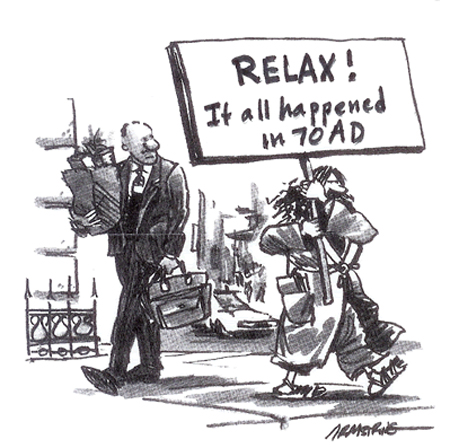
How many people understand that cartoon there? One in a thousand? I’ll bet that less than one person in a thousand understands what that cartoon is talking about. So I’m going to do what most people don’t like. I’m going to explain a joke

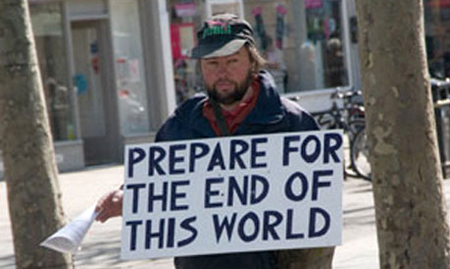
First, you have to know that off and on for years there have been people, sometimes dressed in robes and walking down the street with signs, proclaiming “The End is Near”. And you could even think that I do that at least somewhat with the videos I’ve been producing about the prophecies of Daniel.

But the vast majority of the secular world tends to mock and deride things like this. And the ones dressed in robes, walking down the street with a sign about the End being near, all too often turn out to be easy targets of mockery.

And if you really have no background in this, you may have no idea what it could mean by “the end of the world”. Nowadays of course, you don’t have to be religious or spiritually minded to think we may be near a worldwide precipice of social, economic or ecological collapse. And for those of you who aren’t “religious”, you may not know that the Bible has a string of predictions in it that at some point in the future, some very major changes will take place in our world, which could almost be considered “the end”. (Actually the Bible doesn’t predict a total annihilation of the planet like some think it does. It just says there is going to be a huge, monumental change that will usher in the return of Jesus of Nazareth to rule the earth, as the King He is.)


If you’re Jewish, you may already know the answer to this.

So what in the world is this cartoon talking about when the guy says, “Relax, it all happened in 70 AD”? First hint:if you’re Jewish, you may already know the answer to this.Here’s the deal. One school of thought in the study of Bible prophecy says that all those future predictions of “the end” were fulfilled in 70 AD. But what happened in 70 AD?


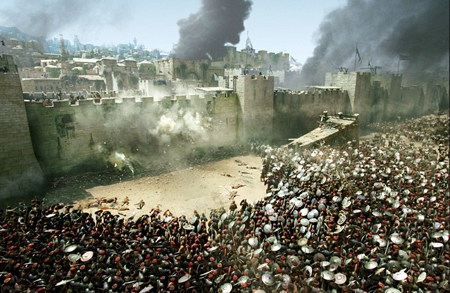
Roman legions surround Jerusalem, 70 AD

This is the date in history when the Roman legions of Titus surrounded Jerusalem, destroyed the city and ended up killing over one million Jews in Palestine. It was the end of Israel as an entity and a group of people living together in that part of the world. Within a generation or so, the Romans had made it completely illegal for any Jewish person to be living in their former homeland there. As their prophet Hosea had told them centuries before, they became “wanderers among the nations.” (Hosea 9:17)

And that’s where the idea comes from for this cartoon. It’s like the guy is saying there, “Relax, there’s not going to be any “the End”. That already happened in 70 AD.” And there are certainly Bible teachers today who teach that.


The destruction of Jerusalem in 70 AD was clearly foretold by the angel Gabriel to Daniel the prophet 600 years before it happened

Well, this is all “right down my alley”, as they say in English. At the moment I’m finishing up a video on Daniel chapter 9 which talks about this very thing. The destruction of Jerusalem in 70 AD was clearly foretold by the angel Gabriel to Daniel the prophet 600 years before it happened. He said it would happen after the death of the Messiah who was yet to come. Gabriel told Daniel that, “After …Messiah is cut off… the people of the prince who shall come shall destroy the city and the sanctuary.” (Daniel 9:26)

But just to be clear, most Bible prophecies of “the endtime” were not fulfilled in 70 AD. Far from it. I’m what’s called a “futurist” and I strongly believe that the main events Jesus talked about in Matthew 24, or what Paul talked about in II Thessalonians 2, or much of Daniel and basically all of the book of Revelation are still ahead of us, perhaps soon to come. Was “the end” in 70 AD? It was certainly an end for the nation of Israel at that time. But was this what Bible prophecy has pointed to and what the prophecies in the Bible have been predicting? I don’t think so. “The end is not yet” (Matthew 24:6), as Jesus said.


My goal is not to go around scaring people with gloom and doom proclamations.

My goal is not to go around scaring people with gloom and doom proclamations. My goal is to try to inform, to clarify and bring into view the original writings of the prophets of the Bible as to what God has said will be the future events which He has ordained to bring the world back to His rule and direction. It will be a cataclysmic time leading up to that. It will seem for many like “the end”. It will be “the end” of a lot of things which need to end. But it will bring in a new and better world, a world liberated from the hate and foolishness that dominate it now. Like Daniel told Nebuchadnezzar, “In the days of these kings shall the God of Heaven set up a kingdom that shall never be destroyed. And the kingdom shall not be left to other peoples. But it shall break in pieces and consume all these kingdoms. And it shall stand forever.” (Daniel 2:44 & 45)

Wednesday, April 6, 2016

Panama Papers: a massive document leak reveals a global web of corruption and tax avoidance

By Matthew Yglesias, Vox, April 3, 2016:

Mossack Fonseca is not a household name, but the Panamanian law firm has long been well-known to the global financial and political elite, and thanks to a massive 2.6-terabyte leak of its confidential papers to the International Consortium of Investigative Journalists it’s about to become much better known. A huge team of hundreds of journalists is poring over the documents they are calling the Panama Papers.

The firm’s operations are diverse and international in scope, but they originate in a single specialty–helping foreigners set up Panamanian shell companies to hold financial assets while obscuring the identities of their real owners. Since its founding in 1977, it’s expanded its interests outside of Panama to include more than 40 offices worldwide, helping a global client base work with shell companies not just in Panama but also the Bahamas, the British Virgin Islands, and other notorious tax havens around the world.

The documents provide details on some shocking acts of corruption in Russia, hint at scandalous goings-on in a range of developing nations, and may prompt a political crisis in Iceland.

But they also offer the most granular look ever at a banal reality that’s long been hiding in plain sight. Even as the world’s wealthiest and most powerful nations have engaged in increasingly complex and intensive efforts at international cooperation to smooth the wheels of global commerce, they have willfully chosen to allow the wealthiest members of Western society to shield their financial assets from taxation (and in many cases divorce or bankruptcy settlement) by taking advantage of shell companies and tax havens.

If Panama or the Cayman Islands were acting to undermine the integrity of the global pharmaceutical patent system, the United States would stop them. But the political elite of powerful Western nations have not acted to stop relatively puny Caribbean nations from undermining the integrity of the global tax system–largely because Western economic elites don’t want them to.

What’s a shell company? Why would someone want one?

Sometimes a person or a well-known company or institution wants to buy things or own assets in a way that obscures who the real buyer is.

The typical reason for this is a kind of routine corporate secrecy. Apple, for example, appears to have created a shell company called SixtyEight Research that journalists believe to be a front for its interest in building a car. Since Apple happens to be the most covered company on the planet, this hasn’t been incredibly effective–and when SixtyEight Research staff showed up at an auto industry conference, everybody noticed.

But in general, companies don’t like to tip their hand to what they are doing, and the use of shell companies to undertake not-ready-for-public-announcement projects can be a useful tool.

Shell companies are often used for simple privacy reasons. Real estate transactions, for example, are generally a matter of public record. So an athlete, actor, or other celebrity who wants to buy a house without his name and address ending up in the papers might want to pay a lawyer to set up a shell company to do the purchasing.

Okay, but how about the shady stuff?

As is generally the case in life, secrecy can have illegitimate purposes as well. This is particularly true for shell companies set up in international centers of banking secrecy that offer a level of anonymity and obscurity that goes beyond simply making it hard to look up the real owner’s name online.

Your soon-to-be-ex-wife cannot seize half of the money in an account that she and her lawyers don’t know exists and can’t prove that you own, for example. Nor can your creditors seize such an account in a bankruptcy proceeding. Nor can the government levy estate taxes on it when you die and pass it on to your kids. In all those circumstances, a Panamanian company that you secretly control and that holds stocks, bonds, and other financial assets on your behalf could be the ideal vehicle.

By the same token, if you have made a bunch of money illegally (taking bribes, trafficking drugs, etc.) you need to do something with the money that won’t attract the attention of the authorities or the media. A secret offshore shell company is perfect. Not only does it help you avoid scrutiny in real time, but if you are found out its assets can’t be taken from you if you have to flee the jurisdiction or even serve jail time.

But even though various criminal money-laundering schemes are the sexiest possible use of shell companies, the day-to-day tax dodging is what really pays the bills. As a manager of offshore bank accounts told me years ago, “People think of banking secrecy as all about terrorists and drug smugglers, but the truth is there are a lot of rich people who don’t want to pay taxes.” And the system persists because there are a lot of politicians in the West who don’t particularly want to make them.

How much money is there in offshore tax havens?

A big part of the idea, of course, is to make it hard for anyone to know for sure.

But Gabriel Zucman, an economics professor at UC Berkley, has made the most detailed study of the question for his book The Hidden Wealth of Nations, and estimates that it totals at least $7.6 trillion. That’s upward of 8 percent of all the world’s financial wealth, and it’s growing fast. Zucman estimates that offshore wealth has surged about 25 percent over the past five years.

Much of that reflects “new money” from China and other developing nations whose citizens to an extent have legitimate fears about political stability and the rule of law.

But some of it is simple avarice. The name of Ian Cameron, the late father of British Prime Minister David Cameron, shows up in the Panama Papers, for example. Mossack Fonseca helped him set up his investment company Blairmore Holdings (named after his family’s ancestral country estate) in the British Virgin Islands, where, marketing material assured investors, the company “will not be subject to United Kingdom corporation tax or income tax on its profits.”

This particular kind of move is perfectly legal and doesn’t even involve any secrecy. It is entirely typical for investment companies whose employees all work or reside in New York, London, or Connecticut to be domiciled for tax purposes in someplace like the Cayman Islands. Since these companies don’t own much in the way of physical assets, they can be officially located anywhere in the world and naturally choose to locate in jurisdictions where they won’t need to pay taxes.

Why doesn’t anyone do anything about this?

To an extent, things have been done.

First the war on drugs and then, more recently, the war on terror led to meaningful political pressure on countries around the world to alter their banking practices so as to reduce global money laundering. More recently, the European Union has successfully pressured Switzerland to change its laws to make it easier for the EU to catch people engaged in criminal tax evasion.

But there’s a big difference between tax evasion–illegally refusing to pay taxes you owe, and then taking advantage of secret accounts to try to hide the money and get away with it–and tax avoidance, which is hiring clever people to help you find and exploit legal loopholes to minimize your tax bill.

Incorporating your hedge fund in a country with no corporate income tax even though all your fund’s employees and investors live in the United States is perfectly legal. So is, in most cases, setting up a Panamanian shell company to own and manage most of your family’s fortune.

Tax avoidance is an inevitable feature of any tax system, but the reason this particular form of avoidance grows and grows without bounds is that powerful politicians in powerful countries have chosen to let it happen. As the global economy has become more and more deeply integrated, powerful countries have created economic “rules of the road” that foreign countries and multinational corporations must follow in order to gain lucrative market access.

Establishing some kind of minimum global standard of taxation of corporate and investment income hasn’t been done, because it hasn’t been a political priority. In the United States, in particular, the Republican Party fights quite hard for the view that high levels of taxation on rich people and investment income are economically ruinous, so there isn’t the kind of institutional mobilization that exists around drug trafficking or possible terrorism financing.

The leak of the Panama Papers is significant in part because of the specific information the documents contain, but more broadly because they draw attention to what “everyone knows” and may put public pressure on the powers that be to do something about it.

Tuesday, April 5, 2016

Celtic Demons on the Way of Saint James

By Dennis Edwards:

Last month my wife and myself were invited by a friend to a Sunday walk organized by an association related to the famous walking trail "the Way of Saint James." For those who are not familiar with "the Way," it consists of various walking routes through towns and countryside from various cities in Portugal, France and Spain to the historical city of Santiago de Compostelo. Santiago is a famous city near Vigo in north-western Spain. The supposed remains of Saint James the Apostle are said to be buried there. A great cathedral was built to celebrate the discovery of the supposed remains. Since that time Santiago has been a place of pilgrimage for those looking for answers to prayers, like other famous locations, such as Fatima in Portugal and Lourdes in France,

We had been invited to meet up in the Portuguese town of Felgueiras in the early morning to start the 15 kilometer walk. But the night before was cold, rainy and windy with hail, so we were in no mood for an early morning pre-dawn departure. Besides, because of the weather, I had been unable to make deliveries of food-stuffs on Saturday, Therefore, Sunday morning we made our deliveries and met up with our friend in the afternoon.

When we arrived the walk was finished  as was the lunch and the group was waiting to have fellowship in the local town hall. Most of the 40 to 50 people were from the ages of 35 to 60. We sat in the back of the room as the different entities gave their speeches. The vice-president of the association gave his testimony of how the Way of Saint James had changed him, had healed him and had deepened his life spiritually.

Finally he got some alcohol called Aguardente, a clear alcohol similar to Brandy and made a mixture with red wine, sugar, lemon juice, and coffee beans. After lighting the concoction, he let it burn for some time occasionally stirring it as it burned. Then with a help of an assistant, they recited an old Celtic prayer to cast out evil influences and protect everyone that drank from it from any evil spells.Supposedly the evil is being burnt inside the cauldron in the flames while the prayer is being recited. Some say it is a spoof, but it was recited with all seriousness. Afterward, the vice-president asked if anyone had a prayer request to pray over the burning cauldron. Our friend's 11 year-old daughter was the first to pray and ask for the healing of her brother who has cancer. Another child also approached the cauldron and prayed.

My wife and I were in shock. We did not know if he had been praying against the evil entities he mentioned or to them. He did not mention God or Jesus throughout the prayer. We sat wondering what in the world this Celtic prayer had to do with the supposedly Christian "Way of Saint James."The vice-president had explained that the "Way of Saint James" was actually routes made by early Celtic worshipers who would travel to Santiago at certain times of the year for Celtic ceremonies worshiping the sun. In any case, the crowd seemed to be happy with the concoction judging by their happy smiles and conversation. But I was wondering what the Apostle James who had lost his head and life for preaching the Gospel of Jesus Christ would have been thinking had he seen the ceremony.

The vice-president had mentioned that the Catholic Church had refused to recognize them as a legitimate representative of the Way of Saint James. After watching the ceremony, I could understand why.

Jesus + Nada = Tudo

Compilação
http://anchor.tfionline.com/pt/post/jesus-nada-tudo/

A declaração é simples, porém profunda: Jesus + Nada = Tudo.

Pare e pense nisso. Reflita. Diga para si mesmo com fervor: “Jesus, mais nada, igual a tudo.” Essa foi a afirmação de Tchividjian, neto de Billy Graham e pastor da igreja presbiteriana Coral Ridge. Foi o título de uma série de sermões sobre a epístola de Paulo aos Colossenses, lembrando-nos que Jesus Cristo é supremo. Considere as palavras de Paulo em Colossenses 1 (NVI):

Ele é a imagem do Deus invisível, o primogênito de toda a criação, pois nele foram criadas todas as coisas nos céus e na terra, as visíveis e as invisíveis, sejam tronos ou soberanias, poderes ou autoridades; todas as coisas foram criadas por ele e para ele. Ele é antes de todas as coisas, e nele tudo subsiste. Ele é a cabeça do corpo, que é a igreja; é o princípio e o primogênito dentre os mortos, para que em tudo tenha a supremacia.

Pois foi do agrado de Deus que nele habitasse toda a plenitude, e por meio dele reconciliasse consigo todas as coisas, tanto as que estão na terra quanto as que estão no céu, estabelecendo a paz pelo seu sangue derramado na cruz. Antes vocês estavam separados de Deus e, em suas mentes, eram inimigos por causa do mau procedimento de vocês. Mas agora ele os reconciliou pelo corpo físico de Cristo, mediante a morte, para apresentá-los diante dele santos, inculpáveis e livres de qualquer acusação, desde que continuem alicerçados e firmes na fé, sem se afastarem da esperança do evangelho, que vocês ouviram e que tem sido proclamado a todos os que estão debaixo do céu. Esse é o evangelho do qual eu, Paulo, me tornei ministro.—Colossenses 1:15–23

Não é maravilhoso? Paulo nos ajuda a ver a capacidade e superioridade de Jesus Cristo, a plenitude da Sua preeminência e beleza, incitando-nos a nos afastarmos dos ídolos e ideais humanos e recorrermos apenas a Ele em busca da liberdade e graça que tanto desejamos.

Não é “Jesus + dons” ou “Jesus + bênçãos” ou “Jesus + trabalho” ou “Jesus + família” ou “Jesus + religião.” É “Jesus + nada = tudo.” Sim, para o crente, Ele é realmente tudo, e é suficiente. É isso o que peço a Deus hoje para você, leitor, que Ele seja mais do que suficiente e que, independentemente das circunstâncias que a vida nos traga, quer boas, quer ruins, possamos declarar, como Jó: “Bendito seja o nome do Senhor!”[1]— Chris Poblete[2]

*

Eu acho que a maioria de nós começa a jornada cristã com essa simples verdade.

Estou muito mal. Preciso de Jesus. Ponto final.

Contudo, conforme iniciamos esta nova jornada, logo percebemos o incessante e crescente sussurro: “Esforce-se mais, faça mais.” Cante mais. Memorize mais. Registre mais. Pregue mais. Ore mais. Evangelize mais. Sirva mais.

Essa abordagem pode parecer bastante espiritual para as pessoas ao nosso redor, porém, na maioria das vezes está arraigada a uma convicção interior de que o nosso valor como cristão depende da nossa capacidade de se destacar dos outros. Essa fachada espiritual esconde um coração frágil e inseguro que tenta desesperadamente fazer Deus nos amar mais.

A cruz não é o ponto inicial do qual desviamos para o caminho que desejamos, não é apenas o ponto de partida da nossa fé, mas a sua essência. A graça não é necessária apenas para a salvação, ela é o oxigênio do crente.

Por isso, hoje, quando ouvir essa vozinha na sua cabeça lhe dizendo: “Esforce-se mais, faça mais”, lembre-se que você está mal e precisa de Jesus. Ponto final.—Pete Wilson[3]

*

Pelo sacrifício da crucificação de Jesus, Deus perdoa nossos pecados. A imputação de nossos pecados a Cristo faz com que estes se tornem Seus pecados e não mais nossos. Ao mesmo tempo, a integridade de Jesus passou a ser atribuída aos que O recebem e aceitam Sua dádiva de salvação, de forma que Deus não mais nos vê como pecadores dignos de castigo, mas como justos. Nossa culpa “legal” e a nossa condenação foram removidas, eliminando assim a separação entre Deus e nós.

A palavra justificar usada no Novo Testamento e o vocábulo grego dikaioo. Uma de suas definições é declarar ou pronunciar alguém justo. Nossa justificação significa que Deus nos declara justos, ou não mais culpados e condenados. Isso não quer dizer que nós, que recebemos Sua dádiva de salvação, não pecamos, pois ainda somos pecadores mas que, “do ponto de vista legal”, somos justos diante de Deus. Assim como nossos pecados foram imputados a Jesus e, consequentemente, vistos como dEle, Sua integridade nos é conferida e é vista por Deus como se fosse nossa.

Tudo isso é obra de Deus, não nossa. Não há nada que poderíamos fazer ou realizar para merecer esse perdão e essa integridade. É uma dádiva de Deus. Em Seu amor, criou uma forma de nos tornarmos íntegros aos Seus olhos —não pelas nossas obras ou nossos bons atos, mas pela Sua graça, misericórdia e amor. É uma dádiva de amor, cara para Deus, grátis para nós.[4]

As Escrituras deixam claro que as pessoas não são salvas por serem bondosas, por realizarem boas obras, por cumprirem as leis de Moisés, ou por qualquer outra coisa que possam fazer. A salvação, que resulta na justificação, depende exclusivamente de Deus e do Seu plano. Tudo que temos de fazer é acreditar que Deus nos disponibilizou a salvação por Jesus, e aceitar isso por fé.[5]

Um belo aspecto dessa justificação é que os cristãos não mais precisam viver preocupados com seu status perante Deus. O fato de ainda pecarmos não muda a condição de termos a integridade de Cristo. Não precisamos mais nos perguntar se fizemos o bastante ou se somos próximos de Deus o suficiente para merecer a salvação. Deus fez tudo e, pela morte e ressurreição de Jesus somos e sempre seremos considerados íntegros por Deus.

O amor e o sacrifício de Deus pela morte de Jesus na cruz resultaram na nossa justificação diante de Deus. Removeram nossa separação e nos reconciliaram com Ele. Que presente valioso é oferecido à humanidade pelo Deus de amor.”[6]—P. Amsterdam

*

Quando se trata de aproximar-se de Deus e Lhe agradar, o legalismo insiste que a obediência precede a aceitação, que fica tudo por nossa conta. Mas a fresca brisa da Liberdade que nos concede o Evangelho afirma que a aceitação precede a obediência. Depois que somos aprovados e aceitamos Deus em Cristo, podemos seguir livremente a orientação divina e cada vez mais realizar a sua vontade por gratidão por Sua graça maravilhosa, sem medo de julgamento ou condenação quando falhamos.—Tullian Tchividjian[7]

Publicado no Âncora em março de 2016.

[1] Jó 1:21.
[2] http://blogs.blueletterbible.org/blb/2011/05/25/jesus-nothing-everything.
[3] http://www.churchleaders.com/outreach-missions/outreach-missions-blogs/173995-the-incessant-whisper.html.
[4] Veja Efésios 2:8–9.
[5] Veja Romanos 10:9–10 e Gálatas 2:16.
[6] Romanos 5:1 NVI.
[7] Tullian Tchividjian, Jesus + Nothing = Everything (Wheaton, Ill: Crossway Books, 2011).

Copyright © Fight for Your Faith