Sunday, October 4, 2015
O Verdadeiro Significado do “Adeus”
Link
Steve Hearts
Estava sentado no saguão do aeroporto me sentindo bem como o tempo lá fora—sombrio e melancólico. Meu pai e eu voltávamos para casa depois de uma reunião de família. Tínhamos acabado de dizer adeus à minha avó, tia e irmão. Eu nunca gostei de dizer adeus desde que me entendo por gente, mas sempre escondi minhas emoções muito bem durante as despedidas. Naquele dia, porém, eu estava todo emotivo, tanto por dentro como externamente.
Disse silenciosamente ao Senhor que precisava de Seu consolo. Admitir isso não foi fácil para um cara durão e orgulhoso como eu. Mas eu não queria passar as várias horas da viagem de avião debaixo de uma nuvem, e sabia que teria que sair daquele triste estado de espírito em algum momento seguir com a vida, de modo que fui sincero com o Senhor. “Sei que Você prometeu que não nos desampararia e que enviaria o Espírito Santo para nos consolar,” orei. “Eu também sei que Você passou pelas mesmas batalhas terrenas que nós. Mas Você realmente sabe o que é dizer adeus a alguém, Senhor? Se sabe, não me lembro de ler nem ouvir sobre isso.
A resposta veio quase que imediatamente. Não era uma sucessão de palavras, mas sim um entendimento simples e claro de que, claro que Jesus sabia como era dizer adeus. Ele teve que deixar Seu lar celestial para vir para o mundo e nos salvar. Dizer adeus a Seu Pai não pode ter sido algo fácil. E depois, quando Sua missão terrena foi cumprida, Ele teve que dizer adeus à Sua família terrena e Seus seguidores. Eu não entendia como que isso podia ter me escapado, mas certamente compreender isso me consolou.
Eu então me perguntei o que foi que consolou Jesus quando era difícil dizer adeus. A resposta me veio quase que antes de eu perguntar. Era o conhecimento de que um dia Ele estaria reunido com todos aqueles que estiveram um dia com Ele. Ela sabia que voltaria a ver os Seus amados, e lhes disse isso para consolá-los. “Assim também vós agora, na verdade, tendes tristeza; mas outra vez vos verei, e o vosso coração se alegrará, e a vossa alegria ninguém vo-la tirará.”[1]
Justo então me lembrei de algo que aprendera quando era pequeno, que a palavra “good-bye” (adeus) era originalmente a contração da frase “God be with you” (Fique com Deus). Percebi como essa palavra tem um contexto diferente hoje, que lhe dá uma conotação triste e pesarosa. Hoje em dia, geralmente removemos o “good” (bom) e simplesmente dizemos “bye” (tchau), que enfatiza ainda mais o contexto triste. Não é de admirar que muitas vezes seja tão penoso dizer adeus (good-bye). Contudo, posto de volta em seu contexto original, o termo deveria me dar certeza e consolo—me lembrando que Deus estava tanto comigo como com meus amados. Sabendo também que “aqueles que amam a Deus nunca se encontram pela última vez” só serviu para me consolar ainda mais e me deixou mais certo sobre isso.
É claro que é perfeitamente normal e aceitável sentir-se emotivo quando dizemos adeus àqueles que amamos. É um sinal claro de que nos importamos com eles e sentimos saudades quando estamos ausentes. O Senhor nos fez assim. Contudo, por outro lado, podemos minimizar a tristeza e o pesar nos lembrando que um dia estaremos num lugar onde não haverá mais despedidas.
Sem dúvida, a coisa mais difícil e dolorosa de dizer adeus é quando uma pessoa amada passa desta vida para a próxima. Mas até mesmo este adeus não é permanente. Pensando nisso, o verdadeiro significado do adeus é expressado claramente na frase do velho hino: “Fique com Deus até nos encontrarmos novamente.”[2] De agora em dia, quando chegar a hora de dizer adeus a alguém, ou de ouvir alguém dizer adeus para mim, vou tentar me lembrar que o que está sendo dito não é nada triste nem digno de lágrimas, mas sim uma mensagem reconfortante: “Fique com Deus.”
[1] João 16:22 KJV.
[2] http://www.cyberhymnal.org/htm/g/b/gbewiyou.htm.
Steve Hearts
Estava sentado no saguão do aeroporto me sentindo bem como o tempo lá fora—sombrio e melancólico. Meu pai e eu voltávamos para casa depois de uma reunião de família. Tínhamos acabado de dizer adeus à minha avó, tia e irmão. Eu nunca gostei de dizer adeus desde que me entendo por gente, mas sempre escondi minhas emoções muito bem durante as despedidas. Naquele dia, porém, eu estava todo emotivo, tanto por dentro como externamente.
Disse silenciosamente ao Senhor que precisava de Seu consolo. Admitir isso não foi fácil para um cara durão e orgulhoso como eu. Mas eu não queria passar as várias horas da viagem de avião debaixo de uma nuvem, e sabia que teria que sair daquele triste estado de espírito em algum momento seguir com a vida, de modo que fui sincero com o Senhor. “Sei que Você prometeu que não nos desampararia e que enviaria o Espírito Santo para nos consolar,” orei. “Eu também sei que Você passou pelas mesmas batalhas terrenas que nós. Mas Você realmente sabe o que é dizer adeus a alguém, Senhor? Se sabe, não me lembro de ler nem ouvir sobre isso.
A resposta veio quase que imediatamente. Não era uma sucessão de palavras, mas sim um entendimento simples e claro de que, claro que Jesus sabia como era dizer adeus. Ele teve que deixar Seu lar celestial para vir para o mundo e nos salvar. Dizer adeus a Seu Pai não pode ter sido algo fácil. E depois, quando Sua missão terrena foi cumprida, Ele teve que dizer adeus à Sua família terrena e Seus seguidores. Eu não entendia como que isso podia ter me escapado, mas certamente compreender isso me consolou.
Eu então me perguntei o que foi que consolou Jesus quando era difícil dizer adeus. A resposta me veio quase que antes de eu perguntar. Era o conhecimento de que um dia Ele estaria reunido com todos aqueles que estiveram um dia com Ele. Ela sabia que voltaria a ver os Seus amados, e lhes disse isso para consolá-los. “Assim também vós agora, na verdade, tendes tristeza; mas outra vez vos verei, e o vosso coração se alegrará, e a vossa alegria ninguém vo-la tirará.”[1]
Justo então me lembrei de algo que aprendera quando era pequeno, que a palavra “good-bye” (adeus) era originalmente a contração da frase “God be with you” (Fique com Deus). Percebi como essa palavra tem um contexto diferente hoje, que lhe dá uma conotação triste e pesarosa. Hoje em dia, geralmente removemos o “good” (bom) e simplesmente dizemos “bye” (tchau), que enfatiza ainda mais o contexto triste. Não é de admirar que muitas vezes seja tão penoso dizer adeus (good-bye). Contudo, posto de volta em seu contexto original, o termo deveria me dar certeza e consolo—me lembrando que Deus estava tanto comigo como com meus amados. Sabendo também que “aqueles que amam a Deus nunca se encontram pela última vez” só serviu para me consolar ainda mais e me deixou mais certo sobre isso.
É claro que é perfeitamente normal e aceitável sentir-se emotivo quando dizemos adeus àqueles que amamos. É um sinal claro de que nos importamos com eles e sentimos saudades quando estamos ausentes. O Senhor nos fez assim. Contudo, por outro lado, podemos minimizar a tristeza e o pesar nos lembrando que um dia estaremos num lugar onde não haverá mais despedidas.
Sem dúvida, a coisa mais difícil e dolorosa de dizer adeus é quando uma pessoa amada passa desta vida para a próxima. Mas até mesmo este adeus não é permanente. Pensando nisso, o verdadeiro significado do adeus é expressado claramente na frase do velho hino: “Fique com Deus até nos encontrarmos novamente.”[2] De agora em dia, quando chegar a hora de dizer adeus a alguém, ou de ouvir alguém dizer adeus para mim, vou tentar me lembrar que o que está sendo dito não é nada triste nem digno de lágrimas, mas sim uma mensagem reconfortante: “Fique com Deus.”
[1] João 16:22 KJV.
[2] http://www.cyberhymnal.org/htm/g/b/gbewiyou.htm.
The Mind of Mr. Putin
By Patrick J. Buchanan, Creators Syndicate, October 2, 2015
So Vladimir Putin in his U.N. address summarized his indictment of a U.S. foreign policy that has produced a series of disasters in the Middle East that we did not need the Russian leader to describe for us.
Fourteen years after we invaded Afghanistan, Afghan troops are once again fighting Taliban forces for control of Kunduz. Only 10,000 U.S. troops still in that ravaged country prevent the Taliban’s triumphal return to power.
A dozen years after George W. Bush invaded Iraq, ISIS occupies its second city, Mosul, controls its largest province, Anbar, and holds Anbar’s capital, Ramadi, as Baghdad turns away from us–to Tehran.
The cost to Iraqis of their “liberation”? A hundred thousand dead, half a million widows and fatherless children, millions gone from the country and, still, unending war.
How has Libya fared since we “liberated” that land? A failed state, it is torn apart by a civil war between an Islamist “Libya Dawn” in Tripoli and a Tobruk regime backed by Egypt’s dictator.
Then there is Yemen. Since March, when Houthi rebels chased a Saudi sock puppet from power, Riyadh, backed by U.S. ordinance and intel, has been bombing that poorest of nations in the Arab world.
Five thousand are dead and 25,000 wounded since March. And as the 25 million Yemeni depend on imports for food, which have been largely cut off, what is happening is described by one U.N. official as a “humanitarian catastrophe.”
“Yemen after five months looks like Syria after five years,” said the international head of the Red Cross on his return.
On Monday, the wedding party of a Houthi fighter was struck by air-launched missiles with 130 guests dead. Did we help to produce that?
What does Putin see as the ideological root of these disasters?
“After the end of the Cold War, a single center of domination emerged in the world, and then those who found themselves at the top of the pyramid were tempted to think they were strong and exceptional, they knew better.”
Then, adopting policies “based on self-conceit and belief in one’s exceptionality and impunity,” this “single center of domination,” the United States, began to export “so-called democratic” revolutions.
How did it all turn out? Says Putin:
“An aggressive foreign interference has resulted in a brazen destruction of national institutions. … Instead of the triumph of democracy and progress, we got violence, poverty and social disaster.
Nobody cares a bit about human rights, including the right to life.”
Is Putin wrong in his depiction of what happened to the Middle East after we plunged in? Or does his summary of what American interventions have wrought echo the warnings made against them for years by American dissenters?
Putin’s concept of “state sovereignty” is this: “We are all different, and we should respect that. No one has to conform to a single development model that someone has once and for all recognized as the right one.”
The Soviet Union tried that way, said Putin, and failed. Now the Americans are trying the same thing, and they will reach the same end.
Unlike most U.N. speeches, Putin’s merits study. For he not only identifies the U.S. mindset that helped to produce the new world disorder, he identifies a primary cause of the emerging second Cold War.
To Putin, the West’s exploitation of its Cold War victory to move NATO onto Russia’s doorstep caused the visceral Russian recoil. The U.S.-backed coup in Ukraine that overthrew the elected pro-Russian government led straight to the violent reaction in the pro-Russian Donbas.
What Putin seems to be saying to us is this:
If America’s elites continue to assert their right to intervene in the internal affairs of nations, to make them conform to a U.S. ideal of what is a good society and legitimate government, then we are headed for endless conflict. And, one day, this will inevitably result in war, as more and more nations resist America’s moral imperialism.
Nations have a right to be themselves, Putin is saying.
They have the right to reflect in their institutions their own histories, beliefs, values and traditions, even if that results in what Americans regard as illiberal democracies or authoritarian capitalism or even Muslim theocracies.
There was a time, not so long ago, when Americans had no problem with this, when Americans accepted a diversity of regimes abroad. Indeed, a belief in nonintervention abroad was once the very cornerstone of American foreign policy.
Wednesday and Thursday, Putin’s forces in Syria bombed the camps of U.S.-backed rebels seeking to overthrow Assad. Putin is sending a signal: Russia is willing to ride the escalator up to a collision with the United States to prevent us and our Sunni Arab and Turkish allies from dumping over Assad, which could bring ISIS to power in Damascus.
Perhaps it is time to climb down off our ideological high horse and start respecting the vital interests of other sovereign nations, even as we protect and defend our own.
So Vladimir Putin in his U.N. address summarized his indictment of a U.S. foreign policy that has produced a series of disasters in the Middle East that we did not need the Russian leader to describe for us.
Fourteen years after we invaded Afghanistan, Afghan troops are once again fighting Taliban forces for control of Kunduz. Only 10,000 U.S. troops still in that ravaged country prevent the Taliban’s triumphal return to power.
A dozen years after George W. Bush invaded Iraq, ISIS occupies its second city, Mosul, controls its largest province, Anbar, and holds Anbar’s capital, Ramadi, as Baghdad turns away from us–to Tehran.
The cost to Iraqis of their “liberation”? A hundred thousand dead, half a million widows and fatherless children, millions gone from the country and, still, unending war.
How has Libya fared since we “liberated” that land? A failed state, it is torn apart by a civil war between an Islamist “Libya Dawn” in Tripoli and a Tobruk regime backed by Egypt’s dictator.
Then there is Yemen. Since March, when Houthi rebels chased a Saudi sock puppet from power, Riyadh, backed by U.S. ordinance and intel, has been bombing that poorest of nations in the Arab world.
Five thousand are dead and 25,000 wounded since March. And as the 25 million Yemeni depend on imports for food, which have been largely cut off, what is happening is described by one U.N. official as a “humanitarian catastrophe.”
“Yemen after five months looks like Syria after five years,” said the international head of the Red Cross on his return.
On Monday, the wedding party of a Houthi fighter was struck by air-launched missiles with 130 guests dead. Did we help to produce that?
What does Putin see as the ideological root of these disasters?
“After the end of the Cold War, a single center of domination emerged in the world, and then those who found themselves at the top of the pyramid were tempted to think they were strong and exceptional, they knew better.”
Then, adopting policies “based on self-conceit and belief in one’s exceptionality and impunity,” this “single center of domination,” the United States, began to export “so-called democratic” revolutions.
How did it all turn out? Says Putin:
“An aggressive foreign interference has resulted in a brazen destruction of national institutions. … Instead of the triumph of democracy and progress, we got violence, poverty and social disaster.
Nobody cares a bit about human rights, including the right to life.”
Is Putin wrong in his depiction of what happened to the Middle East after we plunged in? Or does his summary of what American interventions have wrought echo the warnings made against them for years by American dissenters?
Putin’s concept of “state sovereignty” is this: “We are all different, and we should respect that. No one has to conform to a single development model that someone has once and for all recognized as the right one.”
The Soviet Union tried that way, said Putin, and failed. Now the Americans are trying the same thing, and they will reach the same end.
Unlike most U.N. speeches, Putin’s merits study. For he not only identifies the U.S. mindset that helped to produce the new world disorder, he identifies a primary cause of the emerging second Cold War.
To Putin, the West’s exploitation of its Cold War victory to move NATO onto Russia’s doorstep caused the visceral Russian recoil. The U.S.-backed coup in Ukraine that overthrew the elected pro-Russian government led straight to the violent reaction in the pro-Russian Donbas.
What Putin seems to be saying to us is this:
If America’s elites continue to assert their right to intervene in the internal affairs of nations, to make them conform to a U.S. ideal of what is a good society and legitimate government, then we are headed for endless conflict. And, one day, this will inevitably result in war, as more and more nations resist America’s moral imperialism.
Nations have a right to be themselves, Putin is saying.
They have the right to reflect in their institutions their own histories, beliefs, values and traditions, even if that results in what Americans regard as illiberal democracies or authoritarian capitalism or even Muslim theocracies.
There was a time, not so long ago, when Americans had no problem with this, when Americans accepted a diversity of regimes abroad. Indeed, a belief in nonintervention abroad was once the very cornerstone of American foreign policy.
Wednesday and Thursday, Putin’s forces in Syria bombed the camps of U.S.-backed rebels seeking to overthrow Assad. Putin is sending a signal: Russia is willing to ride the escalator up to a collision with the United States to prevent us and our Sunni Arab and Turkish allies from dumping over Assad, which could bring ISIS to power in Damascus.
Perhaps it is time to climb down off our ideological high horse and start respecting the vital interests of other sovereign nations, even as we protect and defend our own.
So far in 2015, we’ve had 274 days and 294 mass shootings
By Christopher Ingraham, Washington Post, October 1, 2015
Today a shooter opened fire at a community college in Oregon. Early media reports indicate numerous fatalities and a number of additional people wounded. That brings the total of mass shootings this year–incidents where 4 or more people are killed or injured by gunfire–to 294.
There have been only 274 days this year. The shootings are captured in this calendar, drawn from the Mass Shooting Tracker. The tracker draws some criticism because its definition is broader than the FBI’s definition, which requires three or more people to be killed by gunfire. But the broader definition is nonetheless a useful one, because it captures many high-profile instances of violence–like the Lafayette theater shootings–that don’t meet the FBI’s criteria.
Charleston. Lafayette. Virginia. Now, Roseburg Oregon. But beneath the steady drumbeat of these high-profile cases lay the hundreds daily mass shootings that most of us never hear about. 11 wounded in a Georgia barroom. Six shot outside a Tulsa nightclub. A pregnant mom and grandmother killed, an infant wounded in Chicago.
We’ve gone no more than eight days without one of these incidents this year. On six days in September, there were 3 mass shootings or more. If the initial casualty figures in Oregon hold up, that would bring the total of deaths by mass shooting this year to 380 so far, with well over one thousand injured.
And of course, there’s the broader universe of nearly 10,000 people killed and 20,000 wounded in nearly 40,000 gun violence incidents so far this year.
These numbers only tell the smallest part of the story. And these very numbers will need to be updated again tomorrow. And the day after. And the day after that.
Today a shooter opened fire at a community college in Oregon. Early media reports indicate numerous fatalities and a number of additional people wounded. That brings the total of mass shootings this year–incidents where 4 or more people are killed or injured by gunfire–to 294.
There have been only 274 days this year. The shootings are captured in this calendar, drawn from the Mass Shooting Tracker. The tracker draws some criticism because its definition is broader than the FBI’s definition, which requires three or more people to be killed by gunfire. But the broader definition is nonetheless a useful one, because it captures many high-profile instances of violence–like the Lafayette theater shootings–that don’t meet the FBI’s criteria.
Charleston. Lafayette. Virginia. Now, Roseburg Oregon. But beneath the steady drumbeat of these high-profile cases lay the hundreds daily mass shootings that most of us never hear about. 11 wounded in a Georgia barroom. Six shot outside a Tulsa nightclub. A pregnant mom and grandmother killed, an infant wounded in Chicago.
We’ve gone no more than eight days without one of these incidents this year. On six days in September, there were 3 mass shootings or more. If the initial casualty figures in Oregon hold up, that would bring the total of deaths by mass shooting this year to 380 so far, with well over one thousand injured.
And of course, there’s the broader universe of nearly 10,000 people killed and 20,000 wounded in nearly 40,000 gun violence incidents so far this year.
These numbers only tell the smallest part of the story. And these very numbers will need to be updated again tomorrow. And the day after. And the day after that.
The Real “Blowback” in Syria
Link
Corbett • 09/29/2015 • 17 Comments
by James Corbett
TheInternationalForecaster.com
September 29, 2015
A month and a half ago, when the US-Turkey deal for the creation of Kurdish ISIS-free zones was still the big talking point in the Syrian war, Russia was engaged in a diplomatic effort that flew under the radar. Their plan: to create a “broad coalition” of countries to seriously confront the ISIS threat. The idea, floated by Russian minister Lavrov at the Iran nuclear negotiations in Vienna and other international venues, received little attention and wasn’t taken very seriously by anyone. Spurned by the so-called “Syrian National Council,” rejected by the Saudis, and, inevitably, turned down cold by the White House, it looked like this was destined to be another Russian foreign policy initiative that would whither on the vine.
Oh what a difference a month makes. Far from giving up on the idea, Russia simply decided to proceed with their own “coalition of the willing,” much to the chagrin of the yellow press of the West. Faux outrage over the presence of Russian military advisers and equipment in the country (neither a new nor a surprising development given Russia’s military alliance with Syria) soon gave way to consternation over Russia’s military/intelligence alliance with Iran and Iraq and even the possible extension of that alliance to include Hezbollah and Yemen.
But this week’s bombshell threatens to blow all of that out of the water: the latest (unconfirmed) reports indicate China is getting involved in the fight. According to Al-Masdar Al-‘Arabi, a high-ranking Syrian army official has confirmed to the news site that Chinese involvement in the Syrian conflict is here: “the Chinese will be arriving in the coming weeks.” This follows a week of speculation piqued by the apparent deployment of a Chinese cruiser to the Mediterranean that Russian Senator Igor Morozov has asserted is taking part in Russia’s Syrian operations.
If these reports are true, then there is a significant shift taking place in the Syria narrative, long dominated by the West, the Gulf states, the Israelis, the Turks and their puppet organizations in the country. We are now witnessing the rise of a power bloc that contains the second and third largest militaries on the planet as well as the active cooperation of the governments actually effected by the ISIS invasion. That brings with it a legitimacy that the US and GCC could only wish for in the conflict.
All eyes are now on the UN General Assembly, where it seems Obama and Putin are engaging ina tit-for-tat on the Syrian conflict and the respective parties’ participation in it. It is also evident that the US has lost even more face in the international community as Russia once again steps up to the plate with actual decisive actions that show they mean business.
This turn of events is much closer to what is meant by the mealy-mouthed “blowback” explanation that left war apologists love to use to explain things like the rise of Al Qaeda or the rise of ISIS. According to the proponents of the blowback theory, the current mess in Syria wasn’t a deliberate strategy to foment an Islamic State (as even the former head of the DIA has now publicly accused the White House of doing); no, it’s “blowback” and “unintended consequences” by a “bungling administration” that “can’t do intervention right.”
Well here’s blowback of a much different sort. The US, the Saudis, the Turks, the Israelis, all of these parties have used the conflict as an excuse for showboating, hand-wringing, and advancing their own agendas in the region. And now, as a result, a military coalition that is actually interested in obliterating the ISIS terror boogeyman has arisen.
It remains to be seen whether this is just more 2D chess in support of 3D machinations. Rumors that Putin has been willing to put Assad on the chopping block since the very beginning of the conflict persist, and it will be interesting to see if Russia ultimately puts some sort of Assad “power-sharing” arrangement on the table as a concession to get the ball moving diplomatically in Syria.
But however it plays out from here, there is no happy ending for Obama and his partners in crime. Their carefully constructed terror boogeyman is increasingly looking like its days are numbered.
Corbett • 09/29/2015 • 17 Comments
by James CorbettTheInternationalForecaster.com
September 29, 2015
A month and a half ago, when the US-Turkey deal for the creation of Kurdish ISIS-free zones was still the big talking point in the Syrian war, Russia was engaged in a diplomatic effort that flew under the radar. Their plan: to create a “broad coalition” of countries to seriously confront the ISIS threat. The idea, floated by Russian minister Lavrov at the Iran nuclear negotiations in Vienna and other international venues, received little attention and wasn’t taken very seriously by anyone. Spurned by the so-called “Syrian National Council,” rejected by the Saudis, and, inevitably, turned down cold by the White House, it looked like this was destined to be another Russian foreign policy initiative that would whither on the vine.
Oh what a difference a month makes. Far from giving up on the idea, Russia simply decided to proceed with their own “coalition of the willing,” much to the chagrin of the yellow press of the West. Faux outrage over the presence of Russian military advisers and equipment in the country (neither a new nor a surprising development given Russia’s military alliance with Syria) soon gave way to consternation over Russia’s military/intelligence alliance with Iran and Iraq and even the possible extension of that alliance to include Hezbollah and Yemen.
But this week’s bombshell threatens to blow all of that out of the water: the latest (unconfirmed) reports indicate China is getting involved in the fight. According to Al-Masdar Al-‘Arabi, a high-ranking Syrian army official has confirmed to the news site that Chinese involvement in the Syrian conflict is here: “the Chinese will be arriving in the coming weeks.” This follows a week of speculation piqued by the apparent deployment of a Chinese cruiser to the Mediterranean that Russian Senator Igor Morozov has asserted is taking part in Russia’s Syrian operations.
If these reports are true, then there is a significant shift taking place in the Syria narrative, long dominated by the West, the Gulf states, the Israelis, the Turks and their puppet organizations in the country. We are now witnessing the rise of a power bloc that contains the second and third largest militaries on the planet as well as the active cooperation of the governments actually effected by the ISIS invasion. That brings with it a legitimacy that the US and GCC could only wish for in the conflict.
All eyes are now on the UN General Assembly, where it seems Obama and Putin are engaging ina tit-for-tat on the Syrian conflict and the respective parties’ participation in it. It is also evident that the US has lost even more face in the international community as Russia once again steps up to the plate with actual decisive actions that show they mean business.
This turn of events is much closer to what is meant by the mealy-mouthed “blowback” explanation that left war apologists love to use to explain things like the rise of Al Qaeda or the rise of ISIS. According to the proponents of the blowback theory, the current mess in Syria wasn’t a deliberate strategy to foment an Islamic State (as even the former head of the DIA has now publicly accused the White House of doing); no, it’s “blowback” and “unintended consequences” by a “bungling administration” that “can’t do intervention right.”
Well here’s blowback of a much different sort. The US, the Saudis, the Turks, the Israelis, all of these parties have used the conflict as an excuse for showboating, hand-wringing, and advancing their own agendas in the region. And now, as a result, a military coalition that is actually interested in obliterating the ISIS terror boogeyman has arisen.
It remains to be seen whether this is just more 2D chess in support of 3D machinations. Rumors that Putin has been willing to put Assad on the chopping block since the very beginning of the conflict persist, and it will be interesting to see if Russia ultimately puts some sort of Assad “power-sharing” arrangement on the table as a concession to get the ball moving diplomatically in Syria.
But however it plays out from here, there is no happy ending for Obama and his partners in crime. Their carefully constructed terror boogeyman is increasingly looking like its days are numbered.
Russians Strike Targets in Syria, but Not ISIS Areas
By HELENE COOPER, MICHAEL R. GORDON and NEIL MacFARQUHARSEPT. 30, 2015
Video
Russia May Not Have Attacked ISIS
Defense Secretary Ashton B. Carter said the Russian airstrikes in Syria were probably not in areas with Islamic State forces. By REUTERS on Publish DateSeptember 30, 2015.Photo by Saul Loeb/Agence France-Presse — Getty Images. Watch in Times Video »
WASHINGTON — Russian aircraft carried out a bombing attack against Syrian opposition fighters on Wednesday, including at least one group trained by the C.I.A., eliciting angry protests from American officials and plunging the complex sectarian war there into dangerous new territory.
Russia’s entry into the Syrian conflict, foreshadowed by a rapid military buildup in the past three weeks at an air base in Latakia, Syria, makes the possibility of a political settlement in Syria more difficult and creates a new risk of inadvertent incidents between American and Russian warplanes flying in the same area. And it adds a powerful but unpredictable combatant to a civil war that has already resulted in hundreds of thousands of deaths and a flood of refugees.
President Vladimir V. Putin of Russia justified his country’s entry into the conflict by saying that Russia was acting “preventatively, to fight and destroy militants and terrorists on the territories that they already occupied, not wait for them to come to our house.”
GRAPHIC
Tracking the Russian Airstrikes in Syria
Maps show that most of the areas hit by the airstrikes are controlled by rebel groups and not in Islamic State territory.

OPEN GRAPHIC
But American officials said the attack was not directed at the Islamic State but at other opposition groups fighting against the government of the Syrian president, Bashar al-Assad, whom Mr. Putin has vowed to support. American officials said Russian warplanes and helicopter gunships had dropped bombs north of the central city of Homs, where there are few, if any, militants of the Islamic State, also known as ISIS or ISIL.
“By supporting Assad and seemingly taking on everybody fighting Assad,” Defense Secretary Ashton B. Carter said Wednesday, Russia is “taking on the whole rest of the country that’s fighting Assad.” Some of those groups, he added, are supported by the United States and need to be part of a political resolution in Syria.
“That’s why the Russian position is doomed to fail,” Mr. Carter said.
Both Mr. Carter and Secretary of State John Kerry were critical of Russia for failing to fully inform American officials ahead of time of their mission. The notification consisted of contacting the American Embassy in Baghdad one hour before the strikes with the warning that American planes should avoid Syrian airspace. No effort was made to coordinate the airstrikes with American air operations in the region.
Illustrating the widening complexity of the war, the United States conducted its own airstrikes in Syria on Wednesday, near Aleppo, without warning to the Russians. “No, we did not,” an American official said afterward. “It should come as a surprise to no one that we’re conducting airstrikes in Syria.”
Mr. Kerry raised Russia’s handling of the mission Wednesday morning with Sergey V. Lavrov, the Russian foreign minister, and after a late-afternoon meeting at the United Nations, Mr. Kerry told reporters that the two sides had agreed to begin talks on avoiding unintended confrontations in Syria and clarifying which targets the Russians are picking as soon as possible, maybe even Thursday.
“It is one thing, obviously, to be targeting ISIL,” Mr. Kerry said. “We are concerned, obviously, that is not what’s happening.”Photo

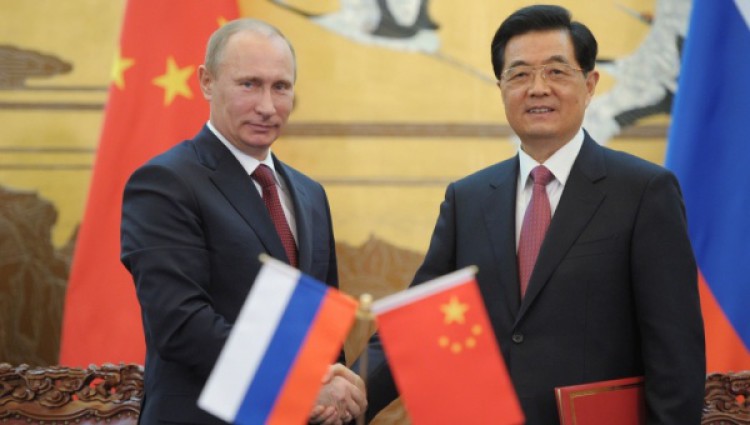
President Vladimir V. Putin of Russia, right, at a meeting near Moscow on Wednesday.CreditPool photo by Alexey Nikolsky
Though Russia and the United States remain far apart on the critical question of whether Mr. Assad should remain in power, Mr. Kerry said the two sides had agreed to explore “options” to ease the conflict. “We think we have some very specific steps that may be able to help lead in the right direction,” said Mr. Kerry, who did not provide any details. “That needs to be properly explored.”
At least one and possibly more Syrian opposition groups that have been secretly armed and trained by the C.I.A. were among the rebel groups targeted by the Russian airstrikes, a senior United States official said. The official would not identify which group or groups were attacked or where they were located. Nor would he assess the damages or casualties suffered by the Syrian fighters other than to say, “It was not minor.” American officials said they were still sorting through the battle damage reports coming in from the field.
While the Pentagon’s $500 million program to train and equip Syrian fighters has largely failed — at one point this month only four or five American-trained combatants were in the fight in Syria — the C.I.A.’s covert program to train other fighters has weathered some setbacks to produce 3,000 to 5,000 fighters in the nearly two years it has been operating.
Mr. Kerry, speaking to the Security Council, warned Russia not to carry out airstrikes in areas of Syria in which the Islamic State is not believed to be operating. With his Russian counterpart in the chair, Mr. Kerry said that the Obama administration would welcome “any genuine effort” by Moscow to target the Islamic State and the Nusra Front, Al Qaeda’s branch in Syria.
But Mr. Kerry made clear that the United States would have “grave concerns” if the Russians bombed other moderate rebel groups, and he repeated the American position that Mr. Assad would eventually need to leave power as part of a political transition that would be intended to bring peace to Syria. He also said that the United States-led coalition is poised “to dramatically accelerate” airstrikes against the Islamic State.
When a reporter asked Mr. Lavrov about Mr. Carter’s assertion that the Russian airstrikes appeared to have been directed at parts of Syria not known to be under the control of the Islamic State, he said, “Don’t listen to the Pentagon about the Russian strikes.”
But Western diplomats warned that Russia was sending a dangerous message if its attacks were aimed primarily against opponents of Mr. Assad, rather than the Islamic State.
Putin on Intervention in Syria
President Vladimir V. Putin of Russia said that he believes the only way to deal with terrorists in Syria is to act preemptively. By REUTERS on Publish DateSeptember 30, 2015. Photo by Justin Lane/European Pressphoto Agency. Watch in Times Video »
“We need the Russians to understand that in coming to defense of the regime to attack ISIL, what they will do is forge a single united force under ISIL leadership against the regime,” said the British foreign secretary, Philip Hammond. “That’s the huge danger we face.”
A spokesman for the Russian Defense Ministry, Maj. Gen. Igor Konashenkov, said its pilots were engaged in precision strikes “against the military equipment, communication centers, transport vehicles, arms depots, ammunition and fuels and lubricant materials belonging to ISIS terrorists.”
But in a video on YouTube, a rebel commander in Hama Province, Jamil al-Saleh, said that his forces had eavesdropped on communications between Syrian Air Force pilots and their bases, which confirmed that Russian warplanes were aloft. His group, the Izza Gathering, is one of the remaining fragments of the loosely knit Free Syrian Army, relatively secular groups that have received some Western support.
The attacks, according to state-run television and rebel sources, occurred north of Homs and into Hama Province. Recent advances in Hama by a coalition of insurgents opposed to Mr. Assad as well as to the Islamic State have posed new threats to the coastal Alawite heartland, where Mr. Assad enjoys his strongest support. That coalition has a range of groups, including the Nusra Front, less-extremist Islamist groups and relatively secular groups like Mr. Saleh’s.
In his comments, Mr. Putin said that the only long-term solution for Syria was through political change and dialogue between the opposition and the government. “I know that President Assad understands that and is ready for this process,” Mr. Putin said. He said Russia hoped Mr. Assad would make “compromises in the name of his country and his people.”
But the United States has long held that Mr. Assad must step down before a stable peace can be achieved. Lately, President Obama has added some nuance, saying that Mr. Assad could be part of a “managed transition” to a new government.
In Syria, the state-run news media strongly endorsed the move by Russia. Supporters of Mr. Assad seemed particularly pleased that Moscow was sending military aid because they felt his endorsement at the United Nations two days ago was a bit tepid.
Mr. Putin harbors both international and domestic reasons for interfering in Syria. On the international front, he wants to restore Russian influence as a global power and try to force an end to the diplomatic and financial isolation the West imposed after Moscow seized Crimea and supported separatists in southeastern Ukraine. He also wants to maintain control over Russia’s naval station at Tartus, in Syria, its only remaining overseas military base outside the former Soviet Union.
Helene Cooper reported from Washington, Michael R. Gordon from New York, and Neil MacFarquhar from Moscow. Eric Schmitt contributed reporting from Washington, Somini Sengupta from the United Nations, and Anne Barnard from Beirut, Lebanon.
Video
Russia May Not Have Attacked ISIS
Defense Secretary Ashton B. Carter said the Russian airstrikes in Syria were probably not in areas with Islamic State forces. By REUTERS on Publish DateSeptember 30, 2015.Photo by Saul Loeb/Agence France-Presse — Getty Images. Watch in Times Video »
WASHINGTON — Russian aircraft carried out a bombing attack against Syrian opposition fighters on Wednesday, including at least one group trained by the C.I.A., eliciting angry protests from American officials and plunging the complex sectarian war there into dangerous new territory.
Russia’s entry into the Syrian conflict, foreshadowed by a rapid military buildup in the past three weeks at an air base in Latakia, Syria, makes the possibility of a political settlement in Syria more difficult and creates a new risk of inadvertent incidents between American and Russian warplanes flying in the same area. And it adds a powerful but unpredictable combatant to a civil war that has already resulted in hundreds of thousands of deaths and a flood of refugees.
President Vladimir V. Putin of Russia justified his country’s entry into the conflict by saying that Russia was acting “preventatively, to fight and destroy militants and terrorists on the territories that they already occupied, not wait for them to come to our house.”
GRAPHIC
Tracking the Russian Airstrikes in Syria
Maps show that most of the areas hit by the airstrikes are controlled by rebel groups and not in Islamic State territory.
OPEN GRAPHIC
But American officials said the attack was not directed at the Islamic State but at other opposition groups fighting against the government of the Syrian president, Bashar al-Assad, whom Mr. Putin has vowed to support. American officials said Russian warplanes and helicopter gunships had dropped bombs north of the central city of Homs, where there are few, if any, militants of the Islamic State, also known as ISIS or ISIL.
“By supporting Assad and seemingly taking on everybody fighting Assad,” Defense Secretary Ashton B. Carter said Wednesday, Russia is “taking on the whole rest of the country that’s fighting Assad.” Some of those groups, he added, are supported by the United States and need to be part of a political resolution in Syria.
“That’s why the Russian position is doomed to fail,” Mr. Carter said.
Both Mr. Carter and Secretary of State John Kerry were critical of Russia for failing to fully inform American officials ahead of time of their mission. The notification consisted of contacting the American Embassy in Baghdad one hour before the strikes with the warning that American planes should avoid Syrian airspace. No effort was made to coordinate the airstrikes with American air operations in the region.
Illustrating the widening complexity of the war, the United States conducted its own airstrikes in Syria on Wednesday, near Aleppo, without warning to the Russians. “No, we did not,” an American official said afterward. “It should come as a surprise to no one that we’re conducting airstrikes in Syria.”
Mr. Kerry raised Russia’s handling of the mission Wednesday morning with Sergey V. Lavrov, the Russian foreign minister, and after a late-afternoon meeting at the United Nations, Mr. Kerry told reporters that the two sides had agreed to begin talks on avoiding unintended confrontations in Syria and clarifying which targets the Russians are picking as soon as possible, maybe even Thursday.
“It is one thing, obviously, to be targeting ISIL,” Mr. Kerry said. “We are concerned, obviously, that is not what’s happening.”Photo
President Vladimir V. Putin of Russia, right, at a meeting near Moscow on Wednesday.CreditPool photo by Alexey Nikolsky
Though Russia and the United States remain far apart on the critical question of whether Mr. Assad should remain in power, Mr. Kerry said the two sides had agreed to explore “options” to ease the conflict. “We think we have some very specific steps that may be able to help lead in the right direction,” said Mr. Kerry, who did not provide any details. “That needs to be properly explored.”
At least one and possibly more Syrian opposition groups that have been secretly armed and trained by the C.I.A. were among the rebel groups targeted by the Russian airstrikes, a senior United States official said. The official would not identify which group or groups were attacked or where they were located. Nor would he assess the damages or casualties suffered by the Syrian fighters other than to say, “It was not minor.” American officials said they were still sorting through the battle damage reports coming in from the field.
While the Pentagon’s $500 million program to train and equip Syrian fighters has largely failed — at one point this month only four or five American-trained combatants were in the fight in Syria — the C.I.A.’s covert program to train other fighters has weathered some setbacks to produce 3,000 to 5,000 fighters in the nearly two years it has been operating.
Mr. Kerry, speaking to the Security Council, warned Russia not to carry out airstrikes in areas of Syria in which the Islamic State is not believed to be operating. With his Russian counterpart in the chair, Mr. Kerry said that the Obama administration would welcome “any genuine effort” by Moscow to target the Islamic State and the Nusra Front, Al Qaeda’s branch in Syria.
But Mr. Kerry made clear that the United States would have “grave concerns” if the Russians bombed other moderate rebel groups, and he repeated the American position that Mr. Assad would eventually need to leave power as part of a political transition that would be intended to bring peace to Syria. He also said that the United States-led coalition is poised “to dramatically accelerate” airstrikes against the Islamic State.
When a reporter asked Mr. Lavrov about Mr. Carter’s assertion that the Russian airstrikes appeared to have been directed at parts of Syria not known to be under the control of the Islamic State, he said, “Don’t listen to the Pentagon about the Russian strikes.”
But Western diplomats warned that Russia was sending a dangerous message if its attacks were aimed primarily against opponents of Mr. Assad, rather than the Islamic State.
Putin on Intervention in Syria
President Vladimir V. Putin of Russia said that he believes the only way to deal with terrorists in Syria is to act preemptively. By REUTERS on Publish DateSeptember 30, 2015. Photo by Justin Lane/European Pressphoto Agency. Watch in Times Video »
“We need the Russians to understand that in coming to defense of the regime to attack ISIL, what they will do is forge a single united force under ISIL leadership against the regime,” said the British foreign secretary, Philip Hammond. “That’s the huge danger we face.”
A spokesman for the Russian Defense Ministry, Maj. Gen. Igor Konashenkov, said its pilots were engaged in precision strikes “against the military equipment, communication centers, transport vehicles, arms depots, ammunition and fuels and lubricant materials belonging to ISIS terrorists.”
But in a video on YouTube, a rebel commander in Hama Province, Jamil al-Saleh, said that his forces had eavesdropped on communications between Syrian Air Force pilots and their bases, which confirmed that Russian warplanes were aloft. His group, the Izza Gathering, is one of the remaining fragments of the loosely knit Free Syrian Army, relatively secular groups that have received some Western support.
The attacks, according to state-run television and rebel sources, occurred north of Homs and into Hama Province. Recent advances in Hama by a coalition of insurgents opposed to Mr. Assad as well as to the Islamic State have posed new threats to the coastal Alawite heartland, where Mr. Assad enjoys his strongest support. That coalition has a range of groups, including the Nusra Front, less-extremist Islamist groups and relatively secular groups like Mr. Saleh’s.
In his comments, Mr. Putin said that the only long-term solution for Syria was through political change and dialogue between the opposition and the government. “I know that President Assad understands that and is ready for this process,” Mr. Putin said. He said Russia hoped Mr. Assad would make “compromises in the name of his country and his people.”
But the United States has long held that Mr. Assad must step down before a stable peace can be achieved. Lately, President Obama has added some nuance, saying that Mr. Assad could be part of a “managed transition” to a new government.
In Syria, the state-run news media strongly endorsed the move by Russia. Supporters of Mr. Assad seemed particularly pleased that Moscow was sending military aid because they felt his endorsement at the United Nations two days ago was a bit tepid.
Mr. Putin harbors both international and domestic reasons for interfering in Syria. On the international front, he wants to restore Russian influence as a global power and try to force an end to the diplomatic and financial isolation the West imposed after Moscow seized Crimea and supported separatists in southeastern Ukraine. He also wants to maintain control over Russia’s naval station at Tartus, in Syria, its only remaining overseas military base outside the former Soviet Union.
Helene Cooper reported from Washington, Michael R. Gordon from New York, and Neil MacFarquhar from Moscow. Eric Schmitt contributed reporting from Washington, Somini Sengupta from the United Nations, and Anne Barnard from Beirut, Lebanon.
US Complains As Russia Bombs its Terrorists
Link
October 1, 2015 (Tony Cartalucci - NEO) - The New York Times in its recent article, "Russians Strike Targets in Syria, but Not ISIS Areas," attempts to frame Russia's recent actions in Syria as dishonest and dangerous. It reports:
Russian aircraft carried out a bombing attack against Syrian opposition fighters on Wednesday, including at least one group trained by the C.I.A., eliciting angry protests from American officials and plunging the complex sectarian war there into dangerous new territory.

This of course would only make Russia's actions dishonest or dangerous if groups trained by the US CIA were in fact the "moderates" the US claims they are. However, they are not, and thus Russia's actions are duly justified as is the expansion of their current policy.
There Are no Moderates, and There Never Were
For months now, after years of headlines confirming the US has been covertly arming militants in Syria for the purpose of overthrowing the government in Damascus, a narrative revolving around tens of thousands of these militants "defecting" to Al Nusra and the so-called "Islamic State" (ISIS/ISIL) has been peddled to the public by the Western media and US politicians to account for the apparent failure of America's alleged policy of creating an army of "moderates" to both fight ISIS/Al Qaeda and the Syrian government.
In reality, from the beginning, there were never any moderates. Starting as early as 2007, years before the war in Syria began, the US as a matter of policy had long since decided to intentionally fund and support the Syrian Muslim Brotherhood - for all intents and purposes the political wing of Al Qaeda - and begin arming militants affiliated with Al Qaeda itself.
This was revealed in Pulitzer Prize-winning journalist Seymour Hersh's 2007 New Yorker article titled, "The Redirection Is the Administration’s new policy benefitting our enemies in the war on terrorism?," which stated explicitly (emphasis added):
To undermine Iran, which is predominantly Shiite, the Bush Administration has decided, in effect, to reconfigure its priorities in the Middle East. In Lebanon, the Administration has coöperated with Saudi Arabia’s government, which is Sunni, in clandestine operations that are intended to weaken Hezbollah, the Shiite organization that is backed by Iran. The U.S. has also taken part in clandestine operations aimed at Iran and its ally Syria. A by-product of these activities has been the bolstering of Sunni extremist groups that espouse a militant vision of Islam and are hostile to America and sympathetic to Al Qaeda.Hersh's prophetic 9-page report would also reveal that even then, the extremist Syrian Muslim Brotherhood was already receiving funding and support from the United States via Saudi Arabia. His report revealed (emphasis added):
There is evidence that the Administration’s redirection strategy has already benefitted the Brotherhood. The Syrian National Salvation Front is a coalition of opposition groups whose principal members are a faction led by Abdul Halim Khaddam, a former Syrian Vice-President who defected in 2005, and the Brotherhood. A former high-ranking C.I.A. officer told me,“The Americans have provided both political and financial support. The Saudis are taking the lead with financial support, but there is American involvement.” He said that Khaddam, who now lives in Paris, was getting money from Saudi Arabia, with the knowledge of the White House. (In 2005, a delegation of the Front’s members met with officials from the National Security Council, according to press reports.) A former White House official told me that the Saudis had provided members of the Front with travel documents.By 2011, Al Qaeda's affiliates in Syria, most notably the Al Nusra Front, began operating nation-wide, taking the lead in the US-backed fight against Damascus. By 2012, when the US State Department listed Al Nusra as a foreign terrorist organization, it was clear even then, that the largest contingent of anti-government forces on the battlefield was Al Qaeda.
The US State Department's official statement regarding Al Nusra reported that:
Since November 2011, al-Nusrah Front has claimed nearly 600 attacks – ranging from more than 40 suicide attacks to small arms and improvised explosive device operations – in major city centers including Damascus, Aleppo, Hamah, Dara, Homs, Idlib, and Dayr al-Zawr. During these attacks numerous innocent Syrians have been killed.It is clear that Al Qaeda was not only involved in the conflict since its beginning, but also led it. This betrays current US rhetoric that Al Qaeda had only entered the fight later on, seizing on the chaos created by "moderates" and their fight with Damascus. It is clear that it was Al Qaeda itself that drove that chaos from the beginning, and is still driving this chaos to this day.
The Rhetorical Pipeline
To explain how America's fictional "moderate" army has been displaced on the battlefield in Syria by Al Qaeda and ISIS, the US claims that its multi-billion dollar nearly 5-year operation has suffered from massive defections.
The Guardian would report in its article, "Free Syrian Army rebels defect to Islamist group Jabhat al-Nusra," that:
Syria's main armed opposition group, the Free Syrian Army (FSA), is losing fighters and capabilities to Jabhat al-Nusra, an Islamist organisation with links to al-Qaida that is emerging as the best-equipped, financed and motivated force fighting Bashar al-Assad's regime.The International Business Times would report in its article, "Four Years Later, The Free Syrian Army Has Collapsed," that:
The Nusra Front, aka Jabhat al-Nusra, has picked up thousands of men who once fought under the umbrella of the FSA during the past three years. It offers its soldiers hundreds of dollars a month in salary and food installments. The soldiers in the FSA did not receive any monthly stipend. When extremist groups such as the Nusra Front gained ground in Syria and received millions of dollars in cash and weapons from wealthy businessmen in the Gulf states and Libya, the moderate rebels “had no other choice,” Jarrah said. “They feel like they are cheated, so they join ISIS.”The Daily Beast would report in its article, "Main U.S.-Backed Syrian Rebel Group Disbanding, Joining Islamists," that:
The Syrian rebel group Harakat al-Hazm, one of the White House’s most trusted militias fighting President Bashar al-Assad, collapsed Sunday, with activists posting a statement online from frontline commanders saying they are disbanding their units and folding them into brigades aligned with a larger Islamist insurgent alliance distrusted by Washington.Harakat al-Hazm would take with them to Al Qaeda and ISIS, millions of dollars worth of sophisticated US weapons, including US-made anti-tank TOW missiles.

The most recent US supported group, the fabled "Division 30," has also allegedly defected to Al Qaeda - assuming they weren't Al Qaeda militants from the beginning. The Telegraph in its article, "US-trained Division 30 rebels 'betray US and hand weapons over to al-Qaeda's affiliate in Syria'," reported that:
Pentagon-trained rebels in Syria are reported to have betrayed their American backers and handed their weapons over to al-Qaeda in Syria immediately after re-entering the country.
Fighters with Division 30, the “moderate” rebel division favoured by the United States, surrendered to the al-Qaeda-affiliated Jabhat al-Nusra, a raft of sources claimed on Monday night.What this news, admitted to by the West itself, of these US-backed "moderates" joining Al Qaeda's ranks by the thousands proves is that at the very least America's policy of building up a moderate opposition has failed entirely. What documented evidence stretching back as far as 2007 proves is that the US had no intention of building up a moderate opposition in the first place, and news of "defections" are simply cover for the direct funding and arming of Al Qaeda and ISIS in Syria.
At the very least, Russia bombing these groups either having already defected to Al Qaeda, or inevitably going to defect to Al Qaeda, is doing the Pentagon a favor.
Russia is Bombing Al Qaeda
This leads back to the most recent New York Times article. Russia is not arbitrarily bombing "moderates" backed by the US in Syria to stave off allegedly "legitimate" opposition to the government in Damascus - Russia is bombing terrorists who are either operating under the banner of Al Qaeda but are portrayed as otherwise by the US, or will inevitably end up turning their fighters and weapons over to Al Qaeda. Russia is bombing Al Qaeda.
The New York Times article would also claim:
“By supporting Assad and seemingly taking on everybody fighting Assad,” Defense Secretary Ashton B. Carter said Wednesday, Russia is “taking on the whole rest of the country that’s fighting Assad.” Some of those groups, he added, are supported by the United States and need to be part of a political resolution in Syria.Indeed, Russia is undoubtedly bombing militants supported by the United States, but that is only because the United States has intentionally supported Al Qaeda and ISIS in Syria. At any time if the United States truly wanted to strike an irreparable blow at ISIS forces, it could simply seal off the Turkish border across which the summation of ISIS' supplies, fighters, weapons, and vehicles flow. By securing the Turkish-Syrian border to the north, and the Jordanian-Syrian border in the south, the United States could strangle ISIS out of existence in a month, if not sooner.

Image: It is abundantly clear that ISIS' supply lines lead out of NATO-member Turkey and that Syrian and Kurdish forces are desperately trying to seal off the Turkish-Syrian border to stop them. Note that the proposed US-Turkish "safe zone" in Syria would be located and protecting the remaining ISIS supply corridor into Syria.
That it has intentionally allowed ISIS supplies to flow out from under the nose of its allies and its own military forces stationed both in Jordan and in Turkey, indicates the the US at the very least is tacitly perpetuating the existence of ISIS - but most likely is actively involved in filling the trucks bound for ISIS in Syria as well.
US Secretary of Defense Ashton Carter claims that the Russian position is "doomed," in what appears to be a pledge by the United States to resist Moscow's attempts to stamp out Al Qaeda groups in addition to taking on and eliminating ISIS.
Some might consider doubling down on a policy of backing terrorists that will inevitably be revealed to the world, and a policy that has thus far failed to topple the Syrian government which is now being bolstered by Russian, Iranian, and possibly Chinese forces, is a policy that is ultimately doomed.
And finally, it must be noted, for those still doubting ISIS is in fact an intentional creation of US foreign policy, that ISIS is now fighting the combined military forces of Syria, Hezbollah, Iran, Iraq, and now Russia. One must ask themselves who has the material resources, finances, and operational capacity to support a single army capable of taking on a multinational coalition of this size. Where, if not from the US and its regional allies, is ISIS deriving the source of its fighting capacity?
Claiming to fight ISIS, while so transparently supporting them, is indeed a doomed position, one doomed to fail today, and one doomed to eternal condemnation in the future.
Tony Cartalucci, Bangkok-based geopolitical researcher and writer, especially for the online magazine“New Eastern Outlook”.
October 1, 2015 (Tony Cartalucci - NEO) - The New York Times in its recent article, "Russians Strike Targets in Syria, but Not ISIS Areas," attempts to frame Russia's recent actions in Syria as dishonest and dangerous. It reports:
Russian aircraft carried out a bombing attack against Syrian opposition fighters on Wednesday, including at least one group trained by the C.I.A., eliciting angry protests from American officials and plunging the complex sectarian war there into dangerous new territory.

This of course would only make Russia's actions dishonest or dangerous if groups trained by the US CIA were in fact the "moderates" the US claims they are. However, they are not, and thus Russia's actions are duly justified as is the expansion of their current policy.
There Are no Moderates, and There Never Were
For months now, after years of headlines confirming the US has been covertly arming militants in Syria for the purpose of overthrowing the government in Damascus, a narrative revolving around tens of thousands of these militants "defecting" to Al Nusra and the so-called "Islamic State" (ISIS/ISIL) has been peddled to the public by the Western media and US politicians to account for the apparent failure of America's alleged policy of creating an army of "moderates" to both fight ISIS/Al Qaeda and the Syrian government.
In reality, from the beginning, there were never any moderates. Starting as early as 2007, years before the war in Syria began, the US as a matter of policy had long since decided to intentionally fund and support the Syrian Muslim Brotherhood - for all intents and purposes the political wing of Al Qaeda - and begin arming militants affiliated with Al Qaeda itself.
This was revealed in Pulitzer Prize-winning journalist Seymour Hersh's 2007 New Yorker article titled, "The Redirection Is the Administration’s new policy benefitting our enemies in the war on terrorism?," which stated explicitly (emphasis added):
To undermine Iran, which is predominantly Shiite, the Bush Administration has decided, in effect, to reconfigure its priorities in the Middle East. In Lebanon, the Administration has coöperated with Saudi Arabia’s government, which is Sunni, in clandestine operations that are intended to weaken Hezbollah, the Shiite organization that is backed by Iran. The U.S. has also taken part in clandestine operations aimed at Iran and its ally Syria. A by-product of these activities has been the bolstering of Sunni extremist groups that espouse a militant vision of Islam and are hostile to America and sympathetic to Al Qaeda.Hersh's prophetic 9-page report would also reveal that even then, the extremist Syrian Muslim Brotherhood was already receiving funding and support from the United States via Saudi Arabia. His report revealed (emphasis added):
There is evidence that the Administration’s redirection strategy has already benefitted the Brotherhood. The Syrian National Salvation Front is a coalition of opposition groups whose principal members are a faction led by Abdul Halim Khaddam, a former Syrian Vice-President who defected in 2005, and the Brotherhood. A former high-ranking C.I.A. officer told me,“The Americans have provided both political and financial support. The Saudis are taking the lead with financial support, but there is American involvement.” He said that Khaddam, who now lives in Paris, was getting money from Saudi Arabia, with the knowledge of the White House. (In 2005, a delegation of the Front’s members met with officials from the National Security Council, according to press reports.) A former White House official told me that the Saudis had provided members of the Front with travel documents.By 2011, Al Qaeda's affiliates in Syria, most notably the Al Nusra Front, began operating nation-wide, taking the lead in the US-backed fight against Damascus. By 2012, when the US State Department listed Al Nusra as a foreign terrorist organization, it was clear even then, that the largest contingent of anti-government forces on the battlefield was Al Qaeda.
The US State Department's official statement regarding Al Nusra reported that:
Since November 2011, al-Nusrah Front has claimed nearly 600 attacks – ranging from more than 40 suicide attacks to small arms and improvised explosive device operations – in major city centers including Damascus, Aleppo, Hamah, Dara, Homs, Idlib, and Dayr al-Zawr. During these attacks numerous innocent Syrians have been killed.It is clear that Al Qaeda was not only involved in the conflict since its beginning, but also led it. This betrays current US rhetoric that Al Qaeda had only entered the fight later on, seizing on the chaos created by "moderates" and their fight with Damascus. It is clear that it was Al Qaeda itself that drove that chaos from the beginning, and is still driving this chaos to this day.
The Rhetorical Pipeline
To explain how America's fictional "moderate" army has been displaced on the battlefield in Syria by Al Qaeda and ISIS, the US claims that its multi-billion dollar nearly 5-year operation has suffered from massive defections.
The Guardian would report in its article, "Free Syrian Army rebels defect to Islamist group Jabhat al-Nusra," that:
Syria's main armed opposition group, the Free Syrian Army (FSA), is losing fighters and capabilities to Jabhat al-Nusra, an Islamist organisation with links to al-Qaida that is emerging as the best-equipped, financed and motivated force fighting Bashar al-Assad's regime.The International Business Times would report in its article, "Four Years Later, The Free Syrian Army Has Collapsed," that:
The Nusra Front, aka Jabhat al-Nusra, has picked up thousands of men who once fought under the umbrella of the FSA during the past three years. It offers its soldiers hundreds of dollars a month in salary and food installments. The soldiers in the FSA did not receive any monthly stipend. When extremist groups such as the Nusra Front gained ground in Syria and received millions of dollars in cash and weapons from wealthy businessmen in the Gulf states and Libya, the moderate rebels “had no other choice,” Jarrah said. “They feel like they are cheated, so they join ISIS.”The Daily Beast would report in its article, "Main U.S.-Backed Syrian Rebel Group Disbanding, Joining Islamists," that:
The Syrian rebel group Harakat al-Hazm, one of the White House’s most trusted militias fighting President Bashar al-Assad, collapsed Sunday, with activists posting a statement online from frontline commanders saying they are disbanding their units and folding them into brigades aligned with a larger Islamist insurgent alliance distrusted by Washington.Harakat al-Hazm would take with them to Al Qaeda and ISIS, millions of dollars worth of sophisticated US weapons, including US-made anti-tank TOW missiles.

The most recent US supported group, the fabled "Division 30," has also allegedly defected to Al Qaeda - assuming they weren't Al Qaeda militants from the beginning. The Telegraph in its article, "US-trained Division 30 rebels 'betray US and hand weapons over to al-Qaeda's affiliate in Syria'," reported that:
Pentagon-trained rebels in Syria are reported to have betrayed their American backers and handed their weapons over to al-Qaeda in Syria immediately after re-entering the country.
Fighters with Division 30, the “moderate” rebel division favoured by the United States, surrendered to the al-Qaeda-affiliated Jabhat al-Nusra, a raft of sources claimed on Monday night.What this news, admitted to by the West itself, of these US-backed "moderates" joining Al Qaeda's ranks by the thousands proves is that at the very least America's policy of building up a moderate opposition has failed entirely. What documented evidence stretching back as far as 2007 proves is that the US had no intention of building up a moderate opposition in the first place, and news of "defections" are simply cover for the direct funding and arming of Al Qaeda and ISIS in Syria.
At the very least, Russia bombing these groups either having already defected to Al Qaeda, or inevitably going to defect to Al Qaeda, is doing the Pentagon a favor.
Russia is Bombing Al Qaeda
This leads back to the most recent New York Times article. Russia is not arbitrarily bombing "moderates" backed by the US in Syria to stave off allegedly "legitimate" opposition to the government in Damascus - Russia is bombing terrorists who are either operating under the banner of Al Qaeda but are portrayed as otherwise by the US, or will inevitably end up turning their fighters and weapons over to Al Qaeda. Russia is bombing Al Qaeda.
The New York Times article would also claim:
“By supporting Assad and seemingly taking on everybody fighting Assad,” Defense Secretary Ashton B. Carter said Wednesday, Russia is “taking on the whole rest of the country that’s fighting Assad.” Some of those groups, he added, are supported by the United States and need to be part of a political resolution in Syria.Indeed, Russia is undoubtedly bombing militants supported by the United States, but that is only because the United States has intentionally supported Al Qaeda and ISIS in Syria. At any time if the United States truly wanted to strike an irreparable blow at ISIS forces, it could simply seal off the Turkish border across which the summation of ISIS' supplies, fighters, weapons, and vehicles flow. By securing the Turkish-Syrian border to the north, and the Jordanian-Syrian border in the south, the United States could strangle ISIS out of existence in a month, if not sooner.

Image: It is abundantly clear that ISIS' supply lines lead out of NATO-member Turkey and that Syrian and Kurdish forces are desperately trying to seal off the Turkish-Syrian border to stop them. Note that the proposed US-Turkish "safe zone" in Syria would be located and protecting the remaining ISIS supply corridor into Syria.
That it has intentionally allowed ISIS supplies to flow out from under the nose of its allies and its own military forces stationed both in Jordan and in Turkey, indicates the the US at the very least is tacitly perpetuating the existence of ISIS - but most likely is actively involved in filling the trucks bound for ISIS in Syria as well.
US Secretary of Defense Ashton Carter claims that the Russian position is "doomed," in what appears to be a pledge by the United States to resist Moscow's attempts to stamp out Al Qaeda groups in addition to taking on and eliminating ISIS.
Some might consider doubling down on a policy of backing terrorists that will inevitably be revealed to the world, and a policy that has thus far failed to topple the Syrian government which is now being bolstered by Russian, Iranian, and possibly Chinese forces, is a policy that is ultimately doomed.
And finally, it must be noted, for those still doubting ISIS is in fact an intentional creation of US foreign policy, that ISIS is now fighting the combined military forces of Syria, Hezbollah, Iran, Iraq, and now Russia. One must ask themselves who has the material resources, finances, and operational capacity to support a single army capable of taking on a multinational coalition of this size. Where, if not from the US and its regional allies, is ISIS deriving the source of its fighting capacity?
Claiming to fight ISIS, while so transparently supporting them, is indeed a doomed position, one doomed to fail today, and one doomed to eternal condemnation in the future.
Tony Cartalucci, Bangkok-based geopolitical researcher and writer, especially for the online magazine“New Eastern Outlook”.
Friday, October 2, 2015
A Lâmpada da Palavra
Link
Palavras de Jesus
[The Lamp of the Word]
Lâmpada para os meus pés é a Sua palavra, e luz para o meu caminho. — Salmo 119:105
*
O segredo para encontrar o seu caminho e saber qual o próximo passo e chegar à hora certa ao destino que determinei é usar a Minha Palavra como guia e deixa-la ser a luz que vai cortar as trevas e lhe mostrar o caminho.
Algo interessante sobre uma lâmpada ou luz é que quando a segura nas mãos, ela brilha bem à sua frente. Não reluz à distância onde não serviria de nada, mas ao seu redor, de maneira que, conforme você se movimenta, ela vai mostrando melhor o caminho. É por isso que comparei Minha Palavra a uma lâmpada, porque para ela realmente surtir efeito na sua vida é preciso deixá-la reluzir ao seu redor. Fazendo isso você terá uma visão melhor e o seu caminho ficará mais nítido.
Adoro quando Meus filhos seguem o caminho que a luz da Minha Palavra lhes revela. Quando alguém está andando no escuro precisa ter fé que a sua lâmpada vai ajudar a mantê-lo no caminho certo. Ele só se perde e fica sem saber para onde seguir quando decide encontrar o caminho sozinho. Quando, porém, clama a Mim, Eu levo a luz de volta ao viajante e o coloco no caminho certo.
A Minha Palavra é essa luz na sua vida e é preciso esforço para criar o hábito de abrir o seu coração para a luz e absorvê-la.Quanto mais contato tiver com a Minha Palavra e mais prioridade lhe der, mais forte ficará esse hábito e mais vida ela passará a ter para você.
Conforme se esforçar por seguir na direção em que guio, e a receber qualquer novo direcionamento que Eu lhe dê, a luz da Minha Palavra continuará guiando, iluminando você, e lhe mostrando o caminho.
*
Revistam-se do Senhor Jesus Cristo. — Romanos 13:14[1]
*
Busque a Minha face no início do seu dia, assim poderá “se revestir de Mim”, passando a agir como Eu no seu dia a dia. A maioria das pessoas se veste assim que acorda. Da mesma maneira, quanto mais cedo você “vestir-se de Mim”, comunicando-se Comigo, mais bem preparado estará para o que vier a acontecer.
“Revestir-se de Mim” significa basicamente pensar como Eu, ter os Meus pensamentos. Peça ao Espírito Santo para guiar seus pensamentos e se transforme pela renovação que ocorrerá no seu íntimo. Assim estará melhor equipado para encarar as pessoas e situações que Eu permitir. Revestir a sua mente do Meu pensamento é o melhor preparativo para cada dia.
Demonstre sua confiança em Mim sentando-se sossegadamente na Minha presença. Deixe de lado tudo o que ainda precisa ser feito. Recuse-se a se preocupar com qualquer outra coisa. Esse tempo sagrado juntos os fortalecerá e preparará para encarar o que o dia trouxe. Ao esperar em Mim antes de começar as atividades do dia, está proclamando a realidade da Minha presença viva.
Quando precisar agir, Eu o guiarei claramente através do Meu Espírito e Palavra. O mundo é muito complexo e exageradamente estimulante, portanto é fácil perder o senso de direção. Quando você passa tempo Comigo, resgato seu senso de direção.
Venha a Mim e ouça! Entre em sintonia com a Minha voz e receba as bênçãos mais magníficas. Deslumbre-se com a maravilha de se comunicar com o Criador do universo, desde o conforto do seu lar.
Apesar de ser o rei do universo, estou totalmente acessível. Estou ao seu lado aonde quer que você vá. Nada o tirará da Minha presença. Quando clamei na cruz: “Está consumado”, o véu se dividiu de cima a baixo, o que lhe ofereceu uma maneira de Me conhecer cara a cara, sem protocolo ou sacerdotes. Eu, o Rei dos reis, sou a sua companhia constante. Sou totalmente acessível a você.[2]
*
O espírito é que vivifica, a carne para nada serve. As palavras que eu vos disse são espírito e vida. — João 6:63[3]
Passe tempo de qualidade na Minha Palavra
Tempo de qualidade na Palavra significa comunicar-se de coração Comigo e dar ao seu espírito o alimento espiritual que ele precisapara o dia, ou desafio. Significa fazer contato Comigo no espírito. Conforme se incitar, o seu espírito estenderá a mão e Me tocará, de maneira que você será reabastecido, renovado, revigorado e fortalecido.
Passar tempo de qualidade na Palavra significa descansar em Meus braços e se sentar aos Meus pés, como Maria, satisfeito só por receber o que tenho para lhe dar, conectar-se a Mim e absorver o Meu Espírito. Significa ter uma experiência Comigo em sua mente, coração, espírito ese concentrar totalmente em Mim, dedicar-me o seu tempo e atenção e permitir que Eu satisfaça a sua fome espiritual.
Sou a Palavra. Conectar-se Comigo na leitura da Palavra o tornará um Comigo. Conforme se aplicar à leitura e ao estudo da Minha Palavra, você se tornará um Comigo. Conforme ler e estudar a Minha Palavra, buscando aplicá-la e guardá-la no seu coração, aprenderá a sentir a Minha presença e Me conhecerá de maneira mais íntima, profunda e pessoal. Você se tornará um Comigo e com a Minha Palavra.
*
Aqueles que são sábios reluzirão como o brilho do céu, e aqueles que conduzem muitos à justiça serão como as estrelas, para todo o sempre. — Daniel 12:3[4]
*
A verdadeira e eterna sabedoria é Me conhecer. Conhecer-Me de coração é sabedoria e também um grande e incomparável prazer. Além do que, os sábios reluzirão como o brilho do céu. Você receberá uma maravilhosa recompensa pelo hábito de desfrutar da Minha presença. Em Meu reino, a sensibilidade espiritual gera entendimento verdadeiro e alicerçado na Palavra. Quanto mais absorver a Palavra e permitir que ela penetre em seu coração, mente e espírito, mais Me conhecerá. Aqueles que Me conhecem como Salvador reluzirão no céu por toda a eternidade. Encha o coração de esperança com essa promessa fulgurante.
Outro privilégio fabuloso que lhe ofereço é o de guiar muitos à justiça. Sua vida e suas palavras podem influenciar os outros no caminho da justiça. Conforme procura viver próximo de Mim e desfrutar da Minha presença, sua luz brilhará diante dos homens para que possam Me conhecer. Influenciar outros no caminho da justiça aumenta sua capacidade de brilhar como as estrelas, para sempre e eternamente. Viver perto de Mim não só o abençoa, mas também expande sua capacidade de refletir Minha glória por toda a eternidade![5]
*
Venha sobre mim o Teu constante amor, ó Senhor, e a Tua salvação segundo a Tua promessa. Então terei que responder ao que me afronta, pois confio na Tua palavra. Da minha boca não tires a palavra de verdade, pois espero nas Tuas leis. Observarei de contínuo a Tua lei, para sempre e eternamente. Andarei em liberdade, pois busquei os Teus preceitos. Falarei dos Teus estatutos perante os reis, e não me envergonharei. Tenho prazer nos Teus mandamentos, porque os amo. Levanto as mãos para os Teus mandamentos, que amo, e medito nos Teus decretos. — Salmo 119:41–48
Publicado no Âncora em julho de 2015.
[1] NLTH.
[2] Sarah Young, Jesus Calling (Thomas Nelson, 2010).
[3] NVI.
[4] NVI.
[5] Sarah Young, Jesus Lives (Thomas Nelson, 2009).