
By Denise Grady, NY Times, Dec. 7, 2014
PHOENIX—The medical record, from an Ebola case, made for grim reading, but Dr. Ian Crozier could not put it down. Within days of the first symptom, a headache, the patient was fighting for his life. He became delirious, his heartbeat grew ragged, his blood teemed with the virus, and his lungs, liver and kidneys began to fail.
“It’s a horrible-looking chart,” Dr. Crozier said.
It was his own. Dr. Crozier, 44, contracted the disease in Sierra Leone while treating Ebola patients in the government hospital in Kenema. He was evacuated to Emory University Hospital in Atlanta on Sept. 9, the third American with Ebola to be airlifted there from West Africa. He had a long, agonizing illness, with 40 days in the hospital and dark stretches when his doctors and his family feared he might sustain brain damage or die. His identity was kept secret at his request, to protect his family’s privacy.
Now, for the first time, he is speaking out. His reason, he said, is to thank Emory for the extraordinary care he received, and to draw attention to the continuing epidemic. He and his family granted their first interviews to The New York Times, and gave permission to interview his physicians.
His account offers glimpses of the hardships and dangers that have confronted doctors and nurses who volunteered to fight an epidemic that has claimed the lives of more than 330 health care workers—most of them African—and of the desperate need that has drawn them to the front lines. Dr. Crozier told of three brothers, just 4, 5 and 11, who fought for their lives on his ward in Kenema. Not long after, he lay near death in an isolation room at Emory, with his mother reading him poetry through an intercom.
Dr. Crozier, soft-spoken and genial, is now on the mend in Phoenix, where his parents and sister live. But the disease has taken its toll. Six-foot-5 and 220 pounds before he got Ebola, he has lost 30 pounds, much of it muscle. He tires easily, but has begun a grueling physical therapy program to rebuild wasted muscles.
“Ian was by far the sickest patient with Ebola virus that we’ve cared for at Emory,” said Dr. Jay B. Varkey, an infectious-disease specialist.
Doctors say his recovery has taught them that aggressive treatments, even life-support measures like ventilators and dialysis, can save some Ebola patients. Dr. Bruce S. Ribner, who leads the Emory team, said that until recently the general practice was not to bother intubating Ebola patients or put them on dialysis, because if they got that sick they were going to die.
“One of the things Ian taught us was, guess what, you can get sick enough to need those interventions and you can still walk out of the hospital,” Dr. Ribner said. “I think it has sent a message to our colleagues around the world.”
Dr. Crozier was born in Bulawayo, Rhodesia (now Zimbabwe), but his family moved to the United States when he was 10, and he became an American citizen. He went to medical school at Vanderbilt University on a scholarship, specializing in infectious diseases.
He was always drawn back to Africa. He was living in Uganda, treating patients with H.I.V. and training doctors at the Infectious Diseases Institute in Kampala, when Ebola broke out in West Africa. He wanted to help.
“Anyone who was on the ground in Africa and not in West Africa, you would think, maybe we’re missing the bus, missing something remarkable,” he said. “And my skills meet the need.”
Dr. Crozier signed on with the World Health Organization—expenses only, no pay—and by August he was in Kenema. He planned to stay three or four weeks.
It was even more wrenching than he had imagined—the sights, the sounds, the smells, the steady stream of deaths. There were often 60 to 80 patients, sometimes more, suspected and confirmed cases, from all over the country. They arrived day and night.
Blood, stool and vomit were ever-present though cleaners mopped with chlorine several times a day. Choruses of delirious patients with bloodshot, eerily vacant eyes would shout “Doctor! Doctor!” over and over. Some were too sick to clean or feed themselves, and there were never enough staff members to tend to them. A patient might lie in one bed and a corpse in the next, waiting to be disinfected, bagged and taken away.
“Those isolation wards are horrible places,” Dr. Crozier said.
But there were moments of grace. Mothers whose babies had died would feed children who were orphaned or alone.
“Childless parents took care of parentless children,” he said.
The protective gear required to enter the ward—hood, masks, rubber boots, goggles, double gloves, Tyvek suit—was stifling. No one could wear it for more than an hour without becoming dangerously overheated. Dr. Crozier would go into the ward two or three times a day for as long he could stand it. When he came out to cool off, he would pour the sweat out of his boots.
One night, the three young brothers were brought in. All were infected. Their mother had died, and their father was absent.
“I didn’t think they’d survive,” Dr. Crozier said.
The oldest, Victor, 11, was also the sickest. Dr. Crozier, the oldest of four children in his family, saw a bit of himself in Victor. The boy had taken on the role of father, and even when he was lying on a mattress on the floor, soiled by vomit and diarrhea, the younger ones, Shaku and Ibrahim, would not leave him.
“They were this little band of brothers,” Dr. Crozier said. Sometimes he wished he could rip off his protective gear and hold them.
The last thing he would do at night was make sure they and the other children were fed.
Returning to the ward each morning, he kept expecting to find that one or more of the brothers had died. But they kept surprising him.
“They just sort of pushed each other through it,” he said.
They recovered enough to race around the ward with other children—including two boys named Success and Courage—playing, laughing and making a nuisance of themselves, Dr. Crozier said.
“In such a dark place, they were little cracks of joy,” he said. The brothers survived, but others like them did not.
Many local nurses had contracted Ebola and died in Kenema. Aid workers from other countries also became infected, and Dr. Crozier arranged medical evacuation flights for several of them. He never dreamed he would become a passenger on that plane.
On the morning of Saturday, Sept. 6, during rounds on the ward, he developed a fever and a headache. He isolated himself in his hotel, hoping he had malaria. A colleague brought equipment so that Dr. Crozier could draw his own blood for an Ebola test.
She called him the next morning, crying: His Ebola test was positive.
He had no idea how he had become infected.
The plane picked him up on Monday. The World Health Organization paid for the flight, and his medical care.
He has no memory of the three weeks after he arrived at Emory. The isolation unit there was built 12 years ago at the request of the Centers for Disease Control and Prevention, which is less than a mile away.
Dr. Varkey, the infectious-disease specialist, said there were warning signs early on that Dr. Crozier might become severely ill. The viral load in his blood was extremely high, more than 100 times that of the other patients Emory had treated. And he was becoming delirious, a sign of encephalitis. Doctors do not know why some patients become so much sicker than others. Dr. Crozier’s age may have worked against him: People over 40 tend to have worse outcomes than younger ones.
His family and girlfriend filled with dread as they watched him decline. They could not enter his room, but could see him through a window and talk to him over an intercom. His temperature was 104 degrees. His hands shook violently. He spent more and more time sleeping, and sank into delirium, his mind still in Kenema.
The family had been warned that Ebola often causes such intense diarrhea that patients can lose eight or 10 quarts of fluid a day, and Dr. Crozier was heading toward that stage. He would be pumped full of fluids and salts to prevent dehydration, which kills many Ebola patients. The family thought that once he got through that phase, he would start to improve.
Instead he got worse. By Friday he was struggling to breathe, his chest heaving. The sight tore at his relatives. On Sunday morning, he was placed on a ventilator.
“It seemed to signify final stages,” said his sister, Anne.
A nurse who had also been infected in Kenema, Will Pooley—whose evacuation Dr. Crozier had supervised—flew to Emory from England and donated several units of plasma. Survivors have antibodies that may help fight off the virus, and a number of patients have been given such transfusions. Dr. Crozier’s virus levels began dropping, but his kidneys failed, and he was connected to a dialysis machine. He had swelled up with 20 pounds of excess fluid, and all that his relatives could see through the window were tubes, machines and a bloated face they barely recognized. He had begun having abnormal heart rhythms. Doctors warned that he might not survive.
He was on the ventilator for 12 days, and on dialysis for 24. Members of his family read him emails from friends, played his favorite music and told him over and over that he would be all right. They gave his nurses dozens of family photos to tape to his walls.
His mother, Pat, spent most nights at the hospital. She spoke to her son, hummed hymns and every day read him a poem that her brother in Zimbabwe, the poet and novelist John Eppel, had written for him.
Mrs. Crozier had been a nurse-midwife, and her training made her painfully aware of signs that her son was deteriorating.
“The really tough part was the thought that he was going to die and that I was not going to be able to touch him before he left the earth,” she said. “So he was either going to go in a body bag to the C.D.C. for research, or he was going to be incinerated rapidly.”
He began to recover physically. But there were ominous signs that he might have suffered brain damage: His eyes wandered in different directions, and he took a long time to wake up when his sedation was withdrawn.
“I thought we’d be discharging him to a nursing home as a cognitively impaired person,” said Dr. Colleen Kraft, one of his doctors. She said his difficult course had left her in a “dark psychological place” that for a while had made her feel hesitant about treating more Ebola patients, for fear that they might be as sick as Dr. Crozier.
When he finally did open his eyes at the end of September, a few days after his 44th birthday, he looked around the room in a way that reminded his sister, Anne, of a newborn baby. She spoke softly through the intercom, as if he were a child. Her voice, reassuring him that he was all right, is the first thing he remembers.
At first, he had trouble making conversation. But he grilled doctors about his lab results, so the family knew his mind was intact.
There are scarlike lesions on his retinas, and it is not clear whether they are getting better or worse. Though people around him do not notice it, he says his mind is not working as fast as it should, and he sometimes has trouble thinking of the word he wants to say.
“It’s a fear,” he said. “Am I going to be myself again, completely?”
Dr. Crozier hopes to return to West Africa by February or March to help treat more Ebola patients. Survivors are thought to be immune to the strain that infected them, so he figures he has built-in protection.
PHOENIX—The medical record, from an Ebola case, made for grim reading, but Dr. Ian Crozier could not put it down. Within days of the first symptom, a headache, the patient was fighting for his life. He became delirious, his heartbeat grew ragged, his blood teemed with the virus, and his lungs, liver and kidneys began to fail.
“It’s a horrible-looking chart,” Dr. Crozier said.
It was his own. Dr. Crozier, 44, contracted the disease in Sierra Leone while treating Ebola patients in the government hospital in Kenema. He was evacuated to Emory University Hospital in Atlanta on Sept. 9, the third American with Ebola to be airlifted there from West Africa. He had a long, agonizing illness, with 40 days in the hospital and dark stretches when his doctors and his family feared he might sustain brain damage or die. His identity was kept secret at his request, to protect his family’s privacy.
Now, for the first time, he is speaking out. His reason, he said, is to thank Emory for the extraordinary care he received, and to draw attention to the continuing epidemic. He and his family granted their first interviews to The New York Times, and gave permission to interview his physicians.
His account offers glimpses of the hardships and dangers that have confronted doctors and nurses who volunteered to fight an epidemic that has claimed the lives of more than 330 health care workers—most of them African—and of the desperate need that has drawn them to the front lines. Dr. Crozier told of three brothers, just 4, 5 and 11, who fought for their lives on his ward in Kenema. Not long after, he lay near death in an isolation room at Emory, with his mother reading him poetry through an intercom.
Dr. Crozier, soft-spoken and genial, is now on the mend in Phoenix, where his parents and sister live. But the disease has taken its toll. Six-foot-5 and 220 pounds before he got Ebola, he has lost 30 pounds, much of it muscle. He tires easily, but has begun a grueling physical therapy program to rebuild wasted muscles.
“Ian was by far the sickest patient with Ebola virus that we’ve cared for at Emory,” said Dr. Jay B. Varkey, an infectious-disease specialist.
Doctors say his recovery has taught them that aggressive treatments, even life-support measures like ventilators and dialysis, can save some Ebola patients. Dr. Bruce S. Ribner, who leads the Emory team, said that until recently the general practice was not to bother intubating Ebola patients or put them on dialysis, because if they got that sick they were going to die.
“One of the things Ian taught us was, guess what, you can get sick enough to need those interventions and you can still walk out of the hospital,” Dr. Ribner said. “I think it has sent a message to our colleagues around the world.”
Dr. Crozier was born in Bulawayo, Rhodesia (now Zimbabwe), but his family moved to the United States when he was 10, and he became an American citizen. He went to medical school at Vanderbilt University on a scholarship, specializing in infectious diseases.
He was always drawn back to Africa. He was living in Uganda, treating patients with H.I.V. and training doctors at the Infectious Diseases Institute in Kampala, when Ebola broke out in West Africa. He wanted to help.
“Anyone who was on the ground in Africa and not in West Africa, you would think, maybe we’re missing the bus, missing something remarkable,” he said. “And my skills meet the need.”
Dr. Crozier signed on with the World Health Organization—expenses only, no pay—and by August he was in Kenema. He planned to stay three or four weeks.
It was even more wrenching than he had imagined—the sights, the sounds, the smells, the steady stream of deaths. There were often 60 to 80 patients, sometimes more, suspected and confirmed cases, from all over the country. They arrived day and night.
Blood, stool and vomit were ever-present though cleaners mopped with chlorine several times a day. Choruses of delirious patients with bloodshot, eerily vacant eyes would shout “Doctor! Doctor!” over and over. Some were too sick to clean or feed themselves, and there were never enough staff members to tend to them. A patient might lie in one bed and a corpse in the next, waiting to be disinfected, bagged and taken away.
“Those isolation wards are horrible places,” Dr. Crozier said.
But there were moments of grace. Mothers whose babies had died would feed children who were orphaned or alone.
“Childless parents took care of parentless children,” he said.
The protective gear required to enter the ward—hood, masks, rubber boots, goggles, double gloves, Tyvek suit—was stifling. No one could wear it for more than an hour without becoming dangerously overheated. Dr. Crozier would go into the ward two or three times a day for as long he could stand it. When he came out to cool off, he would pour the sweat out of his boots.
One night, the three young brothers were brought in. All were infected. Their mother had died, and their father was absent.
“I didn’t think they’d survive,” Dr. Crozier said.
The oldest, Victor, 11, was also the sickest. Dr. Crozier, the oldest of four children in his family, saw a bit of himself in Victor. The boy had taken on the role of father, and even when he was lying on a mattress on the floor, soiled by vomit and diarrhea, the younger ones, Shaku and Ibrahim, would not leave him.
“They were this little band of brothers,” Dr. Crozier said. Sometimes he wished he could rip off his protective gear and hold them.
The last thing he would do at night was make sure they and the other children were fed.
Returning to the ward each morning, he kept expecting to find that one or more of the brothers had died. But they kept surprising him.
“They just sort of pushed each other through it,” he said.
They recovered enough to race around the ward with other children—including two boys named Success and Courage—playing, laughing and making a nuisance of themselves, Dr. Crozier said.
“In such a dark place, they were little cracks of joy,” he said. The brothers survived, but others like them did not.
Many local nurses had contracted Ebola and died in Kenema. Aid workers from other countries also became infected, and Dr. Crozier arranged medical evacuation flights for several of them. He never dreamed he would become a passenger on that plane.
On the morning of Saturday, Sept. 6, during rounds on the ward, he developed a fever and a headache. He isolated himself in his hotel, hoping he had malaria. A colleague brought equipment so that Dr. Crozier could draw his own blood for an Ebola test.
She called him the next morning, crying: His Ebola test was positive.
He had no idea how he had become infected.
The plane picked him up on Monday. The World Health Organization paid for the flight, and his medical care.
He has no memory of the three weeks after he arrived at Emory. The isolation unit there was built 12 years ago at the request of the Centers for Disease Control and Prevention, which is less than a mile away.
Dr. Varkey, the infectious-disease specialist, said there were warning signs early on that Dr. Crozier might become severely ill. The viral load in his blood was extremely high, more than 100 times that of the other patients Emory had treated. And he was becoming delirious, a sign of encephalitis. Doctors do not know why some patients become so much sicker than others. Dr. Crozier’s age may have worked against him: People over 40 tend to have worse outcomes than younger ones.
His family and girlfriend filled with dread as they watched him decline. They could not enter his room, but could see him through a window and talk to him over an intercom. His temperature was 104 degrees. His hands shook violently. He spent more and more time sleeping, and sank into delirium, his mind still in Kenema.
The family had been warned that Ebola often causes such intense diarrhea that patients can lose eight or 10 quarts of fluid a day, and Dr. Crozier was heading toward that stage. He would be pumped full of fluids and salts to prevent dehydration, which kills many Ebola patients. The family thought that once he got through that phase, he would start to improve.
Instead he got worse. By Friday he was struggling to breathe, his chest heaving. The sight tore at his relatives. On Sunday morning, he was placed on a ventilator.
“It seemed to signify final stages,” said his sister, Anne.
A nurse who had also been infected in Kenema, Will Pooley—whose evacuation Dr. Crozier had supervised—flew to Emory from England and donated several units of plasma. Survivors have antibodies that may help fight off the virus, and a number of patients have been given such transfusions. Dr. Crozier’s virus levels began dropping, but his kidneys failed, and he was connected to a dialysis machine. He had swelled up with 20 pounds of excess fluid, and all that his relatives could see through the window were tubes, machines and a bloated face they barely recognized. He had begun having abnormal heart rhythms. Doctors warned that he might not survive.
He was on the ventilator for 12 days, and on dialysis for 24. Members of his family read him emails from friends, played his favorite music and told him over and over that he would be all right. They gave his nurses dozens of family photos to tape to his walls.
His mother, Pat, spent most nights at the hospital. She spoke to her son, hummed hymns and every day read him a poem that her brother in Zimbabwe, the poet and novelist John Eppel, had written for him.
Mrs. Crozier had been a nurse-midwife, and her training made her painfully aware of signs that her son was deteriorating.
“The really tough part was the thought that he was going to die and that I was not going to be able to touch him before he left the earth,” she said. “So he was either going to go in a body bag to the C.D.C. for research, or he was going to be incinerated rapidly.”
He began to recover physically. But there were ominous signs that he might have suffered brain damage: His eyes wandered in different directions, and he took a long time to wake up when his sedation was withdrawn.
“I thought we’d be discharging him to a nursing home as a cognitively impaired person,” said Dr. Colleen Kraft, one of his doctors. She said his difficult course had left her in a “dark psychological place” that for a while had made her feel hesitant about treating more Ebola patients, for fear that they might be as sick as Dr. Crozier.
When he finally did open his eyes at the end of September, a few days after his 44th birthday, he looked around the room in a way that reminded his sister, Anne, of a newborn baby. She spoke softly through the intercom, as if he were a child. Her voice, reassuring him that he was all right, is the first thing he remembers.
At first, he had trouble making conversation. But he grilled doctors about his lab results, so the family knew his mind was intact.
There are scarlike lesions on his retinas, and it is not clear whether they are getting better or worse. Though people around him do not notice it, he says his mind is not working as fast as it should, and he sometimes has trouble thinking of the word he wants to say.
“It’s a fear,” he said. “Am I going to be myself again, completely?”
Dr. Crozier hopes to return to West Africa by February or March to help treat more Ebola patients. Survivors are thought to be immune to the strain that infected them, so he figures he has built-in protection.
“There’s still a great deal left to be done,” he said.A
 Both infected nurses treated Duncan at Texas Health Presbyterian Hospital
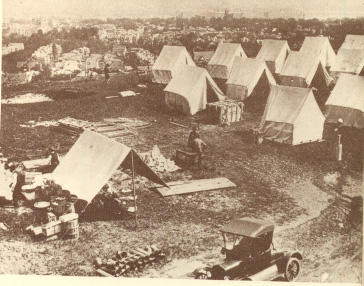
 The Great War, with its mass movements of men in armies and aboard ships, probably aided in its rapid diffusion and attack. The origins of the deadly flu disease were unknown but widely speculated upon. Some of the allies thought of the epidemic as a biological warfare tool of the Germans. Many thought it was a result of the trench warfare, the use of mustard gases and the generated "smoke and fumes" of the war. A national campaign began using the ready rhetoric of war to fight the new enemy of microscopic proportions. A study attempted to reason why the disease had been so devastating in certain localized regions, looking at the climate, the weather and the racial composition of cities. They found humidity to be linked with more severe epidemics as it "fosters the dissemination of the bacteria," (Committee on Atmosphere and Man, 1923). Meanwhile the
 Return to the


 Public buildings were turned into hospitals to cope with all the cases


 In many countries like France people were urged to wear protective masks
 Shop staff in Chicago also wore them
 As did did police officers in Washington


