Does your faith need strengthening? Are you confused and wondering if Jesus Christ is really "The Way, the Truth, and the Life?" "Fight for Your Faith" is a blog filled with interesting and thought provoking articles to help you find the answers you are seeking. Jesus said, "Seek and ye shall find." In Jeremiah we read, "Ye shall seek Me, and find Me, when ye shall seek for Me with all your heart." These articles and videos will help you in your search for the Truth.

Saturday, January 17, 2026

Saturday, July 19, 2025

Monday, September 2, 2019

Robert Jastrow e Deus

Dennis Edwards 

Robert Jastrow (1925–2008) foi discípulo de Edwin Hubble, o famoso astrónomo americano, cuja interpretação do red shift (desvio vermelho) relativo à luz de galáxias distantes originou a Teoria do Big Bang. Após a morte de Hubble, Jastrow deu continuidade ao seu trabalho. Posteriormente escreveu o livro God and the Astronomers (W.W. Norton, 1978 — Deus e os Astrônomos, em tradução livre). Em uma entrevista falando da sua fé — ou falta de fé — ele faz uma observação interessante ao mencionar as implicações do desvio vermelho observado por Hubble:

"Invertendo-se o movimento, os movimentos externos das estrelas e galáxias, e retrocedendo no tempo, ficarão cada vez mais próximos. Por fim alcançam um ponto em que são quase infinitos em densidade e temperatura, e é o máximo que se consegue alcançar. Concluímos que existe um início, um ponto no tempo em que tudo começa. Isso é notável, e tem um forte traço teológico que me intriga, porque sou agnóstico. Mas se existiu um início, um momento em que o universo foi criado, então houve um criador. Mas o criador não é compatível com o agnosticismo. Achei interessante essa questão e tive uma forte vontade de compartilhar isso com outros.

"Por isso escrevi este livro. Se por um lado não consigo crer na existência de um criador, por outro também não consigo crer que tudo aconteceu por um processo randômico, o que então implica na existência de um criador. Foi assim que entrei em um beco sem saída e ali fiquei. Repito, tenho dificuldade em acreditar que tudo é só uma questão de átomos e moléculas. Por essa razão tento encaixar no meu conceito de mundo, a conclusão de que existe algum tipo de força maior que denominamos Deus, ou seja o que for. Mas não consigo aceitar isso, porque a minha filosofia é materialista. Eu acredito que o mundo consiste de substâncias materiais (e não de causas sobrenaturais). Quando se especifica essas substâncias e as leis sob as quais atuam, morre o assunto. Não é preciso dizer mais nada.
Resultado de imagem para big bang
"É assim que a Ciência explica. Eu sempre fui um cientista. Mas não fico satisfeito com essa explicação. Na verdade, fico inquieto; parece que falta algo. Mas sei que não descobrirei o que não consigo explicar durante a minha vida aqui na terra." [1]

“Para o cientista que viveu por sua fé no poder da razão, a história termina como um pesadelo. Ele escalou as montanhas da ignorância, está prestes a conquistar o pico mais alto; quando se coloca sobre o rock final, é recebido por um bando de teólogos que estão lá há séculos. ” Robert Jastrow

Dennis Edwards:

Certamente uma honesta, ainda que triste, admissão. No fim da vida, Jastrow sente que a sua visão materialista do mundo deixou a desejar. Apreensivo e insatisfeito, indaga-se sobre a possibilidade de estar enganado. Sente que tem que existir mais, porém o seu orgulho intelectual, todos os seus anos acreditando num sistema materialista o fazem negar a aparente verdade da existência de um Criador. Infelizmente, ele admite que morrerá sem saber a resposta.
Image result for Isaac Newton A maravilhosa disposição e harmonia do universo
O famoso cientista Isaac Newton chegou a uma conclusão diferente. Ele escreveu:

A maravilhosa disposição e harmonia do universo com sois, planetas e cometas só pode ter tido origem segundo o plano e o domínio de um Ser que tudo sabe e tudo pode. … Este Ser reina sobre tudo, não como a alma do mundo, mas como Senhor de tudo e todos; e por causa disso deve ser chamando Senhor Deus, ou Senhor do Universo.
Image result for Isaac Newton A maravilhosa disposição e harmonia do universo
Isaac Newton foi um grande cientista e também um grande cristão; dedicou-se ao estudo da Bíblia tanto quanto ao da Ciência.
Image result for Isaac Newton A maravilhosa disposição e harmonia do universo
Thomas Jefferson, o terceiro presidente dos Estados Unidos, fez uma afirmação semelhante:

As evidências de um agente inteligente e poderoso são tão contundentes que, dentre o número infinito de seres humanos que já viveu em todas as eras, eles acreditaram, na proporção de pelo menos um milhão para cada um descrente, na hipótese da preexistência de um criador eterno, em vez de um universo que se auto-criou.[2]

Jefferson, que não era conhecido por sua religiosidade, chegou à mesma conclusão que Newton, com base em “evidências irresistíveis”.
Image result for Albert Einstein: we are the position of a little child
Até mesmo Albert Einstein, que não tinha fama de ser um homem de fé, declarou em uma entrevista em 1929:
Image result for Albert Einstein: we are the position of a little child
Estamos na posição de uma criança pequena ao entrar em uma grande biblioteca cujas paredes estão cobertas por prateleiras cheias de livros em diferentes idiomas. A criança sabe que os livros foram escritos por alguém, mas não sabe quem ou como. Não entende os idiomas nos quais foram escritos. Ela observa uma ordem na disposição dos livros, uma sequência para ela misteriosa e incompreensível que ela consegue apenas vagamente imaginar. Para mim essa é a atitude da mente humana, até mesmo da pessoa mais importante e culta, a respeito de Deus. Vemos um universo maravilhosamente coordenado, regido por leis definidas, mas temos apenas uma leve compreensão delas. As nossas limitações mentais não compreendem a força misteriosa que governa as constelações.

Einstein, portanto, chegou à mesma conclusão diante das evidências, de que deve existir um “Deus”, ou “uma força misteriosa” que rege o universo.

O engenheiro aeroespacial Wernher von Braun, que liderou o programa aeroespacial americano que levou o homem à Lua, expressou-se de uma forma um pouco diferente:
Image result for wernher von braun  quotes
Para mim, a noção de uma criação é inconcebível sem admitir-se a necessidade de um desenho. Não se pode ter contato com a lei e a ordem do universo sem concluir a existência de um plano e um propósito por trás de tudo. …Minhas experiências no campo da Ciência me levaram a Deus. Desafiam a Ciência para provar a existência de Deus. Mas será realmente necessário acender uma vela para ver o sol?[3]
Image result for the distance of their heart to their head
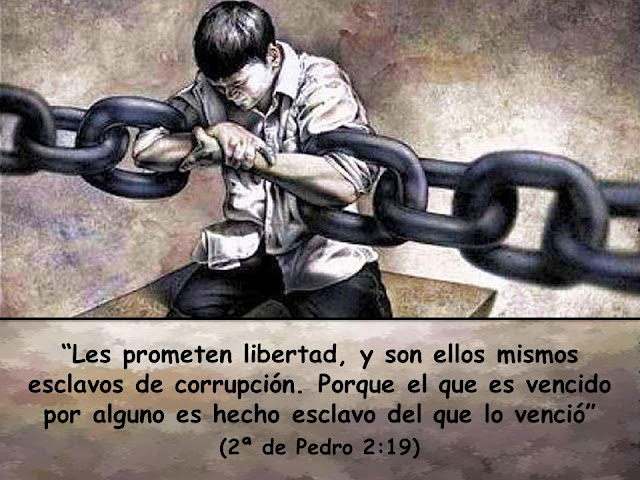
Algumas pessoas deixam de passar pela porta da Salvação por muito pouco — a distância do seu coração às suas mentes. O orgulho e a incredulidade as fazem rejeitar a verdade do Evangelho. O apóstolo Pedro definiu muito bem quando disse: “Prometendo-lhes liberdade, sendo eles mesmos servos da corrupção. Porque de quem alguém é vencido, do tal faz-se também servo.”[4] Tornam-se cativos de suas filosofias mundanas, aparentemente o caminho para a liberdade, e caem nas mãos de um tirano que demanda obediência total, até à morte.
Image result for 2 pedro 2:19
A visão materialista de Jastrow prometeu-lhe liberdade das crenças “arcaicas” do cristianismo. No final da vida, porém, ele percebeu que poderia estar enganado a respeito disso. Jastrow tornou-se cativo da filosofia que lhe prometeu liberdade. Por mais que tivesse preferido o contrário, não conseguiu escapar de suas garras materialistas. Que triste final! Mas Jesus prometeu uma saída. Não precisamos morrer ignorantes da verdade. Quando buscamos Jesus de todo o coração, toda a alma e todo o nosso entendimento, Ele responde. “E conhecereis a verdade, e a verdade vos libertará”.[5]“Aquele que o Filho libertou é verdadeiramente livre.”[6] (Ver documentário link abaixo ou clique aqui)
Related image

[1] The Privileged Planet, documentário dirigido por Lad Allen (Illustra Media, 2004), DVD, http://www.theprivilegedplanet.com/scientists.php. https://www.youtube.com/watch?v=_Yv57I7dOcA
[2] Thomas Jefferson para John Adams, 11 de abril de 1828.
[3] Carta endereçada à Secretaria Estadual de Educação do estado da Califórnia, 14 de setembro de 1972.
[4] 2 Pedro 2:19.
[5] João 8:32.
[6] João 8:36.

Tuesday, August 20, 2019

The Information in DNA is Best Explained by a Creator

By Dennis Edwards 

Our bodies not only have irreducibly complex biological machines at work in each and every cell, but each cell has a DNA molecule which holds the information needed for the cell to reproduce itself, repair itself, etc. The DNA is an information code, the computer code of the cell. Where did the information, the computer code we find in the DNA molecule come from? "There is no known law of nature, no known process and no known sequence of events which can cause information to originate by itself in matter.”[1] Therefore, where does the information in the DNA come from? 
Dr. Stephen Meyer, a proponent of the Intelligent Design hypothesis, has written extensively on the subject. In his book, The Signature in the Cell, he deals with the problem that specified information, the kind we find in DNA - which is purposeful, gives to the Darwinian Theory of Evolution. He writes, 
“Our uniform experience affirms that specified information – whether inscribed in hieroglyphics, written in a book, encoded in a radio signal, or produced in a simulation experimente – always arises from an intelligent source, from a mind and not a strictly material process. So the discovery of the specified digital information in the DNA molecule provides strong grounds for inferring that intelligence played a roll in the origin of DNA. Indeed, whenever we find specified information and we know the causal story of how that information arose, we always find that it arose from an intelligent source. It follows that the best, most causally adequet explanation for the origin of the specified, digitally encoded information in DNA is that it too had an intelligent source. Intelligent Design best explains the DNA enigma.”[2]
Nobel laureate and biochemist E.C. Komfield had a similar thought on the complexity within the cell when he observed the biological machines at work. He wrote, 
“While laboring among the intricacies and definately minute particles in a laboritory, I frequently have been overwhelmed by a sense of the infinite wisdom of God…One is rather amazed that a mechanism of such intricacy could ever function properly at all…The simplist man-made mechanism requires a planner and a maker; how a mechanism ten times more involved and intricate can be conceived as self-constructed and self-developed is completely beyond me.” 
Astronomer and mathematician Fred Hoyle who framed mathematically the Steady-State model of the universe and studied the mathematical probabilities of life forming randomly from non-life made the following comment: 
“There is not a shred of objective evidence to support the hypothesis that life began in an organic soup here on earth. Indeed, Francis Crick, who shared the Nobel Prize for the discovery of the structure of DNA, is one biophysicist who finds this theory unconvincing. So why do biologists indulge in unsubstantiated fantasies in order to deny what is so patently obvious, that 200,000 amino acid chains, and hence life, did not appear by chance. The answer lies in a Theory developed over a century ago, which sought to explain the development of life as an inevitable product of the purely local natural process. Its author, Charles Darwin, hesitated to challenge the Church´s doctrine on the creation, and publicly at least did not trace the implications of his ideas back to their bearing on the origin of life. However, he privately suggested that life itself may have been produced in “some warm little pond,” and to this day his followers have sought to explain the origin of terrestrial life in terms of a process of chemical evolution from the primordial soup. But, as we have seen, this theory simply does not fit the facts.”[3]
With the help of his university students, Hoyle calculated the probability of life forming from non-life from some unknown natural process. He concluded, 
“The likelihood of the formation of life from inanimate matter is one to a number with 40,000 zeros after it. (Probability scientists consider one to a number with 50 zeros after it impossible, so thosands of zeros would dimish impossible beyond our ability to imagine.- Dennis) It is enough to bury Darwin and the whole General Theory of Evolution. There was no primordial soup, neither on this planet nor any other, and if the beginnings of life were not random, they must, therefore, have been the product of purposeful intelligence.”[4]
The leaders of today’s scientific community are aware of these difficulties. Because of Hoyle’s vociferous attacks against the idea of life forming from non-life spontaneously, he was denied a Nobel Prize, though he was one of the most prominant astronomers and mathematicians of his time. So why do scientists ignore the obvious? A Professor of Genetics for many years at Harvard University, Richard Lewontin, candidly reveals the secret. 
“We take the side of evolutionary science (that life came form non-life spontaneously) in spite of the patent absurdities of some of its constructs, in spite of the tolerance of the scientific community for unsubstantiated just so stories, because we have a prior committment to materialism, and that materialism is absolute for we cannot allow a divine foot in the door.”[5]
In other words, it is their pior belief system and committment to only materialistic explanations that force the scientists to reject supernational explanations even though the physical evidence is best explained by metaphysical means. They do not want a Divine foot in the door of scholastic thinking. Students would not be so quick to abandom faith and believe the unsubstaniated evolutionary stories. 
Albert Einstein himself touched on Intelligent Design seen in the universe when he wrote the following: 
“A scientist’s religious feelings take the form of raptuous amazement at the harmony of natural law, which reveals an intelligence of such superiority that, compared with it, all the systematic thinking and acting of human beings is an utterly insignificant reflection.”[6]
Some 300 years earlier Sir Isaac Newton came to a similar conclusion, but went a bit further along in his thinking, which led him to the God of the Bible and not just a "Universal Consciousness." 
“This most beautiful system of the sun, planets, and comets, could only proceed from the counsel and dominion of an intelligent and powerful Being…This Being governs all things, not as the soul of the world (as the New Age philosophies teach – Dennis), but as Lord over all; and on account of His dominion He is wont to be called Lord God, or Universal Ruler.”[7]
From the DNA, to the biologically complex machines, to the harmony of natural law, to the movement of the celestial bodies themselves, all the evidence points to a Divine Creator God of superior intelligence. God is the best explanation for the information in the DNA molecule and God is the best explanation for the world we see and live in. 
If you would like to read my online book Where is America in Bible Prophecy? click on the title.

Notes:

[1] Gitt, Werner; In the Beginning Was Information; pg.107
[2] Meyer, Stephen C.; Signature in the Cell.
[3] Hoyle, Fred: “The Intelligent Universe;” 1983; p.23.
[4] Hoyle, Fred; “Evolution from Space,” 1884
[5] Lewontin, Richard.
[6] Einstein, Albert; “The World as I See It.”
[7] Newton, Isaac.

Monday, July 15, 2019

The Universe's Natural Laws Give Evidence of God's Design

 A Compilation                                                                    

When talking with others about our faith, I find it is good to have or know quotes by famous people on the subject. Here’s a few quotes made by some famous men on the topic of “Intelligent Design” or the idea that there must be an intelligent Creator.

“A scientist’s religious feelings take the form of rapturous amazement at the harmony of natutal law, which reveals an Intelligence of such superiority that, compared with it, all the systematic thinking and acting of human beings is an utterly insignificante reflection.”[1] Albert Einstein

“We are in the position of a little child entering a huge library filled with books in many different languages. The child knows someone must have written those books. It does not know how. It does not understand the languages in which they are written. The child dimly suspects a mysterious order in the arrangement of the books but doesn’t know what it is. That, it seems to me, is the attitude of even the most intelligent being toward God. We see a universe marvellously arranged and obeying certain laws, but only dimly understand those laws. Our limited minds cannot grasp the mysterious force that moves the constellations.”[2] Albert Einstein
                                             
Another famous scientist writing long before Einstein said something similar.
“This most beautiful system of the sun, planets, and comets, could only proceed from the counsel and dominion of an intelligent and powerful Being…..This Being governs all things, not as the soul of the world [as the New Age philosophies teach], but as Lord over all [as the Bible teaches]; and on account of His dominion He is want to be called Lord God, or Universal Ruler.”[3] Isaac Netwon

More than a hundred years later, an American President would echo Newton’s words as if he had been reading from Newton’s writings.

“So irresistable are these evidences of an intelligent and powerful Agent, that, of the infinite numbers of men who have existed through all the time, they have believed, in the porportion of a million to one, in the hypothesis of an eternal pre-existence of a creator, rather than in that of a self-existent universe.”[4] Thomas Jefferson

Jefferson, you may remember, was not a traditional Christian, but a Christian Deist. As a Deist he believed that some invisible, powerful, intelligent “Agent” had created the universe. But he did not believe in the miracles of the Bible, nor in a resurrected Christ. He is known to have cut out all the supernatural events from his Bible. But even with this doubts about the Bible, he still confessed to an Intelligent Designer and believed that the teachings of Jesus constituted the “outlines of a system of the most sublime morality which has ever fallen from the lips of man.”[5]

Werner Von Braun, the rocket scientist who helped put the first man on the moon, was asked to give testimony  at a court case involving the teaching of creation in the high-school classroom. In his deposition to the court he said, “For me, the idea of a creation is not conceivable without invoking the necessity of design. One cannot be exposed to the law and order of the universe without concluding that there must be design and purpose behind it all…My experience with science led me to God. They challenge science to prove the existence of God. But must we light a candle to see the sun?”[6]

Abraham Lincoln, the 16th President of the United States, also had similar thoughts to Newton and Einstein. He said, “I can see how it might be possible for a man to look down upon the earth and be an atheist.” I guess we can all understand that thought when we see man’s inhumanity to man on a daily bases. Lincoln continues, “but I cannot conceive how a man could look up into the heaven and say, ‘There is no God.’”[7]

The Prussian philosopher Immanuel Kant wrote, “Two things fill the mind with ever new and increasing admiration and awe, the more often and steadily we reflect upon them: the starry heavens above me and the moral law within me.”[8]

Some three thousand years ago the poet and musician King David wrote, “The heavens declare the glory of God; and the skies proclaim the work of his hands. Day after day they pour forth speech; night after night they reveal knowledge. They have no speech, they use no words; no sound is heard from them. Yet their voice goes out into all the earth, their words to the ends of the world.”[9]

The Apostle Paul in the New Testament made a similar observation: “For since the creation of the world God’s invisible qualities—his eternal power and divine nature—have been clearly seen, being understood from what has been made, so that people are without excuse.”[10]

C.S. Lewis, the great Christian speaker and writer, had thoughts on why he didn’t agree with the idea that the universe was a result of  random, purposeless processes. He wrote, “If the solar system was brought about by an accidental collision, then the appearance of organic life on this planet was also an accident, and the whole evolution of man was an accident, too. If so, then all our present thoughts are mere accidents—the accidental by-products of the movements of atoms, and this holds for the thoughts of the materialist’s, and astronomer’s, as well as for anyone else’s. But if their thoughts, that is, of materialism and astronomy—are merely acidental by-products, why should we believe them to be true? I see no reason for believing one accident should be able to give a correct account of all the other accidents.”

In 1968 one of the astronauts who had traveled to the moon and backed was asked by a reportor if he had seen God as a Russian astronaut was repórted to have said he hadn’t seen God.  Frank Borman answered quite distinctly, “I can’t comment on what he didn’t see, but I saw  evidence that God lives.” About seeing the earth rise for the first time on the moon he said,“This must be what God sees. I was absolutely awe struck.”[11]

Are you seeing God in His creation? He’s speaking loud and clear if you’ll listen.


[1] Einstein, Albert; The World as I See It, 1934
[2] Einstein, Albert; Interview, 1929
[3] Newton, Isaac; The Principia: Matematical Principles of Natural Philosophy, 1687
[4] Jefferson, Thomas; Letter from Thomas Jefferson to John Adams, 1823; https//founders.archives.gov>From Thomas Jefferson; Retrieved 2019-07-16
[5] https//en.m.wikipedia.org; Religious views of Thomas Jefferson; “Jefferson’s Religious Beliefs,” monticello.org. Retrieved 2016-10-09.
[6] Von Braun, Werner; From a letter to the California State Board of Education, 14 September 1972
[7] Lincoln, Abraham; https//www.goodreads.com; Quote by Abraham Lincoln; Retrieved 2019-07-16.
[8] Kant Immanuel, Critique of Practical Reason, 1781
[9] David, Psalm 19:1-4, NIV
[10] Apostle Paul, Romans 1:20, NIV
[11] Borman, Frank; https//cprovstgaard.blogspot.com; Men on the Moon: Apollo 8; Retrieved 2019-07-16

Saturday, April 25, 2015

Robert Jastrow author of God and the Astronomers


"Now we see how the astronomical evidence leads to a Biblical view of the origin of the world... The chain of events leading to man commence suddenly and sharply at a definite moment in time, in a flash of light and energy." (pg.14) "It turns out that the scientist behaves the way the rest of us do when our beliefs are in conflict with the evidence. We become irritated, we pretend the conflict doesn't exist, or we paper it over with meaningless phrases." (pg. 16) God and the Astronomers

Dennis Edwards

Robert Jastrow (1925-2008) was a disciple of Edwin Hubble the famous American astronomer whose interpretation of the red shift in light from distant galaxies gave rise to the Big Bang Theory. After Hubble died, Jastrow continued with much of his work. A few years ago he wrote a book God and the Astronomers. In an interview about his faith, or lack of it, he makes an interesting observation. He starts by talking about the implications of the Hubble’s red-shift. Read for yourself from his own words:

If you reverse the motion, the outward motions of the stars and galaxies and go backwards in time, they come closer and closer together. Finally they reach a point where they are nearly infinite in density and temperature and further than that you cannot go. So, there’s a beginning, a point in time from which it all started. That’s a remarkable thing. It has a strong theological flavor to it, which intrigued me, because I am an agnostic. But if there was a beginning, a moment of creation of the universe, then there was a creator. But a creator is not compatible with agnosticism. I found that point so interesting, that I felt a strong compulsion to share it with others.

That’s why I wrote the book. Just like I can’t believe there was a creator, I can’t believe that this all happened by chance, which implies, there was a creator. So you see, I am in a completely hopeless bind and I have stayed there. Again, I find it hard to believe that this is all a matter of atoms and molecules. So, I try to fit into my concept of the world the conclusion that there is a larger force of some kind which we can call God, or whatever. But I can’t accept that, because I’m a materialist in philosophy. I believe the world consists entirely of material substances (and no supernatural causes). When you specify those substances and the laws of how they interact, you have done it all. Nothing more needs to be said.

That’s what science tells me. I have been a scientist all my life. But I find it unsatisfactory, in fact, it makes me uneasy. I feel I am missing something. But I will not find out what I am missing within my lifetime.[1]

What an honest, yet sad confession. Here he is facing his last years of life and Jastrow sees, he senses that his materialistic worldview has fallen short. He’s apprehensive. He’s unsatisfied and wondering if he’s gotten it wrong. He senses that there has to be more, but his intellectual pride, his lifetime of upholding to a materialistic belief system forces him to deny the apparent truth of a Creator. Sadly he confesses he will go to his grave in pride before he finds the answer.

And what about you, will you have the same fate? Some miss the door of salvation by so little, the distance of their heart to their head. Their pride and intellectual beliefs cause them to reject the simplicity of the gospel. Like Peter so aptly put: While they promise them liberty, they themselves are the servants of corruption: for of whom a man is overcome, of the same is he brought in bondage.[2]Jastrow’s materialistic philosophy promised him freedom from Christianity “archaic” beliefs. But now, at the end of his life, when he senses he could very well be wrong about the whole thing, he’s imprisoned by the philosophy that had promised him liberty. He cannot escape its materialistic grasp as much as he would like. What a sad ending. And you, will you call upon Jesus? He promises a way of escape. You don’t need to go to your grave wondering what is true. Seek Jesus with all your heart, mind and soul today and He will answer. “And ye shall know the truth and the truth shall set you free.”[3]

Footnotes: 

[1] The Privileged Planet, http:http://www.theprivilegedplanet.com/scientists.php//
[2] 2Peter 2:19
[3] John 8:32

Thursday, July 10, 2014

Friday, June 28, 2013

Are Science and Christianity Compatible?

Atheist Richard Dawkins from Oxford and leading geneticist Francis Collins debated the subject of God versus Science in a Time magazine feature article.[1] At issue was whether belief in Science and God are compatible.

Dawkins, author of The God Delusion, argues that belief in God has been made irrelevant by new scientific discoveries. Collins, a Christian who led 2400 scientists in mapping the human genetic blueprint, sees it differently, stating that belief in both God and science is totally reasonable.

Although the Bible clearly states that God created the universe, it reveals nothing about how He did it. Yet its message that God is rational and personal profoundly influenced scientists such as Copernicus, Galileo, Newton, Pascal and Faraday. Their belief that the world was created by a reasonable God gave them confidence in scientific observation and experimentation.

As Christians, these scientists believed in an all powerful, all knowing Creator who, although not limited by natural laws, chose to use them in the universe. These brilliant men and women were fascinated with the world around us, and sought to discover the mysteries behind what they deemed as God’s creation.


Jesus and Creation

The eyewitnesses to Jesus tell us that he continually demonstrated creative power over nature’s laws. The New Testament tells us that before Jesus became a man, he eternally existed with his Father in heaven. In fact, the author of Hebrews as well as the apostles John and Paul write of Jesus as Creator. Paul tells the Colossians:

“Now Christ is the visible expression of the invisible God. He existed before creation began, for it was through him that everything was made, whether spiritual or material, seen or unseen….In fact, every single thing was created through and for him….Life from nothing began through him, and life from the dead began through him, and he is therefore justly called the Lord of all.” Colossians 1:15-17
J.B. Phillips

When Paul said that “life from nothing began through him [Jesus],” he was making a statement that had no scientific backing at the time. In fact, scientists were of the opinion that matter had always existed in one form or another.

Materialists reasoned that if matter has always existed, then there never had been a creation. This led atheist Carl Sagan to declare on international TV that “the cosmos is all that is or ever was or ever will be.”[2]

Sagan’s materialistic worldview and the Christian worldview can’t both be right. The question is, “does science shed any light on our origins”? So, who are we to believe? That was the question facing seventeen year-old Jeff Smith.

Jeff was confused. At a camp he heard that Jesus Christ offers forgiveness of sins and eternal life. More than that, he discovered that Jesus designed us to have a life of meaning, purpose, and hope. For the first time in his life Jeff felt like he understood why he was here on earth. He wanted forgiveness of sins, and he wanted his life to have meaning and purpose.

But Jeff struggled intellectually. He wanted to believe Jesus is real, but he loved science. He wondered, “Is it possible to believe in both creation and science?”

For Jeff and others who want to believe in both God and science, there is good news. In the past few decades, an increasing number of leading scientists have publicly spoken of stunning new evidence that supports the biblical view of creation. And many of these scientists have no personal faith in God.

So, what is this evidence that has many scientists suddenly speaking of a Creator? To answer those questions we need to look at recent discoveries in astronomy and molecular biology, letting the evidence speak for itself. [For a more in-depth study, read the articles at www.y-Origins.com.]


One Time Beginning

Throughout human history man has gazed in awe at the stars, wondering what they are and how they got there. Although on a clear night we only see about 6,000 stars, trillions of them are spread out among billions of galaxies.

However, prior to the 20th century, most scientists believed our Milky Way galaxy was the entire universe, and that only about 100 million stars existed. The prevailing view even then was that our material universe had always existed.

But in the early 20th century, astronomer Edwin Hubble discovered the universe actually had a beginning. A beginning implies a “Beginner,” which the Bible had firmly revealed. Concerned materialists like Sir Fred Hoyle scoffed at the idea of a one-time beginning, sarcastically calling the explosion a “big bang.”

However, the evidence for a beginning kept mounting. Finally, in 1992, COBE satellite experiments proved that the universe really did have a one-time beginning.[3] Doubters were silenced by the overwhelming evidence. For lack of a better name, this beginning became known by Hoyle’s label of “the big bang.” (see “Back to the Beginning“)

Many scientists realized that this discovery coincided with the Genesis account of a beginning. Furthermore, they realized that prior to creation even matter and energy could not have existed. Therefore, after centuries of erroneous belief, science came around to agree with the Bible that everything came from nothing.

Some scientists had a major problem with this confirmation of the Bible, and sought other explanations. However, others like agnostic George Smoot, the Nobel Prize winning scientist in charge of the COBE experiment admits:

“There is no doubt that a parallel exists between the big bang as an event and the Christian notion of creation from nothing.”[4]

The COBE experiments and Einstein’s theorems both confirm a one time creation of the universe, a position the Bible has maintained for 3500 years.


Finely-Tuned for Life

It was difficult enough for materialists to accept the evidence for a one-time creation event. But more startling discoveries about our universe were to follow.

Scientists calculated that for life to exist, each of nature’s laws had to be precisely fine-tuned. In other words, gravity and the other forces of nature had to measure within very narrow parameters or our universe couldn’t exist. Had the force that led to creation been weaker, gravity would have pulled all matter back into a “big crunch.” Had it been stronger, stars and galaxies couldn’t have formed.

Likewise, our solar system and planet also need to be just right for life to exist. For example, we all realize that without an atmosphere of oxygen, none of us would be able to breathe. And without oxygen, water couldn’t exist. Without water there would be no rainfall for our crops. Other elements such as hydrogen, nitrogen, sodium, carbon, calcium, and phosphorus are also essential for life.

The size and nature of our planet, sun, and moon also need to be just right. And there are dozens of other conditions that needed to be exquisitely fine-tuned or we wouldn’t be here to think about it.[5]

Those scientists who believed in God may have expected such fine-tuning, but those who had no faith were unable to explain the remarkable “coincidences.” Theoretical physicist Stephen Hawking, an agnostic, writes:

“The remarkable fact is that the values of these numbers seem to have been very finely adjusted to make possible the development of life.”[6]

Scientists evaluated the probability of whether such remarkable fine-tuning could have been accidental. Odds-makers know that even long-shots can eventually win at the racetrack. So, just how long are the odds against life existing by chance? According to most scientists, the odds of us being here by chance is impossible.

Cosmologists compared the odds against life occurring by accident with those of shooting an arrow from Earth at a small target on the planet Pluto and hitting the bullseye. Imagine the engineering required if such a feat were even possible. Such odds would be comparable with winning over a hundred Powerball lotteries after purchasing only one ticket for each. Impossible—unless the outcome was fixed by someone behind the scenes. And that is what many scientists are concluding—Someone behind the scenes designed and created the universe.

These incredible odds are far beyond anything mere chance and time could accomplish. This new understanding of our universe led scientists like astronomer George Greenstein to ask:

“Is it possible that suddenly, without intending to, we have stumbled upon the scientific proof of the existence of a Supreme Being?”[7]

Some materialists have tried to explain away the fine-tuning of the universe as luck. However, others have been more open to realism. Sir Fred Hoyle, a committed agnostic, was stunned by the evidence for a Creator, remarking:

“A common sense interpretation of the facts suggests that a superintellect has monkeyed with physics, as well as chemistry and biology, and that there are no blind forces worth speaking about in nature.”[8]

Einstein came to the same conclusion. Although he wasn’t religious, and didn’t believe in a personal God, Einstein pondered the genius behind the universe, calling it “an intelligence of such superiority that, compared with it, all the systematic thinking and acting of human beings is an utterly insignificant reflection.”[9]

It is not merely scientists who are perplexed by how all the forces of nature are so perfectly designed to make life possible The world’s leading atheists also struggle to explain why everything is so exquisitely fine-tuned. Leading atheist, Christopher Hitchens, who spent most of his life arguing against God, was perplexed by the fact that life couldn’t exist if things were different by just “one degree or one hair.[10]


[10] http://www.youtube.com/watch?v=GDJ9BL38PrI

Scientists continue their quest for an explanation as to what was behind the creation of the universe. But the deeper they dig, the more in awe they are of the unexplainable origin of our universe and its remarkable fine-tuning.


DNA: The Language of Life

Although the Bible tells us that Jesus created all life, it says nothing about how He did it. However, some of the mysteries of creation are now being discovered.

For example, in the past half century, scientists have learned that a tiny molecule called DNA is the “brains” behind each cell in our bodies and every other living thing. Yet the more they discover about DNA, the more amazed they are at the brilliance behind it.

Although evolutionists believe that DNA evolved through natural selection, they have no idea how such an intricately complex molecule could ever have begun by mere chance. DNA’s intricate complexity caused its co-discoverer, Francis Crick, to believe that it could never have originated on earth naturally. Crick, an evolutionist who believed life is so complex it must have come from outer space, wrote,:

“An honest man, armed with all the knowledge available to us now, could only state that in some sense, the origin of life appears at the moment to almost be a miracle, so many are the conditions which would have had to have been satisfied to get it going.”[11]

The coding behind DNA reveals such intelligence that it staggers the imagination. A mere pinhead of it contains information equivalent to a stack of paperback books that would encircle the earth 5,000 times. And DNA operates like a language with its own extremely complex software code. Microsoft founder Bill Gates says that the software of DNA is “far, far more complex than any software we have ever developed.”[13]

Although Flew is not a Christian, he now admits that the “software” behind DNA is too complex to have originated without a “designer.” And Flew is certainly not alone. The discovery of the incredible intelligence behind DNA has convinced many former agnostics and atheists that life in our universe is not an accident.


Fingerprints of a Designer

In summary, three recent scientific discoveries have convinced many scientists that an intelligent Designer both planned and created our universe:

1. The beginning of the universe and its laws

2. The remarkable fine-tuning of nature’s laws making life possible

3. The intricate complexity of DNA

So what are leading scientists saying about these remarkable discoveries? Stephen Hawking, recognized as one of the world’s leading theoretical physicists, asks,

What is it that breathes fire into the equations and makes a universe for them to describe? The usual approach of science of constructing a mathematical model cannot answer the questions of why there should be a universe for the model to describe.[14]

Upon deeper reflection, Hawking states, “There must be religious overtones. But I think most scientists prefer to shy away from the religious side of it.”[15] And even though many scientists do shy away from the religious implications of these new discoveries, an increasing number are now admitting that a Designer’s fingerprints are coming into view. (See what leading scientists are saying: http://www.y-origins.com/index.php?p=quotes)

The fact that many scientists are now openly speaking of God doesn’t mean that all materialists like Flew are relinquishing their atheistic views. In fact, many like Richard Dawkins are becoming even more aggressive against faith in God. Yet, when one looks objectively at the evidence regarding the origin of the universe and the intricate complexity of DNA, even many non-Christian scientists admit that the evidence of a Designer’s “fingerprints” are coming into focus.

Dr. Robert Jastrow is one such scientist. Jastrow is a theoretical physicist who joined NASA when it was formed in 1958. Jastrow helped establish the scientific goals for the exploration of the moon during the Apollo lunar landings. He set up and directed NASA’s Goddard Institute for Space Studies, which conducts research in astronomy and planetary science. Jastrow, an agnostic, wrote these thoughts, reflecting the view of many scientists:6″For the scientist who has lived by his faith in the power of reason, the story ends like a bad dream. He has scaled the mountains of ignorance; he is about to conquer the highest peak; as he pulls himself over the final rock, he is greeted by a band of theologians who have been sitting there for centuries.”[16]

As an agnostic, Jastrow has no Christian agenda behind his conclusions. He simply notes that the biblical view of a one-time beginning of the universe has finally been confirmed by science. And this “beginning” was not some happenstance explosion, but rather a precisely engineered event that made human life possible. This conclusion perfectly coincides with the biblical statement, “In the beginning God created the heavens and the earth.”

If the Bible is right, and God does exist, how can we know what He is like? Has He communicated to us personally? The eyewitnesses of Jesus Christ tell us that he claimed to fully represent the one true God. And although many others have claimed they speak for God, Jesus’ followers tell us that he backed up his claim.

But did Jesus provide proof that he spoke for God? He reportedly performed miraculous deeds that required creative power. However, the most dramatic miracle of all was his resurrection from the dead. No other person in history had ever died, been buried for three days, and then returned to life. If true, Jesus Christ would have provided ample evidence that his words were truly the words of God


1. David Bjerklie and Alice Park/New York, Dan Cray/Los Angeles and Jeff Israely/Rome, Time, November 7, 2006.

2. Carl Sagan, Cosmos (New York: Ballantine Books, 1980), 1.

3. George Smoot and Keay Davidson, Wrinkles in Time (New York: Avon, 1993), 241.

4. Smoot and Davidson, 17.

5. Hugh Ross, The Creator and the Cosmos (3rd ed. (Colorado Springs, CO: NavPress, 2001), 224.

6. Stephen Hawking, A Brief History of Time (New York: Bantam, 1990), 125.

7. George Greenstein, The Symbiotic Universe (New York: William Morrow, 1988), 27.

8. Fred Hoyle, “Let there be Light,” Engineering and Science (November 1981).

9. Albert Einstein, Ideas and Opinions—The World As I See It (New York: Bonanza, 1931), 40.

10. http://www.youtube.com/watch?v=GDJ9BL38PrI

11. Francis Crick, Life Itself (New York: Simon & Schuster, 1981), 88.

12. Quoted in William A. Dembski and James M. Kushiner, eds., Signs of Intelligence (Grand Rapids, MI: Brazos, 2001), 108.

13. Quoted in Gary Habermas, “My Pilgrimage from Atheism to Theism”: Interview with Antony Flew, Philosophia Christi, (Winter, 2005).

14. Stephen Hawking, A Brief History of Time, 174.

15. John Boslough, Stephen Hawking’s Universe (New York: Avon, 1989), 109.

16. Robert Jastrow, God and the Astronomers (London: W.W. Norton & Co. Inc., 1992), 107.

Permission to reproduce this article: Publisher grants permission to reproduce this material without written approval, but only in its entirety and only for non-profit use. No part of this material may be altered or used out of context without publisher’s written permission. Printed copies of this article and Y-Origins and Y-Jesus magazine may be ordered at: http://jesusonlineministries.com/resources/products/


© 2012 JesusOnline Ministries. This article is a supplement to Y-Jesus magazine by Bright Media Foundation & B&L Publications: Larry Chapman, Chief Editor.

Copyright © Fight for Your Faith