Does your faith need strengthening? Are you confused and wondering if Jesus Christ is really "The Way, the Truth, and the Life?" "Fight for Your Faith" is a blog filled with interesting and thought provoking articles to help you find the answers you are seeking. Jesus said, "Seek and ye shall find." In Jeremiah we read, "Ye shall seek Me, and find Me, when ye shall seek for Me with all your heart." These articles and videos will help you in your search for the Truth.

Wednesday, August 5, 2015

“Com Você”

Link
John Listen

A maioria de nós tem amigos, conhecidos, membros da família, pessoas com quem realmente desfrutamos de estar. Levando isso para outro nível, você tem alguém—um cônjuge, companheiro(a), amigo(a) querido—sobre quem você poderia dizer, “Quero estar com você 24 horas por dia”? Jesus quer estar conosco 24 horas por dia—e não só por um tempinho, nem mesmo apenas pelo resto desta vida, mas por toda a eternidade. (Aqui está a palavra “eternidade” mais uma vez, que nós conseguimos entender tanto quando uma formiga consegue entender a largura do mar.)

É impressionante pensar no quanto Deus nos ama e desfruta de estar conosco. Aliás, “Emanuel” significa “Deus conosco.”

Eis que a virgem conceberá, e dará à luz um filho, E chamá-lo-ão pelo nome de EMANUEL, Que traduzido é: Deus conosco.—Mateus 1:23


Será que tem outros versículos na Bíblia sobre Jesus estar conosco, ou mesmo quererestar conosco?

Porque, onde estiverem dois ou três reunidos em meu nome, aí estou eu no meio deles.—Mateus 18:20

Eis que eu estou convosco todos os dias, até a consumação dos séculos. Amém.—Mateus 28:20

E quando eu for, e vos preparar lugar, virei outra vez, e vos levarei para mim mesmo, para que onde eu estiver estejais vós também.—João 14:3

Pai, aqueles que me deste quero que, onde eu estiver, também eles estejam comigo.—João 17:24

E digo-vos que, desde agora, não beberei deste fruto da vide, até aquele dia em que o beba novo convosco no reino de meu Pai.—Mateus 26:29

Desejei muito comer convosco esta páscoa, antes que padeça.—Lucas 22:15

Em verdade te digo que hoje estarás comigo no Paraíso.—Lucas 23:43

E aconteceu que, indo eles falando entre si, e fazendo perguntas um ao outro, o mesmo Jesus se aproximou, e ia com eles.—Lucas 24:15

O Pai... vos dará outro Consolador, para que fique convosco para sempre ... vós o conheceis, porque habita convosco, e estará em vós.—João 14:16–17

Estou em meu Pai, e vós em mim, e eu em vós.—João 14:20

Aquele que tem os meus mandamentos e os guarda esse é o que me ama; e aquele que me ama será amado de meu Pai, e eu o amarei, e me manifestarei a ele.—João 14:21

Se alguém me ama, guardará a minha palavra, e meu Pai o amará, e viremos para ele, e faremos nele morada.—João 14:23

Estai em mim, e eu em vós.—João 15:4

Mas, a todos quantos o receberam, deu-lhes o poder de serem feitos filhos de Deus, aos que creem no seu nome. … E o Verbo se fez carne, e habitou entre nós.—João 1:12, 14

Recebestes o Espírito de adoção de filhos, pelo qual clamamos: Aba, Pai. … E nos predestinou para filhos de adoção por Jesus Cristo, para si mesmo, segundo o beneplácito de sua vontade.—Romanos 8:15; Efésios 1:5

Os seus anjos nos céus sempre vêem a face de meu Pai que está nos céus.—Mateus 18:10

Sempre via diante de mim o Senhor, porque está à minha direita, para que eu não seja abalado.—Atos 2:25

E a mão do Senhor era com eles.—Atos 11:21

Porque eu sou contigo, e ninguém lançará mão de ti para te fazer mal.—Atos 18:10

Que pensamentos maravilhosos, e confirmações do amor de Jesus por nós, e até orações para estar conosco. Os versículos acima são todos do Novo Testamento. Será que Deus tinha esse relacionamento próximo em mente desde o começo, mesmo no Antigo Testamento?

E ouviram a voz do Senhor Deus, que passeava no jardim pela viração do dia.—Gênesis 3:8

Peregrina nesta terra, e serei contigo, e te abençoarei.—Gênesis 26:3

Não temas, porque eu sou contigo.—Gênesis 26:24

E eis que estou contigo, e te guardarei por onde quer que fores.—Gênesis 28:15

Certamente eu serei contigo.—Êxodo 3:12

Irá a minha presença contigo para te fazer descansar.—Êxodo 33:14

Pois o SENHOR teu Deus … está contigo.—Deuteronômio 20:1

O Senhor teu Deus é o que vai contigo; não te deixará nem te desamparará.—Deuteronômio 31:6

Esforçai-vos, e animai-vos; não temais, nem vos espanteis diante deles; porque o Senhor teu Deus é o que vai contigo.—Josué 1:9

Levanta-te, pois, e faze a obra, e o Senhor seja contigo.—1 Crônicas 22:16

Esforça-te e tem bom ânimo, e faze a obra; não temas, nem te apavores; porque o Senhor Deus, meu Deus, há de ser contigo; não te deixará, nem te desamparará, até que acabes toda a obra do serviço da casa do Senhor.—1 Crônicas 28:20

Contigo está um que tem perfeito conhecimento.—Jó 36:4

Tenho posto o Senhor continuamente diante de mim; por isso que ele está à minha mão direita, nunca vacilarei. … Far-me-ás ver a vereda da vida; na tua presença há fartura de alegrias; à tua mão direita há delícias perpetuamente.—Salmo 16:8, 11

Porque em ti está o manancial da vida; na tua luz veremos a luz.—Salmo 36:9

Todavia estou de continuo contigo: tu me sustentaste pela minha mão direita.—Salmo 73:23

O Senhor está comigo; não temerei o que me pode fazer o homem.—Salmo 118:6

Quando acordo ainda estou contigo.— Salmo 139:18

Não temas, porque eu sou contigo; não te assombres, porque eu sou teu Deus.—Isaías 41:10

Quando passares pelas águas estarei contigo, e quando pelos rios, eles não te submergirão; quando passares pelo fogo, não te queimarás, nem a chama arderá em ti.—Isaías 43:2

Não temas diante deles; porque estou contigo para te livrar, diz o Senhor.—Jeremias 1:8

Pelejarão contra ti, mas não prevalecerão contra ti; porque eu sou contigo para te guardar, para te livrar deles, diz o Senhor.—Jeremias 15:20

Eu sou contigo, diz o Senhor, para te salvar.—Jeremias 30:11

Então Ageu, o mensageiro do Senhor, falou ao povo conforme a mensagem do Senhor, dizendo: Eu sou convosco … esforça-te, todo o povo da terra... e trabalhai; porque eu sou convosco, diz o Senhor dos Exércitos.—Ageu 1:13; 2:4

Então, desde o começo, esta é a grande meta, desejo e plano de Deus—provado ao extremo e possibilitado pela morte de Jesus na cruz. Louvado seja o Senhor pela Sua constante, amorosa e infalível presença!

O Deus de amor e de paz será convosco.—2 Coríntios 13:11

Eis aqui o tabernáculo de Deus com os homens, pois com eles habitará, e eles serão o seu povo, e o mesmo Deus estará com eles, e será o seu Deus.—Apocalipse 21:3


O Avião Sequestrado Caía na Água e ele Pregava o Evangelho

Link
Mark Ellis

Depois que sequestradores se apoderaram do voo das Linhas Aéreas Etíopes em 1996 e ficaram sem combustível, um homem se levantou para dar aos passageiros sua última chance de ouvir uma mensagem que lhes salvaria a vida—o evangelho de Jesus Cristo.

Cerca de 20 minutos depois que o voo 961 decolou da capital da Etiópia, Addis Ababa, em um voo para o Abidjan, três sequestradores entraram na cabine do piloto e ordenaram que alterasse a rota para a Austrália.

“A aeromoça ficou assustada e perturbada”, contou mais tarde a passageira Katherine Hayes para o The Scottish Daily Record. “Um homem então falou pelo interfone e disse que estava sequestrando o avião e que tinha uma bomba.”

Hayes disse que ficou surpresa ao ver que a maioria das pessoas permaneceu calma. “Era quase surreal,” relata.

Um homem pegou o livro de Hayes emprestado, já que o ambiente ficou relativamente normal por um tempo, como se estivessem em um sonho. “Foi assim por quatro horas. Não havia comida nem bebida, mas estávamos bem,” relatou Hayes ao Daily Record.

Os pilotos, porém, sabiam que o avião não tinha combustível suficiente para chegar à Austrália. Conforme o precioso combustível era usado, o piloto Leul Abate falou de forma direta e firme com o chefe dos sequestradores.

“Olha, temos 30 minutos para viver. A não ser que você me deixe pousar e reabastecer, jamais chegaremos à Austrália. A única opção é morrermos no mar,” contou o capitão Abate mais tarde ao History Channel.

Os sequestradores não pareceram se importar e recusaram o seu pedido para pousar em Moroni, capital das Ilhas Comoros.

O inevitável então aconteceu. Um dos motores começou a engasgar e parou.

Pouco depois, o capitão Abate falou no interfone e deu as más notícias aos passageiros: “Estamos sem combustível,” disse sem emoção. “Perdemos o motor esquerdo e estamos a ponto de perder o direito. Preparem-se para um pouso de emergência. É tudo o que posso dizer.”

As pessoas começaram a gritar, berrar e chorar, e algumas vomitaram. Depois dos adultos, foi a vez das crianças começarem a chorar.

“Elas estavam sossegadas porque não sabiam que havia um problema, mas assim que os adultos se perturbaram, elas também perderam o controle,” disse Hayes ao Daily Record.

A 21 mil pés de altitude, o segundo motor parou. O avião de 150 toneladas, porém, ainda planava, caindo a uma velocidade de 2.000 pés por minuto. Eles iam bater contra a água a cerca de 65 quilômetros naquele ritmo.

Andy Meakins, de 43 anos, de Beckenham, em Kent, que trabalhava em uma obra de caridade do Tear Fund em Addis Ababa, estava no voo, sentado ao lado de sua esposa.

Franklin Graham [havia] conhecido Meakins na Etiópia nos anos 80. Ele relembra os momentos críticos seguintes, segundo reconta aqui. “Andy Meakins era um gentil gigante da fé, um inglês que amava Jesus Cristo e O havia servido na África por muitos anos,” relembra Graham.

Com uma coragem e ousadia dada pelo Espírito Santo, Meakins sentiu-se compelido a fazer o inesperado. “A esposa de Andy ouviu o barulho do cinto de segurança ser solto e viu então seu marido de pé,” relata Graham.

“Muitos de nós vamos morrer nesta queda,” exclamou Andy, “de modo que tem algo que você precisam saber.” Andy então começou a explicar a mensagem do evangelho com urgência e simplicidade. Ele foi andando pela cabine inteira para que todos pudessem ouvir.

“Ele convidou todos a depositarem sua confiança em Jesus Cristo em arrependimento e fé,” relata Graham.

“Uma comissária de bordo ouviu as palavras de Andy, abaixou a cabeça e pediu para Jesus perdoar seus pecados e entrar em seu coração.” Ela observou muitos mais responderem e, junto com outro sobrevivente, contou mais tarde a história.

“Das 175 pessoas a bordo, 125 morreram, inclusive Andy, que ainda estava de pé pregando o evangelho quando o avião caiu na água.”

“Cada dia milhares de pessoas passam deste mundo para a eternidade—a vasta maioria despreparada, ‘morta em ofensas e pecados’ (Efésios 2:1). Temos que usar cada oportunidade para compartilhar o amor de Jesus Cristo e a verdade do evangelho, a única mensagem que vai fazer a diferença para uma alma perdida. Tal como um avião caindo, o tempo está se esgotando…”

De http://blog.godreports.com/2015/04/he-preached-the-gospel-as-hijacked-plane-hit-the-water. Fotos e a história das notícias sobre o sequestro e o avião caído podem ser vistas neste link.

A cry from the heart in Yemen: ‘We are a nation of bereaved’

By Zaid Al-Alayaa, Los Angeles Times, Aug. 2, 2015

In the last four months of devastating war in my country, and in my years as a journalist before this conflict began, I have seen and written about many terrible things. But nothing prepared me for this.

On July 24, my uncle, my aunt and their five children–the oldest of them 16 and the youngest 5–died in a barrage of airstrikes in the port city of Makha, in Taiz province, a bombardment that killed some 80 people in all. My aunt was six months pregnant with what would have been their sixth child.

All over Yemen there are people like me, who have suffered the loss of a loved one–or of a whole family dear to them. The air war that began on March 26, when a Saudi-led military coalition commenced its offensive against Shiite Muslim Houthi rebels and their allies, has killed more than 3,000 people, by the estimates of international groups. Many believe the real figure is much higher.

So we are a nation of bereaved, trying to make sense of our overpowering grief.

Quite often, I interview people who tell me about the losses they have suffered. It has sometimes surprised me that people are so willing–eager, even–to talk about their dead relatives. Now I understand their need to speak about these things.

I want to tell everyone about my uncle, Sadiq Qadasi, who was also my great friend. He was 49 years old. His wife, Intithar Qaid, was 37. Their children were Mohammed, Ahmed, Abdullah, Asma’a and Nusaibah.

My other uncle, Mohammed, begged the doctors for a different outcome, even when he knew they all were dead. He asked them: Can you at least save the unborn baby?

“May God bless my brother,” he told me on the phone, in tears. “Now he has died with nobody to carry his name.”

I could not go to the funeral. I knew what the bodies would look like. For months, our media have been full of scenes of carnage–bloodshed and scattered, mutilated body parts. How ugly is war! I hope that when it ends, our humanity does not end with it.

I am used to writing about events and describing them as best I can. But when it comes to this, the words are slipping from my brain. I cannot express what is in my heart.

Families here in Yemen are large but very close-knit. Everyone in mine was shattered by this news, especially my mother, facing the death of her brother. My particular role to play in this tragedy was that I was the first in my family to know of their deaths.

When I learned of the air raids that struck the area where they lived, I tried to call my uncle, but his phone was off. Later, I called my sources at the Red Cross, after a rescue team had arrived. I gave them my uncle’s name, and in an hour they told me that he and his family were among the dead.

I did not know what to do or whom to tell. I waited in tears until my other uncle reached the area. He undertook the task of informing everyone else in the family.

Every day my Uncle Sadiq either called me or sent me text messages telling me to take care of myself, because he knew my work takes me into harm’s way. “Stay away from clashes, from military sites,” he said. “There is nothing worth dying for, but so many things that are worth living for.”

He also said often: “Take care of your family.”

I have sometimes told people who lost someone close to them to be strong, to accept what fate has dealt them. But I find I cannot do this. When I received this news, I wept for hours. My strength and courage evaporated. I understood what it means to lose those who were beloved in the blink of an eye.

On my phone, I have text messages from my dead uncle that I read every day. I listen to the cassettes of songs that he gave me. I remember the foods he liked, the way he dressed, his cologne. I hear the echoes of his laughter.

I think of his wife, my Aunt Intithar, and their youngest son, Ahmed, who was just 5. I had not seen my uncle and his family recently because of the chaos caused by the war, but he had told me on the phone that Ahmed not only looked like me but acted like me too. Remembering this made me cry the hardest.

At home in Sana, I received callers who came to give their condolences. There is so much of that now, this paying of respect. So many people have dead to remember and honor.

Well-wishers told me: “Life goes on. You will overcome your pain.” I am not convinced. Sadiq was not just my uncle; he was like a father to me. Everyone in his village wept for his loss.

I think of his soul, of the soul of my aunt, of the souls of my five cousins, and the souls of so many others dead in this war.

I was pulled over last month. It didn’t go well.

By Lonnae O’Neal, Washington Post, August 2, 2015

I am no longer annoyed when police pull me over.

I’m afraid.

My anxiety used to be economic.

As a single mother, I’m always running a deficit–time, money, patience–and traffic stops always seem to cost more than I can afford. I speed because I’m running somewhere where there’s a psychic toll for being late. I haven’t gotten that headlight, taillight, smoke coming from my car fixed because I’m waiting to get paid–but I still have to go to the store or pick up kids from school in the meantime. In this way, I can relate to the people many of us don’t see, and can scarcely imagine, for whom a traffic stop comes as trauma to an ecosystem that’s already so precariously balanced.

This doesn’t mean I think my infraction is okay, simply that so many times police flash their lights at the thinnest places in our lives.

My anxiety is now full-out dread.

It crossed over last month. During a traffic stop.

I was pulled over less than a minute from my house because my headlight was out. My kids and I were coming from the grocery store, and my 17-year-old was driving. She’d forgotten her learner’s permit. We both apologized to the officer. He ran her name, said it wasn’t in their records. I said it had to be. He shined his flashlight into the car. It hurt my eyes. I asked if he could stop.

I told him we lived close and asked if my daughter could run home and get her permit. She wasn’t going anywhere, he told me. He returned to his squad car to check her name again. I was impatient. His system was wrong. The kids were hungry. I had an idea. My 13-year-old son could run home, grab the permit and bring it right back. Easy, I thought.

I got out of the car to tell the officer. I know now that was a big mistake.

“Get back in the car, NOW!” he screamed. I was stunned. I reflexively tried to explain myself. “Get back in the car!” the officer yelled again.

I just wanted to know if my son could go get the permit, I kept trying to say. I just stood there, in the squad car’s headlights in leggings and a T-shirt.

“I’m going to count to five!” he threatened. “One … two … three …”

I should have moved quicker. But sometimes, I freeze. Freeze, fight, flee. It’s a matter of basic wiring. It’s a fact people seem to understand intuitively when passengers on a Metro train fail to come to the aid of a man being stabbed to death in front of them, but often lose sight of completely when police encounters go left.

“FOUR …” the officer yelled.

“I’m a reporter for The Washington Post!” I blurted. Then I finally found my legs and dashed to my car.

Calling out my job was bad form, I know. But I wasn’t doing it to impress him. I was doing it because I needed him to see me, and nothing intrinsic to who I am–not my citizenship, not my motherhood, not my lack of size or pockets to hold even a cellphone, let alone a weapon–was allowing him to do that.

I did it because I couldn’t imagine what would happen when he got to five.

I was shaking uncontrollably when the officer got to my door. I asked his name, but couldn’t steady myself enough to write it. “It’s okay, Mom,” my 17-year-old said nervously, rubbing my hand.

I didn’t know if the officer heard me, but he apologized for yelling. I apologized as well. He let my son run home to get my daughter’s permit.

What do you do? the officer asked as we waited. I’m a columnist, I told him. He asked what I write about. I didn’t answer.

I know most police officers are not like the ones in the Bland, Garner, Scott, Rice, Crawford, Jones, Harris, Gray, DuBose, et al. videos.

I know it can be a dangerous job, but it’s a danger officers sign up–and presumably train–for. One that requires discernment. Every time someone is left humiliated or frightened by one of these stops (let alone bloody or dead), some of what binds us is lost.

By a thousand cuts, you are losing your nation’s respect.

My son got back with the permit, and the officer let us go with a warning. I’m not going to read about this, am I? he asked. No worries, I promised. I would have promised anything to get away. I guess this column breaks my promise. There’s a lot of that going around.

Sovereign Man


Vilnius, Lithuania
August 5, 2015

Conventional wisdom tells you that a university degree is the best investment you can make for your career.

Invest the time and money now, they say, and you’ll make heaps more in the future.

The thing is, that’s not really happening anymore.

Tuition costs have skyrocketed, meaning a far higher initial investment, while potential returns have slumped.

From baristas to janitors, some 43% of graduates don’t even need a degree for the jobs they have.

This basically means that they are four years behind and $50,000-$100,000 worse off than if they’d just gotten that job straight out of high school.

There are better uses of one’s time and money than getting a degree.

But, if you feel like you absolutely HAVE to have a degree, at least do it smartly.

Treat education like an investment. Think about both the capital and opportunity costs, and calculate the expected returns.

The costs are the time and money that could be spent doing other things; while the potential returns are the knowledge, connections, and opportunities you stand to gain.

Then, look for great deals, where you can maximize your returns.

As is the case with most investments, many of the best deals are found overseas.

Peking University is the most prestigious in China; yet tuition runs less than $5,000 per year.

Here you would be rubbing elbows with China’s elite business circles, providing invaluable connections for doing business in the country later in life.

Meanwhile, you’d be saving on living costs and building up fluency in one of the world’s most important emerging business languages.

Ecole Polytechnique Federale de Lausanne, where you’d be studying at one of the finest universities in the world—in ENGLISH—for less than $1,500 a year.

Even if you just want to drop in, EPFL lets you attend classes without being awarded a degree for about 50 bucks per course.

This is a steal given that EPFL ranks higher than Cornell, Brown, Northwestern, Rice, Carnegie Mellon, Dartmouth, UC Berkley, BU, Duke, McGill, NYU, and many other top-ranked US schools.

Technical University of Munich, one of the most highly regarded universities in Europe, where you can get an advanced degree for a whopping $120 a semester.

AND that includes a free bus pass. I mean, it’s like being paid to go to school.

My favorite investment deals are always the ones where I can get something for nothing.

I love a great real estate deal, for example, where I can buy a high quality home for less than the cost of its construction. Or buying a company (stocks) for less than the amount of cash that it has in the bank.

Getting something for nothing is almost always a great deal. And they’re out there, whether you’re talking about traditional investments, or the investment you make in yourself (like education).

What stuns me is how few people take advantage of this, especially when they come from high cost countries like the United States.

In fact, only about 4,600 American students are enrolled in all of Germany, where tuition costs throughout the country are uniformly low.

Just think about it-- imagine spending next to nothing while graduating debt-free, with international experience, and possibly even another language under your belt?

Now that is how you make going to university profitable.
Until tomorrow,

Simon Black
Founder, SovereignMan.com

Long time therefore…

Mark McMillion
Posted on August 3, 2015
Link

It was late summer in dry, arid west Texas, just before I turned 22. I was standing on top of a hill, thinking about the last few months and the ones up ahead. It had turned out to be the best year of my life till then, the year I very nearly died in torment and went to hell. But instead I was miraculously saved by the undeserved mercy of God. That’s what I wrote about in “Lucifer and the White Moths“.

I’d been staying with some young people who had banded together to study God’s Word and prepare for a life of Christian service. But my time there had come to an end and I was soon to leave to go to California and begin a time of daily witnessing on the streets of Los Angeles.

“Long time therefore…” My feeling was that the Lord was telling me I would have a long time of Christian service ahead of me.

I don’t remember exactly asking the Lord for a message right then, maybe I did. But something very simple came to me as I stood on that hill, a reference to a Bible verse I don’t remember reading before, Acts 14:3. I carried a small Bible with me so I looked it up. It said, “Long time therefore abode they speaking boldly in the Lord, which gave testimony to the Word of His grace, and granted signs and wonders to be done by their hands.” I took it as a message of encouragement from the Lord that He had a plan for me. And I was especially drawn to the words “long time therefore…” My feeling was that the Lord was telling me I would have a long time of Christian service ahead of me.

Thinking back to that time and how my life has gone from then to now, I can feel that the verse I got that day has already been fulfilled in my life, for which I am so thankful. If I quit right now, that “long time” has already been a reality of decades of endeavoring to abide in His grace in many lands, during storms and calms, during fruitful times and dry years, but always with the knowledge that “He that began a good work in me would continue to perform it.” (Philippians 1:6)

Back then, that method of the Lord speaking to me that way, by just giving me a reference which would unlock a passage in Scripture that was specifically for me, was not something that happened all the time. But from time to time it did happen. This is what I wrote about in “Direct Revelations” where I mentioned a couple of other times when the Lord gave me Bible references like that in answer to prayer.

It’s just so easy to decide that you’ve gone as far as you want to go.

It’s encouraging to look back and reminisce about these things, to see how the Lord has fulfilled His promise and Word to me as He does to all of us. But I do feel there’s a potential danger in it. Because it’s just so easy to decide that you’ve gone as far as you want to go.

“Quit while you are ahead” is not a phrase found in the Bible.

But in the world, this is a common theme and very easy to fall into. So looking back and reminiscing about your life, while understandable and very human, is for me at least something I don’t like to spend much time doing. Because it just might influence me to not keep going forward.
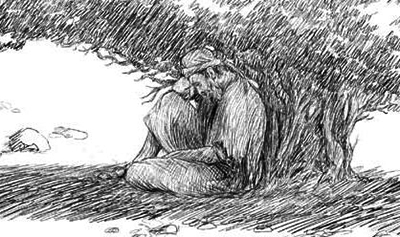
under a treeThere’s that strange story in the Old Testament of the old prophet and the young prophet, one of the more “post graduate” lessons in the Bible. (see I Kings 13) God told the young prophet to go do something and then come right back to where he had been. And the young prophet obeyed, at least in some ways, and he even performed miracles. But then what happened? On the way home, he sat down under a tree. He didn’t keep obeying. He sat down. It’s all a really intriguing story; I’ll let you read the whole thing yourself. But the end of the matter was that the sitting under the tree, rather than finishing his task, ultimately led to the death of the young prophet.
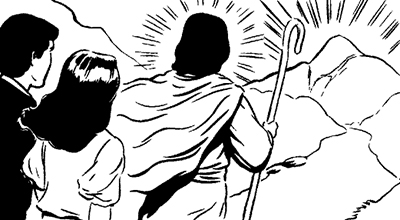
path aheadSo our best bet is to keep our eyes on the Lord and to keep obeying and living for Him, even if you think you’ve already had a pretty good life and it’s time to just sit down, kick back, relax and retire from His service that He’s called you to. I’m thankful for the life the Lord has given me; it’s such a blessing to look back and see all the ways He’s fulfilled His Word and allowed me to be a part of His work and plan. But it’s even more thrilling to look ahead to all that may still lie ahead, greater victories to be won and greater experiences to have with Him as He continues to set the captives free and break the chains that enslave so many around the world in these threatening times.

Copyright © Fight for Your Faith