Does your faith need strengthening? Are you confused and wondering if Jesus Christ is really "The Way, the Truth, and the Life?" "Fight for Your Faith" is a blog filled with interesting and thought provoking articles to help you find the answers you are seeking. Jesus said, "Seek and ye shall find." In Jeremiah we read, "Ye shall seek Me, and find Me, when ye shall seek for Me with all your heart." These articles and videos will help you in your search for the Truth.

Wednesday, September 15, 2021

Sofrimento e Bênção


Compilação


Considero que os nossos sofrimentos atuais não podem ser comparados com a glória que em nós será revelada.—Romanos 8:18[1]

*

Alguém me perguntou certa vez se eu não achava Deus injusto por ter permitido que eu tivesse mal de Parkinson e outros problemas de saúde sendo que estava tentando servi-lO fielmente. Eu respondi que não via dessa maneira. O sofrimento faz parte da existência humana, e todos estamos sujeitos a isso. O segredo é a maneira como reagimos a ele, se vamos ficar com raiva e amargurados e nos afastarmos de Deus, ou ficarmos mais próximos dEle com mais confiança e certeza.

Deus pode permitir o sofrimento para aprendermos a responder aos problemas de uma forma bíblica. Diz o versículo que, Jesus “aprendeu a obedecer por meio daquilo que sofreu”.[2] Nosso objetivo não deveria ser meramente ter alívio do sofrimento, mas sim aprender a agradar a Deus, sendo receptivos e obedientes a Ele e à Sua Palavra.[3]

Às vezes, Deus nos permite sofrer para aprendermos que a dor faz parte da vida. Em nenhum lugar na Bíblia diz que o cristão não sofrerá adversidades. Paulo salienta em Filipenses 1:29: “Pois a vocês foi dado o privilégio de, não apenas crer em Cristo, mas também de sofrer por ele.”[4] A adversidade pode ser um dom de Deus. Cristo não evitou a cruz para escapar do sofrimento. Hebreus 12:2 diz que Ele “suportou a cruz, desprezando a vergonha”. Por quê? “Pela alegria que lhe fora proposta.” Ele sabia que a palavra final não era crucificação (sofrimento), mas sim ressurreição (vitória).

Deus pode permitir o sofrimento para o nosso  bem. “Sabemos que Deus age em todas as coisas para o bem daqueles que o amam, dos que foram chamados de acordo com o seu propósito.”[5] Devemos aceitar isso pela fé e orar para que o bem maior que Deus propõe a nossa respeito venha como resultado do nosso sofrimento. Somente através da adversidade aprendemos algumas das lições mais profundas da vida. Confie em Deus para que Ele faça a Sua própria vontade e realize o Seu propósito, para que possamos ser mais como Cristo.[6] Não há mérito redentor em nosso sofrimento como houve no de Jesus, mas se formos fieis durante a adversidade, seremos incluídos na “participação em seus sofrimentos”.[7]

Podemos sofrer brevemente, ou durante toda a nossa vida, mas não devemos perder a esperança nem ficarmos amargurados ou em autocomiseração. O resultado final é o que todos esperamos ansiosamente. Estar com o Senhor no céu vai colocar tudo em perspectiva!—Billy Graham[8]

*

A maioria dos Salmos brotou de dificuldades. A maioria das Epístolas foi escrita em prisões. A maioria dos maiores pensamentos dos maiores pensadores de todos os tempos teve que passar pelo fogo. Bunyan escreveu o O Peregrino na prisão. Florence Nightingale, entrevada em uma cama, reorganizou os hospitais da Inglaterra. Semiparalisado e sob a constante ameaça da apoplexia, Pasteur foi incansável em seu combate a doenças. Durante a maior parte de sua vida, o historiador americano Francis Parkman sofreu tão intensamente que não conseguia trabalhar por mais de cinco minutos. Sua visão era tão ruim que ele conseguia apenas rabiscar algumas palavras gigantescas em um manuscrito, mas conseguiu escrever vinte magníficos volumes de história. Às vezes, parece que quando Deus está prestes a usar alguém grandemente, ele faz a pessoa passar pelo fogo.—Tim Hansel[9]

*

O pastor romeno Richard Wurmbrand passou 14 anos na prisão por pregar o Evangelho. Embora seus captores tenham esmagado quatro de suas vértebras e cortado ou queimado seu corpo em 18 lugares, não conseguiram derrotá-lo. Ele testemunhou: “Sozinho na minha cela, com frio, faminto e em trapos, eu dançava de alegria todas as noites.”

Durante esse tempo ele se voltou para um companheiro de prisão, um homem que ele havia conduzido ao Senhor antes de serem presos, e perguntou: “Você tem algum ressentimento contra mim por eu o conduzir a Cristo?” A resposta dele foi: “Não tenho palavras para expressar minha gratidão por me ter trazido ao maravilhoso Salvador. Eu jamais desejaria que fosse de outra forma.” Estes dois homens exemplificam a alegria sobrenatural que pode ser vivenciada pelos crentes que vivem à beira da morte, como resultado de serem severamente perseguidos.

A salvação, que traz força para o dia de hoje e esperança para o amanhã, dura para sempre. Portanto, não temos que ser derrotados por circunstâncias difíceis. Quando sabemos que estamos salvos, temos a certeza de que Deus está operando em nossas vidas, preparando-nos para as realidades eternas do mundo melhor. Sim, a salvação é a maior bênção da vida.—H.V.L., Our Daily Bread

*

O salmista nos diz: “O caminho de Deus é perfeito.”[10] Se os caminhos de Deus são “perfeitos”, então podemos confiar que tudo o que Ele faz—e tudo o que Ele permite—também é perfeito. Isto pode não nos parecer possível, mas não temos a mente de Deus. É verdade que não podemos esperar compreender Sua mente perfeitamente, como Ele nos lembra: “Pois os meus pensamentos não são os pensamentos de vocês, nem os seus caminhos são os meus caminhos, declara o Senhor. Assim como os céus são mais altos do que a terra, também os meus caminhos são mais altos do que os seus caminhos e os meus pensamentos mais altos do que os seus pensamentos.”[11] Ã€s vezes, a perfeita vontade de Deus inclui tristeza e sofrimento para os Seus filhos. Mas podemos nos regozijar porque Ele nunca nos testa além da nossa capacidade de suportar e sempre provê um escape do peso da tristeza que suportamos temporariamente.[12]

Ninguém sofreu tanto quanto Jesus, “um homem de tristeza e familiarizado com o sofrimento.”[13] Sua vida foi uma sequência de vicissitudes, desde o berço até a cruz. Em Sua infância, Sua vida correu perigo por causa de Herodes, e Seus pais tiveram que levá-lo e fugir para o Egito.[14] Todo Seu ministério foi caracterizado pela tristeza que Ele sentiu pela dureza e incredulidade humana; pela oposição dos líderes religiosos, e até mesmo pela inconstância de Seus próprios discípulos, sem mencionar as tentações de Satanás. Na noite anterior à Sua crucificação, Ele estava “cheio de tristeza até a morte” ao contemplar a ira e justiça vindouras de Deus que recairiam sobre Ele ao morrer por Seu povo. Tão grande era Sua agonia que Seu suor era como grandes gotas de sangue.[15] Claro, a maior tristeza de Sua vida foi quando estava na cruz e Seu Pai escondeu Seu rosto do Filho, fazendo Jesus gritar em agonia: “Por que me abandonaste?”[16] Certamente nenhum de nós passou por um sofrimento que se possa comparar com o do Salvador.

Mas, assim como Jesus retornou para a destra do Pai depois de suportar a dor, nós também podemos ter certeza de que, Deus usará as dificuldades e momentos de tristeza e adversidades para nos tornar mais semelhantes a Cristo.[17] A vida do ser humano na sociedade pecadora jamais será perfeita, mas sabemos que Deus é fiel, e que quando Cristo voltar, a tristeza será substituída pela alegria.[18] Mas, enquanto isso, usamos nossa tristeza para glorificar a Deus[19] e descansar na graça e na paz do Senhor Deus Todo-Poderoso.—De gotquestions.org[20]

*

Confiar no grande amor de Jesus por você não só o fará mais feliz, mas será uma força estabilizadora em sua vida. Quando estiver seguro do amor dEle por você e ciente de que Ele Se preocupa pessoalmente com o seu bem-estar e felicidade, esse conhecimento lhe dará paz de espírito e o estabilizará, mesmo quando sofrer ou enfrentar decepções, desgostos, dificuldades ou quaisquer outras adversidades que a vida coloque no seu caminho.—Maria Fonte

Publicado no Âncora em setembro de 2021.   https://anchor.tfionline.com/pt/post/sofrimento-e-bencao/


[1] NVI.

[2] Hebreus 5:8 NVI.

[3] Ver Romanos 12:1–2.

[4] NVI.

[5] Romanos 8:28 NVI.

[6] Ver Romanos 8:29.

[7] Filipenses 3:10.

[8] The Billy Graham Christian Worker's Handbook (Minneapolis: World Wide Publ., 1984), 223–25.

[9] You Gotta Keep Dancin' (David C. Cook, 1985), 87.

[10] Salmo 18:30.

[11] Isaías 55:8–9 NVI.

[12] 1 Coríntios 10:13.

[13] Isaías 53:3 NVI.

[14] Mateus 2:13–14.

[15] Mateus 26:38; Lucas 22:44.

[16] Mateus 27:46 NVI.

[17] Romanos 8:29; Hebreus 12:10.

[18] Isaías 35:10.

[19] 1 Pedro 1:6–7.

[20] https://www.gotquestions.org/Bible-sadness.html.

Character of Jesus - Part 4

The Character of Jesus, Forbidding His Possible Classification With Men - Part 4    To go to Part 1.

He undertakes what is humanly impossible. 

But Christ shows himself to be a superhuman character, not in the personal traits only, exhibited in his life, but even more sublimely in the undertakings, works, and teachings, by which he proved his Messiahship.

Consider then the reach of his undertaking; which, if he was only a man, shows him to have been the most extravagant and even wildest of all human enthusiasts. Contrary to every religious prejudice of his nation and even of his time, contrary to the comparatively narrow and exclusive religion of Moses itself, and to all his training under it, he undertakes to organise a kingdom of God, or kingdom of heaven on earth. 

His purpose includes a new moral creation of the race—not of the Jews only and of men proselyted to their covenant, but of the whole human race. He declared thus, at an early date in his ministry, that many shall come from the east and the west and sit down with Abraham, and Jews and Jacob, in the kingdom of God; that the field is the world; and that God so loves the world, as to give for it his only-begotten Son. He also declared that his gospel shall be published to all nations, and gave his apostles their commission to go into all the world, and publish his gospel to every creature.

He assumes to set up the kingdom of God among men. 

Here, then, we have the grand idea of his mission—it is to new-create the human race and restore it to God, in the unity of a spiritual kingdom. And upon this single fact, Reinhard erects a complete argument for his extra human character; going into a formal review of all the great founders of states and most celebrated lawgivers, the great heroes and defenders of nations, all the wise kings and statesmen, all the philosophers, all the prophet founders of religions, and discovering as a fact that no such thought as this, or nearly proximate to this, had ever before been taken up by any living character in history; showing also how it had happened to every other great character, however liberalized by culture, to be limited in some way to the interest of his own people, or empire, and set in opposition, or antagonism, more or less decidedly, to the rest of the world. 

But to Jesus alone, the simple Galilean carpenter, it happens otherwise; that, never having seen a map of the world in his whole life, or heard the name of half the great nations on it, he undertakes, coming out of his shop, a scheme as much vaster and more difficult than that of Alexander, as it proposes more and what is more divinely benevolent! This thought of a universal kingdom, cemented in God—why, the immense Roman empire of his day, constructed by so many ages of war and conquest, is a bauble in comparison, both as regards the extent and the cost! And yet the rustic tradesman of Galilee propounds even this for his errand, and that in a way of assurance, as simple and quiet, as if the immense reach of his plan were, in fact, a matter to him of no consideration.

His plan covers ages of time. 

Nor is this all; there is included in his plan, what, to any mere man, would be yet more remote from the possible confidence of his frailty; it is a plan as universal in time, as it is in the scope of its objects. It does not expect to be realized in a lifetime, or even in many centuries to come. He calls it understandingly, his grain of mustard-seed; which, however, is to grow, he declares, and overshadow the whole earth. But the courage of Jesus, counting a thousand years to be only a single day, is equal to the run of his work. 

He sees a rock of stability, where men see only frailty and weakness. Peter himself, the impulsive and always unreliable Peter, turns into rock and becomes a great foundation, as he looks upon him. “On this rock,” he says, “I will build my church, and the gates of hell shall not prevail against it.” 

His expectation, too, reaches boldly out beyond his own death; that, in fact, is to be the seed of his great empire—“except a corn of wheat fall into the ground and die, it abideth,” he says, “alone.” And if we will see with what confidence and courage he adheres to his plan, when the time of his death approaches—how far he is from giving it up as lost, or as an exploded vision of his youthful enthusiasm—we have only to observe his last interview with the two sisters of Bethany, in whom hospitality he was so often comforted. 

When the box of precious ointment is broken upon his head, which Judas reproves as a useless expense, he discovers a sad propriety or even prophecy, in what the woman has done, as connected with his death, now at hand. But it does not touch his courage, we perceive, or the confidence of his plan, or even cast a shade on his prospect, “Let her alone. She hath done what she could. She is come aforehand to anoint my body to the burying. Verily I say unto you, wheresoever this gospel shall be preached throughout the whole world, this also that this woman hath done shall be told for a memorial of her." Such was the sublime confidence he had in a plan that was to run through all future ages, and would scarcely begin to show its fruit during his own lifetime.

Such attempts not human. 

Is this great idea then, which no man ever before conceived, the raising of the whole human race to God, a plan sustained with such evenness of courage, and a confidence of the world’s future so far transcending any human example—is this a human development? Regard the benevolence of it, the universality of it, the religious grandeur of it, as a work readjusting the relations of God and his government with men—the cost, the length of time it will cover, and the far-off date of its completion—is it in this scale that a Nazarene carpenter, a poor uneducated villager, lays out his plans and graduates the confidence of his undertakings? 

There have been great enthusiasts in the world, and they have shown their infirmity by lunatic airs, appropriate to their extravagance. But it is not human, we may safely affirm, to lay out projects transcending all human ability, like this of Jesus, and which cannot be completed in many thousands of years, doing it in all the airs of sobriety, entering on the performance without parade, and yielding life to it firmly as the inaugural of its triumph. No human creature sits quietly down to a perpetual project, one that proposes to be executed only at the end, or final harvest of the world. That is not human, but divine.


Passing now to what is more interior in his ministry, taken as a revelation of his character, we are struck with another distinction, viz., that he takes rank with the poor, and grounds all the immense expectations of his cause, on a beginning made with the lowly and dejected classes of the world. He was born to the lot of the poor. His manners, tastes, and intellectual attainments, however, visibly outgrew his condition, and that in such a degree that, if he had been a mere human character, he must have suffered some painful distaste for the kind of society in which he lived. 

The great, as we perceive, flocked to hear him, and sometimes came even by night to receive his instructions. He saw the highest circles of society and influence open to him, if he only desired to enter them. And, if he was a properly human character, what virtuous, but rising young man would have had a thought of impropriety, in accepting the elevation within his reach; considering it as the proper reward of his industry and the merit of his character—not to speak of the contempt for his humble origin, and his humble associates, which every upstart person, of only ordinary virtue, is so commonly seen to manifest. 

Still he adheres to the poor, and makes them the object of his ministry. And what is more peculiar, he visibly has a kind of interest in their society, which is wanting in that of the higher classes; perceiving, apparently, that they have a certain aptitude for receiving right impressions, which the others have not. They are not the wise and prudent, filled with the conceit of learning and station, but they are the ingenuous babes of poverty, open to conviction, prepared, by their humble lot, to receive thoughts and doctrines in advance of their age. 

Therefore he loves the poor, and, without descending to their low manners, he delights to be identified with them. He is more assiduous in their service than other men have been in serving the great. He goes about on foot, teaching them, and healing their sick; occupying his great and elevated mind, for whole years, with details of labor and care, which the nurse of no hospital had ever laid upon him—insanities, blind eyes, fevers, fluxes, leprosies, and sores. His patients are all below his level and unable to repay him, even by a breath of congenial sympathy; and nothing supports him but the consciousness of good which attends his labors.

No great social architect ever saw the wisdom of it. 

Meantime, consider what contempt for the poor had hitherto prevailed among all the great statesmen and philosophers of the world. The poor were not society, or any part of society. They were only the conveniences and drudges of society; appendages of luxury and state, tools of ambition, material to be used in the wars. No man who had taken up the idea of some great change or reform in society, no philosopher who had conceived the notion of building up an ideal state or republic, ever thought of beginning with the poor. Influence was seen to reside in the higher classes, and the only hope of reaching the world, by any scheme of social regeneration, was to begin with them, and through them operate its results. 

But Christ, if we call him a philosopher, and, if he is only a man, we can call him by no higher name, was the poor man’s philosopher; the first and only one that had ever appeared. Seeing the higher circles open to him, and tempted to imagine that, if he could once get footing for his doctrine among the influential and the great, he should thus secure his triumph more easily, he had yet no such thought. He laid his foundations, as it were, below all influence, and, as men would judge, threw himself away.

And precisely here did he display a wisdom and character totally in advance of his age. Eighteen centuries have passed away, and we now seem just beginning to understand the transcendent depth of this feature in his mission and his character. We appear to be just waking up to it as a discovery, that the blessing and upraising of the masses are the fundamental interest of society—a discovery, however, which is only a proof that the life of Jesus has at length begun to penetrate society and public history. 

It is precisely this which is working so many and great changes in our times, giving liberty and right to the enslaved many, seeking their education, encouraging their efforts by new and better hopes, producing an aversion to war, which has been the fatal source of their misery and depression, and opening, as we hope, a new era of comfort, light, and virtue in the world. It is as if some higher and better thought had visited our race—which higher thought is in the life of Jesus. The schools of all the philosophers are gone, hundreds of years ago, and all their visions have died away into thin air; but the poor man’s philosopher still lives, bringing up his poor to liberty, light, and character, and drawing the nations on to a brighter and better day,


And still he raises no partisan feeling.

At the some time, the more than human character of Jesus is displayed also in the fact that, identifying himself thus with the poor, he is yet able to do it, without eliciting any feelings of partisanship in them. To one who will be at the pains to reflect a little, nothing will seem more difficult than this; to become the patron of a class, a downtrodden and despised class, without rallying in them a feeling of intense malignity. And that for the reason, partly, that no patron, however just or magnanimous, is ever quite able to suppress the feelings of a partisan in himself. A little ambition, pricked on by a little abuse, a faint desire of popularity playing over the face of his benevolence, and tempting him to loosen a little of ill-nature, as tinder to the passions of his sect—something of this kind is sure to kindle some fire of malignity in his clients.

No human leader in this. 

Besides, men love to be partisans. Even Paul and Apollos and Peter had their sects or schools, glorying in one against another. With all their efforts, they could not suppress a weakness so contemptible. But no such feeling could ever get footing under Christ. If his disciples had forbidden one to heal in the name of Jesus, because he followed not with them, he gently rebuked them, and made them feel that he had larger views than to suffer any such folly. 

As the friend of the poor and oppressed class, he set himself openly against their enemies, and chastised them as oppressors, with the most terrible rebukes. He exposed the absurdity of their doctrine, and silenced them in argument; he launched his thunderbolts against their base hypocrisies; but it does not appear that the populace ever testified their pleasure, even by a cheer, or gave vent to any angry emotion under cover of his leadership. For there was something still, in the manner and air of Jesus, which made them feel it to be inappropriate, and even made it impossible. 

It was as if some Being were here, taking their part, whom it were even an irreverence to applaud, much more to second by any partisan clamor. They would as soon have thought of cheering the angel in the nun, or of rallying under him as the head of their faction.

On one occasion, when he had fed the multitudes by a miracle, he saw that their national superstitions were excited, and that, regarding him as the Messiah predicted in the Scriptures, they were about to take him by force and make him their king; but this was a national feeling, not the feeling of a class. Its root was superstition, not hatred. 

His triumphal entry into Jerusalem, attended by the acclamations of the multitude, if this be not one of the fables or myths, which our modern criticism rejects, is yet no demonstration of popular faction, or party animosity. Robbing it of its mystical and miraculous character, as the inaugural of the Messiah, it has no real signification. In a few hours, after all, these hosannas are hushed, Jesus is alone and forsaken, and the very multitudes he might seem to have enlisted, are crying “Crucify him!" 

On the whole, it cannot be said that Jesus was ever popular. He was followed at times, by great multitudes of people, whose love of the marvellous worked on their superstitions, to draw them after him. They came also to be cured of their diseases. They knew him as their friend. But there was yet something in him that forbade their low and malignant feelings gathering into a conflagration round him. He presents, indeed, an instance that stands alone in history, as God at the summit of the worlds, where a person has identified himself with a class, without creating a faction, and without becoming a popular character.

To go to Part 5

Natural Immunity Lasts Longer Than Vaccine Immunity!

https://www.theepochtimes.com/mkt_morningbrief/natural-immunity-longer-lasting-than-protection-from-covid-19-vaccines-dr-robert-malone_

Natural Immunity Longer Lasting Than Protection From COVID-19 Vaccines: Dr. Robert Malone

 
September 6, 2021 Updated: September 7, 2021

The immunity conferred by recovering from COVID-19 is better than the protection afforded by COVID-19 vaccines, a prominent vaccine inventor says, citing in part a recent study from Israel.

Israeli researchers found that people in the country vaccinated with Pfizer’s COVID-19 shot were 13 times more likely to contract the Delta variant of the CCP virus and 27 times more at risk of symptomatic disease, compared to those who had recovered from COVID-19.

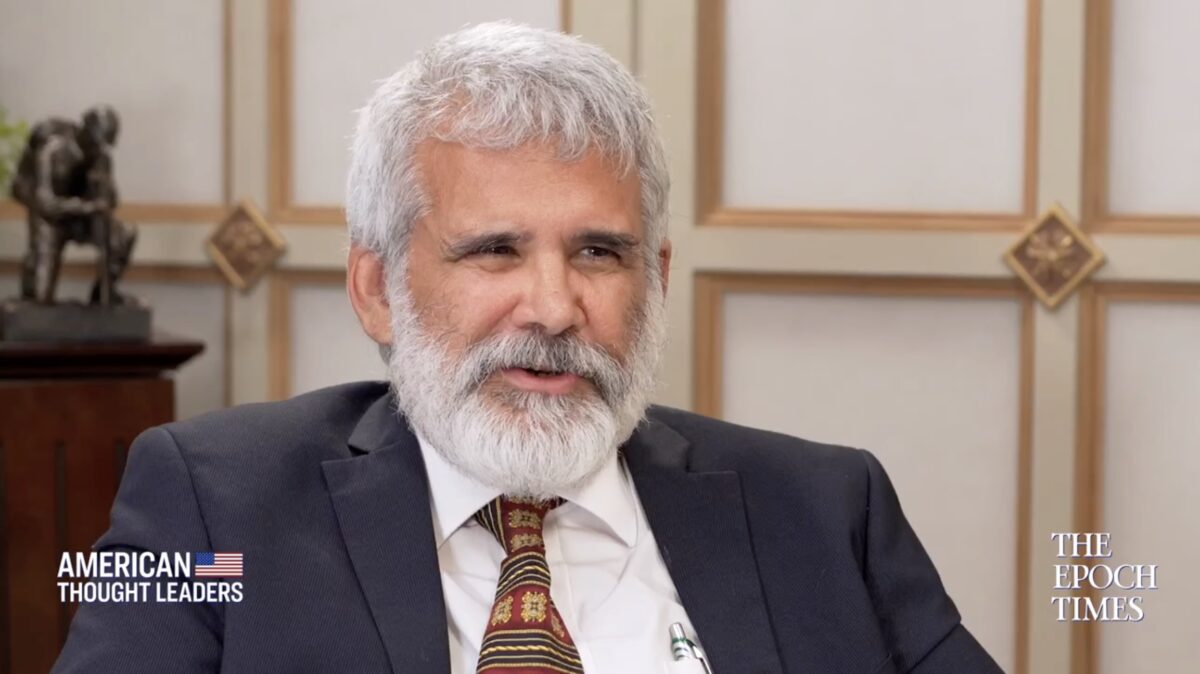
“It’s now been shown in that paper and others that the breadth of that immune response in terms of T and B cell memory populations is more diverse and more long-lasting than the breadth of immune response elicited by the spike-based vaccines alone,” Dr. Robert Malone, the inventor of the class of vaccines based on messenger RNA, said on Epoch TV’s “American Thought Leaders” program.

While antibodies reduce over time, T cells, a type of white blood cells that protect against infection, and B cells can last for a lifetime.

Federal health authorities acknowledge natural immunity exists but have continued to claim that the protection from vaccines is better, pointing to a different set of studies, including one from Kentucky published by state and Centers for Disease Control and Prevention (CDC) researchers.

Authorities continue to urge everybody, regardless of prior infection, to get a vaccine.

Some other scientists, though, say the growing body of evidence on natural immunity must play a larger role in policy discussions on vaccination amid the pandemic.

“Natural immunity is pretty darn good. We would be best to focus our efforts on people who are both unvaccinated AND have not recovered from prior infection,” Dr. Vinay Prasad, a professor at the University of California–San Francisco’s Department of Epidemiology & Biostatistics, wrote on social media over the weekend.

The Israeli study, Malone said, “seems to indicate that the breadth and durability of the immune response was superior with the natural infection in recovery.”

“There’s also evidence that there’s a significant—depending on the timeframe—six- to 20-fold improvement in protection from infection and disease associated with the natural immunity acquired from prior infection compared to that conferred by the vaccine.”

Malone says the newer data is a key piece in what he described as a social contract between members of the public and government health agencies.

The public “is faced with a situation where they had been told that natural immunity was not as protective, that they can’t rely on that; that if you’ve been previously infected, you should still get both doses of vaccine; that this vaccination would provide broad durable protection, it would protect you and it would protect your elders from you potentially spreading disease to them,” he said.

The CDC didn’t immediately respond to a request for comment. The agency has told The Epoch Times in the past that it doesn’t comment on papers that aren’t authored by the agency and that officials “continually evaluate the science that leads to our guidance, and if it needs to be changed, we will base that on our own research and studies.”

Zachary Stieber 
Zachary Stieber
REPORTER
Zachary Stieber covers U.S. news, including politics and court cases. He started at The Epoch Times as a New York City metro reporter.
Jan Jekielek 
Jan Jekielek
SENIOR EDITOR
Jan Jekielek is a Senior Editor with The Epoch Times and host of the show, "American Thought Leaders." Jan’s career has spanned academia, media, & international human rights work. In 2009 he joined The Epoch Times full time and has served in a variety of roles, including as Website Chief Editor. He is the producer of the award-winning Holocaust documentary film "Finding Manny."

WHAT ARE THE TOP BOOKS TO GIVE A NON-CHRISTIAN?

 Sean McDowell | February 29, 2016

What are the Top Books to Give a Non-Christian?

SeanMcDowell.org

One of the most common questions I receive regards which books I would recommend Christians to give their non-Christian friends who they hope may become believers. While there are many excellent books, these six come from both my personal experience of hearing stories of how people have become believers, and also an assessment of the apologetic and evangelistic value of each book.

1.The Gospel of John. In our desire to convince people that Christianity is true, we sometimes miss the power of personally encountering God’s word. If I could just recommend one book for non-Christians to read, it would be the Gospel of John. If someone is open to spiritual truth, there’s nothing more powerful than being confronted with the teachings, miracles, and person of Jesus Christ.

2.Mere Christianity, by C.S. Lewis. There are few books, if any, that have drawn more people to Christ than this impressive, classical, and insightful book. For instance, the great scientist Francis Collins credits it as key in his salvation. Lewis does a masterful job of articulating and defending core Christian beliefs (hence “mere Christianity”) and not getting bogged down on secondary issues. His articulation of the moral argument for God’s existence is simple, clear, and powerful.

3.More Than A Carpenter, by Josh McDowell (I helped update this book in 2009). I am undeniably biased on this one, but I hear stories weekly from people who have come to faith through reading this book. The book is framed through my dad’s personal journey attempting to disprove Christianity, as well as his search for happiness. The real power in the book comes when he discusses how the truth of Christianity personally changed his life, which included how God’s love enabled him to forgive his alcoholic father as well as the man who sexually abused him for seven years.

4.The Reason for God, by Timothy Keller. Pastor Keller deeply understands the barriers that often prevent people from becoming believers today. He addresses these issues—such as the particularity of Christ, and the claim that Christianity should be more inclusive—with both clearness and force. He also provides positive evidence for Christianity from science, history and philosophy.

5.Simply Christian, by N.T. Wright. Wright is a rare author who can speak truth in a poetic and compelling manner. In my experience, many people reject Christianity because they don’t really understand what it is about (i.e., they reject a straw-man). Thus, a book like Simply Christian provides evidence for Christianity, but clarifies the heart of the Christian message and explains what it means to follow Jesus.

6.The Case for Christby Lee Strobel. Even though this book has been out less than two decades, it is already a classic. Strobel is both a great thinker and an excellent storyteller. Since it is written in conversational style, The Case for Christ draws readers into Strobel’s personal journey to the faith and presents the Gospel with clarity and force.

7.The Reason Why Faith Makes Senseby Mark Mittelberg. Speaking of classics, Lee Strobel’s ministry partner, Mark Mittelberg, has recreated a classic called The Reason Why, by Robert Laidlaw, that sold in the millions over the past century. Mark's new, powerful little book combines up-to-date apologetics with a clear presentation of the gospel, and is being used in churches throughout the nation to give to visitors and anyone with spiritual questions.

Giving a book to a non-Christian is a great means of evangelism. But keep a couple things in mind. First, don’t let it replace genuine interaction. It’s easy to give a book to people withouth truly sharing our lives and beliefs with them. If you give someone a book, then follow up and be willing to discuss it in more depth, even if you don’t have all the answers.

Second, be willing to read a book someone else gives you. I have had many people of other faiths give me books to read. I am always touched when people do this because I know its their way of showing genuine care. I will read the book charitably and then follow up with questions. In my experience, its amazing how many people are truly willing to engage spiritual issues when we approach them with genuine love, care, and openness. Go for it!

Sean McDowell, Ph.D. is a professor of Christian Apologetics at Biola University, a best-selling author, popular speaker, and part-time high school teacher. Follow him on Twitter: @sean_mcdowell, TikTokInstagram, and his blog: seanmcdowell.org.

The Character of Jesus - Part 3

 Horace Bushnell's The Character of Jesus, Part 3

The astonishing pretensions of Jesus. 

There is yet another point related to this, in which the attitude of Jesus is even more distinct from any that was ever taken by man, and is yet triumphantly sustained. I speak of the astonishing pretensions asserted concerning his person. Similar pretensions have sometimes been assumed by maniacs, or insane persona, but never, so far as I know, by persons in the proper exercise of their reason. Certain it is that no mere man could take the same attitude of supremacy towards the race, and inherent affinity or oneness with God, without fatally shocking the confidence of the world by his effrontery. 

Imagine a human creature saying to the world—“I came forth from the Father”—“ye are from beneath, I am from above”; facing all the intelligence and even the philosophy of the world, and saying, in bold assurance—“behold, a greater than Solomon is here”—“I am the light of the world”—“the way, the truth, and the life”; publishing to all peoples and religions—“No man cometh to the Father, but by me”; promising openly in his death—“I will draw all men unto me”; addressing the Infinite Majesty, and testifying—“I have glorified thee on the earth”; calling to the human race—“Come unto me”; “follow me”; laying his hand upon all the dearest and moat intimate affections of life, and demanding a precedent love—“he that loveth father or mother more than me, is not worthy of me.” 

Was there ever displayed an example of effrontery and spiritual conceit so preposterous? Was there ever a man that dared put himself on the world in such pretensions?—as if all light was in him; as if to follow him and be worthy of him was to be the conclusive or chief excellence of mankind! What but mockery and disgust does he challenge as the certain reward of his audacity! But no one is offended with Jesus on this account, and what is a sure test of his success, it is remarkable that, of all the readers of the gospel, it probably never even occurs to one in a hundred thousand, to blame his conceit, or the egregious vanity of his pretension,

His pretensions enter also into his actions. 

Nor is there any thing disputable in these pretensions, least of all, any trace of myth or fabulous tradition. They enter into the very web of his ministry, so that if they are extracted and nothing left transcending mere humanity, nothing at all is left. Indeed, there is a tacit assumption, continually maintained, that far exceeds the range of these formal pretensions. He says—“I and the Father that sent me.” What figure would a man present in such language—I and the Father? 

He goes even beyond this, and apparently without any thought of excess or presumption; classing himself with the Infinite Majesty in a common plural, he says—We will come unto him, and make our abode with him. Imagine any, the greatest and holiest of mankind, any prophet, or apostle, saying we, of himself and the Great Jehovah! What a conception did he give us concerning himself, when he assumed the necessity of such information us this—“my Father is greater than I”; and above all, when he calls himself, as he often does, in a tone of condescension—“the Son of Man.” 

See him also on the top of Olivet, looking down on the guilty city and weeping words of compassion like these—imagine some man weeping over London or New York, in the like—“How often would I have gathered thy children together as a hen doth gather her chickens under her wings, and ye would not!" See him also in the supper, instituting a rite of remembrance for himself, a scorned, outcast man, and saying—“this is my body”—“this do in remembrance of me.”

Nobody offended by these pretensions. 

I have dwelt thus on the transcendent pretensions of Jesus, because in them is an argument here for his superhumanity, which can not be resisted. For eighteen hundred years, these prodigious assumptions have been published and preached to a world that is quick to lay hold of conceit, and bring down the lofty airs of pretenders, and yet, during all this time, whole nations of people, composing as well the learned and powerful as the ignorant and humble, have paid their homage to the name of Jesus, detecting never any disagreement between his merits and his pretensions, offended never by any thought of his extravagance. In which we have absolute proof that he practically maintains his amazing assumptions! 

Indeed it will even be found that, in the common apprehension of the race, he maintains the merit of a most peculiar modesty, producing no conviction more distinctly, than that of his intense lowliness and humility. His worth is seen to be so great, his authority so high, his Spirit so celestial, that instead of being offended by his pretensions, we take the impression of one in whom it is even a condescension to breathe our air. I say not that his friends and followers take this impression, it is received as naturally and irresistibly by unbelievers. I do not recollect any skeptic or infidel who has even thought to accuse him as a conceited person, or to assault him in this, the weakest and absurdest, if not the strongest and holiest, point of his character.

What mere man could support such pretensions? Come now, all ye that tell us in your wisdom of the mere natural humanity of Jesus, and help us to find how it is, that he is only a natural development of the human; select your best and wisest character; take the range, if you will, of all the great philosophers and estate, and choose out one that is most competent; or if, perchance, some one of you may imagine that he is himself about upon a level with Jeans (as we hear that some of you do), let him come forward in this trial and say—“follow me”—“be worthy of me”—“I am the light of the world”—“ye are from beneath, I am from above”—“behold a greater than Solomon is here”; take on all these transcendent assumptions, and see how soon your glory will be sifted out of you by the detective gaze, and darkened by the contempt of mankind! 

Why not? is not the challenge fair? Do you not tell us that you can say as divine things as he? Is it not in you, too, of course, to do what is human? ere you not in the front rank of human developments? do you not rejoice in the power to rectify many mistakes and errors in the words of Jesus? Give us then this one experiment, and see if it does not prove to you a truth that is of some consequence; viz., that you are a man, and that Jesus Christ is—more.


Peculiar in the passive virtues. 

But there is also a passive side to the character of Jesus which is equally peculiar, and which likewise demands our attention. I recollect no really great character in history, excepting such as may have been formed under Christianity, that can properly be said to have united the passive virtues, or to have considered them any essential part of a finished character. 

Socrates comes the nearest to such an impression, and therefore most resembles Christ in the submissiveness of his death. It does not appear, however, that his mind had taken this turn previously to his trial, and the submission he makes to the public sentence is, in fact, a refusal only to escape from the prison surreptitiously which he does, partly because he thinks it the duty of every good citizen not to break the laws, and partly, if we judge from his manner, because he is detained by a subtle pride; as if it were something unworthy of a grave philosopher, to be stealing away, as a fugitive, from the laws and tribunals of his country. 

The Stoics, indeed, have it for one of their great principles, that the true wisdom of life consists in a passive power, viz., in being able to bear suffering rightly. But they mean by this, the bearing of suffering so as not to feel it; a steeling of the mind against sensibility, and a raising of the will into such power as to drive back the pangs of life, or shake then off. But this, in fact, contains no allowance of passive virtue at all; on the contrary, it is an attempt so to exalt the active powers, as even to exclude every sort of passion, or passivity. 

And Stoicism corresponds, in this respect, with the general sentiment of the world’s great characters. They are such as like to see things in the heroic vein, to see spirit and courage breasting themselves against wrong, and, where the evil can not be escaped by resistance, dying in a manner of defiance. Indeed it has been the impression of the world generally, that patience, gentleness, readiness to suffer wrong without resistance, is but another name for weakness.

But Christ, in opposition to all such impressions, manages to connect these non-resisting and gentle passivities with a character of the severest grandeur and majesty; and, what is more, convinces us that no truly great character can exist without them.

Does not falter in the common trials of existence. 

Observe him, first, in what may be called the common trials of existence. For if you will put a character to the severest of all tests, see whether it can bear without faltering, the little common ills and hindrances of life. Many a man will go to his martyrdom, with a spirit of firmness and heroic composure, whom a little weariness or nervous exhaustion, some silly prejudice, or capricious opposition, would, for the moment, throw into a fit of vexation, or ill-nature.

Great occasions rally great principles, and brace the mind to a lofty bearing, a bearing that is even above itself. But trials that make no occasion at all, leave it to show the goodness and beauty it has in its own disposition. And here precisely is the superhuman glory of Christ as a character, that he is just as perfect, exhibits just as great a spirit, in little trials as in great ones. In all the history of his life, we are not able to detect the faintest indication that he slips or falters.

And this is the more remarkable, that he is prosecuting so great a work, with so great enthusiasm counting it his meat and drink, and pouring into it all the energies of his life. For when men have great works on hand, their very enthusiasm runs to impatience. When thwarted or unreasonably hindered, their soul strikes fire against the obstacles they meet, they worry themselves at every hindrance, every disappointment, and break out in stormy and fanatical violence. 

But Jesus, for some reason, is just as even, just as serene, in all his petty vexations, and hindrances, as if he bad nothing on hand to do. A kind of sacred patience invests him everywhere. Having no element of crude will noised with his work, he is able, in all trial and opposition, to hold a condition of serenity above the clouds, and let them sail under him, without ever obscuring the sun. He is poor, and hungry, and weary, and despised, insulted by his enemies, deserted by his friends, but never disheartened, never fretted or ruffled.

You see, meantime, that he is no Stoic; he visibly feels every such ill as his delicate and sensitive nature must, but he has some sacred and sovereign good present, to mingle with his pains, which, as it were, naturally and without any self-watching, allays them. He does not seem to rule his temper, but rather to have none; for temper, in the sense of passion, is a fury that follows the will, as the lightnings follow the disturbing forces of the winds among the clouds; and accordingly, where there is no self-will to roll up the clouds and hurl them through the sky, the lightnings hold their equilibrium, and are as though they were not.

His passion no mere human martyrdom. 

As regards what is called pre-eminently his passion, the scene of martyrdom that closes his life, it is easy to distinguish a character in it which separates it from all mere human martyrdoms. Thus, it will be observed, that his agony, the scene in which his suffering is bitterest and most evident, is, on human principles, wholly misplaced. It comes before the time, when as yet there is no arrest, and no human prospect that there will be any. He is at large, to go where he pleases, and in perfect outward safety. His disciples have just been gathered round him in a scene of more than family tenderness and affection. Indeed it is but a very few hours since that he was coming into the city, at the head of a vast procession, followed by loud acclamations, and attended by such honors as may fitly celebrate the inaugural of a king. 

Yet here, with no bad sign apparent, we see him plunged into a scene of deepest distress, and racked, in his feeling, with a more than mortal agony. Coming out of this, assured and comforted, he is shortly invested, brought to trial and crucified; where, if there be any thing questionable in his manner, it is in the fact that he is even more composed than some would have him to be, not even stooping to defend himself or vindicate his innocence. And when he dies, it is not as when the martyrs die. They die for what they have said, and remaining silent will not recant. He dies for what he has not said, and still is silent.

His agony misplaced, taken as being only a man’s. 

By the misplacing of his agony thus, and the strange silence he observes when the real hour of agony is come, we are put entirely at fault on natural principles. But it was not for him to wait, as being only a man, till he is arrested, and the hand of death is upon him, then to be nerved by the occasion to a show of victory. He that was before Abraham, must also be before his occasions. In a time of safety, in a cool hour of retirement, unaccountably to his friends, he falls into a dreadful context and struggle of mind; coming out of it finally to go through his most horrible tragedy of crucifixion, with the serenity of a spectator!

It is, humanly speaking, excessive. Why now this so great intensity of sorrow? why this agony? Was there not something unmanly in it, something unworthy of a really great soul? Take him to be only a man, and there probably was; nay, if he were a woman, the same might be said. But this one thing is clear, that no one of mankind, whether man or woman, ever had the sensibility to suffer so intensely; even showing the body, for the mere struggle and pain of the mind, exuding and dripping with blood. Evidently there is something mysterious here; which mystery is vehicle to our feeling, and rightfully may be, of something divine. What, we begin to ask, should be the power of a superhuman sensibility? and how far should the human vehicle shake under such a power? How too should an innocent and pure spirit be exercised, when about to suffer, in his own person, the greatest wrong ever committed?

The pathology is divine. 

Besides there is a vicarious spirit in love; all love inserts itself vicariously into the sufferings and woes and, in a certain sense, the sins of others, taking them on itself as a burden. How then, if perchance Jesus should be divine, an embodiment of God’s love in the world—how should he feel, and by what signs of feeling manifest his sensibility, when a fallen race are just about to do the damning sin that crowns their guilty history; to crucify the only perfect being that ever came into the world; to crucify even him, the messenger and representative to them of the love of God, the deliverer who has taken their case and cause upon him! 

Whomever duly ponders these questions, will find that he is led away, more and more, from any supposition of the mere mortality of Jesus. What he looks upon, he will more and more distinctly see to be the pathology of a superhuman anguish. It stands, he will perceive, in no mortal key. It will be to him the anguish, visibly, not of any pusillanimous feeling, but of holy character itself; nay, of a mysteriously transcendent, or somehow divine character.

His defence before Pilate all that could be made. 

But why did be not defend his cause and justify his innocence in the trial? Partly because he had the wisdom to see that there really was and could be no trial, and that one who undertakes to plead with a mob, only mocks his own virtue, throwing words into the air that is already filled with the clamors of prejudice. To plead innocence in such a case, is only to make a protestation, such as indicates fear, and is really unworthy of a great and composed spirit. A man would have done it, but Jesus did not. 

Besides, there was a plea of innocence in the manner of Jesus, and the few very significant words that he dropped, that had an effect on the mind of Pilate, more searching and powerful than any formal protestations. And the more we study the conduct of Jesus during the whole scene, the more shall we be satisfied that he said enough; the more admire the mysterious composure, the wisdom, the self-possession, and the superhuman patience of the sufferer. 

It was visibly the death-scene of a transcendent love. He dies not as a man, but rather as some one might, who is mysteriously more and higher. So thought aloud the hard-faced soldier—“Truly this was the Son of God.” As if he had said—“I have seen men die—this is not a man. They call him Son of God—he can not be less.” Can he be less to us?

To go to Part 4.  To go back to Part 1.

Copyright © Fight for Your Faith