Does your faith need strengthening? Are you confused and wondering if Jesus Christ is really "The Way, the Truth, and the Life?" "Fight for Your Faith" is a blog filled with interesting and thought provoking articles to help you find the answers you are seeking. Jesus said, "Seek and ye shall find." In Jeremiah we read, "Ye shall seek Me, and find Me, when ye shall seek for Me with all your heart." These articles and videos will help you in your search for the Truth.

Wednesday, April 8, 2015

МЕРА ВЕРЫ

http://anchor.tfionline.com/ru/post/mera-very/

Виржиния Брандт Берг

Моя подруга однажды спросила заведующего супермаркетом, удавалось ли злоумышленникам получить у него деньги по фальшивому чеку. «Ни разу, – ответил он, – потому что я никогда не смотрел на чек. Я всегда смотрю на человека. Если он заслуживает доверия, я приму его чек без вопросов». Такой вере стоит поучиться!

В десятой главе послания к Евреям мы читаем, что «верен Обещавший» (см. Евреям, 10:23). Кто этот Обещавший? Бог. Взгляните на Того, Кто дает обещания в Божьем слове, и у вас не останется сомнений в их абсолютной верности. Божье слово гласит: «Сблизься же с Ним – и будешь спокоен; чрез это придет к тебе добро» (Иов, 22:21).

Познать Бога – значит, быть уверенным в том, что Он сдержит каждое произнесенное Им слово. Авраам знал Бога и «не поколебался в обетовании Божием неверием, но пребыл тверд в вере, […] будучи вполне уверен, что Он силен исполнить обещанное» (см. Римлянам, 4:20-21).

Некоторые считают веру чем-то таинственным и совершенно недосягаемым. Есть также люди, которые полагают, что вера – это природный дар, которым одни в той или иной степени обладают, а другие – нет. И то, и другое – заблуждение.

Бог всем уделил «меру веры» (см. Римлянам, 12:3). Мера веры дана каждому, но пользуются своей верой немногие. А без употребления вера дрябнет, будто мускул, который перестал работать. Вера растет лишь от постоянных упражнений.

Получить веру путем научного анализа невозможно – Бог утаил свои глубочайшие истины от «мудрых и разумных» (см. от Матфея, 11:25). Он открыл их лишь тем, кто рискнул поверить Ему на слово. И именно они, люди с младенческой верой, способны прорваться сквозь любые споры и сомнения. Именно они повергают в стыд ученых мужей – ведь стоит им руку протянуть, и Бог исполнит Свое обещание – обещание, даже суть которого ученым познать не дано.

Вера живет в собственном мире, полностью отличном от привычного нам мира пяти органов чувств. Однако в нем применимы те же принципы. Если мы пробуем на вкус что-то сладкое, то не нуждаемся в дальнейшем доказательстве сладости: об этом нам сообщают вкусовые рецепторы. И кто бы ни старался убедить нас в обратном, мы знаем, что попробовали сладкий плод – доказательство у нас уже есть.

В духовной жизни вера предоставляет нам информацию о духовных истинах точно так же, как органы чувств предоставляют информацию о мире физическом. И коль скоро мы доверяем своим органам чувств, не стоит ставить под сомнение и голос веры! Когда мы прислушиваемся к нему, вера материализует то, о чем говорит: «Как ты веровал, да будет тебе» (от Матфея, 8:13).

Поверьте Богу на слово. Если становится туго – не поддавайтесь неприятностям. Возьмите лучше Библию, найдите подходящее обещание Божье и потребуйте его исполнения во имя Иисуса. Вот, например, обещание, которым часто пользуюсь я, хотя до конца его так и не понимаю – уж слишком оно грандиозно: «Если чего попросите у Отца во имя Мое, то сделаю, да прославится Отец в Сыне». А вот еще одно: «Воззови ко Мне – и Я отвечу тебе, покажу тебе великое и недоступное, чего ты не знаешь» (Иеремия, 33:3).

Неудивительно, что Божье слово называет эти обещания «великими» и «драгоценными», утверждая, что через них мы можем сделаться «причастниками Божеского естества» (см. 2-е Петра, 1:4). Все, что для этого необходимо – это простая вера!

***

Физический мир держится на невидимой силе тяготения. Финансовый мир держится на невидимом принципе доверия. А невидимая вера – это основная сила, на которой держится весь духовный мир.

Tuesday, April 7, 2015

God Needs You

By Mark McMillion
Posted on March 18, 2015

One morning while I was in Bulgaria, I was in a room above the little church where they were hosting me. I’d been speaking to around 70 people for the first two nights who’d braved the late winter snow to come and hear what the foreigner had to say. I’d shared my life story of how I came to believe in the God of Abraham and then in Jesus. Another night I’d shared some basic classes on the importance of Jesus, the subject of Salvation, the significance of the Holy Spirit, the need for the Bible in our lives.
But I somehow felt that the last night’s time with these folks lacked the full power that an opportunity like this requires. So the next morning I felt desperate that things go better. I’ve already written about this some in “Work? Or Prayer…in Bulgaria” There I mentioned how that I felt the Lord answered my desperate prayer by laying something on my heart which I wrote down after my prayer. Here’s an edited version of that and what has come to be one of the main things I’ve shared with these ones since then.
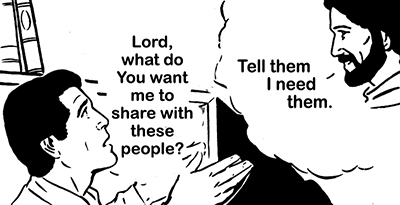
God Needs You

In Ezekiel there’s an obscure but extremely significant passage. God is speaking and He says, “I sought for a man among them to stand in the gap and make up the hedge, that I should not destroy the land. But I found him not.” (Ezekiel 22:30) The picture is of a broken wall. We can think of it as the city of our fellowship and heritage of the people of God. There was a gap through which the Enemy could attack and God needed a person to rally the forces of God to stand up for Him in the battles of the Lord. But the Scripture says, “He found him not.” God found no one to take up the mission of His will and service.

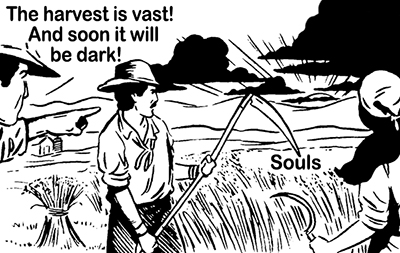
In another place, God is speaking in Isaiah, “Who shall I send, who shall go for us?” Then Isaiah answers “Here am I Lord, send me.” (Isaiah 6:8) That’s what is needed, but there are so very few. Jesus said the same thing. “When He saw the multitudes, He was moved with compassion. For they fainted and were scattered abroad as sheep having no shepherd. Then He said to His disciples, ‘The harvest is plenteous, but the laborers are few. Pray to the Lord of the harvest that He will send laborers into His harvest.’” (Matthew 9:36-38)


Where are the victors of God? Where are the heroes? Where are the “mighty men”, like David had

And it’s certainly still the same today. God needs and wants fighters, not just believers. There is a raging war going on. Souls are dying without the Word of the Lord. In the endtime, we are destined to be winners in the battles. Where are the victors of God? Where are the heroes? Where are the “mighty men”, like David had, who knew there was a battle and that they were on the side of the God of light and love and truth?

That’s what is needed. Not spectators, but players on the field of battle. God has a destiny prepared for those who will claim it in their lives. God has victorious battles to be won, souls to be set free, lights to be lifted up, and multitudes to turn to Him. But He doesn’t want to do it alone. He wants us to work with Him; He wants to work with flesh and blood us.


The church of our times has left the arena and now sits in the grandstands.

Who can He use in your community, in your family? Who does He chose? “The foolish things to confound the wise.” (I Corinthians 1:26). “When they saw the boldness of Peter and John, and perceived that they were unlearned and ignorant men, they marveled and took knowledge of them, that they had been with Jesus.” (Acts 4:13) That’s really all that’s needed. Not theology school, a university degree, the right skin color and the backing of a large denomination. What’s needed is that “they had been with Jesus”. And so, so many have been with Jesus and are with Jesus. But their lights remain “under a basket” (Matthew 5:15), rather than really on a candlestick. The church of our times has left the arena and now sits in the grandstands.


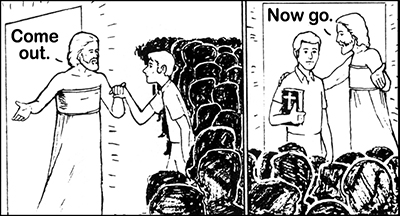
Today is the day that God needs you to step out of your circle of normalcy and to go a little further.

How can we rule with Him in the Millennium if we are not working, fighting and winning with Him right now? “Now is the day of salvation“. (II Corinthians 6:2) Today is the day that souls are fainting in the land, dying and giving up hope. Today is the day that God needs you to step out of your circle of normalcy and to go a little further. It says of Jesus, “He went a little further, and fell on His face.” (Matthew 26:39) That’s what each of us should be doing each day: going a little further and falling on our face in desperate prayer that we can be all that He wants us to be and needs us to be.

May God help all of us to not be complacent, not satisfied with the normal hum-drum tediousness of our lives. May we obey what the Lord said, to “Lift up our eyes and look on the fields, for they are white already to harvest.” (John 4:35) The Lord needs laborers, the Lord needs soldiers, the Lord needs simple people like you and me to take the mantel of His mighty men of old in these desperate end times, to have the vision of fighters, winners, overcomers, harvesters, soul winners, sheep-feeders, comforters of the weak, whatever the call or need is, that His people will have the vision of the service He has called us to and which is so very needed in these desperate times.

It’s just a very basic principle of God for centuries, “If you draw out our soul to the hungry and satisfy the afflicted soul, then your light will rise in obscurity and your darkness will be as the noonday.” (Isiah 58:10) Even in your own life, if you “Seek first the kingdom of God and His righteousness, then all these things will be added to you”. (Matthew 6:33)


But that love is a compassionate, active, stirred up love

It all comes back to love, to love God and your neighbor.But that love is a compassionate, active, stirred up love, love that doesn’t get stopped by barriers, love that ends up being something that isn’t really often seen to the degree it needs to be. It was love that sent the shepherd boy David to the front lines to see and confront the enemies of God. “Is there not a cause?”, young David said. It was love that cause Philip to run to meet the Ethiopian eunuch (Acts 8), “The love of Christ constrains us”, Paul said. (II Corinthians 5:14)
This is what I have come to share here with these precious ones. I felt the Lord would challenge them to go further in their lives, to look outward to the circle of friends and acquaintances they come in contact with daily, to witness and share the Love of God with the unsaved, those who’ve never heard the message of salvation, so many of whom will willingly come to Him, if someone will just reach them with His love.

My Mother Bravely Rejected Abortion After She Was Raped, God Had a Plan for Me

http://www.lifenews.com/2015/04/06/my-mother-bravely-rejected-abortion-after-she-was-raped-god-had-a-plan-for-me/

Six years ago while on a trip home to visit my parents, I had the privilege to take a four hour drive and meet a woman who I have come to know. I admire her for her selfless love, her act of courage in the middle of adversity and her strength. She is my birthmother.

Growing up, I always knew I was an adopted child. My parents did not keep it a secret and they loved me no matter if I was born into the family or adopted into the family. My parents told me growing up that when I reached the age of 18, if I wanted to search for my birthparents, they would help me do it.

For many years, I dealt with some medical issues and had a lot of questions that adoptee’s think about. In January of 2008, I decided to get the non-ID information regarding my adoption. My adoption was a closed case adoption. I received the information without any names of my birthparents being mentioned. My husband inspired me to search for her. So I called my parents and I told them that I was going to search for my birthmother.

I wrote my birthmother an outreach statement without any names and emailed it to my caseworker. Several days went by and the days felt more like years. I continued to pray that God would work the situation out because I wanted to know who she was so I could thank her for choosing life.

The day finally came that I received a phone call from my caseworker. She said I have talked with your birthmother and she wants to have contact with you. The caseworker told me that before she could give me her information; my birthmother wanted me to know the truth. My birthmother was raped. The day that I heard that I was conceived in rape, I chose not to become angry or bitter about my birthfather and I chose to love my birthfather. You may ask why I chose to love my birthfather who is a rapist. Jesus Christ died on the cross for my sins and the sins of my birthfather. I chose to love him through the love of Jesus Christ. That day, God also gave to me a heart filled with so much love and compassion for my birthmother.

It was several weeks later after my birthmother was raped that she discovered that she was pregnant. When she told her mother that she was pregnant, her mother was not thrilled with the turn of events and gave my birthmother three weeks to get out of the house. Her father had passed away in 1967. She then went to live at a home for unwed mothers and it was there that my birthmother started her healing process.

The question went through her mind: what am I to do with this baby? My birthmother had to make a decision. She had no job, no permanent place to live, was not married. My birthfather, of course, was out of the picture. She didn’t even know my birthfather’s name. Her aunt though had an idea. Her aunt could arrange for her to have an illegal abortion with a doctor in Michigan since this was before Roe V Wade.

My birthmother though knew that there was life growing inside of her womb—Life given by God and a gift from God. My Birthmothers favorite verse is:

Jeremiah 29:11 “For I know the plans I have for you,” declares the Lord, “plans to prosper you and not to harm you, plans to give you hope and a future.”

She did not want to disrupt the plans that God had for the tiny life that was growing inside of her. When she decided to place me for adoption, her one request to the social worker was that her baby be placed in a strong Christian home.

When I was born, my birthmother had some complications. She was in the hospital for a week and I was in the hospital for a week before going to my foster parent’s house. God blessed my birthmother with one week to love, care for and hold her baby girl, Rebecca Ann. My birthmother and I were released from the hospital on the same day and she then placed me into the hands of God.


When I got in contact with my birthmother, she told me I have always loved you and you were the beginning of my healing process and also said What a lot of people don’t realize is the baby that was conceived because of rape they can become a strong healing force in the situation. Why? Because out of something that is horrific and traumatic comes a precious human being and the Giver of Life brings healing to the one who suffered.

Yes, my biological great aunt wanted me to be aborted, but my birthmother chose life and I was protected from an illegal abortion. God was faithful to my birthmother’s prayer. I was raised in a wonderful Christian home where faith was taught and it was real.

God has been so very good to me and He has blessed me beyond measure. God has blessed me with amazing parents, a brother who also is adopted, an amazing husband who I love so very much, amazing friends and an amazing church family.

Дающий жизнь

http://anchor.tfionline.com/ru/post/dayushij-zhizn/

Подборка

Господь, как за короткий час присутствие Твое меняет,

Как от дождя земля свежеет, когда Бог тяготы снимает!

Колени преклоняем мы, и все вокруг с нами склоняется!

Встаем мы, и все, вдали и вблизи, в сиянии поднимается!

Мы падаем духом слабы, встаем – полны сил и света,

Не нужно вести себя так с другими – неправильно это,

Или с собой, ведь мы не всегда бываем сильны,

Не значит, что мы всегда должны быть заботливы,

Слабы, бессердечны, обеспокоены, утомлены,

Зачем – ведь у нас есть молитва и радость и сила Твои!

— Р.С. Тренч

*

Когда же Он приблизился к городским воротам, тут выносили умершего, единственного сына у матери, а она была вдова…Увидев ее, Господь сжалился над нею и сказал ей: не плачь. И, подойдя, прикоснулся к одру; несшие остановились, и Он сказал: юноша! тебе говорю, встань! Мертвый, поднявшись, сел и стал говорить; и отдал его Иисус матери его. —Евангелие от Луки 7:12–15[1]


Сын вдовы. Лазарь. Сын сунамитянки.

Все они выглядели мертвыми. Были мертвыми.

Но в одно мгновение все изменилось.

Жизнь была возвращена.

Надежда зажжена вновь.

Жизненные силы возобновлены.

Это напоминает мне о том, как иногда в (американском) футболе, арбитры выходят для объявления результатов игры или после удаления команда оказывается в безвыходном положении. Все кажется безнадежным. Игра или возможность выигрыша упущены. Но после того, как арбитры просматривают запись, они говорят: «Результат не защитан» – и возвращают игру или удаленного игрока. И в одно мгновение все меняется.

Любая мертвая зона вашей жизни может быть пересмотрена Богом с помощью Его живительной силы.

Может, в вашей жизни только что разрушились отношения.

Может, в прошлом году вы потеряли работу.

Может, вы совершили ужасные ошибки, из-за которых потеряли много времени и возможностей .

И ситуация кажется безвыходной.

Но это не так, пока есть Иисус.

После дальнейшего пересмотра он может восстановить ваши отношения.

После дальнейшего пересмотра он может удовлетворить все ваши потребности.

После дальнейшего пересмотра он может простить вас и исцелить.

Большинство из нас слишком легко перестают надеяться на Бога.

Не теряйте надежды.

С Богом, в вашей жизни ничто не утрачено безвозвратно.—Пастор Стивен Фуртик

*

Может быть иногда Господь просто позволяет нам приобрести проблему, чтобы дать нам ответ. Ему нравится, когда мы молимся и понимаем, что мы не всегда можем решить все наши проблемы самостоятельно и требуем Его помощи. Наконец, если бы мы могли самостоятельно решать все проблемы, мы бы не нуждались в Нем. Так что Господь позволяет нам периодически получать небольшие проблемы, чтобы показать, что мы нуждаемся в Нем и в молитве. Ему нравится давать нам ответы, чтобы напомнить, что мы зависим от Него и нуждаемся в Нем. Ему нравится, когда мы ценим Его помощь и любим Его за это – как отца! —Давид Брандт Берг[2]

*

Люди всюду спешат изо всех сил, как будто заняты служением Царю. Но здесь, под центральным куполом, они просто стоят тихо и смотрят вверх, купаясь в прекрасном, прекрасном золотом сиянии, идущем сверху, и глубоко вдыхают небесный воздух… Вы просто не сможете дальше жить, если будете постоянно спешить. Если никогда не ступите в зал, чтобы смотреть вверх сквозь купол в тишине, наблюдая небесные видения и вдыхая небесный воздух, слушая небесную музыку и голоса! Это полностью обновляет и освежает вас, придает новые силы, вдохновение, взгляд, отдых, покой и радость!—Давид Брандт Берг[3]

*

Если вы всегда спешите всюду, в беспокойстве и нетерпении, вам никогда не удастся полностью сосредоточить свое внимание – глаза, уши, разум, сердце – на Господе, чтобы получить решение проблем, ответы на вопросы и сделать лучший выбор в любой ситуации!

Как можно получить что-то от Господа, не сосредоточившись в тишине? Он говорит: « Остановитесь и познайте, что Я – Бог. В тишине и уповании крепость ваша»[4]. Если вы хотите услышать Господа, вам нужно уединиться в тишине – где-нибудь, как-нибудь, когда-нибудь.

Каждый великий человек Господа, от Моисея и до Иисуса, должен был уединяться на его горе, чтобы медитировать, молиться и общаться с Богом. Господи, да если самому Иисусу требовалось это, насколько больше мы нуждаемся в этом! Иисусу приходилось вставать на заре, до того, как проснуться его ученики, и идти через холмы или подниматься на гору, чтобы уединиться там с Богом и получить указания на день от Своего Отца.[5]

Если вы отринете общество Царя царей из-за того, что вы слишком заняты делами царства – это будет катастрофой для вашей духовной жизни и связи с Господом! Вы не можете выполнять работу Господа без Его силы и руководства. А чтобы получить их, вам нужно провести время наедине с Господом.

Самый простой способ получить решение проблем – попросить их у Господа. Если вы проведете немного больше времени в молитве, то потратите намного меньше времени на работу и попытки решить все самому!

Всем нам нужно больше времени в тишине, наедине с Господом. Нам нужно отдохнуть и восстановить силы, испить живительную воду Его Слова и общаться с ним в молитве и сладостном единении с Духом. Это полностью обновляет и освежает вас, придает новые силы, вдохновение, взгляд, отдых, покой и радость! Ибо: «надеющиеся на Господа обновятся в силе: поднимут крылья, как орлы, потекут — и не устанут, пойдут — и не утомятся».[6]

«Во всех путях твоих познавай Его, и Он направит стези твои».[7]

Господь всегда рядом с вами. Он говорит: «Не оставлю тебя и не покину тебя».[8] Он всегда рядом. Так что Бог не покидает нас, просто мы не всегда рядом с Ним. Когда мы бежим куда-то и оставляем Его позади, когда забываем молиться.

Так что помните, вы никогда не сможете решить все проблемы на вашем пути собственным умом, силой, мудростью, пониманием и попытками сложить два и два. Иисус сказал: «Ибо без Меня не можете делать ничего ».[9]

Самое важное в нашей жизни – Иисус, оставаться рядом с Ним, позволять Ему вести нас и направлять. Он единственный, кто должен вести нас, ибо Он единственный, кто может! Без Него мы не знаем, куда направляемся или как туда добраться, вообще ничего. Но Он точно знает где и как. Нам просто нужно сесть на заднее сидение и позволить ему вести. Он знает, куда нам идти, и наилучший путь туда.

Он пообещал, что если вы познаете Его, он направит ваши пути. Он сказал: «И уши твои будут слышать слово, говорящее позади тебя: "вот путь, идите по нему"».[10] Так что прежде, чем действовать – спрашивайте Господа обо всем. Убедитесь, что это именно то, чего Он хочет от вас. Ищите Его совета во всем – проблемах, решениях – и Он никогда не подведет вас и не предаст! — Давид Брандт Берг[11]

*

Мы притупляем свое понимание пустяками, заполняем божественные пространства фантомами, тратим небесное время в спешке. Божественное восприятие приходит к тем, кто терпением спасает свои души.—Джордж МакДональд

*

Знаете, хорошие вещи, как и плохие подхватываются как инфекция. Если хотите намокнуть – полезайте в воду. Если хотите радости, силы, покоя, вечной жизни – нужно быть поблизости или даже погрузиться в то, что этим обладает. Это не какие-то призы, которые Бог может по своему выбору вручить кому угодно. Это огромный источник энергии и красоты, бьющий вверх в самом центре реальности. Если вы захотите быть поблизости, влага намочит вас – если нет, вы останетесь сухим. Когда человек объединяется с Богом, разве может он не жить вечно? Когда человек отделяется от Бога – разве он может не зачахнуть и не умереть?—К. С. Льюис[12]


[1] Синодальный перевод Библии.


[2] Впервые опубликовано в октябре 1983 г.


[3] Впервые опубликовано в декабре, 1972 г.


[4] Псалом 45:11; Исаия, 30:15.


[5] Евангелие от Марка, 1:35; Евангелие от Луки, 6:12.


[6] Исаия, 40:31.


[7] Притчи, 3:6.


[8] Послание к Евреям, 13:5.


[9] Евангелие от Иоанна, 15:5.


[10] Исаия, 30:21.


[11] Впервые опубликовано в 1985 г.


[12] Из «Просто христианство».

Celebrando a Ressurreição

http://anchor.tfionline.com/pt/post/celebrando-ressurreicao/
Compilação

O milagre da Páscoa é que, por Jesus não ter per­manecido no túmulo, nós também não devemos. Não temos de passar pela morte nem ir para o Inferno para pagar pelos nossos pecados, nem ficarmos eternamente separados de Deus. Jesus pagou por nós, e depois ressuscitou para uma nova vida. E essa nova vida pode viver em nós, nos dar esperança e paz ao nos preencher com o Seu amor. Ele ressuscitou! E assim nós também nascemos de novo. Aleluia!—D. Brandt Berg

*
A Páscoa nos Dá Esperança

Jesus não foi dominado pela morte nem ficou no Inferno, por esse motivo nós também podemos escapar da morte e do sentimento terrível de que cometemos erros demais e que as coisas jamais poderão reverter para o nosso bem. Resumindo: a Páscoa nos dá esperança.

Podemos voar como uma graciosa águia ou uma tranquila pomba muito acima dos limites da vida e de nós mesmos. Podemos deixar para trás a tortura das nossas falhas e incapacidades, tudo o que nos trava, e então alçar voo rumo aos nossos sonhos, para concretizar o que alguns consideram apenas uma ilusão. Podemos almejar metas celestes e, com a ajuda de Deus, desbravar as alturas.

Porque é Páscoa, a esperança extrapola os limites da possibilidade humana. Jesus morreu e ressuscitou para que tudo o que é possível para Ele, também o é para nós. Basta olharmos em Seus olhos e acreditarmos, e o milagre da Páscoa poderá se tornar realidade também para nós. —Karen Bradford

*

Proclamemos que celebramos um Salvador vivo, não um herói morto! - Um Salvador vivo que nasceu na Terra para poder morrer e depois ressuscitar para nos resgatar do reino maligno do pecado, da morte, do medo e da solidão. Vamos estender às mãos às pessoas com amor e corações quebrantados, tentando sentir a dor, a frustração e o desespero que sentem. Tentem entender a escuridão e a prisão em que vivem, e o tormento que sofrem. Tentem imaginar a angústia, o vazio e a insegurança que sentem! E de todo o coração, estendam as mãos com amor para salvá-las e curá-las.

Como o Pai enviou Jesus, da mesma forma Ele nos envia. Ele nos chamou para sermos Suas mãos, Seus pés, Seus olhos e lábios. Para restaurarmos os contritos de coração; consolar os que choram; libertar os cativos; expulsar demônios; alimentar os famintos com alimento que vai durar para sempre; dar vida aos que estão mortos em transgressões e pecados; curar os doentes de corpo e espírito; limpar os leprosos, os rejeitados, os malquistos e condenados ao isolamento. Vamos dar vista aos cegos dando-lhes Jesus, a Luz; pregar o Evangelho aos pobres; soltar as ligaduras da impiedade; desfazer as cargas pesadas, e libertar os oprimidos. Dessa forma lhes daremos ornamento por cinzas, óleo de gozo por tristeza, e veste de louvor por espírito angustiado. De graça recebestes, de graça dai.[1]

Vamos transformar cada dia em uma celebração de testificação sobre o nascimento de Jesus, Sua morte e ressurreição que promete vida nova para todos!—Maria Fontaine

*

Jesus morreu de um coração quebrado, não pelos nossos pecados, pois sabia que seríamos salvos e perdoados. O que O deixou angustiado foi pensar que Deus Lhe daria as costas. Naquele momento Ele se sentiu como o pecador perdido. Jesus passou por uma experiência que nós, graças a Deus, jamais passaremos. Não foi apenas a crucificação e a agonia física que ele sofreu, mas também a agonia mental, emocional e espiritual de sentir-se completamente desamparado por Deus. “Meu Deus, Meu Deus, por que Me desamparaste?”[2] Será que Deus efetivamente O desamparou? Sim, por um momento, para Ele morrer como um pecador, sem Deus.

Jesus nos amou o suficiente para dar a Sua própria vida por nós e receber em Si mesmo a punição pelos nossos pecados na cruz, para que nós pudéssemos ser perdoados e salvos! Quanto amor!—D. Brandt Berg

*

Eu entendo a provação pela qual as pessoas passam no seu íntimo, o grau de desespero e angústia. Eu compreendo o grau de renúncia, pois primeiro Eu tive que renunciar a Meu Pai para ir para a Terra. E depois tive que renunciar àqueles que amava tanto para regressar para o Meu Pai.

Eu entendo a profundeza da dor e da aflição, pois Eu gritei de dor quando os pregos perfuraram as Minhas mãos e os Meus pés. Sei como é ser abandonado por aqueles que Me amavam, sim, até pelo Meu próprio Pai, por isso gritei: "Meu Deus! Meu Deus! Por que Me desamparaste?"

Eu entendo o medo profundo, o medo de encarar aquilo que está pela frente por causa da dor e da angústia que trará. E por isso Eu disse: "Pai, passa de Mim este cálice".

Eu entendo a profundeza da sensação de perda quando aqueles que Me amavam mais Me abandonaram quando fui levado cativo. E conheço a profundeza da mágoa de ver alguém que amamos nos trair, como Judas Me traiu com um beijo.

Embora o Meu Pai não tenha passado aquele cálice de Mim, e embora Eu tenha visto os que Me eram queridos fugir e Me abandonar na hora da angústia, e aquele que Eu amava Me trair, e embora os pregos tenham perfurado Minhas mãos e Meus pés, e embora Eu tenha levado muitas chicotadas, e embora Eu tenha sentido que Meu Pai Me desamparara, e embora tenha tido que passar pela parte mais profunda do Jordão, o Jordão da morte, ainda assim tudo isso gerou uma vitória enorme, uma renovação enorme, uma salvação enorme!

Pois embora tenha parecido uma derrota Eu ser chicoteado e açoitado, ser coroado de espinhos e pregado numa cruz, o Meu Pai Me guardou e Me deu uma grande ressurreição que mudou o curso da História e toda a eternidade.

Quando tudo parece tenebroso e você não consegue ver, saiba que está envolto nos Meus braços. Eu lhe peço para confiar em Mim quando estiver nas profundezas, para confiar em Mim na hora do desespero, para confiar em Mim na sua dor, para confiar em Mim quando tiver que renunciar, e você também terá uma gloriosa ressurreição que ultrapassará tudo o que conhece.—Jesus falando em profecia

*

Não lembremos apenas a morte na cruz, não vamos ficar sempre vendo Cristo na cruz, o sofrimento, a morte e o temor que tudo isso gera. Nós não temos um Jesus na cruz, Ele deixou a cruz. Nós temos uma cruz vazia. "Onde está, ó morte, o teu aguilhão? Onde está, ó sepultura, a tua vitória?"[3] O nosso Cristo não está na sepultura. O nosso Jesus está vivo, vivendo em nossos corações.

Ele ressuscitou na vitória, na alegria, na liberdade, na libertação, para nunca mais morrer, de modo a poder redimir-nos e também evitar que tenhamos que passar pela mesma coisa. O dia que Ele ressuscitou deve ter sido um grande dia de regozijo, quando Ele percebeu que tudo tinha acabado! Ele tinha ganhado a vitória, o mundo estava salvo. Ele tinha cumprido a Sua missão.—D. Brandt Berg

*

Quando Eu estava morrendo na cruz Me senti desamparado, mas quando ressuscitei era tudo novo, diferente, e já não havia mais lembrança da dor. Não havia remorso nem pesar, porque a angústia da morte fora tragada pela alegria da ressurreição. A dor causada pela morte fora tragada pela vitória.

A Páscoa é uma comemoração de vitória, triunfo e conquista. Então pense nas coisas boas e positivas que coloquei no seu caminho. Concentre-se no que é bom e positivo. É o momento para se esquecer dos pesares, sofrimentos ou desencorajamento e se concentrar no que é alegre e vitorioso.

Lembre-se do Meu imenso amor por você, o qual Me levou a dar a Minha vida e concedeu-Me o poder para ressuscitar em uma nova vida, tudo por você.—Jesus falando em profecia

*
Por que as Cicatrizes?

Um detalhe sobre a história do Natal que sempre me intrigou é: Por que Jesus ficou com cicatrizes depois da crucificação? Imagino que o Seu corpo ressurreto poderia ter sido da maneira que Ele quisesse. No entanto, Ele escolheu um corpo que podia ser identificado principalmente pelas cicatrizes, as quais era possível ver e tocar. Por quê?

Na minha opinião, faltaria algo na história da Páscoa sem as cicatrizes nas mãos de Jesus, nos pés e no lado. Quando o ser humano começa a fantasiar, sonhamos com dentes perfeitos, pele de pêssego e formas físicas atraentes e ideais. Sonhamos com uma condição não natural, com o corpo perfeito. Mas para Jesus, estar confinado a um esqueleto e à pele humana foi uma condição não natural. Para Ele as cicatrizes são emblemáticas de Sua vida no nosso planeta, servindo de constante lembrete dos dias de confinamento e sofrimento.

As cicatrizes de Jesus dão-me esperança. Da perspectiva do Céu elas representam o acontecimento mais terrível já ocorrido na história do universo. Mas apesar disso, a Páscoa o transformou em uma lembrança alegre.

Por causa da Páscoa eu posso ter esperança que as lágrimas que derramamos, os golpes que recebemos, a dor emocional, a dor de perder amigos e amados, tudo isso se tornará lembranças em vez de mágoas, como as cicatrizes de Jesus.

Cicatrizes nunca desaparecem por completo, mas, por outro lado, também não ficam doente permanentemente. Teremos novos corpos, um Céu e Terra renovados, um novo começo, um começo a partir da Páscoa.—Phillip Yancey[4]

*

Minha vida ressuscitada em você é uma energia mais vibrante do que jamais percebeu ou utilizou. Habita em você o Espírito de Meu Pai que Me ressuscitou dos mortos. E assim como Ele ressuscitou a Mim, pode também reavivar a sua estrutura mortal por meio do Seu Espírito. Esta é uma das verdades e maravilhosas promessas que lhe dei, e esse poder para ressuscitar que você tem, através de Mim, também lhe confere o poder de superar. Apodere-se dele, é seu!—Jesus falando em profecia

Publicado no Âncora em março de 2013.
Tradução Hebe Rondon Flandoli. Revisão Edson Campos.


[1] Ver Mateus 10:8, Mat:11:5; João 20:21; Isaías 58:6, 61:1,3.

[2] Mateus 27:46.

[3] 1 Coríntios 15:55.

[4] O Jesus que Eu Nunca Conheci (Editora Vida).

One More Soul to Save

http://anchor.tfionline.com/post/one-more-soul-save/

A compilation

Audio length: 9:33
Download Audio (8.7MB)

[Jesus] said unto them, “Go ye into all the world and preach the gospel to every creature.”—Mark 16:151

*

Whatever we do, we must not treat the Great Commission like it’s the Great Suggestion.—Charles R. Swindoll

*

My father was a minister for over fifty years, serving mostly in small, rural churches. He was a simple preacher, but he was a man with a mission. His favorite activity was taking teams of volunteers overseas to build church buildings for small congregations. In his lifetime, Dad built over 150 churches around the world.

In 1999, my father died of cancer. In the final week of his life the disease kept him awake in a semi-conscious state nearly 24 hours a day. As he dreamed, he’d talk out loud about what he was dreaming. … He relived one church building project after another.

One night near the end … Dad suddenly became very active and tried to get out of bed. Of course, he was too weak, and my wife insisted he lay back down. But he persisted in trying to get out of bed, so finally my wife asked him, “Jimmy, what are you trying to do?” He replied, “Got to save one more for Jesus! Got to save one more for Jesus! Got to save one more for Jesus!” He began to repeat that phrase over and over again.

During the next hour, he said the phrase probably one hundred times. “Got to save one more for Jesus!” As I sat by his bed with tears flowing down my cheeks, I bowed my head to thank God for my dad’s faith. At that moment Dad reached out and placed his frail hand on my head and said, as if commissioning me, “Save one more for Jesus! Save one more for Jesus!”

I intend for that to be the theme of the rest of my life. I invite you to consider it as a focus of your life, too, because nothing will make a greater difference for eternity. … [God] wants his lost children found! Nothing matters more to God; the Cross proves that. I pray that you will always be on the lookout to reach “one more for Jesus” so that when you stand before God one day, you can say, “Mission accomplished!”—Rick Warren2

*

The preeminent requisite for any missionary must be the same driving passion which motivated the apostle Paul and all the apostles and all the martyrs and every great man or woman of God—in fact‚ that irresistible compassion which should motivate every child of God in everything you do, everything you say‚ everywhere you go, with everybody‚ and which that great fanatical apostle summed up in these few famous and ringing words which have cried out from the heart of every true Christian in every true good deed he has ever done‚ and for which indeed he is willing to die: “The love of Christ constraineth us!”3

“For God so lovedthe world that He gave His only begotten Son,”4 and “God commendeth His love toward us, in that, while we were yet sinners, Christ died for us.”5“Hereby perceive we the love of God: because He laid down His life for us‚ and we ought to lay down our lives for the brethren.”6 “Greater love hath no man than this, that a man lay down his life for his friends.”7

If you go in God’s love, you cannot help but win them, as so many of you already have. You have already found that God’s love is the answer to everything. It saves souls, forgives sin, satisfies hearts, purifies minds, redeems bodies, wins friends, and makes life worth living. It’s the only truth, the only way, and the only peace.

The only way to win the world is with the love of Jesus. We’ll keep on winning if we keep on loving them with His love. Love never fails! Let’s win the world with His love! Long live love!—David Brandt Berg

*

Ye shall receive power, after that the Holy Ghost is come upon you: and ye shall be witnesses unto me both in Jerusalem, and in all Judaea, and in Samaria, and unto the uttermost part of the earth.—Acts 1:88

*

[Jesus’] plan called for action, and how He expressed it predicted its success. He didn’t say “you might be my witnesses,” or “you could be my witnesses,” or even “you should be my witnesses.” He said “you will be my witnesses.”―Charles R. Swindoll

*

Jesus Christ told His followers they should be His witnesses to “the ends of the earth”9and to “go and make disciples of all nations,”10 which is the essence of winning souls. As our Father in heaven does not want anyone to perish,11 all Christians should be eager to heed this call and have a passion for winning souls. …

But how can we gain a passion for spreading this good news and winning others to Christ in these difficult days? … It starts by having Jesus Christ front and center in our own lives. Indeed, our passion for winning souls will increase as our passion for Christ Himself and our walk with Him becomes stronger. Two of the best ways to strengthen our Christian walk are to read His Word daily and to pray continually. When we fill our hearts and minds with Christ, we can’t help but have a passion for sharing Him with others.
The most enthusiastic laborers are those who have a heart that is on fire for Christ, and this should actually be easy when we consider the magnitude of what our sinless Savior did for us at Calvary. …[This] should motivate us to win as many people to Christ as possible, especially when we consider the brevity of life that the apostle James aptly calls “a mist that appears for a little while and then vanishes.”12 Once we cross the eternal horizon, there is no going back, and the time for winning souls will be over. Thus, not only is the harvest great and the workers few, but, on top of this, our time is very limited.

In these challenging times we certainly don’t have to look far to see many in despair, and yet even in the midst of this chaos, Christians can find solace in God’s Word. If a Christian finds himself in one of life’s trials, for example, he knows our sovereign Lord either put him there or is allowing him to be there. Either way, the Christian can make sense of this turmoil by realizing God has a purpose for our trial, for we know that “in all things God works for the good of those who love Him.”13 Further, if life occasionally doesn’t make sense to us, that’s okay, for we know to trust in the Lord with all our hearts and to not rely on our understanding of a situation.14 Enduring life’s hardships that inevitably come our way is a lot easier when we know that God is in control.

Our lost brothers and sisters can find this same comfort when they put their faith in Christ. However, as Paul explained to the Romans: “How, then, can they call on the one they have not believed in? And how can they believe in the one of whom they have not heard? And how can they hear without someone preaching to them? And how can they preach unless they are sent? As it is written, ‘How beautiful are the feet of those who bring good news.’”15 The peace of God, which transcends all understanding, and which guards our hearts during these difficult times,16 can guard theirs too, once they let Him in.

There can be no better calling than working on behalf of the One who died so that we may live. Jesus said “you are my friends if you do what I command,”17 and His command was that we obey Him and that we love each other as He loved us. Clearly, then, our love for Him is best exemplified when we passionately and tirelessly work to share His love with others.—From gotquestions.org18

Published on Anchor April 2015. Read by Jon Marc.


1 KJV.


2 The Purpose Driven Life (Grand Rapids, Michigan: Zondervan, 2002).


3 2 Corinthians 5:14.


4 John 3:16.


5 Romans 5:8.


6 1 John 3:16.


7 John 15:13.


8 KJV.


9 Acts 1:8.


10 Matthew 28:19.


11 2 Peter 3:9.


12 James 4:14.


13 Romans 8:28.


14 Proverbs 3:5–6.


15 Romans 10:14–15.


16 Philippians 4:7.


17 John 15:14.


18 www.gotquestions.org/winning-souls.html.

Physicist George Ellis Knocks Physicists for Knocking Philosophy, Falsification, Free Will


Critical views of science in the news Cross-Check Home

the views expressed are those of the author and are not necessarily those of Scientific American.

Biologist Rupert Sheldrake, whom I interviewed in my last post, wasn’t the only fascinating scientist I hung out with recently at Howthelightgetsin, a festival hosted by the Institute of Arts & Ideas. I also befriended George F. R. Ellis, the physicist-mathematician-cosmologist, an authority on the Big Bang and other cosmic mysteries. Ellis and I hit it off initially because we share some—how shall I put it?—concerns about the direction of physics, but I soon discovered that his interests range far beyond physics. He has published papers and books not only on physics and cosmology (including the 1973 classic The Large-Scale Structure of Space-Time, co-authored with Stephen Hawking) but also on philosophy, complexity theory, neuroscience, education and even low-income housing. (See his website, and his terrific 2011 critique of multiverse theories in Scientific American.) A native of South Africa, Ellis is professor emeritus at the University of Cape Town, where he taught for decades, and has also held positions at Cambridge, the University of Texas, the Fermi Institute and other institutions around the globe. I admire Ellis’s social activism as well as his scientific work. He was an early critic of apartheid, and in 1999 Nelson Mandela awarded him the Order of the Star of South Africa. Ellis has a big brain and a big heart.


"You cannot do physics or cosmology without an assumed philosophical basis," says George Ellis. Photo: David Monniaux, Wikimedia Commons.

Horgan: At the conference where we met, How the lights gets in, you were in a session called “The end of experiment.” What was that about?

Ellis: Well this was just echoing what you have already said: many of the possible high-energy physics experiments and astronomy observations relevant to cosmology are now in essence nearly complete. Physics experiments are approaching the highest energies it will ever be possible to test by any collider experiment, both for financial and technical reasons. We can’t build a collider bigger than the surface of the Earth. Thus our ability to test high energy physics – and hence structures on the smallest physical scales – is approaching its limits. Astronomical observations at all wavelengths are now probing the most distant cosmological events that will ever be “seeable” by any kinds of radiation whatever, because of visual horizons for each form of radiation.

It’s rather like the situation as regards exploring the Earth: once upon a time we had only fragmentary knowledge of what is there. Then we obtained a global picture of the Earth’s surface, including detailed satellite images of the entire land mass. Once you have seen it all, you have seen it all; apart from finer and finer details, there is nothing more to find. You might respond, But we can’t see to the bottom of the oceans. However, we do indeed now have quite good maps of the ocean floor too, through various sounding techniques. This is similar to the way we have seen right back to the last scattering surface in the early universe at a redshift of 1200 (the analogue of seeing the entire surface of the Earth from space) with satellites such as COBE, WMAP, and Planck, and also (indirectly) to the time of emission of gravitational waves by Bicep2 (the analogue of seeing to the bottom of the ocean). We’ll sort out that controversy in the next couple of years.

So what we can see at the largest and smallest scales is approaching what will ever be possible, except for refining the details.

But I emphasize that this comment does not apply to complex systems. Complexity is almost unbounded – microbiology, biology, the brain will give us work to do for many centuries more, what we may find may be very unexpected. That might also apply to the foundations of quantum physics, and its relation to complexity. But – barring something very unforeseen – the possible tests of the very large and the very small are coming towards the limits of whatever will be possible.

Yes I know this kind of thing has been said before. That was before we had explored the entire visible universe at all possible wavelengths. I concede that observations relevant to structure formation in the universe – galaxies, stars, planets – have a good while to go, they are in essence verging to the side of studying complexity, and still have life in them yet, they are very interesting studies.

Horgan: Lawrence Krauss, in A Universe from Nothing, claims that physics has basically solved the mystery of why there is something rather than nothing. Do you agree?

Ellis: Certainly not. He is presenting untested speculative theories of how things came into existence out of a pre-existing complex of entities, including variational principles, quantum field theory, specific symmetry groups, a bubbling vacuum, all the components of the standard model of particle physics, and so on. He does not explain in what way these entities could have pre-existed the coming into being of the universe, why they should have existed at all, or why they should have had the form they did. And he gives no experimental or observational process whereby we could test these vivid speculations of the supposed universe-generation mechanism. How indeed can you test what existed before the universe existed? You can’t.

Thus what he is presenting is not tested science. It’s a philosophical speculation, which he apparently believes is so compelling he does not have to give any specification of evidence that would confirm it is true. Well, you can’t get any evidence about what existed before space and time came into being. Above all he believes that these mathematically based speculations solve thousand year old philosophical conundrums, without seriously engaging those philosophical issues. The belief that all of reality can be fully comprehended in terms of physics and the equations of physics is a fantasy. As pointed out so well by Eddington in his Gifford lectures, they are partial and incomplete representations of physical, biological, psychological, and social reality.

And above all Krauss does not address why the laws of physics exist, why they have the form they have, or in what kind of manifestation they existed before the universe existed (which he must believe if he believes they brought the universe into existence). Who or what dreamt up symmetry principles, Lagrangians, specific symmetry groups, gauge theories, and so on? He does not begin to answer these questions.

It’s very ironic when he says philosophy is bunk and then himself engages in this kind of attempt at philosophy. It seems that science education should include some basic modules on Plato, Aristotle, Kant, Hume, and the other great philosophers, as well as writings of more recent philosophers such as Tim Maudlin and David Albert.

Horgan: Are you, or were you ever, a believer in a final theory of physics?

Ellis: I certainly have believed in it as a possibility. However the price of having to use higher-dimensional theories is in my view a considerable drawback and to be avoided if possible; it is certainly unproven to be the way Nature is. Rather it may be that fundamental physics in the end involves two different intermeshed theories: a Grand Unified Theory (GUT) and unimodular Loop Quantum Gravity, with no hidden dimensions and no string theory landscape. The unification will be in terms of broad approaches underlying physical theories (Lagrangians, variational principles, physical symmetries, etc.) but not necessarily one overriding theory that encompasses all fundamental physics in a unified form.

Indeed it is in my view unlikely there is a unified theory of all fundamental forces including gravity, because Einstein taught us that gravity is *not*, at a foundational level, in fact a force – rather it is an effective result of spacetime curvature. Yes of course there are various effective theories of gravity where it is seen as a force, such as Newton’s theory and representing it as a spin 2 graviton, but their existence does not determine what the underlying deep theory of gravitation is. My feeling is that it will be a theory based on a discrete view of space-time with a conformal structure for the gravity sector, probably based in principles of holonomy, interacting with a unified GUT theory for the matter sector. That is not a unified final theory of physics as envisaged by string theorists. Such a theory may not exist.

Horgan: Are you a fan of multiverse theories? String theory? The anthropic principle?

No (may be true but unproveable, much too much untestable speculation about existence of infinities of entities, ill defined and untestable probability measures), no (too much speculative introduction of very complex unseeable entities, treats gravity just like any other force), yes (however one responds to it, it’s a real question that deserves consideration). Fine tuning of fundamental physics parameters is required in order that we can exist. Examining this issue has led to many very interesting studies.

Horgan: Physicist Sean Carroll has argued that falsifiability is overrated as a criterion for judging whether theories should be taken seriously. Do you agree?

Ellis: This is a major step backwards to before the evidence-based scientific revolution initiated by Galileo and Newton. The basic idea is that our speculative theories, extrapolating into the unknown and into untestable areas from well-tested areas of physics, are so good they have to be true. History proves that is the path to delusion: just because you have a good theory does not prove it is true. The other defence is that there is no other game in town. But there may not be any such game.

Scientists should strongly resist such an attack on the very foundations of its own success. Luckily it is a very small subset of scientists who are making this proposal.

Horgan: Krauss, Stephen Hawking and Neil deGrasse Tyson have been bashing philosophy as a waste of time. Do you agree?

Ellis: If they really believe this they should stop indulging in low-grade philosophy in their own writings. You cannot do physics or cosmology without an assumed philosophical basis. You can choose not to think about that basis: it will still be there as an unexamined foundation of what you do. The fact you are unwilling to examine the philosophical foundations of what you do does not mean those foundations are not there; it just means they are unexamined.

Actually philosophical speculations have led to a great deal of good science. Einstein’s musings on Mach’s principle played a key role in developing general relativity. Einstein’s debate with Bohr and the EPR paper have led to a great of deal of good physics testing the foundations of quantum physics. My own examination of the Copernican principle in cosmology has led to exploration of some great observational tests of spatial homogeneity that have turned an untested philosophical assumption into a testable – and indeed tested – scientific hypothesis. That’ s good science.

Ellis: You are a Christian, more specifically a Quaker. Does your faith have any effect on your scientific views, or vice versa?

It may affect to some degree the topics I choose to tackle, but it cannot affect the science itself, which has its own logic that must be followed wherever it leads without fear or favour, within the domain of application of the relevant theories.

My philosophical and religious views must of course take present-day science seriously, but in doing so (a) I distinguish very clearly between what is tested or testable science and what is not, (b) I make strenuous efforts to consider what aspects of reality can be comprehended by a strict scientific approach, and what lie outside the limits of mathematically based efforts to encapsulate aspects of the nature of what exists.

Many key aspects of life (such as ethics: what is good and what is bad, and aesthetics: what is beautiful and what is ugly) lie outside the domain of scientific inquiry (science can tell you what kind of circumstances will lead to the extinction of polar bears, or indeed of humanity; it has nothing whatever to say about whether this would be good or bad, that is not a scientific question).

Attempts to explain values in terms of neuroscience or evolutionary theory in fact have nothing whatever to say about what is good or bad. That is a philosophical or religious question (scientists trying to explain ethics from these kinds of approaches always surreptitiously introduce some unexamined concept of what is a good life by the back door). And they cannot for example tell you, from a scientific basis, what should be done about Israel or Syria today. That effort would be a category mistake.

Horgan: Is your social activism–for example, you past efforts against apartheid–related in any way to your scientific work?

Not directly. It is based in concerns to do with human values and ethics that lie outside the scope of science per se.

Horgan: Are you concerned that today so much research—especially in the U.S.—is funded by the military?

This is not an issue that has been of specific concern to me – but it could become so,particularly as regards brain research.

Horgan: In some of your writings, you warn against excessive determinism in physics, and science. Could you summarize your concerns?

Many scientists are strong reductionists who believe that physics alone determines outcomes in the real world, This is demonstrably untrue – for example the computer on which I am writing this could not possibly have come into being through the agency of physics alone.

The issue is that these scientists are focusing on some strands in the web of causation that actually exist, and ignoring others that are demonstrably there – such as ideas in our minds, or algorithms embodied in computer programs. These demonstrably act in a top-down way to cause physical effects in the real world. All these processes and actual outcomes are contextually dependent, and this allows the effectiveness of processes such as adaptive selection that are the key to the emergence of genuine complexity.

As I stated above, mathematical equations only represent part of reality, and should not be confused with reality. A specific related issue: there is a group of people out there writing papers based on the idea that physics is a computational process. But a physical law is not an algorithm. So who chooses the computational strategy and the algorithms that realise a specific physical law? (Finite elements perhaps?) What language is it written in? (Does Nature use Java or C++? What machine code is used?) Where is the CPU? What is used for memory, and in what way are read and write commands executed? Additionally if it’s a computation, how does Nature avoid the halting problem? It’s all a very bad analogy that does not work.

Horgan: Einstein, in the following quote, seemed to doubt free will: “If the moon, in the act of completing its eternal way around the Earth, were gifted with self-consciousness, it would feel thoroughly convinced that it was traveling its way of its own accord…. So would a Being, endowed with higher insight and more perfect intelligence, watching man and his doings, smile about man’s illusion that he was acting according to his own free will.” Do you believe in free will?

Ellis: Yes. Einstein is perpetuating the belief that all causation is bottom up. This simply is not the case, as I can demonstrate with many examples from sociology, neuroscience, physiology, epigenetics, engineering, and physics. Furthermore if Einstein did not have free will in some meaningful sense, then he could not have been responsible for the theory of relativity – it would have been a product of lower level processes but not of an intelligent mind choosing between possible options.

I find it very hard to believe this to be the case – indeed it does not seem to make any sense. Physicists should pay attention to Aristotle’s four forms of causation – if they have the free will to decide what they are doing. If they don’t, then why waste time talking to them? They are then not responsible for what they say.

Horgan: If you were the King of Physics, responsible for prioritizing and funding research, what would be your first decision?

Ellis: Condensed matter physics and quantum optics are where I’d concentrate first – it is where relatively modest investment is producing fabulous experiments and testable theories. The relation of physics to biology, medicine, and neuroscience is a fantastic area that should be strongly developed.

Yes of course I’d like to see astronomy and high-energy physics continued as far as possible, but the price has to be reasonable. Projects like Bicep2 give great returns, and gravitational wave astronomy is the last frontier and so must be explored, as also the many great observational cosmology projects under way at present. Megabucks for ever-greater colliders will need solid justification.

About the Author: Every week, hockey-playing science writer John Horgan takes a puckish, provocative look at breaking science. A teacher at Stevens Institute of Technology, Horgan is the author of four books, including The End of Science (Addison Wesley, 1996) and The End of War (McSweeney's, 2012). Follow on Twitter @Horganism.

Dr. George Ellis on God, ethics, Jesus and active peaceful-resistance!

http://www.onbeing.org/program/science-and-hope/transcript/1158#main_content

From an interview with Dr. George Ellis

Letter from David Cristie

My conversation with George Ellis was recorded in June 2004 after he won the Templeton prize. We spoke before a live audience at WHYY in Philadelphia. Ellis also responded to questions from the audience. Speaking of Faith's founding producer, Bill Buzenberg, moderated that exchange.

BILL BUZENBERG: Why is the kenotic ethic inherent in the structure of the universe? Where does it come from?

DR. ELLIS: OK. Let me immediately say that there is no scientific proof of this kind of statement. This is a, like everything else to do with religion, this is a faith statement, and I can't prove it's right, but I can give you arguments that it's right. Where does it come from? At one level, the answer comes from the nature of God. It's what is evident for us by all the major religious traditions. And you mentioned this, but I really want to emphasize this, and Sir John Templeton has written about this. This — what just Sir John Templeton calls agape love, unconditional love. It is in all the major religious traditions.

And I, particularly, from my own experience, was talking about this in Berkeley a while ago, at the Science and Spiritual Quest. And I finished talking, and a man rushed up to me with great excitement. He's said, 'Fantastic talk. I really enjoyed that.' He says, 'You spoke like a Muslim.' Yes, he.

MS. TIPPETT: OK.

DR. ELLIS: And he was the director of the Muslim Centre in London. And I think that's really important to understand in the present day, that the true deep understanding of the Muslim faith incorporates this idea. I, in turn, in London, was at — in New York, was at the State of the World meeting, and I heard Professor Jonathan Sacks, the chief rabbi of Great Britain, talking about this. And he is an absolutely marvelous person. He talked in exactly the same kind of way. So I had fun going up to him afterwards. I said, 'Professor Sacks, you talk like a Quaker,' and he looked at me, and he said, 'I will choose to take that as a compliment.' And the evidence that it is something more than just what some people invent is the fact that it is discovered independently by all the great religious traditions.

MS. TIPPETT: So this is the nature of God, this way of being.

DR. ELLIS: Yes.

MS. TIPPETT: This kenosis, this ethic. And it's embedded in the universe as an expression of — an expression of that is embedded in the universe.

DR. ELLIS: This is why I introduced this thing about mathematics. We haven't got a clue in what way mathematics is embedded there, but it is there in some platonic space waiting to be discovered. We actually haven't got a clue how the laws of physics are embedded in the universe. We know they're there. We know they're effective. We don't know how they are embedded.

MS. TIPPETT: Mm-hmm. OK.

DR. ELLIS: So, it's important to understand that we don't understand those, either. In the same way I envisage ethics as being a universal thing, which is applicable. It is there because of the nature of God. It is something we discover and don't invent. That's why I made that point about mathematics. And it is discovered to be the same by all these religious traditions. I'm confident of the following: If we were to one day make contact with people in Alpha Centauri…

MS. TIPPETT: Those are people in other galaxies, life in other…

DR. ELLIS: Yeah.

MS. TIPPETT: Yes.

DR. ELLIS: …we would start talking with them about mathematics, because we are confident that they will have the same understanding of mathematics as we do. If we got on to talk to them about ethics, I'm confident we would find that they, also, had discovered kenotic ethics in the nature of the universe.

MS. TIPPETT:Welcome back to Speaking of Faith, public radio's conversation about religion, meaning, ethics, and ideas. I'm Krista Tippett. Today, "Science and Hope," with Templeton Prize-winning cosmologist George Ellis.

As a cosmologist, George Ellis has explored the nature of space and time, including such questions as whether the universe had a beginning. He's also interested in how human behavior affects the physical universe. He believes that the peaceful end of apartheid in his native South Africa was an event that, in his words, "defied the calculus of rationality."

Through his social activism in South Africa, his Quaker faith, and his scientific research, Ellis has concluded that there are deep ethical truths, an ethical compass built into the physical universe. He calls it a kenotic ethic, referring to a New Testament Greek word describing the ethic of Jesus. At the extreme end, kenosis implies sacrificing one's life. In daily life, Ellis says, it is the basic work of relationship and community of balancing self-interest with the good of others."

MR. BUZENBERG: Given your path of peaceful resistance, do you have any advice for those in conflict in our schools, our boardrooms, and the military? Is there a path of thought to use as we evaluate confrontational situations in everyday life?

DR. ELLIS: That's, well, something I have seen in other places, I really want to say here. I think our biggest enemy in all of this is Hollywood. If you turn on the television, within 10 minutes and, absolutely, always, without exception, you will find the cinema TV is teaching people to — the way to solve problems is to kill people. And that is a message which is broadcast to the black people in the townships in my country, sitting there. This is the role model which is offered to them. And what we've got to do is try to make available the alternative models where children learn, from the smallest ages 'til they're adults, that there are other ways to solve this, that there are peaceful solutions, there are ways in which you sit down and try and talk with people. You don't pull out a gun and shoot them, which is what Hollywood is teaching people daily, 24 hours a day. And I really think that is one of the major problems we have at this time. I'm not sure what one does about that.

MS. TIPPETT: Do you know of projects or, you know what — do you have something in mind, how do we create these models, these other kinds of images?

DR. ELLIS: Well, one of the projects I'm involved with in Cape Town is the Quaker Peace Centre, and we run a school's education program. They use a spectrum. And it's a simple spectrum. It is kind of conflict resolution techniques — getting to use mediation, all that kind of sort of stuff. But I think it's really important to try to take it further. The self-sacrifice is the far end, the really difficult end. But the part, which everybody can reach, which is difficult, but it can be reached, is the issue of forgiveness and the realization of the damage that resentments cause. The fact that you can let go of resentments and forgive and transform the situation by doing that, there is a very interesting phrase that comes in that. You cannot change the facts of the past, but you can change the meaning of the past by re-evaluating it. And I think it is possible and easy in schools to teach — relatively easy — the sort of the simple skills of conflict resolution, listening to the other, and trying to be in their sandals, all that kind of sort of stuff. I think it is possible at the school level to go through to try and to teach people about forgiveness. I think the far end is more difficult.

MS. TIPPETT: Quaker cosmologist, George Ellis, responding to audience questions during a live interview in Philadelphia. I'm Krista Tippett and this is Speaking of Faithfrom American Public Media. Today, "Science and Hope." We're exploring how scientific and religious ideas converge in George Ellis's thought. He's been speaking about the deep universal ethic of kenosis, or self-giving, which he believes is built into the cosmos. A member of the audience asked how this ethic might be applied in a situation like the current U.S. involvement in Iraq.

DR. ELLIS: I want to take just a little bit of time about this because this is very important. Let me first step back to an example of the historical kenosis, which was crucially important. It's the difference between the end of the First World War and the end of the Second World War. The end of the First World War was the Treaty of Versailles, which was a vengeful treaty in which there was absolutely no kenosis. It sets up a situation in which vengeance was enacted on the German people, and one can argue whether or not that was a just thing to do. But it puts situations in place which let Hitler gain his power, and it put the German people in a place which guaranteed that the Second World War would take place. And that is shown in many of the studies of the beginning of the Second World War. The lesson was learned. And at the end of the Second World War, although the leaders were held to account, and some of them executed, the population at large of Germany was not treated in the same way as the end of the First World War. Instead, there was the martial plan, which was a giving to the German people who had cause this immense destruction. And it is that, which wouldn't place the basis of peace in Europe for the next 50 years. And I think that is a really practical example of the kind of thing I'm talking about. Now, I'm going to read something, which I told you I would read about.

MS. TIPPETT: Right.

DR. ELLIS: In relation to Iraq, I want to read to you — when I got the prize, I got a lot of e-mails, and some of it was very interesting. This is from a man called David Christie. He says as follows: "In 1967, I was a young officer in a Scottish battalion engaged in peacekeeping duties in Aden town and what is now Yemen. The situation was similar to Iraq, with people being killed every day. As always, those who suffered the most were the innocent local people. Not only were we tough, but we had the power to pretty well destroy the whole town had we wished." This is the British Army. "But we had a commanding officer who understood how to make peace, and he led us to do something very unusual: not to react when we were attacked. Only if we were a 100 percent certain that a particular person had thrown a grenade or fired a shot at us were we allowed to fire. During our tour of duty, we had 102 grenades thrown at us. And in response, the battalion fired with a grand total of two shots, killing one grenade-thrower.

"The cost to us was over 100 of our own men wounded and, surely by the grace of God, only one killed. When they threw rocks at us, we stood fast. When they threw grenades, we hit the deck and after the explosions, we got to our feet and stood fast. We did not react in anger or indiscriminately. This was not the anticipated reaction. Slowly, very slowly, the local people began to trust us and made it clear to the local terrorists that they were not welcome in their area. At one stage, neighboring battalions were having a torrid time with attacks. We were playing soccer with the locals. We had, in fact, brought peace to the area at the cost of our own blood. How had this been achieved? Principally, because we were led by a man, who, every soldier in the battalion knew would die for him if required. Each soldier in turn came to be prepared to sacrifice himself for such a man. Many people may sneer that we were merely obeying orders. But this was not the case. Our commanding officer was more highly regarded by his soldiers than the general, one might almost say, loved. So gradually, the heart of the peacemaker began to grow in the men and determination to succeed, whatever the cost. Probably, most of the soldiers, like myself, only realized years afterwards what had been achieved."

That is kenosis in action. In a strange situation, an army armed to the teeth but acting in a way in which they were sacrificing because they were wounded, and they didn't take revenge unless they were 100 percent certain what they were doing.

УЗНИК

http://anchor.tfionline.com/ru/post/uznik/

Филлип Линч

Узник диктовал письмо одним из самых дорогих своих друзей, находящихся за сотни километров от него в другой стране. Он рассказал им, что сидит в кандалах, скорее всего, прикованный к своему тюремщику, как делали в те времена. По иронии судьбы, раньше он сидел в тюрьме в том городе, где жили его друзья.[[Деяния, 16:12–40]]В тот раз его избили и посадили, как выяснилось, незаконно в самую строгую тюрьму города. Его назвали атеистом[[Атеизм был одним из преступлений, приписываемых первым христианам, потому что они отвергали существование других богов кроме единого Бога.]] и смутьяном, он был известен властям по всей империи, и они рады были бросать его в тюрьму при любой возможности.

Так было не всегда. Было время, когда он преданно стоял на страже закона. Ему официально поручили возглавить народный патруль, который жестоко расправлялся с еретиками, и взрослыми, и детьми.[[Деяния, 9:1,2]] Он дорожил этой задачей. Но это было давно. Теперь он оказался по другую сторону баррикад, и его бывшие коллеги участвовали в его наказании и заточении.

Апостол Павел знал, что решается его судьба. Его либо казнят, либо освободят – третьего не дано. Он уже давно сидел под домашним арестом, но теперь у него были новые, особо жестокие, тюремщики-преторианцы.[[См. Филиппийцам, 1:13,14.]] В любом случае, жернова римского правосудия вращались крайне медленно. Его друзья в Филиппах волновались о нём и посылали ему деньги на жизнь. Некоторые из них были старыми легионерами и знали, как работает римская система, насколько она жестока и несправедлива. Поэтому Павел писал, чтобы утешить их и напомнить, что всё в Божьих руках.

Похоже, он очень любил филиппийцев. Он писал им с нежностью и ободрением, напоминал им думать и верить в хорошее. Если пришло его время умереть, то он отправится к Господу. А если его освободят, это тоже будет хорошо, потому что тогда он снова сможет приехать к ним в гости. Он сказал, что ему трудно выбрать, что лучше.[[См. Филиппийцам, 1:22.]] Он всё предоставил в руки Бога и взамен получил необъяснимый покой. Его слова бессмертны и находят отклик в сердцах всех верующих.

Радуйтесь всегда в Господе; и ещё говорю: радуйтесь. Кротость ваша да будет известна всем человекам. Господь близко.

Не заботьтесь ни о чём, но всегда в молитве и прошении с благодарением открывайте свои желания пред Богом, и мир Божий, который превыше всякого ума, соблюдёт сердца ваши и помышления ваши во Христе Иисусе.

Наконец, братия мои, что только истинно, что честно, что справедливо, что чисто, что любезно, что достославно, что только добродетель и похвала, о том помышляйте. Чему вы научились, что приняли и слышали и видели во мне, то исполняйте, – и Бог мира будет с вами.


Послание к Филиппийцам, 4:4–9

Copyright © Fight for Your Faith