Does your faith need strengthening? Are you confused and wondering if Jesus Christ is really "The Way, the Truth, and the Life?" "Fight for Your Faith" is a blog filled with interesting and thought provoking articles to help you find the answers you are seeking. Jesus said, "Seek and ye shall find." In Jeremiah we read, "Ye shall seek Me, and find Me, when ye shall seek for Me with all your heart." These articles and videos will help you in your search for the Truth.

Monday, June 29, 2015

Oração de um Afligido

Link

Maria Fontaine

Esta oração foi feita por uma pessoa que estava sofrendo muito e achava que a dor jamais passaria. Pode ser aplicada a todos que acham que não aguentam mais e ser passada para alguém que você deseje consolar, pois é uma oração a Jesus feita por um companheiro de aflição.

O melhor de tudo é a mensagem de Jesus no final para todos os afligidos. Ele conhece bem a sensação. Jesus entende, pois já passou por isso e é nosso constante companheiro.

Querido Senhor, estou aqui deitado, olhando para o teto, sem saber se as minhas palavras sequer chegam ao sótão. Toda vez que mexo doi. Tento pensar em coisas que vão me tranquilizar, mas sou atacado pela dor. Tento cantarolar um velho hino para me consolar, mas a dor sobrepuja a melodia. Tento observar o que está acontecendo lá fora, o sol reluzindo nas folhas, um esquilo fazendo acrobacias no cabo elétrico, mas a dor cerra a cortina. Tento ouvir os sons do dia a dia, um cortador de grama, as conversas e gritos das crianças, o som de cebolas fritando no óleo bem quente, mas a dor abafa o som.

No final tento fazer amizade com a dor, negociar, fazer um acerto para ter uma trégua... Jesus querido, não quero ser vencido pela dor, mas estou muito cansado da batalha e ela está com a vantagem, com uma grande cartada.

Querido Senhor, por favor, clareie os meus pensamentos, abra a cortina, destampe os meus ouvidos, esteja ao meu lado na mesa de negociação. Mesmo que a dor não passe, pelo menos me sentirei consolado. Jesus, eu peço isso porque acho que a minha reserva de lágrimas está se esgotando, e lágrimas são tudo que tenho para Lhe oferecer. Jesus querido, dê-me coragem.—John Tuft

*

Amado amigo, palavras Me faltam para expressar o amor que sinto por você e como Me condoo do seu sofrimento! Mas estou juntinho de você, não desgrudei de você nem por um minuto. Ouvi todas as suas orações, inclusive os pedidos que não teve forças ou fé para fazer. Vi todas as lágrimas que derramou. Eu entendo e sei tudo pelo que está passando.

Mesmo sendo difícil perceber que Eu e o Consolador, o Espírito Santo, o temos ajudado e lhe dado a graça para suportar, pode ter certeza que temos estado ao seu lado. Acredite, porque é o que tem acontecido. Você já não conseguiu suportar tanto, muito mais do que achou que conseguiria ou imaginou que poderia? Sei que não se sente muito corajoso ou forte, mas é porque nem percebe a força que tem tido.

Muitas vezes achou que não aguentaria nem mais um segundo, no entanto perseverou milagrosamente, suportou e superou com a Minha graça. Com a pouca força que lhe resta, e com fé, você se agarra a Mim, mesmo achando que não tem mais forças. E quando o que mais desejaria é que a dor passasse, quando não sabe mais o que fazer com as lágrimas e a dor persiste, ainda assim você fica firme, sempre se esforçando ao máximo para confiar em Mim e recorrendo a Mim em busca de ajuda para conseguir atravessar mais um dia ou mais uma noite.

Eu sei que anseia pelo dia quando não precisará mais suportar, quando a dor se irá definitivamente. E esse dia vai chegar, Meu amor, no melhor momento, na hora certa. Fique na expectativa, anime-se com essa esperança. Foi o que fiz nos Meus momentos de insuportável dor e aflição. Como diz no livro de Hebreus, Eu só consegui suportar a cruz por causa da esperança da alegria.[1]

Querido, eu reafirmo, você não está só. Estou constantemente ao seu lado. Isso não vai dissipar a dor, mas espero que o ajude a suportá-la. E se ajudar, pense em Mim como “companheiro na hora da aflição”, pois Eu realmente já passei por isso e sei como é difícil.

Enfrentei a mesma agonia de espírito e as mesmas tentações. Orava fervorosamente, desejava desesperadamente que houvesse uma outra maneira, que o Meu destino e missão na vida pudessem se realizar de outra maneira. Aflito, eu clamava do fundo do coração implorando ao Meu Pai, “Se possível, passe de Mim esse cálice.” Mas Ele amava tanto você e todos no mundo que precisou Me desamparar momentaneamente.[2]

Apesar de parecer que a dor, a morte e o inferno estavam ganhando a batalha, o Meu Pai e Eu tínhamos o coringa, e pela Sua graça a Minha missão se concretizou e conquistei a vitória! Esse dia vai chegar para você também, querido. Vai ser libertado e sair vitorioso. Sei que parece estar demorando uma eternidade. Eu também me sentia assim, mas garanto que na hora certa vai passar. Então, quando tudo o mais falhar e não adiantar muito tentar focar nas coisas ao seu redor, esforce-se para pensar em Mim e esperar pela alegria vindoura.

Até lá, descanse em Mim; venha a Mim e lhe darei descanso. Eu sei que se sente fraco e que lhe falta fé, mas não se preocupe. Não precisa tentar ter fé, pois vejo o seu coração. Sei que acredita. Apenas estenda a mão com a pouca força que lhe resta e Eu farei o resto. Feche os olhos, não dê atenção ao que está acontecendo ao seu redor, deixe-Me sussurrar Minhas palavras de consolo e amor no seu coração. Quando lhe faltarem forças para falar Comigo, basta pensar em Mim, como Eu estou pensando em você.

Tudo pelo que passei na terra foi por você. Morri por você, e até mesmo agora, todo o seu sofrimento físico afeta-Me profundamente, pois o amo e jamais o desampararei.—Jesus, falando em profecia

*

Tristeza é um fruto que Deus não permite em um galho fraco demais para suportá-la.—Victor Hugo

Exatamente quando dizemos, “Não aguento mais”, Jesus está ao nosso lado dizendo: “Estou vendo e Me importo com você. Eu venci, e você também vencerá.”—Autor desconhecido

Permaneça comigo, a noite já chega, as trevas se adensam. Senhor, habite comigo. Quando nada me ajuda e o consolo se vai, Você que é o auxílio dos indefesos, habite comigo.—Henry Lyte

A tempestade das circunstâncias podem ameaçar a minha alma, mas Jesus fica ao meu lado. O eco do Seu comando, “Paz, aquietem-se!” acalma não só a tempestade ao meu redor, mas também a inquietude do meu próprio coração.—Autor desconhecido

Publicado originalmente em junho de 2011. Republicado em Âncora em junho de 2015.


[1] Hebreus 12:2.

[2] Mateus 26:39.
Israel: War Crimes? Us???

By Uri Avnery, ICH, June 27, 2015

“WAR IS HELL!” the US general George Patton famously exclaimed.

War is the business of killing the “enemy”, in order to impose your will on them.

Therefore, “humane war” is an oxymoron.

War itself is a crime. There are few exceptions. I would exempt the war against Nazi Germany, since it was conducted against a regime of mass murderers, led by a psychopathic dictator, who could not be brought to heel by any other means.

This being so, the concept of “war crimes” is dubious. The biggest crime is starting the war in the first place. This is not the business of soldiers, but of political leaders. Yet they are rarely indicted.

THESE PHILOSOPHICAL musings came to me in the wake of the recent UN report on the last Gaza war.

The investigation committee bent over backwards to be “balanced”, and accused both the Israeli army and Hamas in almost equal terms. That, in itself, is problematic.

This was not a war between equals. On one side, the State of Israel, with one of the mightiest armies in the world. On the other side, a stateless population of 1.8 million people, led by a guerrilla organization devoid of any modern arms.

Any equating of such two entities is by definition contrived. Even if both sides committed grievous war crimes, they are not the same. Each must be judged on its own (de)merits.

THE IDEA of “war crimes” is relatively new. It arose during the 30 Years War, which devastated a large part of Central Europe. Many armies took part, and all of them destroyed towns and villages without the slightest compunction. As a result, two thirds of Germany were devastated and a third of the German people was killed.

Hugo de Groot, a Dutchman, argued that even in war, civilized nations are bound by certain limitations. He was not a starry-eyed idealist, divorced from reality. His main principle, as I understand it, was that it makes no sense to forbid actions that help a warring country [or “party”] to pursue the war, but that any cruelty not necessary for the efficient conduct of the war is illegitimate.

This idea took hold. During the 18th century, endless wars were conducted by professional armies, without hurting civilian populations unnecessarily. Wars became “humane”.

Not for long. With the French revolution, war became a matter of mass armies, the protection of civilians slowly eroded, until it disappeared entirely in World War II, when whole cities were destroyed by unlimited aerial bombardment (Dresden and Hamburg) and the atom bomb (Hiroshima and Nagasaki).

Even so, a number of international conventions prohibit war crimes that target civilian populations or hurt the population in occupied territories.

That was the mandate of this committee of investigation.

THE COMMITTEE castigates Hamas for committing war crimes against the Israeli population.

Israelis didn’t need the committee to know that. A large share of Israeli citizens spent hours in shelters during the Gaza war, under the threat of Hamas rockets.

Hamas launched thousands of rockets towards towns and villages in Israel. These were primitive rockets, which could not be aimed at specific targets–like the Dimona nuclear installation or the Ministry of Defense which is located in the center of Tel Aviv. They were meant to terrorize the civilian population into demanding a stop to the attack on the Gaza strip.

They did not achieve this goal because Israel had installed a number of “Iron Dome” counter-rocket batteries, that intercepted almost all rockets heading for civilian targets. Success was almost complete.

If they are brought before the International Court in The Hague, the Hamas leaders will argue that they had no choice: they had no other weapons to oppose the Israeli invasion. As a Palestinian commander once told me: “Give us cannons and fighter planes, and we will not use terrorism.”

The International Court will then have to decide whether a people that is practically under an endless occupation is allowed to use indiscriminate rockets. Considering the principles laid down by de Groot, I wonder what the decision will be.

That goes for terrorism in general, if used by an oppressed people that has no other means of fighting. The black South Africans used terrorism in their fight against the oppressive apartheid regime, and Nelson Mandela spent 28 years in prison for taking part in such acts und refusing to condemn them.

THE CASE against the Israeli government and army is quite different. They have a plentitude of arms, from drones to warplanes to artillery to tanks.

If there was a cardinal war crime in this war, it was the cabinet decision to start it. Because an Israeli attack on the Gaza Strip makes war crimes unavoidable.

Anyone who has ever been a combat soldier in war knows that war crimes, whether in the most moral or the most base army in the world, do occur in war. No army can avoid recruiting psychologically defective people. In every company there is at least one pathological specimen. If there are not very strict rules, exercised by very strict commanders, crimes will occur.

War brings out the inner man (or woman, nowadays). A well-behaved, educated man will suddenly turn into a ferocious beast. A simple, lowly laborer will reveal himself as a decent, generous human being. Even in the “Most Moral Army in the World”–an oxymoron if there ever was one.

I was a combat soldier in the 1948 war. I have seen an eyeful of crimes, and I have described them in my 1950 book “The Other Side of the Coin”.

THIS GOES for every army. In our army during the last Gaza war, the situation was even worse.

The reasons for the attack on the Gaza Strip were murky. Three Israeli kids were captured by Arab men, obviously for the sake of achieving a prisoner exchange. The Arabs panicked and killed the boys. The Israelis responded, the Palestinians responded, and lo–the cabinet decided on a full-fledged attack.

Our cabinet includes nincompoops, most of whom have no idea what war is. They decided to attack the Gaza Strip.

This decision was the real war crime.

The Gaza Strip is a tiny territory, overcrowded by a bloated population of 1.8 million human beings, about half of them descendants of refugees from areas that became Israel in the 1948 war.

In any circumstances, such an attack was bound to result in a large number of civilian casualties. But another fact made this even worse.

ISRAEL IS a democratic state. Leaders have to be elected by the people. The voters consist of the parents and grandparents of the soldiers, members of both regular and reserve units.

This means that Israel is inordinately sensitive to casualties. If a large number of soldiers are killed in action, the government will fall.

Therefore it is the maxim of the Israeli army to avoid casualties at any cost–any cost to the enemy, that is. To save one soldier, it is permissible to kill ten, twenty, a hundred civilians on the other side.

This rule, unwritten and self-understood, is symbolized by the “Hannibal Procedure”–the code-word for preventing at any cost the taking of an Israeli soldier prisoner. Here, too, a “democratic” principle is at work: no Israeli government can withstand public pressure to release many dozens of Palestinian prisoners in return for the release of one Israeli one. Ergo: prevent a soldier from being taken prisoner, even if the soldier himself is killed in the process.

Hannibal allows–indeed, commands–the wreaking of untold destruction and killing, in order to prevent a captured soldier from being spirited away. This procedure is itself a war crime.

A responsible cabinet, with a minimum of combat experience, would know all this at the moment it was called upon to decide on a military operation. If they don’t know, it is the duty of the army [or “military”] commanders–who are present at such cabinet meetings–to explain it to them. I wonder if they did.

ALL THIS means that, once started, the results were almost unavoidable. To make an attack without serious Israeli casualties possible, entire neighborhoods had to be flattened by drones, planes and artillery. And that obviously happened.

Inhabitants were often warned to flee, and many did. Others did not, being loath to leave behind everything precious to them. Some people flee in the moment of danger, others hope against hope and stay.

I would ask the reader to imagine himself for a moment in such a situation.

Add to this the human element–the mixture of humane and sadistic men, good and bad, you find in any combat unit all over the world, and you get the picture.

Once you start a war, “stuff happens”, as the man said. There may be more war crimes or less, but there will be a lot.

ALL THIS could have been told to the UN committee of inquiry, headed by an American judge, by the chiefs of the Israeli army, had they been allowed to testify. The government did not allow them.

The convenient way out is to proclaim that all UN officials are by nature anti-Semites and Israel-haters, so that answering their questions is counterproductive.

We are moral. We are right. By nature. We can’t help it. Those who accuse us must be anti-Semites. Simple logic.

To hell with them all!

Greeks face new uncertainty as vote called on bailout

By Demetris Nellas, AP, Jun 27, 2015

ATHENS, Greece (AP)–Anxiety over Greece’s future swelled on Saturday, with people queuing outside banks to withdraw cash, after Prime Minister Alexis Tsipras’ call for the people to vote on a proposed bailout deal increased the risks that the country might fall out of the euro.

The call for a vote has strained relations to a near breaking point between Greece and its creditors, some of which say there may be little left to do to save Greece after five months of fruitless and frustrating talks. The sides are haggling over the reforms the country needs to make in exchange for more financial support but have managed to only increase uncertainty over the country’s financial future.

Greece has a debt due on Tuesday and its bailout program expires the same day, after which it is unclear whether its banks would be able to avoid collapse, an event that could be the precursor to Greece leaving the euro.

The Greek Parliament is debating and will vote at midnight Saturday on the government’s request for a referendum, as finance ministers from the 19 euro countries, Greece’s main creditors, gathered to discuss the situation in Brussels.

Across Athens, people started flocking to cash machines shortly after Tsipras announced the referendum just after 1 a.m. local time. The queues grew the next day, though the number of people and the availability of cash varied widely. The Bank of Greece assured in a statement Saturday that the flow of cash will not be interrupted.

The concern over what awaits the country in the hours and days to come was palpable. At one branch of Pireaus Bank in central Athens, one of very few that opens on Saturdays, about 50 people queued up in the early morning before they found out the bank would not open at all. An elderly woman fainted.

The referendum will ask Greeks to vote on a proposal of reforms that the country’s creditors made on Thursday. The Greek government rejected it as imposing cuts that are too harsh on the general population.

The Greek government said it would recommend Greeks vote “no” in the referendum. What would happen in that case–whether Greece would have to leave the euro or try to renegotiate more time with creditors–is unclear.

Eurozone officials were openly frustrated by the Greek move and increasingly pessimistic.

If it became accepted among European politicians that Greece could not agree on a rescue deal, the European Central Bank could decide to end the emergency credit that it allows Greek banks to draw on. The banks would likely collapse and the Greek government would have to support them itself. Penniless, the government would have to revert to printing a new currency, effectively drawing it out of the euro union.

Such a move would put the country through a new era of economic pain. With the new currency less valuable than the euro, the government would have to write off a chunk of its foreign loans–mainly owed to eurozone countries–and many companies and households would go bankrupt.

The uncertainties of all this would roil European and global markets, though experts are divided on the extent. Some say Europe is better equipped to handle a Greek euro exit, but others note that it is unclear. The euro dropped in value on international markets after the referendum was called.

In the streets of Athens, views were mixed on the merits of holding a referendum.

“The people are not in a position to decide. Those who are in position to decide are the ones that know a bit more and they must explain and simplify the issues for the people,” said Grigoris Kanellopoulos, 41, a street seller of bagels.

Athina Kontosozou, 56, has already made up her made about how she will vote.

“No (to the creditors’ proposals), no to any more measures. We don’t know what will happen (after the referendum). Let’s hope that things will be better. And they will get better. We believe it”.

How Busy People Make Time To Think

By Laura Vanderkam, Fast Company, June 23, 2013

Increasingly we are expected to always be “on”–responding to emails and texts outside of business hours. When there’s so much to respond to, it’s hard to find time to just think about strategy, the big picture, or new ideas.

Yet busy people do find time to brainstorm new ideas, and you can too. Here are some smart techniques for more brilliant thinking.

Be proactive about distractions. DeLene Bane is the human resource manager at Martin Equipment of Illinois. “One thing I have tried to do while at the office is schedule meeting time with my managers,” she says. When people know there’s a scheduled time to talk, it helps cut back on the frequency of people who randomly drop by, she says.

You could also create a culture with thinking hours. For example, you and your colleagues could agree to focus on individual intellectual work from 8 to 10 a.m., and come together after that.

Work from home. Bane does this sometimes on Fridays. Even though she doesn’t have to leave early for work, “What I do is still wake up early and work in the morning when the house is quiet,” she says. “It is amazing what I can accomplish with two hours of no distraction.”

Do it first. Joya Dass, TV anchor, speaker, and head of a women’s initiative called Lady Drinks, aims to think for 20 minutes first thing every morning (a habit she says she learned from author Trevor Blake). “New York City is a place where I can go from adrenaline to adrenaline hit. But those 20 minutes I take for myself each day, to write down 10 things I’m grateful for, and be still, are the best part of any day.”

David Laubner, SVP at ThinkingPhones, a company that creates communications apps, likewise says, “I typically dedicate the first 15 to 30 minutes of each workday to nondigital thinking and planning. No meetings, laptops, or smartphones allowed. I pull out a plain old piece of paper and pen, and work through the issues required to make each day successful.”

Hit the track. Going for a walk (or a run) is a great way to ponder big ideas, but you have to be careful about location and speed. A trail run requires you to pay attention to roots and rocks, or you risk spraining your ankles. Choosing a track or paved trail might be a better idea if you want to focus on your thoughts. Or else just slow down. Laubner says, “I periodically put down my phone, close the laptop, and simply get up and walk. The physical separation from my messaging forces me to think and helps recharge my senses to tackle the rest of the day.”

Take a shower. It’s a cliché that people get their best ideas in the shower, but it’s a cliché because it’s true. Theresa Daytner, owner of Daytner Construction Group and mother of six, reports, “I sometimes come out of the bathroom way too excited!” Get up a few minutes earlier and take a longer shower if you find these sessions particularly productive.

Get on the road. Daytner spends a lot of time driving to various events. Radio and audio books are great options, but you don’t always have to fill silence. Daytner finds her driving hours to be a great time to ponder life. “If something really gets me excited, I’ll pull off at the nearest exit and either enter in my Evernote idea file or start scribbling notes for follow-up.” You can also get a lot of thinking time on trains and planes. True, more and more planes offer Internet access, but if you need more strategic thinking time, try pretending it’s still 2005 and they don’t.

Say no more. To make time to think, Dass says that “I’ve had to master the art of saying ‘no’ to any commitments on Sundays. That’s my day for me to hit the reset button.” During this time, she says she’ll “think about my week. Plan it out. Think about the bigger picture.” Daytner will sometimes just take a mini-retreat from life, “when I can temporarily cut the cords of familiarity.” She’ll spend the time exercising, eating healthy food, and reading inspirational books in positive surroundings. Maybe we can’t do it often, but even the busiest of us could take a few hours away from life if we needed to, perhaps on a weekend, if we ask in advance for help with other obligations from family or friends. Given how amazing it feels to slow down and think, it might be worth a try.

The real “Supreme Court”

Link
By Mark McMillion


Most people, at least here in the States, have heard about the Supreme Court ruling clarifying that homosexual and lesbian marriage is legal under United States law. Needless to say, it’s a very big news item and a very big issue in these times, almost everywhere.

I feel some good things can come out of this for the cause of Christ and humanity.

As a Christian and someone who has aspired to Christian discipleship and service for all my adult life, this subject is one I have strong feelings about. Almost all born again Christians here in America see this as a shocking, ominous day for their nation. I can certainly see how they feel that way and in some ways I do too. But also I feel some good things can come out of this for the cause of Christ and humanity.

This issue comes down to whether we hold on to the Word of God or not.

First, to be clear, I’m not a homosexual. Also, as provocative and incendiary as some may find this, I will say that there’s no place in the Bible, from Genesis to Revelation, where homosexuality is condoned or tolerated at all. So for those whose faith is in the Bible, Old or New Testament or both, this issue comes down to whether we hold on to the Word of God or not.

I think that’s one of the reasons why, for me, I somewhat renounced my earthly citizenship some 45 years ago at the time I received Jesus as my Savior and took up the call of a missionary. Paul told the Philippians, “Our citizenship is in heaven.” (Phil. 3:20) And that’s the way I’ve had to look at things in order to have the freedom and peace in my heart to “forsake …lands” (Matthew 19:29), as Jesus said we should do in order to “go into all the world and preach the gospel to every creature.” (Mark 16:15)

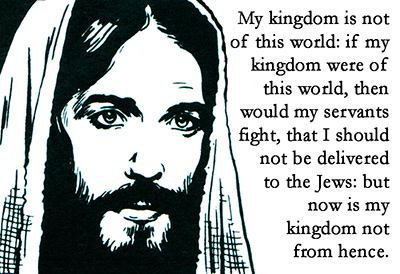
As I’m sure you know, in these days that’s a rather unusual, even “extreme” form of faith and Christianity. Some surely would call it fanatical. But one of the many advantages I’ve gained from this is that the to and fro of political events and tussles have lost the impact they once had on me. Jesus said, “My kingdom is not of this world. If my kingdom were of this world, then would my servants fight, that I should not be delivered to the Jews. But now is my kingdom not from hence.” (John 18:36)

But sadly and very significantly for most American Christians, their ties to this world and this nation are totally wrapped up together with their Christianity. They talk of “bringing the nation to repentance” when I’m personally almost sure that just isn’t going to happen. “Evil men and seducers shall wax worse and worse, deceiving and being deceived.” (II Timothy 3:13) So if the Supreme Court of this worldly, physical nation declares that homosexuality is accepted, I’m all the more confident that there’s a higher court than that: the court of heaven that now is and is to come, “the Judgment Seat of Christ” (II Corinthians 5:10) and “the Great White Throne Judgment” (Revelation 20:11).

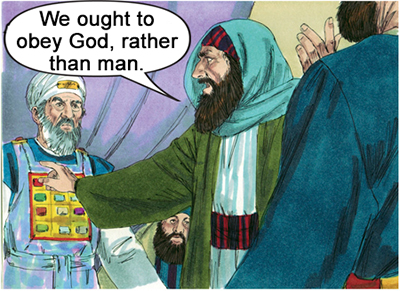
Christians and believers for millennia have struggled with this but often they pretty much saw the eternal truth in it all. Solomon said, “I council you to keep the king’s commandment and that in regard to the oath of God.” (Ecclesiastes 8:2) Yes, keep the laws of the land. But keep the laws of God before that. The apostle Peter had to stand up to the Jewish rulers of his day when he told them, “We ought to obey God, rather than men.” (Acts 5:29)

This Supreme Court ruling is going to cause more Christians to be forced to a decision.

But here’s what I see as some real good in all this. So very many Christians have tried to rock along in what’s mostly a compromised limbo relationship between themselves and God and the Godless world we live in. That’s getting harder to do. This Supreme Court ruling is going to cause more Christians to be forced to a decision. Will I allow my children to go to school where “gender choice” is taught to little children and where basically homosexual teaching is presented to children as a requirement in public schools? Will you go against your conscience as homosexual activists force you into business decisions that to you are clearly a sin?

As the darkness deepens in these times, the lines in the sand have become much more distinct and many millions are finding they have to come down more clearly and strongly for the Lord. Or just declare their allegiance to the morals, ethics and gods of this present evil world and abandon their Christian convictions, their relationship with the Lord and faith in His Word.


Lot & family flee Sodom

This recent Supreme Court ruling is just another road marker, howbeit a very clear one, that we are now where Jesus said things would be shortly before His return, “As the days of Lot…” (who the angels pulled out of Sodom and Gomorrah shortly before its destruction) “…so shall also the days of the coming of the Son of Man be.” (Luke 17:28-30)

As Joshua of old told his people and followers, “Chose you this day whom you shall serve”, meaning the gods of the Egyptians they’d been delivered from or the God of Abraham. And then he said, “As for me and my house, we will serve the Lord.” (Joshua 24:15) Straddling the fence with our heads in the sand is becoming less of an option.

Sunday, June 28, 2015

An Ode to Television


The Twenty-Third Channel
By Philip Day

The TV is my shepherd,

I shall not want.

It makes me lie down on the sofa,

It destroys my soul.

It leads me in the path of sex and violence

For the sponsor's sake. 

Yea, though I walk

In the shadow of Christian responsibilities,

There will be no interruption,

For the TV is with me. 

Its cable and remote, 

They comfort me.

It prepares a commercial for me

In the presence of all my worldliness. 

It anoints my head with

Humanism and consumerism.

My coveting runneth over.

Surely laziness and ignorance

Shall follow me

All the days of my life.

And I shall dwell in the house

Watching TV forever.

“Aquele que Oferece Louvor…”

Link
Virginia Brandt Berg

Nossa meditação de hoje é sobre dar graças a Deus, e encontrei um poema de L. A. Tubbs muito verdadeiro que realmente tocou o meu coração:

Tenho contado minhas bênçãos,
E somado o meu pesar,
Mas não cheguei à conclusão
A que alguns naturalmente iriam chegar.
Parei de contar os problemas antes de chegar a cinco,
Mas vi as bênçãos se multiplicarem a mil.
Certas coisas não foram como eu previa,
E reclamei da Providência por não ter pena de mim.
Mas não avaliei o que havia do outro lado:
Todo o bem que se havia acumulado.
Sempre tive a bonança após a tempestade,
E muitos momentos felizes ao longo da estrada.
Se espinhos me espetaram, com razão eu devo crer
Na imponência da rosa o amor os envolveu.
Por isso continuarei grato pelo sol e pela chuva,
Pela alegria que me trouxe felicidade,
E pela purificação que vem com a dor.
Pelo amor das criancinhas,
Por amigos tão fieis,
Pela mão que tem me guiado,
E cada perigo enfrentado!

Eu gostaria de sugerir neste momento que baixemos nossas cabeças para uma oração sincera de agradecimento a Deus. Você vai orar conosco, não vai?

Pai nosso, queremos Lhe agradecer por todas as Suas misericórdias e bênçãos, e pela força que o Senhor nos tem dado para levarmos as nossas cargas. Agradecemos pelos amigos fieis que têm trazido mais luz à nossa vida, e pela própria vida e oportunidades maravilhosas de serviço e louvor que ela nos oferece; pelos confortos materiais e pela liberdade da qual podemos desfrutar.

Mas, acima de tudo, Pai, nós Lhe agradecemos pelo presente que nos deu, o Seu Filho, e pelas bênçãos espirituais decorrentes do sacrifício que Ele fez. Nós Lhe agradecemos pela alegria e paz que temos por meio da nossa comunhão com Ele, e os frutos do Espírito que recebemos por o Espírito Santo habitar em nós.

Nós louvamos e Lhe agradecemos por essa grande herança! Nós Lhe damos graças de coração pelo privilégio da oração e da doce comunhão Contigo. Nossos corações transbordam de gratidão por tudo isso, Senhor, no precioso nome de Jesus.

Sabem, eu estava lendo e estudando algumas passagens maravilhosas sobre louvor, mas acho que a minha favorita é “Aquele que oferece sacrifício de louvor Me glorificará; e àquele que bem ordena o seu caminho Eu mostrarei a salvação de Deus.”1

Bem, poderia também ser dito, “Aquele que oferece sacrifício de ação de graças Me glorificará.” Sabe, esta última parte do versículo dá a entender que ele [Davi] queria fazer algo grandioso para a glória de Deus, mas aqui vemos que oferecer louvor a Deus glorifica o Senhor!

Se acha que não tem conseguido fazer nada de grandioso para o Senhor, comece a louvar, e isso O glorificará mais do que qualquer outra coisa! Comece a louvar a Deus e verá uma fenda se abrir entre as nuvens negras das dificuldades e dos problemas pelos quais está passando.

Sabe, a Palavra de Deus diz que quando começaram a cantar e a louvar o Senhor, Ele pôs emboscadas contra o inimigo!2 Quando eles começaram. Quando começamos a louvar o Senhor, se é que ainda não começamos, Ele então começa a operar de maneira maravilhosa em nossa vida!

O Senhor muitas vezes não pode começar a operar enquanto persistimos em pedir e orar. Mas se começarmos a louvar Ele fará de nós mais do que vencedores nas dificuldades!

Com a ajuda de Deus você pode decidir ter uma atitude vitoriosa e simplesmente louvar a Ele pela vitória à sua frente. Deus vai operar! Eu sei, porque já me encontrei tantas vezes em situações difíceis e pedi e orei, mas só quando comecei a louvar o Senhor por fé é que obtive a vitória!

Ora, eu me pergunto se você não tem andado reclamando e murmurando em vez de ter um espírito agradecido e de louvor? Um senhor disse a um amigo nosso o outro dia, “Cada vez passo mais tempo no clube porque a minha esposa não para de se queixar e reclamar da vida. Fico cansado de ouvi-la reclamar!” E essa senhora serve ao Senhor trabalhando em sua igreja!

Mas ela não está servindo com alegria! A Palavra de Deus diz, “A alegria do Senhor é a nossa força!”3 Não me admiro que esta senhora se sinta desgastada o tempo todo -- o seu próprio espírito está sugando sua vitalidade!

A Palavra de Deus nos diz, “Deus o ungiu com óleo de alegria mais do que seus companheiros.”4 Bem, temos o mesmo óleo à nossa disposição! Será que o seu espírito demonstra isso e o seu rosto testifica que você tem sido ungido? Esse mesmo óleo está ao seu dispor!

Mais uma vez, a Palavra de Deus nos diz que Ele nos dará “beleza por cinzas e veste de louvor por espírito angustiado; a fim de que se chamem árvores de justiça, plantação do Senhor, para que Ele seja glorificado.”5 Olha, esse versículo é maravilhoso. É magnífico!

Você está com o espírito angustiado? Deus deseja lhe dar alegria, se você colocar a veste de louvor e simplesmente começar a Lhe agradecer pelo que Ele é e pelo que tem feito por você! Ele começará a agir em seu favor quando você começar a louvar!

Não sente vontade de louvar? Ora, louve mesmo assim, por fé, e logo estará louvando de coração!

Originalmente transmitido na década de 1950. Compilado e republicado em março de 2011.


1 Salmo 50:23.

2 2 Crônicas 20:22.

3 Neemias 8:10b.

4 Salmo 45:7.

5 Isaías 61:3.

What Burning Out Taught Me About Prioritizing My Work


By Carson Tate, Fast Company, June 25, 2015

It was December 26. The day after Christmas; 10 days after my daughter’s first birthday. I was sitting on the floor coiling Christmas lights when I began to try to stand up. Almost immediately, I sank back down to the floor.

I was tired: physically tired; emotionally tired. Even my soul felt tired.

How did I get here?

Six weeks after the birth of my daughter, I chose to jump back into the whirlwind of busyness–airplanes, travel and meetings–striving to build my consulting business. I spent the entire first year of her life haunted by my ego as I frantically tried to grow my business, serve my clients all over the world, and prove to myself that I was needed and valuable.

This was all part of something bigger for me personally. I wanted to live up to my image of the successful woman–smart, driven, professionally accomplished; a Mary Poppins mom; a loving wife; a leader in the community. That superwoman was my gold standard, and I had spent years, and especially the last year, trying to live up to it.

But now, on December 26, I’d awakened only to realize that as much as I was chasing the dream of the superwoman, I wasn’t living my life.

And the words of Socrates–”beware the bareness of a busy life”–were suddenly eerily real. It was time for me to face my fears and make bold choices about my life and the way that I worked.

I started to make these bold choices for my life with three key strategies that not only anchored me as I picked myself up that December 26, but also continue to support me today as I work to overcome my fears and build a life where I live fully.

Focus on impact not output. For many years, I prized my ability to produce significant amounts of work–my output. It became something I was known for, however, it came at a tremendous personal cost. There is work and then there is the real work, work that has an impact on the bottom line, your clients, and your organization. Where are you focusing on output instead of impact? What would shift for you personally and professionally if you appreciated impact more than output?

Honor the way you work. I cannot sit still. I prefer to stand when writing. My brain shuts down after 9:00 pm. I do not pull all-nighters well. I am grumpy and unfocused if I do not exercise. And, if I am hungry, there is nothing that can keep me focused. It took me a long time to admit these things to myself. Then it took even longer for me to actually honor that as the way that I worked.

Honor the way you work: When do you do your best work–in the morning, afternoon, or late at night? Under what conditions do you produce your best work–when you exercise, have adequate sleep, or are listening to great music? Resist giving into work cultures that undermine your productivity. Let the quality of your work and the impact you are making speak for themselves. If you do, no one will question how you work.

Stop getting derailed by what you “should” do. It is difficult for me to say no because I get seduced and derailed by something I call the “shoulds.” The shoulds are those voices in your head–you know the ones–saying “You should be doing this,” “You should like that,” “You should spend time on this,” “You should stop doing that,” and so on and so forth–endlessly. The problem with the shoulds is they lead you to over-commit–and when you over-commit, the quality and impact of your work suffers. To combat the shoulds I use the “POWER No.” It’s based on the acrostic POWER–Priorities, Opportunities, Who, Expectations, and Real. Here’s how it works:

Priorities. When that voice in your head tells you that should complete this task, lead another project, attend another meeting, or make cupcakes from scratch, evaluate the priority of that message. How does this should align to your priorities, the organization’s strategic priorities, and/or your families’ priorities?

Opportunities. Explore the opportunities. What opportunities does this should create for you? Is there something that does actually need additional attention in your life? This should could be shining a light on something that you need to address.

Who. Who or what triggered this should? Was it an old script from childhood? Was it an ad in a magazine? Was it your colleague?

Expectations. Whose expectations are these really? Your manager? Your mother? Your spouse? Your child? Society’s?

Real. Get real. What is this should really about? Are there real priorities that are driving this should? Or are you taking on societal expectations that are not in alignment with your priorities?

Say no to the many things that threaten to distract you and derail you, so you can focus your energies on the handful of things that will lead you to your success. The POWER puts you back in the driver’s seat, empowering you to respond rather than merely react. Stop shoulding all over yourself and take back control.

Facing my fears was hard. I am not sure I would have done it if I had not been sitting on my family room floor that December 26. My advice to you is this–don’t wait until you reach your breaking point or there is a catastrophic event to start making bold choices about our life and the way you work. This is your work. This is your time.

Saturday, June 27, 2015

Louvar nos Períodos Difíceis


Uma coletânea de pensamentos

Praticar o louvor (em outras palavras, estar agradecido) em situações difíceis muda as coisas, porque atrai o Espírito e o poder do Senhor. Uma atitude agradecida anima tanto você quanto as pessoas ao seu redor, pois o ajuda a ter uma perspectiva positiva, lhe dá fé, fé no Senhor e fé por mudança. Melhora e traz resultados positivos mesmo em circunstâncias negativas. E fé é a vitória. A oração também pode mudar a situação, é claro, mas quando a coisa está negra, geralmente num primeiro momento é difícil ter fé e o poder espiritual necessários, porque a primeira reação é ficar chateado, triste ou desanimado. O louvor, porém, contra-ataca todos esses elementos negativos e imediatamente enche o seu espírito e a situação com fé, confiança no Senhor e uma energia espiritual positiva.—Maria Fontaine[1]

*

Tente pegar uma tragédia de verdade, uma situação sem esperança, de dar desespero, e deixe-a animar a sua fé no Meu poder a ponto de explodir em louvor, sabendo que Eu vou conquistar, que sou maior do que os problemas, que estou no controle, e que, de alguma maneira, vou lhe dar a vitória. — Isso sem mencionar os incontáveis benefícios atrelados a isso.

Louvar mesmo sem ver sinal de vitória, louvar apesar da aparente derrota, é poderoso.

Quando luta com a arma do louvor, os detalhes da situação se tornam praticamente irrelevantes, exceto pelo fato de que você está agradecido pela situação, por pior que seja, e essa atitude abre caminho para a vitória que posso lhe dar. Você fica tão grato pela Minha bondade, misericórdia, amor, sabedoria e cuidado, pela Minha capacidade de usar tudo para o bem, que transborda em louvores, porque se sente honrado com a oportunidade e bênção de Me ver em ação.

Isso não significa que está ignorando a gravidade da situação, mas que está olhando além, tomando uma atitude e ao mesmo tempo tendo uma visão dos bastidores. Está trabalhando Comigo para superar e integrar o Meu poder à situação, optando por se elevar acima do problema. Usar o louvor para lutar pela vitória ajuda. Mas quando só sente pena, interesse e preocupação, está na realidade se colocando como observador da guerra espiritual.

É da natureza humana fechar os olhos e se afastar de coisas ruins. O ser humano não quer se sentir incomodado. E com certeza é da natureza humana achar que a solidariedade é a única reação adequada à dor e ao sofrimento. Aprender a reagir diferente do natural e usar o louvor nessas situações exige unção e poder sobrenaturais que provem de Mim. Mas posso e vou lhe dar essa unção e poder.—Jesus, falando em profecia[2]

*

A vida real nem sempre vai ser perfeita ou como desejamos. Por isso, reconhecer constantemente o que funciona em nossas vidas nos ajuda não só a sobreviver, mas a superar nossas dificudlades. Sarah Ban Breathnach

*

Se procurar os pontos positivos em cada situação, verá a sua vida subitamente ser inundada por um sentimento de gratidão, um sentimento que vai alimentar a sua alma.—Rabi Harold Kushner

*

Fartura e falta existem concomitantemente na vida. São realidades paralelas. Fica sempre por nossa conta decidir de qual jardim secreto cuidaremos… Quando decidimos não focar o que nos falta na vida, mas agradecer pela abundância real de amor, saúde, família, amigos, trabalho, as alegrias proporcionadas pelo contato com a natureza e buscas pessoais, ficamos felizes, e o deserto da ilusão se vai. Vivenciamos então o Céu na terra. —Sarah Ban Breathnach

*

Quando criança, sentada entre meus pais na igreja nas manhãs de domingo, muitas vezes ouvi a leitura destas palavras encontradas na Bíblia: "Em tudo dai graças!”[3] E minha mente jovem respondia com: "Sim, é preciso ser grato por cada coisa boa que acontece na sua vida”. De tempos em tempos, ao longo da minha juventude, aquelas palavras ecoaram na minha consciência e aprendi a ser grato por muitas coisas óbvias. Eu expresso gratidão por presentes recebidos, pela forma bondosa como sou tratado, e por todos os bons momentos e amigos que tive até hoje.

Expressar gratidão, mesmo quando as coisas deram errado era muito mais difícil, mas, por outro lado, ficava espantada com o resultado disso. Descobri que o versículo: "Deus habita o louvor do Seu povo”[4] serve para nos lembrar que a gratidão libera uma energia que poderia começar a movimentar as coisas. E quando fiz isso, senti-me preencher com a força e a capacidade de superar o que estava acontecendo no mundo exterior. Eventualmente percebi que o que muitas vezes pareceu uma circunstância negativa, na realidade foi o ponto crucial para uma nova direção. Muitas vezes, em retrospecto, vi claramente que fora uma bênção disfarçada que me resultou em uma atitude muito mais profunda e significativa.

“Em tudo dai graças!” Agora, eu posso ficar admirada e agradeccida por um por do sol na praia, ou pelo processo de aprendizagem inerente a uma doença ou um momento de confusão. Eu posso ser grata por minha fé inabalável na harmonia divina quando meu filho doente corre risco de vida e isso foge ao meu controle e ainda não descobri todas as lições e os significados que a situação encerra. Fico agradecida quando posso me conectar com aqueles que amo, e também pelos momentos de divergência e de estranhamento que mostram-me novas lições a serem aprendidas e insights a serem assimilados. Sou realmente GRATA por ter descoberto o poder da gratidão em minha vida, e continuarei sempre dando graças em TUDO! – Gratidão: Um Estilo de Vida[5]

*

A gratidão não deveria ser uma reação que temos apenas ao receber o que desejamos, mas um sentimento constante que resulta da observação de pequenas coisas e de procurarmos sempre ver o bem, mesmo em situações desagradáveis. Comece a incorporar uma atitude de gratidão às suas experiências, em vez de esperar por uma experiência positiva para ficar agradecido.—Marelisa Fábrega

*

Esteja grato pelo que possui, e no final conquistará mais. Se focar o que não tem, você nunca, jamais, terá o suficiente.—Oprah Winfrey

*

O louvor nos ajuda quando passamos por dificuldades, mas também é possível louvar para ajudar outros quando estão passando por momentos difíceis. Talvez seja automático para você pensar que louvar a Mim em uma situação difícil é o oposto de entender e ter compaixão. Mas pense em Mim e no Meu amor por você. Existe algo mais perfeito? Existe alguém que o conhece e entende melhor, ou se solidariza mais com você?

Quando falo com você nos momentos atribulados, por acaso enfatizo a tristeza e tudo de ruim, por acaso digo que foi injustiçado e quão lamentável é a situação? Não. Eu lhe ofereço a Minha mão para puxá-lo para o alto e tirá-lo desse sentimento de tristeza para ter a Minha perspectiva, onde tudo está bem e tem um propósito maior; onde o Meu amor pode envolvê-lo e curá-lo.

Assuma a Minha natureza e o ajudarei a saber como usar o louvor até mesmo nas circunstâncias mais tristes e atribuladas para servir de corda de resgate, como um manto de consolo, aconchego e encorajamento para os que estão em dificuldades. Se estiver assumindo a Minha natureza, os seus louvores refletirão o Meu coração amoroso, a Minha compreensão e ainda a Minha perspectiva, ou seja, que Eu tenho um plano, estou no controle, então pode Me louvar na certeza de que vou cuidar de você e que no final tudo vai dar certo.

Em certas situações vai louvar por entre lágrimas, com o coração partido pelas pessoas, com empatia. Não tem problema, ainda assim é louvor. Às vezes vai interceder fervorosamente pedindo pelo Meu amor e perspectiva, de modo que seus louvores terão a combinação certa de compreensão pela situação e uma fé firme que vê além das dificuldades e louva não importa o que aconteça.

Peça-Me por um espírito sincero de louvor. Louvar-Me de coração é uma atitude linda que libera e reconforta no espírito. E contagia os outros. É feito sem segundas intenções ou querer vender uma imagem. Se estiver disposto a fazer o que for preciso para ajudar alguém a ganhar a vitória, o louvor é uma maneira, mas não a única de se preparar para ajudar, que transmite uma quantidade imensa de amor e certeza.

Eu posso ajudá-lo a aprender a usar o louvor com habilidade e poder para ajudar outros e alterar circunstâncias e situações. Lembre-se que o Meu amor por você inclui compreensão e, ao mesmo tempo, muito da perspectiva celestial. Você também pode ter as duas coisas conforme usar o louvor para consolar e encorajar outras pessoas para que possam receber a cura e as soluções que ofereço.—Jesus, falando em profecia

*

Agradeça por não ter tudo o que deseja,
Se tivesse não haveria expectativa.
Agradeça quando lhe falta conhecimento,
Pois cria oportunidade de aprender.
Agradeça pelas dificuldades,
Porque então você cresce.
Agradeça por suas limitações,
Porque são oportunidades de melhorar.
Agradeça por cada novo desafio,
Porque fortalecem e moldam o seu caráter.
Agradeça pelos seus erros,
Pois lhe ensinam valiosas lições.
Agradeça quando se sente cansado e desgastado,
Porque significa que fez a diferença.
É fácil agradecer pelas coisas boas. Uma vida cheia de realizações é também cheia de reveses.
A GRATIDÃO pode transformar algo negativo em positivo. Procure uma maneira de agradecer por seus problemas… e eles se tornarão bênçãos.—Autor desconhecido

Tradução Hebe Rondon Flandoli. Revisão Denise Oliveira.

Copyright © Fight for Your Faith