Does your faith need strengthening? Are you confused and wondering if Jesus Christ is really "The Way, the Truth, and the Life?" "Fight for Your Faith" is a blog filled with interesting and thought provoking articles to help you find the answers you are seeking. Jesus said, "Seek and ye shall find." In Jeremiah we read, "Ye shall seek Me, and find Me, when ye shall seek for Me with all your heart." These articles and videos will help you in your search for the Truth.

Monday, September 16, 2019

Four Tools for Personal Development or How to Change Yourself!

Dennis Edwards

Yesterday, we were invited to a seminar for Personal Development by my wife’s sister. We decided to go to accompany my sister-in-law and see what it was all about. I brought a book along to read in case it was boring.
The speaker, a Life-Coach, was introduced by the head of a local association. I’ll go through my notes so you can get a feel for what she shared as I believe it’s good advice and we can apply it to our lives. Here we go.
What month is it? That's right, it's September. What does September signify? Exactly, a change of seasons, an end of summer, a getting back to school, or work, or the normal routine of things. September is bringing changes. But changes aren’t something that we like. We tend to abhor change and perfer security over it. We dread change. But physical change can be a catalyse for character change.
Everybody up. I want you to all change your seats. Everyone sit down next to two people that you do not know. Okay. Introduce yourself. Everybody with me. That wasn’t so hard and you have made two new aquaintences. Change is good.
Okay. Everybody on your feet again. I want you all to go and walk around the room counter-clockwise. While you are walking, I want you to be turning around in a circle counter-clockwise as you walk around the room. Okay?
You are rotating and revolving just like the earth is spinning on it’s axis and revolving around the sun. The whole galaxy is revolving, also. The whole universe is in motion. But we want to sit still. We don’t want change. But change signifies progress. Change signifies movement. Change signifies life.
[Of course, the Bible gives us the same advice. In the Psalms we read, “Because they have no changes, they fear not God.”[1] Without changes in our life we get lazy. We settle down and become like bumps on a log. But just like the universe is in movement, God wants to keep us moving, and changing, and learning, and progressing, everyday. Change is good, because it helps us to trust the Lord. – Dennis Edwards]
Before we go any further, I want everyone to think about the greatest problem or challenge they have in their life right now and write it down. Fold it up and put your paper away.
I’m placing some tomatoes in the center of the floor, because they represent the fruits of our lives up to this very moment. What kind of fruit would you like to have in your life?”
These five tennis balls, I’m placing beside the tomatoes, are each labelled with a positive atribute: love, kindness, health, patience, and peace. [The idea here is very similar to Apostle Paul’s writing about the fruits of the spirit,[2]and Jesus’s words about a good tree bringing forth good fruit.[3]]
“What kind of fruit would you like in your life?” Write it down on the papers we’re passing out.
Here are some different packages of seeds. If we want tomatoes, we need to plant tomato seeds. Pass the tomato seeds around and everyone take a few. Look at these seeds. The life of the tomato plant and ultimately it’s fruit is in the tiny seed you hold in your hand. The seed is so small, but from it comes everything. Now remember what the fruit is that you want to bring forth in your life. What seed do you need to plant in your life in order to bring forth that fruit? Write it down.
[Jesus gave many of His parables talking about seeds and fruits. So the point she is making is very scriptural. What bad or evil seeds are we planting in our hearts? What bad or evil attitudes are we allowing in our thoughts? What bad or evil behaviors are they bringing forth in our lives? The metaphor of the seed and tree and fruit is used over and over again throughout Scripture. Jesus said a good tree brings forth good fruit and an evil tree brings forth evil fruit. You shall know the tree by its fruit.[4]]
You are not going to have the fruit you want in your life, if you do not sow the right seeds. Maybe, the fruit you have in your life right now is because you have been sowing the wrong type of seed. You need to start planting a different type of seed.
But in order for the seed to grow properly it needs the right set of conditions. A lot of things can destroy the seeds ability to grow. [Jesus went over this point also in his parable of the sower where some seed fell onto different types of soil. Some fell on rocky ground, some was eaten by the birds, some fell on the pathway and was trodden under foot, some fell among the thorn bushes and sprang up, but later was choked out by the thorns and thistles, lastly, some fell on good ground.[5]] But the seed itself is adequet for the fruit, if it’s given the right conditions like water, air, fertalizer, etc.
When we have a problem in the house we call the plumber or the electrician or the carpenter. They each come with something that helps them do the job. They each come with a ……? That’s right, a toolbox. [But it is God who has given each one of us our own individual toolbox for we are made in His image.[6]] We all have the same box of tools. The problem is, we haven’t been using them. We need to open our toolbox if we want to overcome our problems.
1. Our first and most important tool is the power of thought, the power of thinking. We each think some 60,000 thoughts each day. That’s a lot of thinking. Our thoughts are the seeds for our attitudes and actions. If we want different fruit in our lives, we need to change our thought patterns. Remember, if we sow tomato seeds, we expect to reap tomatoes. There is power in our thinking.[That is why the Word of God goes over this point over and over. God’s people from the time of Moses onward were admonished to memorize God’s Word as a seed that would bring forth the gift of eternal life. In Deuteronomy[7], in Joshua[8], in the Psalms[9], in the words of Jesus[10], and of Apostle Paul[11], we see the importance of having Godly thoughts, of controlling our thoughts, because the spiritual battle is in the mind. The battle for our soul is taking place in our mind. That is the battleground.]
2. The second tool is the power of the spoken word. [We see this truth in the Bible as from the very beginning God spoke the universe and all that was in it into existence. In the book of Proverbs we read that there is power in our spoken words to bring life, or bring death. Jesus said His words brought life[12] and if we followed His Word we would have God’s presence with us and receive the power to become the sons of God. Apostle Paul tells us God’s word is sharper than any two-edged sword and is our offensive weapon against the thoughts and words of the enemy. Words are spiritual entities for good or for evil. God’s Word teaches this point. “Do not let any unwholesome talk come out of your mouths, but only what is helpful for building others up according to their needs, that it may benefit those who listen.”[13]
Jesus said we would have to give account for every idle word we spoke. [14]Words are important. They lift up, or they tear down. They save or they damn.] Instead of speaking negatively, we should make positive statements. Instead of, “I don’t want to be sick.” We could say, “I want to be healthy.” Let’s eliminate negative speaking from our conversation and start speaking positively. Make that an exercise for the coming month to work on changing the words you speak. [After rereading the above, I think as Christians our toolbox is greatly amplified because God has taught us the power of praise.[15] We can use praise to help us in our mental and physical battles with the enemy.[16] Praise is the voice of faith and without faith it is impossible to please God.[17] But with faith, “All things are possible to him that believes.”[18]]
3. The third tool is the power of our feelings. We need to learn to control our feelings. It is not unusual to have negative feelings like anger, jealousy, impatience, lack of love, bitterness, depression. But do not stay with those emotions. Move through them as quickly as possible. Try to feel the feelings that you want to feel. [The Apostle Paul also admonishes us to flee from wrong feelings. He tells us to “Set your affections on things above, not on things on the earth.”[19] Also, as Christians, we can use the power of prayer to help us overcome our negative emotions. We can ask for prayer. The speaker did not explain how we were to move through the negative emotions. She just said, “Move through those negative emotions as quickly as possible.” However, united prayer, or asking for prayer is a way a Christian can overcome the emotional attacks or problems he passes through.[20] Even private prayer can help. The Christian’s toolbox is actually amplified.]
4. The fourth tool is the power of attitude or our overall will-power. Our attitude will determine our altitude. Strong will-power can help us overcome seemingly insurmountable difficulties.
Now, everyone up and move to the other room and sit on the floor on mats, or along the sides of the room on chairs. As the speaker entered the room she turned off the lights and dragged a heavy barley sack labelled “problems” to the middle of the room. With a flash light in her hand, focusing the light on the “sack of problems,” she said, “If I concentrate on my problems, what happens?” She moved closer and closer to the problem. “If I concentrate on my problem, it becomes the only thing that I can see. It distorts everything else. All I can see is my problem. And my problem will bring me down and down.” She leaned into the problem even more. [We as Christians need to keep our eyes on Jesus the author and finisher of our faith.[21] If we don’t, we end up believing the enemies lies, instead of God’s love and mercy for us.[22] We, also, need to use the weapon of praise and praise our way through our problems, not sink into them.]
I’m putting on boxing gloves. I’m going to fight my problem. I’m going to get the victory over it. The speaker started punching the sack of problems. But the more she puncked, the more exhausted she became. [Here, as Christians, we have God’s promises to claim and hold onto. God’s Word tells us to stand back and watch Him fight.[23] It says the Lord will fight for us and we can be at peace.[24] Apostle Paul tells us to fight th good fight of faith by walking in righteousness, godliness, faith, love, patience and meekness. We need to let God do the fighting.[25]]
Some years ago, I had a very serious pain in my body. Different doctors told me I would have it for the rest of her life and there was nothing I could do about it. Finally I met one doctor who advised me otherwise. He told me that the way to get over the pain was to stop thinking about it. I learned how to use the tools in my toolbox and became an overcomer rather than be overcome by my problem.[Same point as previously, we as Christians have the promises in God’s Word to cling to, to claim in prayer, which can help us to overcome, for we can be more than conquerors through Him that loves us.[26]]
Everyone please help me. On the paper I’m handing out now,  write out a solution to help me see how I can overcome my problem.
After collecting all the solutions, but still with her boxing gloves, she sat down with the basket full of our suggestions, the things we had learned through her seminar. Look, I’m unable to pick up a single suggestion. I have the boxing gloves on. I’m still in the mode of fighting the problem in my own strength, rather than facing the problem with reflection, and taking out my toolbox. If we use our toolbox, we can change our situation. Instead of “fighting” our problems in our own strength, we need to face our problems and make a stategy to overcome them. [And with the help of God we can ask God to give us a strategy for overcoming. With the tools He’s given us in our toolboxes, plus the spiritual tools available to us, we can have greater victories.]
Don’t say, “I’m going to try.” Say, “I’m going to do.” Use the toolbox and face your problem instead of fighting it (in your own strength) and losing the battle. You have a problem in your life because the seeds you sowed in the past brought forth bad fruit. They were the wrong seeds. If you continue to sow the same seeds, you will continue with the same results. We need to start sowing different seeds. If we sow different seeds, we can bring forth different fruits in our lives and open up new windows of opportunity which we never dreamed of.
Reflect on how you can face your problems, rather than fight them (in your own strength). We have a box full of good tools we can use. [As Christians our box is much more powerful than the one presented here. God is the source of our toolbox and has given us spiritual tools to enhance the physical tools we all have available.] The toolbox is our box of magic. We all have these tools available to us, but maybe we haven’t been using them. Remember, when you have a bad thought, do something about it. Don’t just sit with it. Move it!
Close your eyes and fold your hands as if in prayer while we listening to a song that recaptures the theme of the seminar. [As Christians we have a great deal of music we can use to help us change our thoughts and thinking. God admonishes us to do just that.[27] The music we listen to can help plant seeds of change in our lives. Becky Harding of the 30 Day Praise Challenge has compiled a list of over 60 songs to help us have victory in Jesus.[28] Nubeat.org[29] has hundreds of Bible based songs available, also.] Therefore, sow the right seeds in your life so that you produce the right fruit. Use the toolbox [God has] given you and face your problems in the right way, (not in your own strength).
As we were leaving, I asked my wife. “What do you think?” She responded, “Fine! But it was missing the part most important, the spiritual part, the getting connected to Jesus.” We who have Jesus have the best toolbox available. Let us apply ourselves to the task at hand and keep moving and changing as God’s Spirit guides us and overcome our problems. And as Apostle Paul has written, “But thanks be to God who gives us the victory through our Lord Jesus Christ,”[30] so that we can be more than overcomers.[31]

Notes:

[1] Psalm 55:19
[2] Galatians 5:22-23
[3] Matthew 7:15-20
[4] Matthew 7:16-20 “Ye shall know them by their fruits. Do men gather grapes of thorns, or figs of thistles? Even so every good tree bringeth forth good fruit; but a corrupt tree bringeth forth evil fruit. A good tree cannot bring forth evil fruit, neither can a corrupt tree bring forth good fruit. Every tree that bringeth not forth good fruit is hewn down, and cast into the fire. Wherefore by their fruits ye shall know them.” KJV
[5] Luke 8:5-15
[6] Genesis 1:27
[7] Deuteronomy 6:6-9
[8] Joshua 1:8
[9] Psalm 1:1-2 & Psalm 119
[10] John 6:63, John 12:48, John 17:17
[11] 2 Corinthians 10:4-5, Philippians 4:8 , Romans 12:1-2
[12] Matthew 12:36 “But I tell you that everyone will have to give account on the day of judgment for every empty word they have spoken.”
[13] Philippians 4:29
[14] Matthew 12:36
[15] 1 Thessalonians 5:18
[16] 2 Chronicles 20:21-22
[17] Hebrews 11:6
[18] Mark 9:23
[19] Colossians 3:2
[20] James 5:14-16
[21] Hebrews 12:1
[22] Jonah 2:8
[23] 2 Chronicles 20:17
[24] Exodus 14:14
[25] 1 Timothy 6:11-12
[26] Romans 8:35, 37-39
[27] Colossians 3:16 Let the word of Christ dwell in you richly in all wisdom; teaching and admonishing one another in psalms and hymns and spiritual songs, singing with grace in your hearts to the Lord.
[28] https://www.youtube.com/watch?v=Sf27E7l0zwQ&list=PLU6CoT7SOq9Pa89xe_cXatSozoboUOaYk
[29] https://www.nubeat.org
[30] 1 Corinthians 15:57 NIV
[31] Romans 8:37

Friday, September 6, 2019

Yale university professor renounces Darwinism!

But what does he believe now instead?

Professor David Hillel Gelernter is a writer, artist and professor of computer science at Yale University. He is a senior fellow in Jewish thought at the Shalem Center in Jerusalem and was also a member of the American Enterprise Institute and the National Endowment for the Arts. He is also chief scientist at Mirror Worlds Technologies. He has published widely in numerous newspapers and written several books. Professor Gelernter has caused quite a buzz recently by publicly renouncing his “faith” in Darwinism, which he describes as a “replacement religion” for troubled souls who desperately need one instead of God.1


Gelernter says that he was swayed by the scientific evidence into abandoning the materialistic theory of Darwinism. Interestingly, most of the evidence that changed his mind falls into three categories of science: natural selection, genetic mutations, and the fossil record, which are three of the five top pieces of evidence that college students use to justify their belief in evolution. Interestingly, our Evolution’s Achilles’ Heels covers these three subjects in depth (chapters 1, 2, and 4, respectively). Notable Intelligent Design (ID) publications which influenced Gelernter’s about-face include Darwin’s Doubt, by Stephen C. Meyer, The Deniable Darwin, by David Berlinski, and Debating Darwin’s Doubt, edited by David Klinghoffer

Some of the arguments that convinced Gelernter

The following are some of the arguments that Gelernter believes discredit Darwinism, taken from his online review of the three previously mentioned works by ID authors.2

The origin of life

Mathematics is the bane of evolution. Probability, specifically, tells us that believing in evolution is akin to believing in miracles. For example, there are only approximately 50,000 known protein families,3 but certain proteins are essential for all forms of life. Most proteins are composed of hundreds to thousands of amino acids. Let’s pick one of these proteins and say that only 150 of the amino acids are necessary for it to work. What is the probability that this one, short protein would evolve in the primordial soup? You can think of the amino acids in a protein like beads on a string. Each position along the string can hold any of the 20 amino acids. Thus, there are 20150 ≈ 10195 possible proteins of this length. This number is much, much larger than the estimated 1080 atoms in the universe.
But bacteria need more than one protein. I published some calculations in 2015 that estimated the probability of a “simple” bacterium evolving with only the very basic essential proteins. The probability of a bacterium evolving from the chemical soup with a mere 1,340 proteins was 10–167,500. We can’t even represent that number with words. That’s smaller than 1 chance in a trillion trillions, and even that is nowhere close. In other words, there is virtually no chance that life evolved; it had to be created. This short exercise gives us the idea of how futile chemical evolution is, and this is only the beginning of probability calculations.

Developmental mutations


human-brain
Figure 1. The Antennapedia mutation, which involves the mutation of a so-called homeobox gene, causing legs to form in the place of antennae on the head of a fruit fly.

Mutations that affect the later stages of the development of an organism achieve only small adjustments in the organism, affecting only local structures. Examples include mutations that influence the density of fur, the shape of a bird’s beak, or the color of a flower. Such mutations occur frequently and are often not detrimental. In contrast, there are no known mutations which occur very early on during embryonic development. These would fundamentally affect the body plan. From everything we have seen, such mutations are always lethal, leading to a premature death, usually before the organism is even born. At best, they produce a monstrous organism that is inviable in the wild, such as the antennapedia mutation that produces legs in the place of antennae in fruit flies (figure 1). Yet these are the kinds of mutations which are necessary for large-scale evolutionary changes, such as transforming invertebrates into vertebrates. This field of “evo-devo” (short for evolutionary development) has been looking into this for decades, but they have drawn a blank. Tinkering with the fundamental building blocks of living organisms only produces catastrophic results, so evolution can’t even get started. This is where Darwin failed. He noticed changes. But his mechanism for change cannot get over the hurdle of genetics, a field he knew nothing about.

The fossil record

Darwinism is a step-by-step process, yet we see a striking variety of organisms suddenly appearing on the scene during what is called the Cambrian explosion. During a short window of only “a few million years” all major animal groups suddenly appear in the fossil record without any predecessors. This means that life appeared very suddenly on Earth—it makes much more sense if life was instantaneously created, as the Bible says.

The reception in insecure secular academia

Although not completely ostracized by all parties for his change of beliefs (perhaps due to his prestige and his not being a biologist), Gelernter describes the extreme anger and hostility that evolutionists have for anyone who denies their worldview. The reason ‘rational’ scientists, who supposedly apply nothing but impassioned logic to their work, transform into fist-shaking, angry people is, as Gelernter says, that evolution goes beyond science and serves as the basis of their atheistic worldview. According to Gelernter, “You take your life in your hands to challenge it intellectually. They will destroy you if you challenge it.”1 Furthermore, “…what I have seen in their behavior intellectually and at colleges across the West is nothing approaching free speech on this topic. It’s a bitter, fundamental, angry, outraged rejection [of intelligent design], which comes nowhere near scientific or intellectual discussion. I’ve seen that happen again and again.” 1

www.claremont.orgtwo-commandments-evolution
Cartoon depiction of Darwin’s “Two Commandments of Evolution”: Mutations and Natural Selection.

Gelernter also views ID as a viable scientific theory capable of replacing Darwinism. It should not be rejected out of hand in a bigoted manner by evolutionists. He states that design is the most obvious explanation for the complexity of life and says that Darwinism was formulated to explain how seemingly designed organisms assembled themselves by evolution. According to Gelernter, the question of intelligent design, “…is one of the most important intellectual issues of modern times, and every thinking person has the right and duty to judge for himself.”2
Evolution does not have a monopoly over theories of origins, and academia is not the exclusive playground of atheists. Such monolithic thinking on the part of secularists kills critical thinking.

What does Gelernter believe now instead of Darwinism?

Based on his rejection of Darwinism, is Gelernter now a biblical creationist? What does he believe now that he has rejected evolution?
It does not automatically follow that, just because someone gives up Darwinism, they become a biblical creationist. According to Gelernter, he still claims that evolution is a beautiful and brilliant scientific theory, because it can explain large processes in the history of life with a simple mechanism, natural selection. He thinks that the legacy of Darwinism will never truly disappear and that only a Darwinist “heresy” will take its place. At the same time, even though Gelernter admits that living organisms show evidence for intelligent design, he claims that the world is a mess, and that humans are prone to do evil. If left to him, Gelernter would fail the intelligent designer for making such a world. Gelernter doesn’t go the extra mile to accept biblical creation (oddly despite his Jewish roots), because he thinks that the two creation accounts in Genesis chapters 1 and 2 are contradictory. However, we have already dealt with this alleged contradiction in detail.
But Gelernter contradicts himself. How can he fail the intelligent designer who created this world, yet at the same time call evolution a beautiful theory? This is because, according to evolution, nature is ‘red in tooth and claw’. It is all about selfish struggle; the stronger species crushes the weaker species. Death is a necessary element in the endless process of struggle, suffering, and extinction.
As opposed to evolution, the Bible calls death the last enemy (1Cor. 15:26). God is a God of the living and not of the dead. This is why Jesus Christ rose from the grave, conquering death. Death and suffering were never part of God’s original, good design. God is not an ogre to use suffering and death to create life. How opposite life is from death! God did not use evolution to create.

Conclusion: the insufficiency of Intelligent Design

Sadly, the evidentialist approach of the ID movement does not often bear much fruit. We have written much about ID before (our position statement on ID is available here).


As Christians, we should preach the full Gospel. If we convince a person that evolution is inviable, we must also replace this defunct worldview with something else which better explains the origin and meaning of life. Many proponents of ID even believe in a form of guided or ‘theistic’ evolution. The ID movement notoriously tends to leave the Bible out of their discussions, by design. But what do we gain if we prove the existence of a “god”, who may turn out to be Zeus or Allah in some peoples’ minds? Indeed, not all members of the ID community, or the flagship of ID, the Discovery Center, are professing evangelicals. One famous ID advocate (Jonathan Wells) is well-known for being a member of the Unification Church of the Reverend Sun Myung Moon (a.k.a. the “Moonies”), which most evangelicals consider a cult. ID is not enough for saving faith. Rather, we need special revelation–the Bible. As mentioned previously Gelernter doesn’t even believe that the Old Testament is fully historical. In comparison, when we look at the conversion of the famous atheist Anthony Flew to theism in 2004, we also see that Flew ended up as a deist. Flew did not believe in the Trinity or the Resurrection of Christ. Rather he believed in what he describes as Aristotle’s God, a philosophical, rationalistic type of God.
ID attempts to deal with theism first, then Christianity later. However, the big problem is that those ID proponents who happen to be Christians are not necessarily attempting to prove a distinctly Christian brand of theism. It would thus make much more sense to deal with Christianity and theism as a unit, and not two separate issues. ID proponents are in effect appealing to human reason alone to build their case, which is the same method atheists use. What is worrisome is that if their starting point is outside the Bible, their endpoint might also well be the same, as Van Til noted.4 Clearly, we must base our thinking on the Bible as the sole highest authority (Sola Scriptura).
According to Psalm 19:1:
“The heavens declare the glory of God, and the sky above proclaims his handiwork.”
There is ample evidence for the existence of the God of the Bible. We can trust the eye-witness accounts of the Bible. His Word is enough for us (2 Timothy 3:16-17) to guide us unto all truth (John 16:13), not just a partial truth. Thus, while we applaud Professor Gelernter for his bold stance in rejecting Darwin, we plead with him to take the next logical step and accept that Jesus Christ, the Creator of the world, is also his Saviour.
Original article found here: CMI 

References and notes

  1. Kabbany, J., Famed Yale computer science professor quits believing Darwin’s theories. thecollegefix.com/famed-yale-computer-science-professor-quits-believing-darwins-theories, 30 July, 2019. 
  2. Gelernter, D. Giving Up Darwin. claremont.org/crb/article/giving-up-darwin, 1 May, 2019. 
  3. Orengo, C.A., Thornton, J.M., Protein families and their evolution—a structural perspective, Annu Rev Biochem. 74:867–900, 2005. 
  4. Van Til, C., The Defense of the Faith, Presbyterian and Reformed Publishing Co., Phillipsburg, NJ, 1967, pp. 114–122. 

Thursday, September 5, 2019

Monday, September 2, 2019

Robert Jastrow and God

By Dennis Edwards

Robert Jastrow (1925–2008) was a disciple of Edwin Hubble, the famous American astronomer whose interpretation of the red shift in light from distant galaxies gave rise to the Big Bang Theory. After Hubble died, Jastrow continued with much of his work. He later wrote a book titled God and the Astronomers (W.W. Norton, 1978). In an interview about his faith, or lack of it, he makes an interesting observation. He starts by talking about the implications of Hubble’s red shift:

"If you reverse the motion, the outward motions of the stars and galaxies, and go backwards in time, they come closer and closer together. Finally they reach a point where they are nearly infinite in density and temperature, and further than that you cannot go. So, there’s a beginning, a point in time from which it all started. That’s a remarkable thing. It has a strong theological flavor to it, which intrigued me, because I am an agnostic. But if there was a beginning, a moment of creation of the universe, then there was a creator. But a creator is not compatible with agnosticism. I found that point so interesting, that I felt a strong compulsion to share it with others.

"That’s why I wrote the book. Just like I can’t believe there was a creator, I can’t believe that this all happened by chance, which implies, there was a creator. So you see, I am in a completely hopeless bind and I have stayed there. Again, I find it hard to believe that this is all a matter of atoms and molecules. So, I try to fit into my concept of the world the conclusion that there is a larger force of some kind which we can call God, or whatever. But I can’t accept that, because I’m a materialist in philosophy. I believe the world consists entirely of material substances (and no supernatural causes). When you specify those substances and the laws of how they interact, you have done it all. Nothing more needs to be said.
Resultado de imagem para big bang
"That’s what science tells me. I have been a scientist all my life. But I find it unsatisfactory; in fact, it makes me uneasy. I feel I am missing something. But I will not find out what I am missing within my lifetime."1

What an honest, yet sad confession. Here he is facing his last years of life and Jastrow senses that his materialistic worldview has fallen short. He’s apprehensive. He’s unsatisfied and wondering if he’s gotten it wrong. He senses that there has to be more, but his intellectual pride, his lifetime of holding to a materialistic belief system forces him to deny the apparent truth of a Creator. Sadly, he confesses he will go to his grave before he finds the answer.

One artist has drawn an image of an atheist scientist climbing the mountain of knowledge. When he arrives at the top he surprisingly finds theologians sitting there already. The famous scientist Isaac Newton came to a different conclusion than Jastrow. Newton wrote:
Image result for Isaac Newton A maravilhosa disposição e harmonia do universo
"This most beautiful system of the sun, planets, and comets could only proceed from the counsel and dominion of an intelligent and powerful being. … This Being governs all things, not as the soul of the world, but as Lord over all; and on account of his dominion he is wont to be called Lord God, or Universal Ruler."

Isaac Newton was a great scientist, but he was also a great Christian and studied the Bible as much as he did science.
Image result for Isaac Newton quote all our human discoveries seem to confirm the holy Scriptures
Thomas Jefferson, the third president of the United States, wrote something very similar to Newton. He said:

"So irresistible are these evidences of an intelligent and powerful agent, that, of the infinite numbers of men who have existed through all time, they have believed, in the proportion of a million at least to a unit, in the hypothesis of an eternal pre-existence of a creator, rather than in that of a self-existent universe."2

We see Jefferson, not known as a religious man, but as a Rationalist or Deist, as they were called, also came to the same conclusion as Newton as a result of the “irresistible evidences.”
Image result for Albert Einstein: we are the position of a little child
Even Albert Einstein, not known for faith, said in a 1929 interview:
Image result for Albert Einstein: we are the position of a little child
"We are in the position of a little child, entering a huge library whose walls are covered to the ceiling with books in many different tongues. The child knows that someone must have written those books. It does not know who or how. It does not understand the languages in which they are written. The child notes a definite plan in the arrangement of the books, a mysterious order, which it does not comprehend, but only dimly suspects. That, it seems to me, is the attitude of the human mind, even the greatest and most cultured, toward God. We see a universe marvelously arranged, obeying certain laws, but we understand the laws only dimly. Our limited minds cannot grasp the mysterious force that sways the constellations."

Einstein thus came to the conclusion from viewing the evidences that there must be a “God” or “mysterious force” that is controlling the universe. Einstein's ideas were more in line with Spinoza's pantheism or the Buddhist cosmic energy, than the Christian-Judeaic God of the Bible, but never the less sound much like arguments used by the Intelligent Design movement. 


Aerospace engineer Wernher von Braun, who helped put America on the moon, said it a bit differently:
Image result for wernher von braun  quotes
"For me, the idea of a creation is not conceivable without invoking the necessity of design. One cannot be exposed to the law and order of the universe without concluding that there must be design and purpose behind it all. … My experiences with science led me to God. They challenge science to prove the existence of God. But must we really light a candle to see the sun?"3
Image result for the distance of their heart to their head
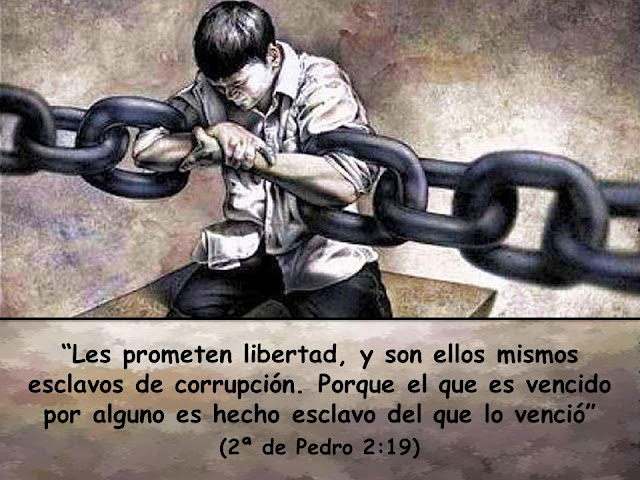
Some people miss the door of salvation by so little, the distance of their heart to their head. Their pride and unbelief cause them to reject the truth of the gospel. As the apostle Peter so aptly put it: “While they promise them liberty, they themselves are the servants of corruption: for of whom a man is overcome, of the same is he brought in bondage.”4 They become in bondage to their worldly philosophies, which appeared to be the path to freedom, only to fall into the hands of another tyrant demanding unfailing obedience even unto death.

Jastrow’s materialistic philosophy promised him freedom from Christianity’s “archaic” beliefs. But then, at the end of his life, when he senses he could very well be wrong about the whole thing, Jastrow is imprisoned by the philosophy that had promised him liberty. He could not escape its materialistic grasp, as much as he would have liked to. What a sad ending. But Jesus promises a way of escape. We don’t need to go to the grave wondering what is true. When we seek Jesus with all our heart, mind, and soul, He answers. “And ye shall know the truth, and the truth shall set you free.”
5 “If the Son therefore shall make you free, ye shall be free indeed.”6

(Watch the documentary The Privileged Planet here.)

1 The Privileged Planet, documentary, directed by Lad Allen (Illustra Media, 2004), DVD, http://www.theprivilegedplanet.com/scientists.php. 
https://www.youtube.com/watch?v=_Yv57I7dOcA

2 Thomas Jefferson to John Adams, April 11, 1828.

3 From a letter to the California State Board of Education, September 14, 1972.

4 2 Peter 2:19.

5 John 8:32.

6 John 8:36.

Robert Jastrow e Deus

Dennis Edwards 

Robert Jastrow (1925–2008) foi discípulo de Edwin Hubble, o famoso astrónomo americano, cuja interpretação do red shift (desvio vermelho) relativo à luz de galáxias distantes originou a Teoria do Big Bang. Após a morte de Hubble, Jastrow deu continuidade ao seu trabalho. Posteriormente escreveu o livro God and the Astronomers (W.W. Norton, 1978 — Deus e os Astrônomos, em tradução livre). Em uma entrevista falando da sua fé — ou falta de fé — ele faz uma observação interessante ao mencionar as implicações do desvio vermelho observado por Hubble:

"Invertendo-se o movimento, os movimentos externos das estrelas e galáxias, e retrocedendo no tempo, ficarão cada vez mais próximos. Por fim alcançam um ponto em que são quase infinitos em densidade e temperatura, e é o máximo que se consegue alcançar. Concluímos que existe um início, um ponto no tempo em que tudo começa. Isso é notável, e tem um forte traço teológico que me intriga, porque sou agnóstico. Mas se existiu um início, um momento em que o universo foi criado, então houve um criador. Mas o criador não é compatível com o agnosticismo. Achei interessante essa questão e tive uma forte vontade de compartilhar isso com outros.

"Por isso escrevi este livro. Se por um lado não consigo crer na existência de um criador, por outro também não consigo crer que tudo aconteceu por um processo randômico, o que então implica na existência de um criador. Foi assim que entrei em um beco sem saída e ali fiquei. Repito, tenho dificuldade em acreditar que tudo é só uma questão de átomos e moléculas. Por essa razão tento encaixar no meu conceito de mundo, a conclusão de que existe algum tipo de força maior que denominamos Deus, ou seja o que for. Mas não consigo aceitar isso, porque a minha filosofia é materialista. Eu acredito que o mundo consiste de substâncias materiais (e não de causas sobrenaturais). Quando se especifica essas substâncias e as leis sob as quais atuam, morre o assunto. Não é preciso dizer mais nada.
Resultado de imagem para big bang
"É assim que a Ciência explica. Eu sempre fui um cientista. Mas não fico satisfeito com essa explicação. Na verdade, fico inquieto; parece que falta algo. Mas sei que não descobrirei o que não consigo explicar durante a minha vida aqui na terra." [1]

“Para o cientista que viveu por sua fé no poder da razão, a história termina como um pesadelo. Ele escalou as montanhas da ignorância, está prestes a conquistar o pico mais alto; quando se coloca sobre o rock final, é recebido por um bando de teólogos que estão lá há séculos. ” Robert Jastrow

Dennis Edwards:

Certamente uma honesta, ainda que triste, admissão. No fim da vida, Jastrow sente que a sua visão materialista do mundo deixou a desejar. Apreensivo e insatisfeito, indaga-se sobre a possibilidade de estar enganado. Sente que tem que existir mais, porém o seu orgulho intelectual, todos os seus anos acreditando num sistema materialista o fazem negar a aparente verdade da existência de um Criador. Infelizmente, ele admite que morrerá sem saber a resposta.
Image result for Isaac Newton A maravilhosa disposição e harmonia do universo
O famoso cientista Isaac Newton chegou a uma conclusão diferente. Ele escreveu:

A maravilhosa disposição e harmonia do universo com sois, planetas e cometas só pode ter tido origem segundo o plano e o domínio de um Ser que tudo sabe e tudo pode. … Este Ser reina sobre tudo, não como a alma do mundo, mas como Senhor de tudo e todos; e por causa disso deve ser chamando Senhor Deus, ou Senhor do Universo.
Image result for Isaac Newton A maravilhosa disposição e harmonia do universo
Isaac Newton foi um grande cientista e também um grande cristão; dedicou-se ao estudo da Bíblia tanto quanto ao da Ciência.
Image result for Isaac Newton A maravilhosa disposição e harmonia do universo
Thomas Jefferson, o terceiro presidente dos Estados Unidos, fez uma afirmação semelhante:

As evidências de um agente inteligente e poderoso são tão contundentes que, dentre o número infinito de seres humanos que já viveu em todas as eras, eles acreditaram, na proporção de pelo menos um milhão para cada um descrente, na hipótese da preexistência de um criador eterno, em vez de um universo que se auto-criou.[2]

Jefferson, que não era conhecido por sua religiosidade, chegou à mesma conclusão que Newton, com base em “evidências irresistíveis”.
Image result for Albert Einstein: we are the position of a little child
Até mesmo Albert Einstein, que não tinha fama de ser um homem de fé, declarou em uma entrevista em 1929:
Image result for Albert Einstein: we are the position of a little child
Estamos na posição de uma criança pequena ao entrar em uma grande biblioteca cujas paredes estão cobertas por prateleiras cheias de livros em diferentes idiomas. A criança sabe que os livros foram escritos por alguém, mas não sabe quem ou como. Não entende os idiomas nos quais foram escritos. Ela observa uma ordem na disposição dos livros, uma sequência para ela misteriosa e incompreensível que ela consegue apenas vagamente imaginar. Para mim essa é a atitude da mente humana, até mesmo da pessoa mais importante e culta, a respeito de Deus. Vemos um universo maravilhosamente coordenado, regido por leis definidas, mas temos apenas uma leve compreensão delas. As nossas limitações mentais não compreendem a força misteriosa que governa as constelações.

Einstein, portanto, chegou à mesma conclusão diante das evidências, de que deve existir um “Deus”, ou “uma força misteriosa” que rege o universo.

O engenheiro aeroespacial Wernher von Braun, que liderou o programa aeroespacial americano que levou o homem à Lua, expressou-se de uma forma um pouco diferente:
Image result for wernher von braun  quotes
Para mim, a noção de uma criação é inconcebível sem admitir-se a necessidade de um desenho. Não se pode ter contato com a lei e a ordem do universo sem concluir a existência de um plano e um propósito por trás de tudo. …Minhas experiências no campo da Ciência me levaram a Deus. Desafiam a Ciência para provar a existência de Deus. Mas será realmente necessário acender uma vela para ver o sol?[3]
Image result for the distance of their heart to their head
Algumas pessoas deixam de passar pela porta da Salvação por muito pouco — a distância do seu coração às suas mentes. O orgulho e a incredulidade as fazem rejeitar a verdade do Evangelho. O apóstolo Pedro definiu muito bem quando disse: “Prometendo-lhes liberdade, sendo eles mesmos servos da corrupção. Porque de quem alguém é vencido, do tal faz-se também servo.”[4] Tornam-se cativos de suas filosofias mundanas, aparentemente o caminho para a liberdade, e caem nas mãos de um tirano que demanda obediência total, até à morte.
Image result for 2 pedro 2:19
A visão materialista de Jastrow prometeu-lhe liberdade das crenças “arcaicas” do cristianismo. No final da vida, porém, ele percebeu que poderia estar enganado a respeito disso. Jastrow tornou-se cativo da filosofia que lhe prometeu liberdade. Por mais que tivesse preferido o contrário, não conseguiu escapar de suas garras materialistas. Que triste final! Mas Jesus prometeu uma saída. Não precisamos morrer ignorantes da verdade. Quando buscamos Jesus de todo o coração, toda a alma e todo o nosso entendimento, Ele responde. “E conhecereis a verdade, e a verdade vos libertará”.[5]“Aquele que o Filho libertou é verdadeiramente livre.”[6] (Ver documentário link abaixo ou clique aqui)
Related image

[1] The Privileged Planet, documentário dirigido por Lad Allen (Illustra Media, 2004), DVD, http://www.theprivilegedplanet.com/scientists.php. https://www.youtube.com/watch?v=_Yv57I7dOcA
[2] Thomas Jefferson para John Adams, 11 de abril de 1828.
[3] Carta endereçada à Secretaria Estadual de Educação do estado da Califórnia, 14 de setembro de 1972.
[4] 2 Pedro 2:19.
[5] João 8:32.
[6] João 8:36.

Copyright © Fight for Your Faith